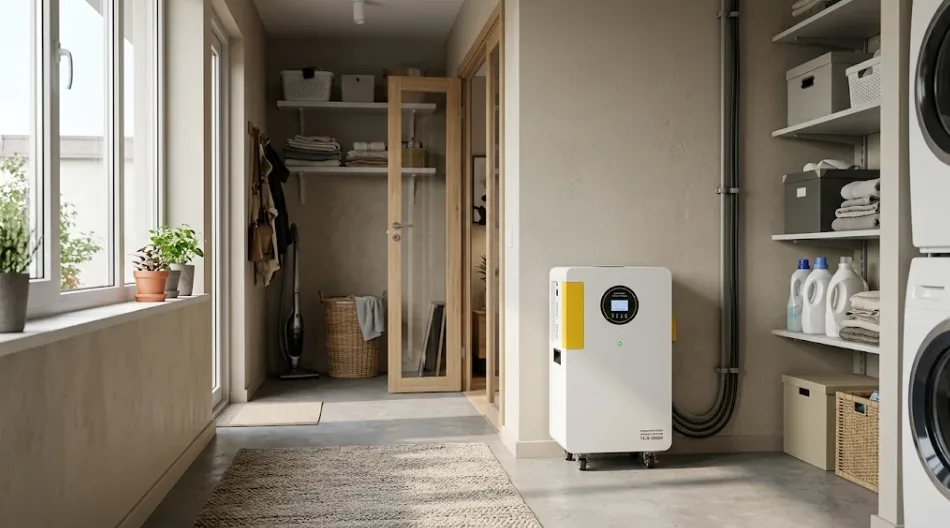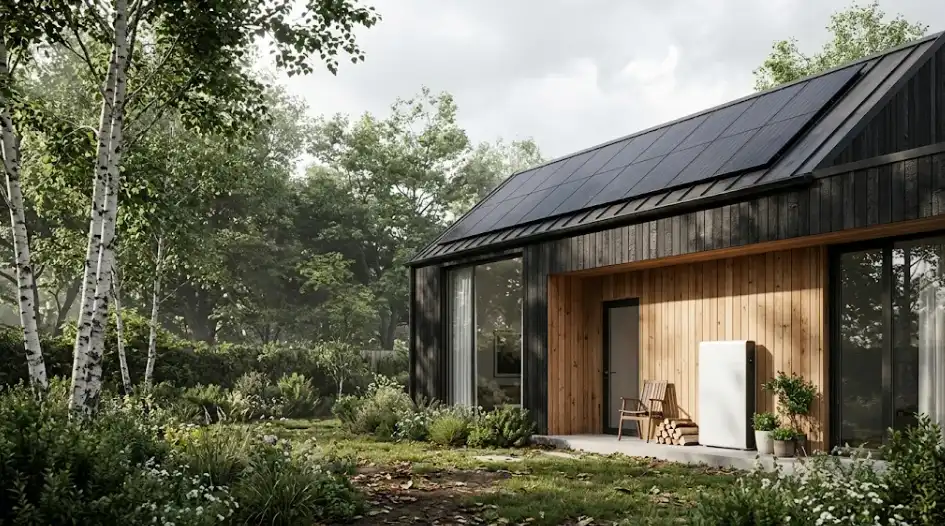

The role of an energy storage system (ESS), simply put, is to store electricity and make it available when needed. It can store electricity during periods of low demand and release it during peak periods to balance supply and demand. It can also provide backup power during outages, keeping critical equipment running.
However, “energy storage” is not limited to batteries. Pumped-storage hydropower plants pump water to a higher elevation and release it to generate electricity when needed, making them a form of mechanical energy storage. Molten salt thermal storage stores heat for power generation at night, making it a form of thermal energy storage. In the most common battery energy storage systems (BESS), batteries store electricity, while inverters and control systems deliver it to loads or the grid. Both residential energy storage systems and large-scale battery installations on the grid fall into this category.
Energy storage has a wide range of applications, from homes and commercial buildings to industrial facilities and utility-scale power grids. Understanding how it works and its main components is essential for determining which solution truly suits your electricity needs.
1. What Does ESS Stand For?
The most common full term for ESS is Energy Storage System. As the name suggests, it refers to a technology that stores electrical energy for later use.
1.1 ESS as Energy Storage System
The ESS system meaning refers to a system composed of batteries, inverters, and a BMS. Its function is to convert renewable energy into electrical energy and store it, enabling efficient energy storage. It includes various forms of energy storage, such as electrochemical storage, mechanical storage, thermal storage, and chemical storage.
As energy generation is shifting toward renewable sources such as solar and wind power, these energy sources are intermittent by nature. The ESS can therefore store and utilize excess energy when generation drops. As a result, ESS plays a crucial role in modern energy infrastructure.
1.2 ESS vs EES
ESS and EES actually both refer to energy storage systems, but they are used as different abbreviations depending on context and convention.
ESS is the more common and mainstream abbreviation. It is used in the vast majority of global contexts, which is why it is the one we see most frequently.
EES stands for Electrical Energy Storage. It is more commonly used in academic and technical standards, and organizations such as the International Electrotechnical Commission tend to prefer EES in official documentation.
Therefore, when referring to energy storage systems in everyday use, ESS is completely sufficient.
1.3 ESS vs BESS
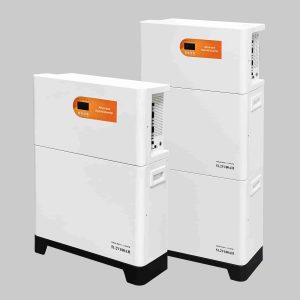
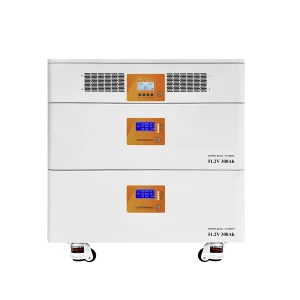
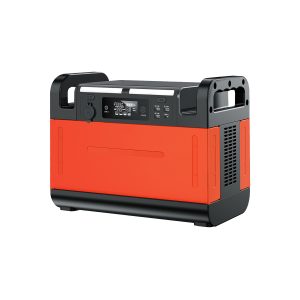
BESS is a subset of ESS that specifically refers to systems using batteries as the energy storage medium. Residential energy storage systems, large-scale grid-side battery storage stations, and portable power stations all fall under the category of BESS.
BESS stores and releases energy through electrochemical reactions. It offers advantages such as modular deployment, fast response times, and suitability for various scales of applications, making it one of the fastest-growing forms of energy storage today.
1.4 ESS Common Meanings
In addition to referring to an energy storage system in the energy sector, ESS may have different meanings in other fields.
For example, in the transportation industry—especially in airport ground operations—ESS may refer to an airport ground power supply system. In the automotive industry, ESS occasionally appears in technical documentation related to start-stop systems, where it refers to an energy management system that automatically shuts off the engine when idling at traffic lights and quickly restarts it when acceleration is needed.
However, in most other fields, the use of ESS is relatively niche, and it only takes on specific meanings when the search context is clearly defined, such as “ESS system airport” or “ESS system car.”
1.5 What Does PV ESS Mean? Understanding PV ESS Meaning and ESS Solar Systems
In the renewable energy field, PV ESS is a common term—but what is the pv ess meaning ? PV stands for photovoltaic, which refers to solar power generation. Therefore, PV ESS refers to a solar power generation and energy storage system. Once we understand its meaning, we can see that it is essentially synonymous with ESS solar systems.
| Term | Full Name | Meaning |
| ESS | Energy Storage System | General energy storage system |
| BESS | Battery Energy Storage System | ESS based on batteries |
| PV ESS | Photovoltaic Energy Storage System | Solar + battery storage |
2. What Are the Main Types of ESS?
Mechanical energy storage includes pumped-storage hydropower, compressed air energy storage, and flywheels. Pumped-storage hydropower is currently the largest form of energy storage worldwide by installed capacity. It pumps water to a higher elevation and releases it to generate electricity when needed. It is suitable for grid-scale peak shaving but depends on specific terrain and requires a long construction period. Compressed air energy storage and flywheels are also used primarily in grid and industrial applications.
Thermal energy storage includes molten salt thermal storage and ice storage. It is commonly used in concentrated solar power plants and air conditioning systems in large commercial buildings. These systems store heat or cooling capacity for later use and have limited relevance to typical household electricity needs.
Chemical energy storage involves converting electricity into hydrogen or other chemical fuels for storage, such as through water electrolysis to produce hydrogen. It is suitable for long-duration energy storage and industrial decarbonization, but costs remain high and efficiency is low, making it a long way from widespread residential use.
Electrochemical energy storage, or battery storage, includes lithium-ion batteries, lead-acid batteries, and flow batteries. It is currently the most widely used and fastest-growing category, powering everything from portable power stations and wall-mounted home batteries to containerized battery installations on the grid.
Mechanical, thermal, and chemical energy storage either depends on specific geographical conditions or involves high costs and low efficiency, making it largely inaccessible to ordinary users. Battery storage is different: it is modular, responds quickly, and offers flexible installation options. It is the only technology category that can serve residential, commercial, and grid-scale applications alike.
3. How Does an ESS Work?
Different types of ESS work in very different ways—pumped-storage hydropower relies on gravitational potential energy, molten salt thermal storage relies on temperature differences, and flywheels rely on rotational kinetic energy. However, they all follow the same basic principle: store energy and release it when needed. Below, we use battery energy storage (BESS) as an example to explain this process, since it is currently the most common type.
During charging, electricity comes from the grid, solar panels, or another power source. An inverter converts it into DC power suitable for the battery, which is then stored in the battery pack (such as a high-density Lipo battery or lithium ironphosphate cells). The BMS also continuously monitors the voltage and temperature of each cell string to prevent overcharging.
During energy storage, the battery retains the electrical energy in chemical form. Nothing appears to be happening during this stage, but the BMS continues working, monitoring cell conditions and balancing voltage differences to ensure the battery pack remains safe.
During discharging, the battery releases DC power, and the inverter converts it back into AC power to supply household loads or feed electricity back into the grid.
Take a residential ESS as an example. During the day, solar power supplies household loads first, and any surplus electricity is stored in the battery. At night, when electricity prices are high, the battery discharges to power the home. During a power outage, the system automatically switches to off-grid mode and continues supplying power to critical equipment. This is the complete operating cycle of an ESS, from charging to discharging.
4.Real-World Applications of ESS Systems
We have now understood some basic concepts of an ESS system. Next, let’s take a look at how it is applied in real-world scenarios.
4.1 Residential Energy Storage
When energy storage systems are used in residential applications, they can continue supplying power to the home during outages, allowing households to maintain normal daily activities.
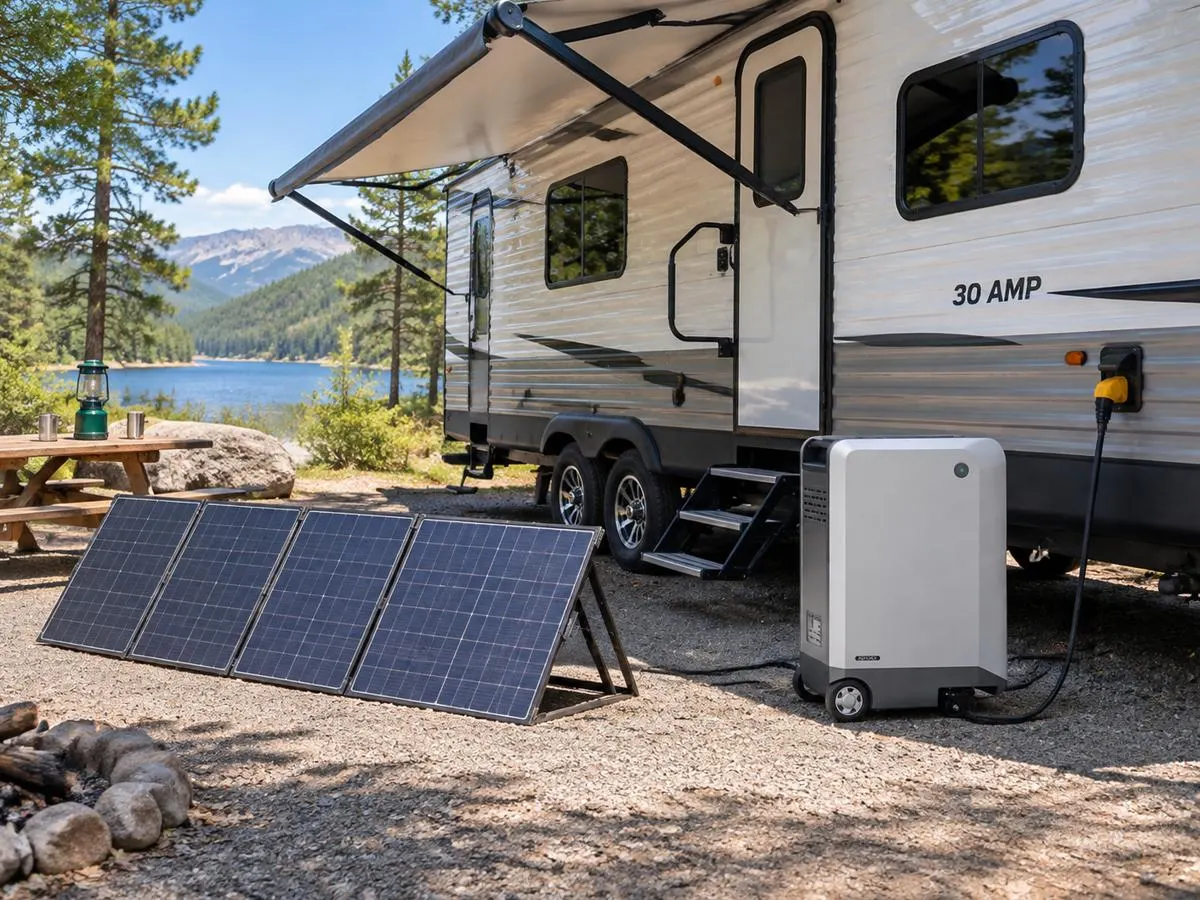
They can also be combined with solar panels. During the day, the battery can be charged using solar energy, and the stored power can be used at night or during peak electricity periods to reduce electricity costs.
| Scenario | Main Purpose | Typical Capacity |
| Backup Power | Keep essential loads running | 5-10kWh |
| Electricity Cost Reduction | Time-of-use optimization | 10-20kWh |
| Off-grid Living | Independent power supply | 30kWh+ |
| Solar Self-consumption | Store excess solar energy | Depends on PV size |
4.2 Commercial & Industrial ESS
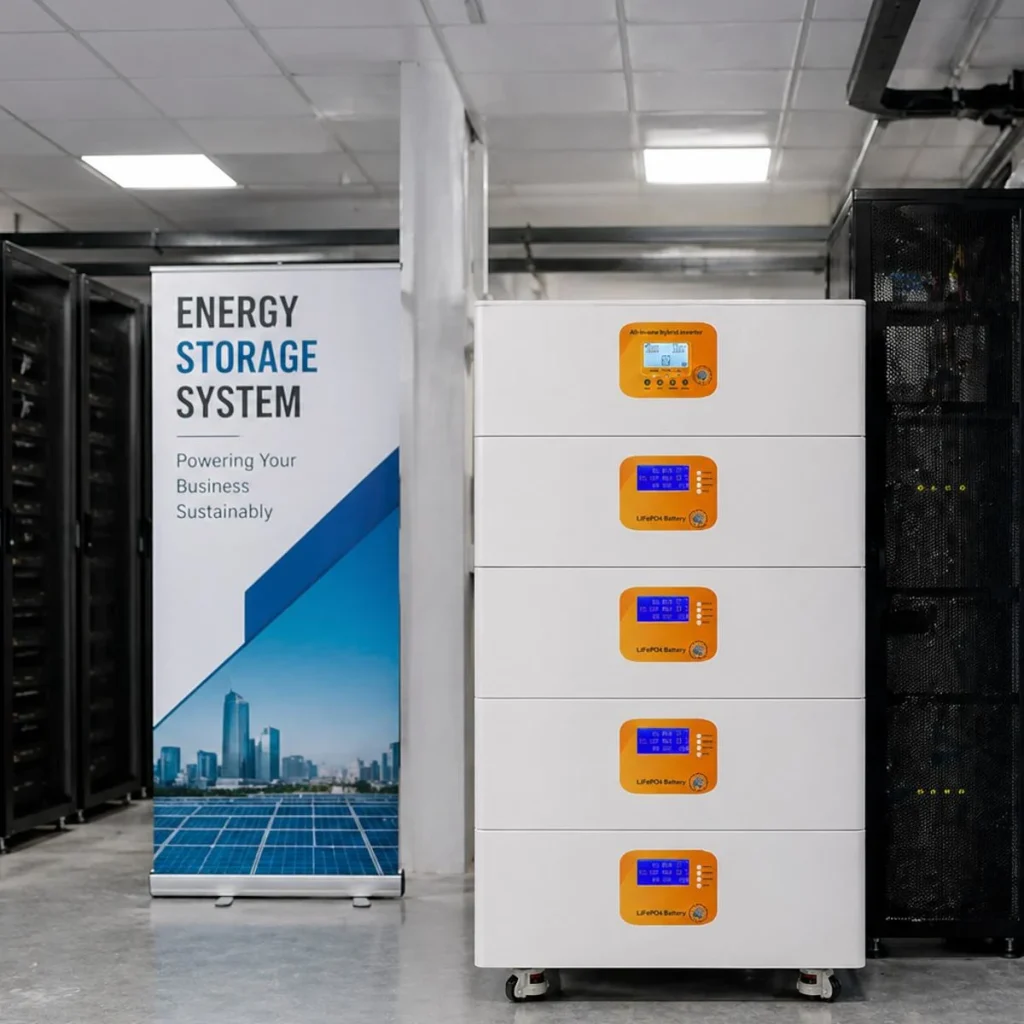
Businesses can use ESS systems to reduce electricity costs by storing energy from the grid during off-peak hours or converting solar energy into electricity, and then using the stored energy during peak periods. This strategy is known as peak shaving or energy arbitrage. It helps reduce demand charges and shifts energy consumption to lower-cost time periods.
A similar logic applies to mobility-focused energy storage: operators running delivery fleets or shared e-bikes increasingly rely on a commercial battery swap cabinet to keep batteries charged and rotated efficiently, avoiding downtime while still benefiting from off-peak charging economics.
4.3 Grid-Level ESS for Renewable Energy
At the grid level, energy storage systems can stabilize wind and solar power generation to support the integration of renewable energy into the grid. Since wind and solar power depend on natural resources, they are inherently intermittent. battery ESS can store electricity when generation is high and release it when generation is low. This process helps maintain grid frequency stability and delays the need for costly upgrades to transmission infrastructure.
5. Challenges and Future Trends of ESS Systems

Nothing is perfect, and although energy storage systems have many advantages, they still have certain limitations. For example, they require a relatively high initial investment. Battery performance also degrades over time, which is an unavoidable issue for all batteries. For instance, our Piforz energy storage series, products can still retain around 80% of their storage capacity after degradation. There are also safety concerns, so it is important to choose products that come with proper safety certifications.
However, energy storage technology is not standing still. The industry has been continuously exploring more durable and higher-performance electrode materials. Solid-state batteries are now considered the most promising next-generation technology. They replace the liquid electrolyte with a solid electrolyte, fundamentally eliminating flammability risks. At the same time, they offer higher energy density and longer cycle life. However, their cost is still relatively high, and large-scale mass production has not yet been achieved.
6. Why ESS Systems Matter More Than Ever
As the trend of renewable energy generation continues to rise, the demand for reliable and scalable ESS system is also increasing. Whether for residential use or large-scale commercial applications, energy storage systems play an important role in providing and storing stable electricity. In addition, the use of new energy helps reduce our dependence on fossil fuels and is more environmentally friendly.
In the near future, energy storage systems will no longer be just a technological option, but will become a fundamental component of modern energy systems.