
At an RV campground, power hookups may all look pretty similar, but you’ll quickly notice the difference when you try to plug in. If you own a 30-amp travel trailer, you need to choose a generator or portable power station based on the actual power demands of your 30-amp system. Go too big, and you’ll waste money. Go too small, and it won’t be able to handle your appliances.
One customer owned a 30-amp travel trailer and wanted to rely on solar power and a battery for two days because there were no available spots at the campground’s power hookups. After doing some research, he found that a 30-amp connection could supply up to 3,600W at 120V. Assuming his RV’s appliances wouldn’t exceed that total, he bought a portable power station rated at 2,000W. But on the first night, the power station went into overload protection when he ran the air conditioner and microwave at the same time. What went wrong? He confused the maximum power the connection could supply with the amount of power his RV would actually need. The air conditioner’s startup surge, the microwave’s brief high-power demand, and the refrigerator and lights running simultaneously could push the instantaneous load close to or even briefly above 3,600W. A 2,000W power station simply couldn’t handle that load with its continuous output.
Understanding 30 Amp RV Power and the TT-30 Connection
30 amps refers to the rated current of the power hookup at an RV campground. In North America, campground power hookups for RVs mainly come in two configurations: 30 amp and 50 amp. A 30-amp connection provides single-phase 120V AC power, with a maximum continuous current of 30 amps. In terms of power, that works out to: 120V × 30A = 3,600W
A 30-amp RV can draw up to 3,600W of continuous power from a campground power pedestal. This means the maximum power a portable power station can supply to the RV is also 3,600W.
The corresponding connector on an RV is called TT-30. It is a three-prong plug with a different shape from a standard household outlet, specifically designed to supply 30-amp, 120V power to RVs. The shore power cord on your RV has a TT-30 plug, and the campground power pedestal has a TT-30 receptacle. This connection means your RV can draw a maximum of 3,600W. If the power exceeds that limit, either the campground pedestal’s circuit breaker will trip or the RV’s electrical panel will activate its protection.
Can you connect a portable power station to the TT-30 inlet to power your RV? Yes, but there are two things to keep in mind. First, check whether the portable power station has a TT-30 outlet. Most standard AC outlets use household plug configurations rather than TT-30, so you’ll need a TT-30 adapter to make the connection. Second, the portable power station’s continuous output must be sufficient to handle your RV’s actual load. Otherwise, even if the connection fits, it won’t be able to power your appliances. As with the customer I mentioned earlier, his portable power station was rated at 2,000W. After connecting it with a TT-30 adapter, the power station went straight into overload protection when the RV’s air conditioner started because the startup surge exceeded its 2,000W capacity by a wide margin.
Also, having a TT-30 outlet does not mean your generator or power station can actually deliver 3,600W. The connector is simply the pathway for power; how much power can flow through it depends on the power source’s own output capacity. If you connect a 2,000W portable power station using a TT-30 adapter, the maximum power it can deliver to the RV is still 2,000W, not 3,600W. Conversely, if you connect a 4,000W generator to a TT-30 connection, the RV’s 30-amp circuit breaker will limit the input to 3,600W. Any additional power cannot be delivered to the RV. So when choosing a power source, focus on its actual continuous and peak output ratings and make sure they are compatible with the connection.
How Much Power Does a 30 Amp RV Solar Generator Need?
A 30-amp rating refers to the electrical connection, not the actual amount of power your RV consumes. While the connection can supply up to 3,600W, you won’t normally run every appliance at full power at the same time. To determine the right size solar generator, you need to consider which appliances will actually be running simultaneously and how long you want the power to last during an outage.
First, let’s look at the typical loads in a 30-amp RV. An air conditioner typically uses around 1,000W to 1,500W while running, a microwave uses about 1,000W but usually only for a few minutes, a refrigerator uses around 150W intermittently, lighting consumes a few dozen watts, and charging phones and laptops also takes a few dozen watts. The water pump only runs occasionally. In everyday use, one of the most common scenarios is having the air conditioner, refrigerator, lights, and charging devices running at the same time, with a combined load of approximately 1,500W to 1,800W. A microwave is a short-duration appliance. When you add it while heating food, the total load may reach around 2,500W, but it won’t stay that high for long.
So, in terms of continuous output, a solar generator rated at 2,000W to 3,000W can generally cover the everyday power needs of a 30-amp RV. The air conditioner’s startup surge is also a key consideration. A 1,200W air conditioner may require a momentary surge of 3,600W to 6,000W when starting. The generator’s peak output needs to be high enough to handle this demand. A continuous output of 2,000W to 3,000W and a peak output of 4,000W to 6,000W would be a reasonable range.
However, output power only determines whether the generator can run your appliances. How long it can keep them running depends on battery capacity. Assuming the air conditioner, refrigerator, and lights consume around 1,500W combined, the battery capacity needed to keep them running for 4 to 6 hours during an outage would be: 1,500W × 5h ÷ 0.85 ≈ 8,800Wh
That’s a substantial amount of energy. In practice, the air conditioner won’t run at full power continuously. Once the room reaches the set temperature, the compressor will cycle off, reducing average power consumption. Even so, keeping the system running all night would still require a battery capacity of more than 5,000Wh. If you only use the air conditioner for short periods during the day and rely on lighting and the refrigerator at night, a 2,000Wh to 3,000Wh battery could keep your basic loads running overnight.
How Many Solar Panels Do You Need for a 30 Amp RV?
The number of solar panels you need depends on how much electricity you use each day and how much of that energy you plan to replenish with solar power.
You can estimate daily solar production based on 4 to 5 peak sun hours and a system efficiency of 75%. A 200W panel can generate approximately 600 to 750Wh of usable electricity per day. Based on this estimate, if you don’t run the air conditioner and use 2 to 3kWh per day, you’ll need 400W to 600W of solar panels, or two to three 200W panels. If you run the air conditioner and use 6 to 8kWh per day, you’ll need 1,000W to 1,200W of solar panels, or five to six 200W panels. However, roof space on an RV is limited. If you can’t fit that many panels, the practical approach is to install the maximum solar capacity your roof can accommodate, use it to replenish part of your energy during the day, and rely on the vehicle’s alternator or a campground power hookup for the rest.
There’s another practical limitation: the RV’s solar charge controller and battery capacity affect how much of the panels’ output can actually be used. Even if you install more solar panels, the controller’s maximum input and the battery’s ability to accept a charge still set limits. Any excess electricity that exceeds those limits can’t be stored. That’s why the number of panels needs to be matched to the charge controller’s specifications and the battery capacity. More panels aren’t always better.
What to Look for in the Best Solar Generator for a 30 Amp RV
Continuous output power determines whether a generator can run your appliances reliably over an extended period. The typical daily load in a 30-amp RV is around 1,500W to 1,800W. That’s roughly what you’ll need when running the air conditioner, refrigerator, lights, and charging devices at the same time. So a continuous output of 2,000W to 3,000W is a reasonable starting point. Anything below that may struggle to run the air conditioner and refrigerator simultaneously.
Peak output power, on the other hand, determines whether the generator can handle the air conditioner’s startup surge. When choosing a unit, its peak output should be at least 1.2 times the air conditioner’s startup power. A range of 4,000W to 6,000W is a relatively safe choice.
Battery capacity is just as important. As calculated earlier, running the air conditioner, refrigerator, and lights at a combined load of around 1,500W for 4 to 5 hours requires a battery capacity of more than 5,000Wh. If you only need to keep the refrigerator, lights, and charging devices running overnight, 2,000Wh to 3,000Wh should be enough. Before choosing a unit, think about exactly which appliances you want to run during an outage and for how long, then work backward to determine the battery capacity you need.
If you plan to recharge your generator with solar power, check its maximum solar input and the specifications of its charge controller. The total wattage of your panels must not exceed the input limit, and the voltage of the panels connected in series must stay within the controller’s permitted range. A 30-amp RV has limited roof space, so you usually can’t fit too many panels. There’s no need to pursue an especially high solar input rating. Just make sure it matches the number of panels you can actually install. What matters is how much energy you can replenish during the day. If your daily consumption is 6 to 8kWh, a setup combining solar panels with a portable power station might realistically replenish 3 to 4kWh per day, with the rest coming from the vehicle’s alternator or a campground power hookup.
A 30-amp RV uses a TT-30 shore power connection. The AC outlets on most generators and power stations are standard household outlets, so you’ll need a TT-30 adapter to connect them. Before buying a power source, also check whether the adapter is included or available for separate purchase.
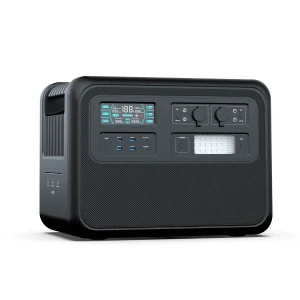
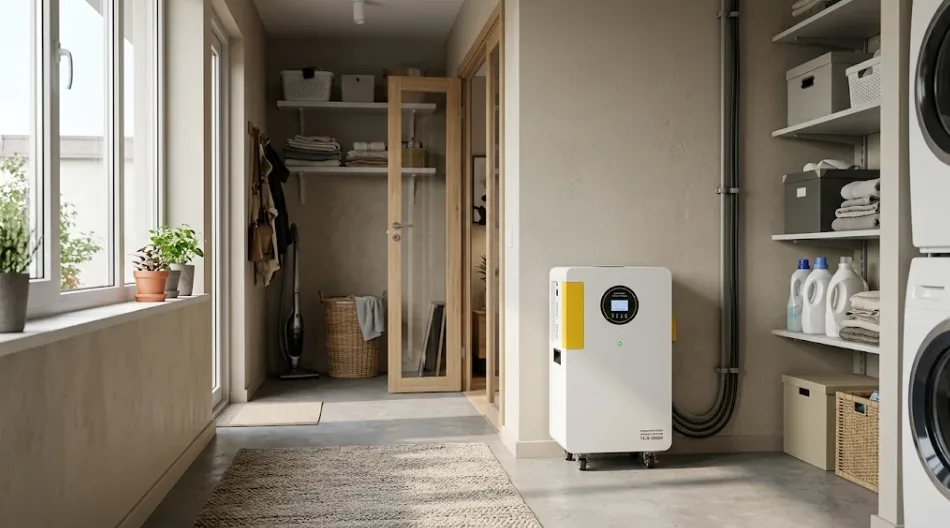
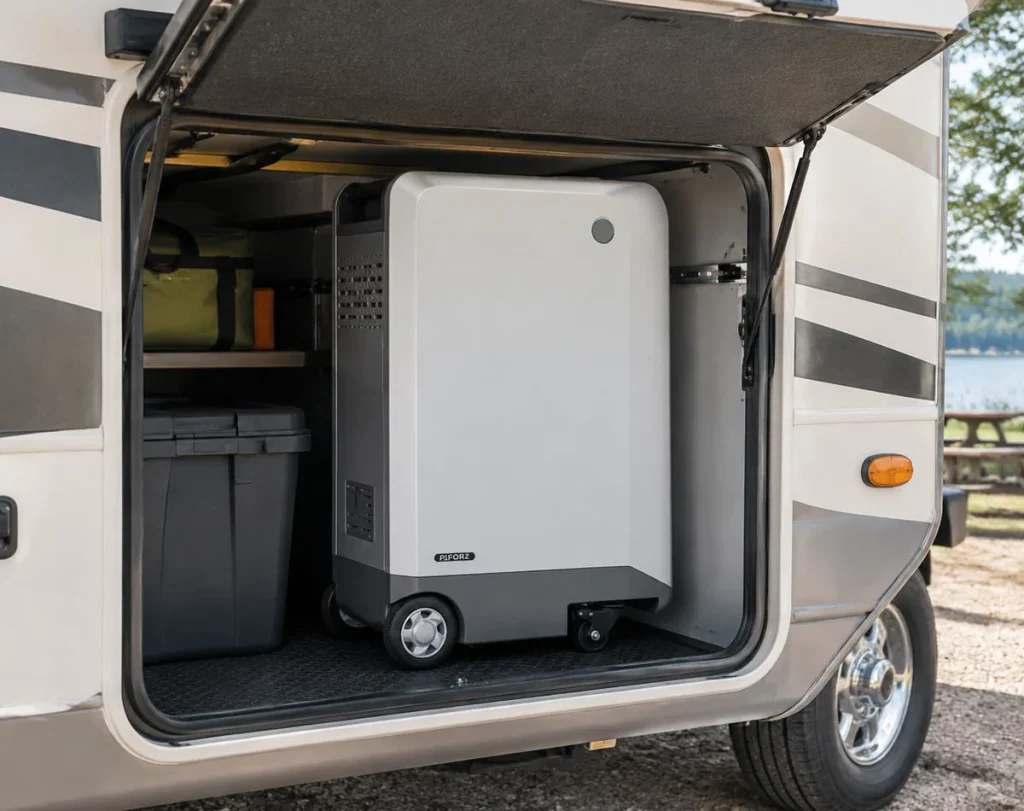
Generators designed for 30-amp RVs with continuous outputs of 2,000W to 3,000W typically weigh between 20kg and 30kg. If you plan to keep the generator inside your RV and rarely move it, weight may be less of a concern. But if you need to carry it from your vehicle to the campsite or move it between different spots, a model with wheels and a handle will be much easier to maneuver.
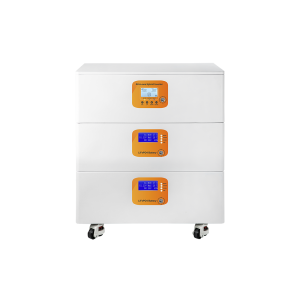
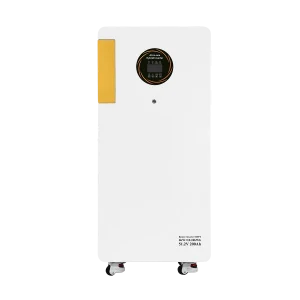
The customer mentioned at the beginning eventually switched to the PT3650S. With a rated output of 3,600W and a peak output of 8,000W, it can handle the air conditioner’s startup surge. Its 5,200Wh battery can keep the air conditioner, refrigerator, and lights running for four to five hours. If you only need to power the refrigerator, lights, and charging devices overnight, it has enough capacity for that, too. The unit also comes with wheels, making it much easier to move from the vehicle to the campsite or between the parking spot and the RV than a portable unit you have to carry by hand. Its three key specifications match the customer’s needs in the exact situation where his previous power station overloaded when he ran the air conditioner and microwave at the same time.
When choosing a solar generator for a 30-amp RV, the key is not to focus solely on the 30-amp rating of the connection. That rating is just a starting point. It tells you how much power your RV can draw at most, but your actual choice depends on your list of appliances, your power usage habits, and what you want to keep running during an outage. Once you have these things figured out, it’s much easier to determine the right output power, battery capacity, and number of solar panels.