Every winter, the question our team hears most isn’t “Which battery should I buy?”—it’s “Will my gas furnace still work during a power outage?”
As a manufacturer that has specialized in home energy storage systems for several years, we understand the concern behind this question. Yes, your furnace burns natural gas, but its blower motor, control board, and ignition system all rely on electricity to operate.
In this article, our technical team explains everything you need to know about powering your furnace with a battery and keeping it running during a power outage. We’ll cover what size system you need, how to connect it safely, and the differences between the available backup solutions. Whether you’re planning to install an energy storage system or already have one in place, you’ll find this guide helpful.
Why Does a Furnace Stop Working During a Power Outage?
The reason is actually quite simple. Even though the furnace runs on natural gas, many of its key components still rely on electricity to operate.
- Blower fan: It pushes the heated air produced by combustion into different rooms in your home. Without power, the fan stops working, and warm air can’t circulate.
- Control board: This acts as the “brain” of the system. It receives signals from the thermostat, controls ignition timing, and regulates heat output.
- Electronic igniter: Most modern furnaces no longer use a standing pilot light. Instead, they rely on electric sparks or heating elements to ignite the gas. Without electricity, the furnace can’t even light, so no combustion can start.
- Safety sensors: These constantly monitor whether the flame is operating correctly. If something goes wrong, they immediately shut off the gas supply to prevent leaks. Without power, these safety systems also stop functioning.
Can a Backup Battery Power a Furnace During a Power Outage?
Yes, it definitely can—but there are important details about the furnace plug (which we’ll explain later) and the type of backup battery system you use.
You cannot simply plug a furnace directly into a standalone battery. If you do that, the furnace may not only fail to run properly, but it could even damage the control board.
You might be wondering: why is that? This brings us to the difference between DC (direct current) and AC (alternating current).
Home furnaces run on AC power, while most batteries store energy as DC power. If you connect a furnace directly to a battery, the electrical types don’t match at all, and the system simply won’t function correctly.
What you actually need is not just a bare battery, but a complete energy storage system that includes a key component: an inverter. With an inverter, the system can convert DC electricity into AC power, allowing it to properly run the furnace.
Here’s an important point:
Not all inverters are suitable. Furnaces are very sensitive to power quality, especially the control board. If you use a backup system with a “square wave” or “modified sine wave” inverter, the power output can be unstable or choppy. This may cause the control board to malfunction or even get damaged.
A pure sine wave inverter, on the other hand, produces smooth, grid-quality electricity that closely matches what you get from the utility grid. For a furnace, this is the only safe and reliable option.
So when choosing a backup battery for furnace backup power, you must make sure it comes with a pure sine wave inverter system.
How Big Should a Backup Battery Be for a Furnace?
So what size energy storage system do you actually need to power your home furnace? If you choose a system that’s too small, it may not be able to run the furnace. If you go too big, it can become unnecessarily expensive. This is a common question for almost anyone considering a home backup power system.
Let’s walk through how to choose the right backup battery for your furnace step by step.
Step 1: Calculate your furnace’s starting power
Inside your furnace, the blower motor is the biggest power consumer. Its startup (surge) power is typically 2–3 times its normal running power. For example, if your furnace normally runs at 600W, it may require as much as 1,800W for a split second when it starts.
That’s why the peak output power of the backup battery system you choose must exceed your furnace’s startup power. Otherwise, the battery won’t be able to start the furnace during a power outage.
This is also why we, as a manufacturer, always emphasize the importance of peak power. Some energy storage systems on the market advertise impressive power ratings, but those figures often refer to continuous output, not peak output. If the system can’t handle the startup surge, the furnace motor simply won’t start.
So when you’re shopping for a backup battery system, make sure you check the peak power specification and ensure it’s comfortably higher than your furnace’s startup power. That’s the safest way to ensure reliable operation during an outage.
Step 2: Calculate the continuous running power
Once the motor starts, it switches into a stable “cruising” state, and power consumption becomes much more consistent. This is called the continuous running power.
You can check your furnace nameplate or manual for the voltage and maximum current, then use this formula:
Power = Voltage × Current
In some cases, manufacturers directly list the running wattage, which makes this step even easier—you can simply use the stated value.
Step 3: Calculate the required battery capacity
Now you need to estimate how long your backup battery can keep the furnace running during an outage. You can use this formula:
Battery capacity = Power × Time ÷ efficiency factor (0.85)
The 0.85 efficiency factor accounts for energy losses during discharge, mainly caused by the inverter. When DC power is converted into AC power, about 15% of energy is lost as heat during the conversion process.
Taking My Home as an Example:
For my own home, my heating furnace is rated at 600W, and I want it to run through the night during a power outage (about 10 hours) so I don’t end up freezing.
Running power: 600W
Starting power: estimated at 3×, so around 1800W, meaning my battery system must have a peak output higher than 1800W.
Battery capacity calculation:
600W × 10h ÷ 0.85 ≈ 7059 Wh (about 7 kWh)
If you’re using a LiFePO4 (lithium iron phosphate) battery, you can safely use about 80%–90% of its capacity, so choosing a system around 7500Wh would be a solid and reliable option.
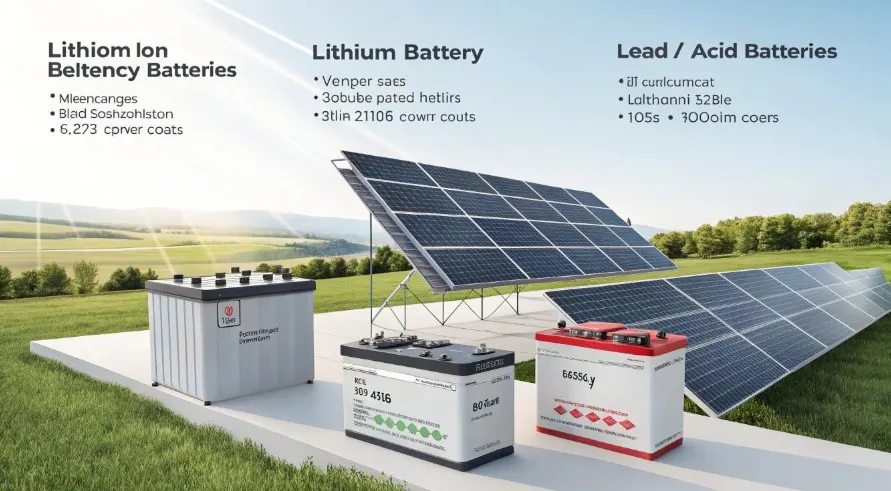
However, if you choose a cheaper lead-acid battery, you can typically only use about 50% of its rated capacity. In that case, you would need a much larger system—around 14,000Wh or more—otherwise the battery would drain very quickly.
While we’re on the subject, it’s also worth mentioning why we, as a manufacturer, insist on using LiFePO4 battery cells.
Based on the calculation above, you’ll need roughly 7 kWh of usable energy. At this point, you might be thinking: There are cheaper lead-acid batteries on the market, or even used battery packs. Wouldn’t those save me money?
My honest advice is: don’t cut corners here.
LiFePO4 batteries offer two major advantages:
First, they’re built to last.
A LiFePO4 battery typically delivers more than 3,000 charge cycles, which means it can easily last eight to nine years under normal use. Lead-acid batteries, on the other hand, often need to be replaced after just two or three years. In the long run, they usually end up costing more.
Second, they provide much deeper usable capacity.
A 10 kWh LiFePO4 battery can comfortably deliver 8–9 kWh of usable energy. A lead-acid battery, however, can typically use only about half of its rated capacity before excessive discharge starts shortening its lifespan.
That means if you choose lead-acid batteries, you’ll need to buy roughly twice the capacity to get the same usable energy. The system becomes much larger, much heavier, and ultimately far less cost-effective.
Important note:
These calculations assume the backup battery is only powering the furnace. In most homes, however, other appliances also need power during an outage. So when choosing your system size, you must also take the energy consumption of those additional devices into account.
Comparison of 3 Backup Power Solutions
I put together a simple table to roughly compare the advantages, disadvantages, and ideal use cases of three different home backup power options:
| Solution | Components | Advantages | Disadvantages | Suitable Scenarios |
| Portable power station | All-in-one unit (battery + inverter + charger), easy to carry | Plug-and-play, no emissions, silent, safe | Higher cost per unit of energy, limited runtime | Short-term outages (a few hours to one day) |
| Backup energy storage system | Stackable battery modules with built-in hybrid inverter, grid-tied and off-grid capable | Large capacity, scalable, supports solar charging, automatic switching, app monitoring | Higher installation cost, significant upfront investment | Long-term outages (several days), solar-equipped homes, whole-home critical load backup |
| Backup fuel generator | Gasoline/propane/diesel generator + transfer switch | High power output, can run as long as fuel is available | Noisy, requires ventilation and exhaust handling, regular maintenance needed | Extreme weather, remote areas, prolonged large-scale outages |
Portable Power Station
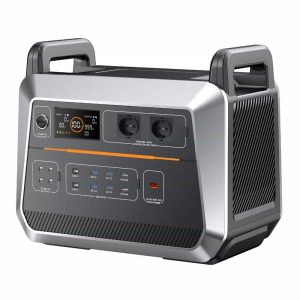
This is currently the most common entry-level solution chosen by regular households (such as the EcoFlow DELTA series, Jackery Explorer series, and Piforz PF series).
Most mid-to-high-end models offer a continuous output of around 1500W–2400W and a peak output of up to 4000W, which is more than enough to handle the startup surge of most gas furnaces.
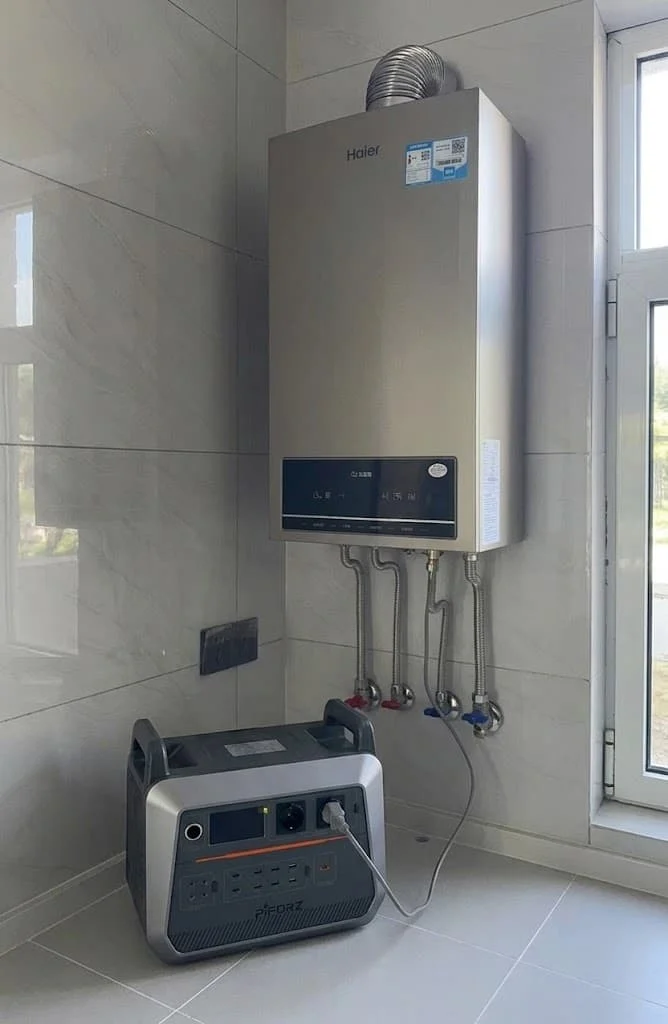
During a power outage, you simply plug the furnace directly into the AC outlet of the portable power station, and it will start working immediately.
However, the main limitation of portable power stations is their moderate battery capacity. For example, the Piforz PF2000 has a capacity of about 2000Wh, which means that under a 600W furnace load, it can only keep the system running for roughly 2–3 hours.
Because of this, this solution is best suited for areas where power outages are rare and usually only last a few hours. It works very well as an emergency backup, but it is not designed for long-duration outages.
Backup Energy Storage System
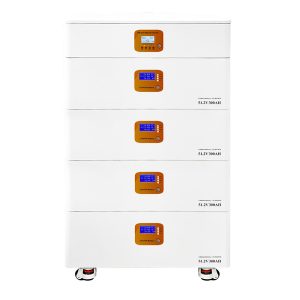
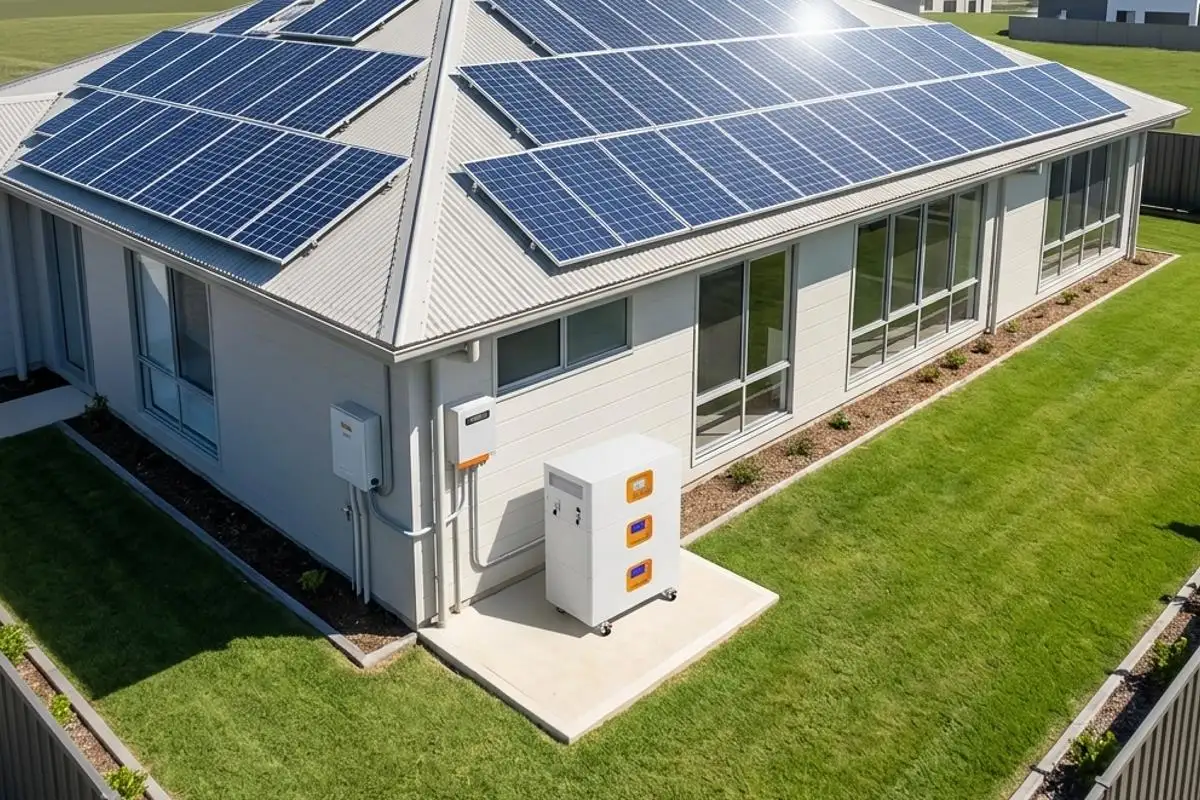
This type of system is essentially a household-level power appliance. It integrates a LiFePO4 battery, a hybrid inverter, and a battery management system (BMS) into one unit.
It can be connected simultaneously to the utility grid (and solar panels if available) and your home appliances. When a power outage occurs, it can switch from grid power to battery power in just milliseconds, so fast that you won’t even notice a flicker in the lights.
There are two main types of energy storage systems on the market based on installation method:
1. Fixed installation systems
Systems like Tesla Powerwall 3 and Enphase IQ Battery fall into this category. These are considered a “permanent home upgrade.”
They must be installed by a licensed electrician, mounted on a wall, and usually require approval from the local utility company as well as fire safety inspections.
The advantage is large capacity and expandability through stacking multiple units. However, once installed, they are not portable—you can’t take them with you when you move. The upfront cost is also higher, and the approval process can take time.
2. Plug-and-play systems
At this point, you might be wondering: is there a storage system that offers large capacity without wall drilling, electrical panel modifications, or long approval processes?
Yes, there is.
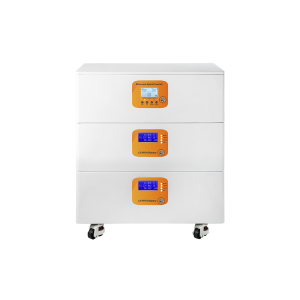
For example, systems like the Piforz ESS series fall into this category. They offer capacities ranging from 10 kWh to 60 kWh, which is more than enough to run a home furnace without any issue.
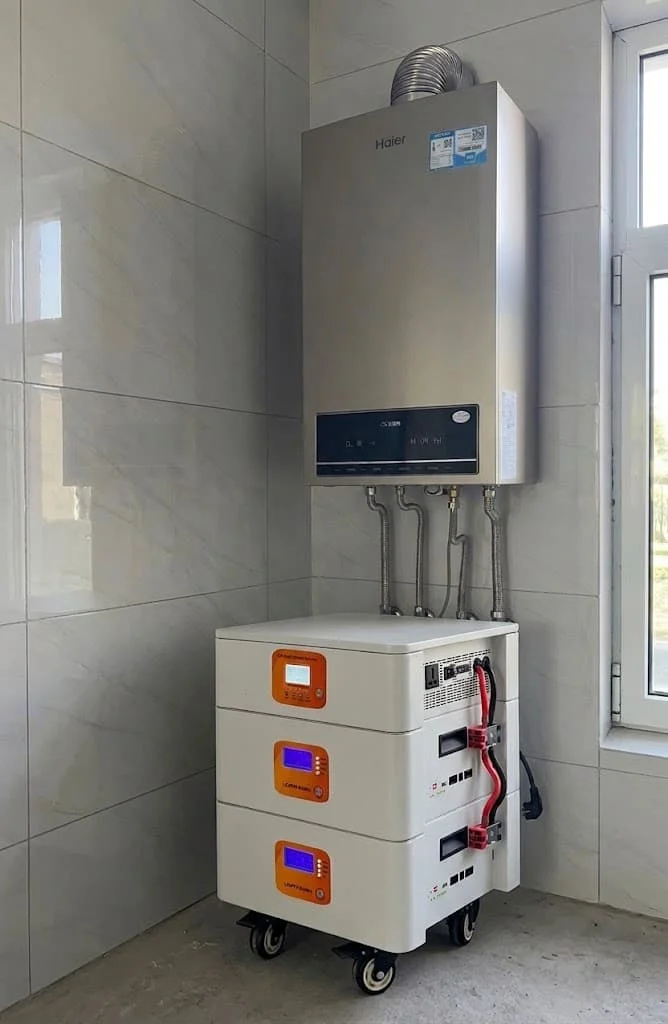
I personally chose the 15 kWh entry-level model. My thinking was simple: its design is very practical. It’s a standalone cabinet with wheels or floor placement, integrating the battery, inverter, and BMS inside. As my energy needs grow in the future, I can simply add more battery modules to expand capacity.
I placed it next to a wall at home, and it doesn’t take up much space. During a power outage, I just plug the furnace into the AC output on the unit, and it works immediately.
However, compared to fixed installation systems, it does have some limitations. If you want to power the entire house (furnace, refrigerator, air conditioner, etc.), you may need extension wiring or an electrician to install a sub-panel to distribute loads properly.
In a power outage, you may also need to manually plug the furnace into the unit, or keep it plugged into a wall outlet while using the system in bypass mode.
Overall, this solution is best suited for people who don’t want permits, don’t want wall modifications, and don’t want to spend heavily on electrical contractors—but still find portable power stations too small to last through the night.
For most users (myself included), it’s a very practical and balanced option.
Backup Fuel Generator
This option doesn’t rely on batteries at all. Instead, it generates electricity by burning fuel to power your furnace.
In practice, using a fuel generator is relatively inconvenient—at least that’s my personal view.
When you need it, you have to move it outdoors, start it manually with a recoil pull cord or an electric starter, connect it to your home electrical panel using heavy-duty cables, and then switch over the transfer switch by hand.
The advantage is simple: as long as you have fuel, it can keep generating electricity and continuously power your furnace and other home appliances.
However, the downsides are also significant. It is very noisy and produces carbon monoxide, so it must be operated outdoors and kept at a safe distance from the house. It also requires regular maintenance and periodic test runs every month to ensure reliability.
This type of solution is mainly suitable for rural or remote areas, places with long-duration power outages, or households that need to run high-power appliances for extended periods.
Safety Precautions When Using a Backup Battery to Power a Furnace
When you bring home a backup battery and are ready to use it to power your heating furnace, don’t rush into it. Take a moment to read these safety precautions first—always put safety first.
1. Never backfeed power into a wall outlet
Some people use a double-ended male-to-male extension cord to plug a backup power source into a wall outlet, attempting to send electricity backward through the home wiring system to power the furnace.
This is completely wrong and extremely dangerous.
When you feed power into a wall socket, electricity can flow back into the utility lines and step up in voltage through transformers, potentially energizing the external grid. A line that was supposed to be de-energized can suddenly become live again, carrying lethal voltage that could kill utility workers repairing the system.
This is not an exaggeration. According to the NIOSH FACE investigation reports, there was a fatal incident in Puerto Rico where a utility worker was electrocuted while servicing a supposedly de-energized line. The line had been unintentionally energized by backfeed from a portable generator used in a nearby home.
So always remember: the output from a backup power source must only be connected directly to appliances or a proper transfer system—never plugged into a wall outlet under any circumstances.
2. Backup Battery for Non-Plug-In Furnaces Requires a Transfer Switch
As I mentioned earlier, furnace plugs can be a bit tricky.
If your furnace is a newer model with a standard plug, then during a power outage you can simply unplug it from the wall and plug it directly into the backup energy storage system. In that case, the system will immediately supply power to the furnace.
However, if your furnace is not plug-in type and is instead hardwired into your home’s electrical system (meaning it is directly integrated into your household wiring), then the situation is different. In this case, you cannot simply plug it into a battery.
You will need to have a licensed electrician evaluate the setup and, if permitted by local regulations, install a transfer switch.
A transfer switch is essentially a physical safety interlock. It allows you to choose whether your furnace is powered by the utility grid or by the backup power source—but never both at the same time. This is the safest and most standard-compliant method.
Important note:
Electrical codes vary by country and region. Always consult a licensed electrician for proper assessment and installation. Do not attempt to modify or wire this system yourself. Safety must always come first.