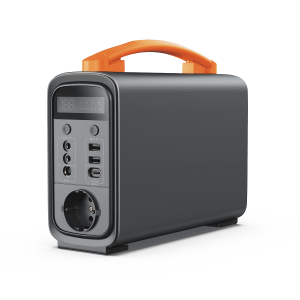

Did you just buy a portable power station and only know how to charge it from a wall outlet? There’s actually a lot more to it than that. A lot of people bring their portable power station home, plug it into the wall as the very first thing, and then never think about it again.
But here’s the thing: charging isn’t nearly as simple as you might think.
For example, a few days ago, one of my customers complained to me that he bought a 500W power station for camping and brought along a small 100W solar panel. He left it under the sun all day, got a few shades darker, and by nighttime, he still couldn’t even fully charge his phone. He asked me, frustrated: “Is this just another scam?”
I told him, “Man, it’s not a scam — you’re just charging it the wrong way!”
The reason I’m writing this article today is to show everyone how to properly charge a portable power station. Whether you want to save money on charging or you’re worried about using the wrong charging method and damaging the battery, you’ll find useful information in this article.
The 3 Most Common Ways to Charge a Portable Power Station
1. Charging from a Home Wall Outlet
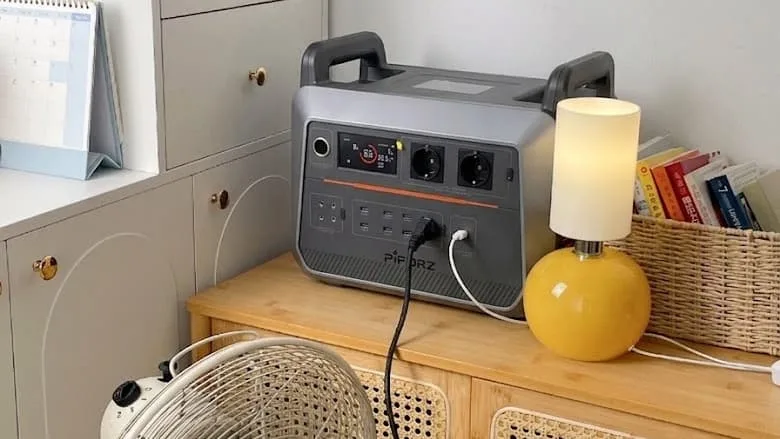
This is definitely the charging method most of us use every day. Portable power stations come with an AC charging adapter—simply plug it into a wall outlet at home and go about your day.
But there’s one very important factor here: charging speed.
Generally speaking, the industry standard for fully charging a 2000Wh portable power station is around 4–5 hours. Some brands, however, can fully charge the unit in as little as 1.5 hours with fast charging. The difference lies in the charger itself. Today, some brands (such as BLUETTI and Piforz) use GaN (gallium nitride) fast-charging technology, which delivers higher conversion efficiency and generates less heat. The PF2000, for example, reduces charging time to 1.5 hours thanks to its GaN charging technology (based on laboratory testing at an ambient temperature of 25°C / 77°F).
However, if you buy a cheap off-brand charger or use an incompatible charging cable, the charging speed can end up being as slow as a snail.
You might be wondering: will keeping it plugged in 24/7 damage the battery? Is there a fire risk? This is indeed an important safety concern we should think about in advance. I’ve previously written an article specifically addressing battery safety risks—if you’re interested, you can check it out for more details.
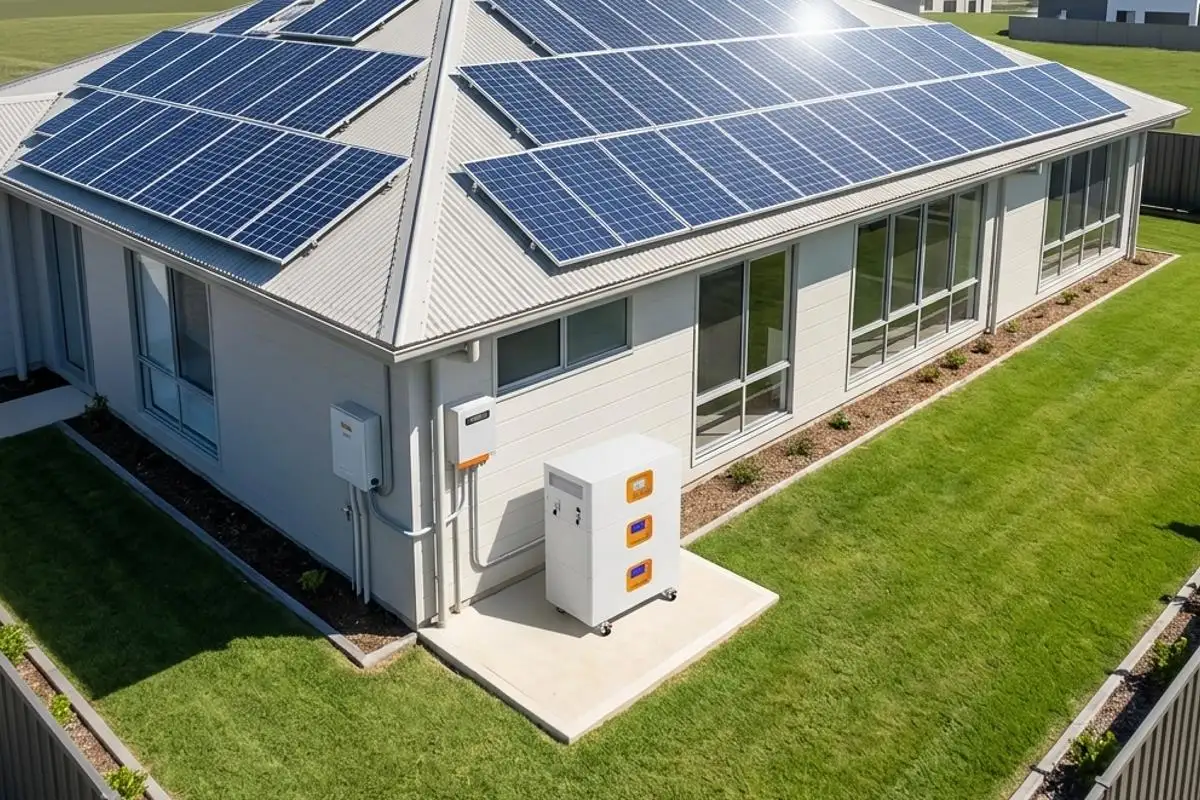
2. Charging with Solar Panels
Speaking of this, I have to be honest — a lot of people buy solar panels because they get sold on the idea of “free energy.” Then after bringing them home, they realize they work fine when the sun is out, but once there’s no sunlight, everything comes to a stop.
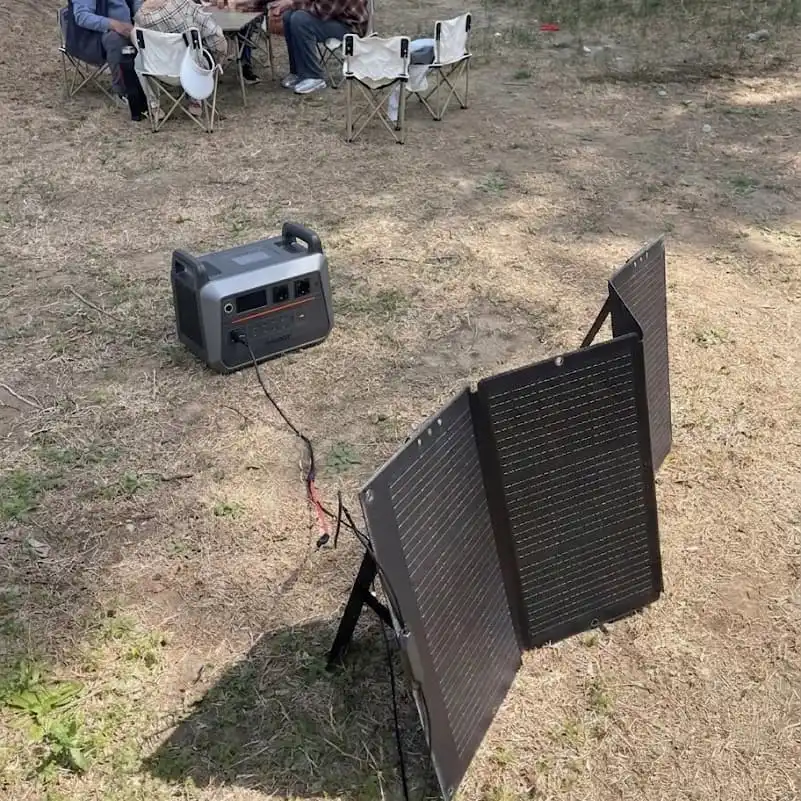
In reality, solar charging is the slowest way to charge a portable power station because it’s heavily affected by weather conditions. Sunlight intensity, panel angle, and other factors can all impact charging efficiency.
I actually tested this before: using a 400W solar panel to charge a 2000Wh outdoor power station took more than four hours to fully charge. So if you’re using a 100W panel to charge a 500Wh portable power station, you really might end up leaving it in the sun all day (and that’s still assuming the weather cooperates).
One customer asked me this question before: How to choose solar panel wattage for my station? My recommendation is that the solar panel’s wattage should ideally be around 1.5 to 2 times the portable power station’s charging power.
3. Charging from Your Car
This means charging your portable power station through your vehicle’s cigarette lighter socket. A lot of people think this is super convenient — especially for road trips, since you can keep charging while driving.
But there’s one thing you absolutely need to pay attention to: never charge your power station while the engine is off!
That’s because a portable power station can also be a pretty heavy power draw. When the car is turned off, the electricity coming from the cigarette lighter socket is still being supplied by the vehicle’s starter battery. In that case, your portable power station may end up fully charged, but your car won’t start afterward — and if that happens in the middle of nowhere, you’re in trouble.
So the correct way to do it is simple: always start the engine before charging.
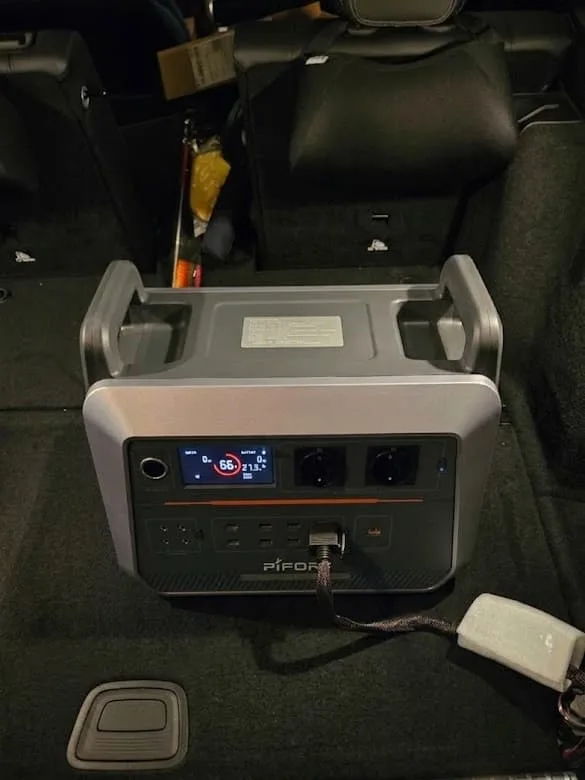
Real-World Comparison of Three Portable Power Station Charging Methods and How to Choose the Right One
Charging Time Comparison of Three Portable Power Station Brands
Charging time formula:
Charging time = Power station capacity / (charger power × conversion efficiency)
To better illustrate the charging time differences under different charging methods, I tested the following three portable power stations with the same capacity but from different brands:
| Comparison | Piforz PF2000 | BLUETTI AC200L | Jackery 2000 Pro |
| Battery Capacity | 2073Wh | 2048Wh | 2160Wh |
| Battery Cell Type | LiFePO4 | LiFePO4 | Lithium-ion |
| AC Charging Time (at 2200W input) | approx.1.5 hours | approx.1.7 hours (supports 2400W fast charging in 1.5 hours) | approx. 2 hours |
| Solar Charging | max 500W / approx. 4 hours | max 1200W / approx. 2 hours | max 6 × 200W / approx. 2.5 hours |
| 12V Car Charging Time | approx. 18 hours | approx. 18 hours | approx. 24 hours |
Summary:
Under 2200W AC wall charging conditions, the Piforz PF2000 has the shortest charging time, while the Jackery 2000 Pro is slightly slower. The BLUETTI AC200L, although capable of high-power input, still does not outperform the PF2000 under 2200W wall charging conditions.
In terms of solar charging, the PF2000 supports a maximum solar input of 500W, so charging time is relatively longer when using solar panels alone. In contrast, both the BLUETTI AC200L and Jackery 2000 Pro support up to 1200W solar input, significantly reducing charging time.
For vehicle charging, both the Piforz PF2000 and BLUETTI AC200L perform better than the Jackery 2000 Pro.
Choose the Right Charging Method Based on Your Use Case:
| Charging Method | Charging Speed | Cost | Best For You |
| Home Wall Outlet | Fastest | Electricity cost, cheapest (best used during off-peak electricity hours) | At home, before departure, emergency backup |
| Solar Charging | Slowest | Free charging, but requires higher upfront equipment cost | Camping, off-grid living, long-term outdoor use |
| Car Charging | Medium to slow | Fuel or electricity consumption, moderate cost | Road trips, long-distance travel |
In simple terms:
If you are at home or need to charge quickly → use a wall outlet.
If you are staying outdoors for a long time → use a solar panel, and choose the highest wattage that your portable power station can support.
If you are on a long road trip → use car charging, and always make sure the engine is running while charging.
Hybrid Charging and Pass-Through Charging in Portable Power Stations
First, let’s talk about “pass-through charging.” This means charging and discharging at the same time. But it does NOT mean that electricity is first stored in the portable power station and then released later to charge devices like a phone.
Instead, it means household power can bypass the internal battery of the portable power station and directly supply power to the connected devices through the unit. For example, when an AC-powered refrigerator is connected while the unit is plugged in, the current flows directly through the bypass circuit to power the fridge, while only the remaining available power is used to charge the battery.
It works just like a UPS (uninterruptible power supply). If a power outage suddenly happens, the battery immediately takes over, and none of the connected devices will be interrupted, allowing everything to keep running smoothly and safely.
Now let’s talk about “hybrid charging.” This is also a feature found in many high-end portable power stations today, which supports charging via both a home wall outlet and a solar panel at the same time.
I tested this before: the PF2000 takes about 1.5 hours to fully charge using AC power alone, and more than 4 hours using a single 400W solar panel. But when both are used together, it only takes about 1 hour to fully charge. After all, two methods are always faster than one!
However, you should note that not all brands of portable power stations support these two functions. Before purchasing, make sure to carefully check the specifications and read the manual to confirm before using them.
How Can You Charge to Protect the Battery?
This is also the question everyone cares about most: how long can a portable power station last, and what is the correct way to charge it? We need to break this down and discuss it in detail.
How Long Does a Portable Power Station Last?
This depends on the capacity of your portable power station and how many hours it can run on a full charge. For example, a 500Wh portable power station powering a 50W mini fridge, ignoring losses, can theoretically run for 10 hours.
How Many Years Can a Portable Power Station Last?
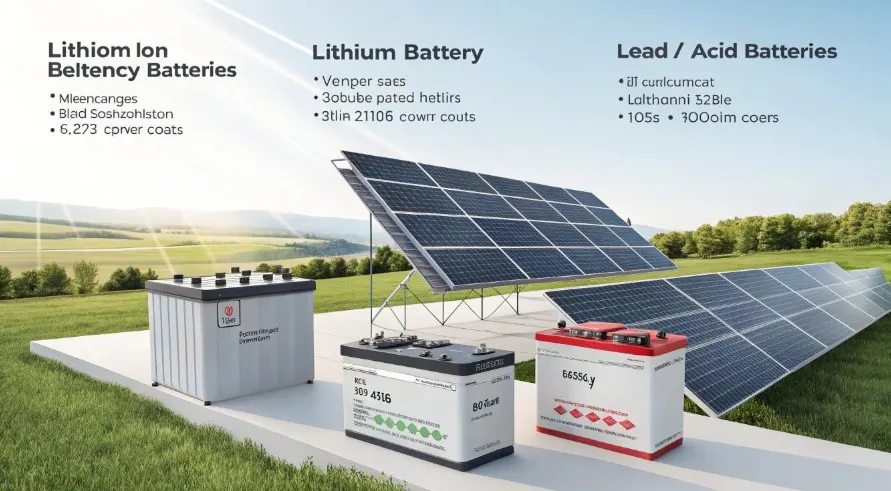
This is one of the most important things to pay attention to. Today, outdoor power stations mainly use two types of battery cells: ternary lithium and lithium iron phosphate, and their service lifespans differ significantly. Below is a cycle life curve comparison of ternary lithium cells and lithium iron phosphate cells:
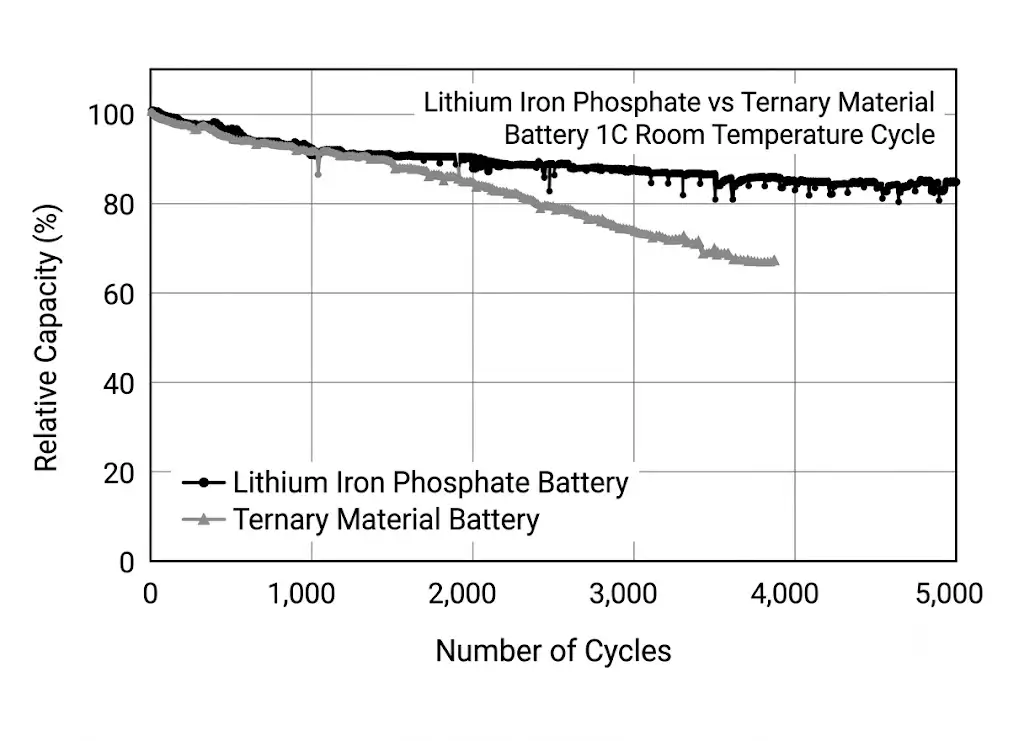
Source: Tao Zhijun et al., “Research on the Business Model of China’s Power Battery Recycling Industry”, China Galaxy Securities.
Compared with ternary lithium batteries, lithium iron phosphate (LiFePO4) batteries are more durable. For example, the PF2000 uses LiFePO4 cells with a cycle life of about 3,500 cycles. If charged and discharged once per day, this portable power station can last around 10 years.
The differences and comparisons between these two cell types will not be covered in detail here. If you would like to see more detailed comparison data, you can read my previous article, “What You Need to Know Before Choosing the Best Battery for a Solar System,” which includes usage comparisons of different products using these two battery types.
Do You Have Any of These Bad Charging Habits?
Using it until it drops to 0% and automatically shuts down before recharging.
At first, I didn’t know any better. My very first power station was used exactly like this—I thought it made sense to fully drain it before recharging. Later, after doing some research, I learned that lithium batteries have no memory effect, and both overcharging and over-discharging can significantly reduce their lifespan.
After that, I changed my habit and started topping it up when the battery dropped to around 20%–30%. As a result, after more than four years of use, the capacity was still about 82%. In contrast, a friend using the same model who often ran it down to shutdown before recharging saw the capacity drop to around 60% in less than two years. The difference is quite significant.
Now, most new portable power stations come with a BMS (Battery Management System). It’s recommended to start charging as soon as the BMS low-battery alert appears (usually around 20%). Compared with charging from 0%, this can effectively extend the cycle life by about 200 cycles.
Leaving it fully charged and then storing it without use for a long time.
The battery is most sensitive to “high-voltage full charge” and “low-voltage deep discharge.” Simply put, the higher the voltage, the more active the internal chemistry becomes, which speeds up aging. On the other hand, if the voltage is too low, the internal structure of the battery can suffer irreversible damage. This is exactly why, after I went back home for half a year and came back, my portable power station wouldn’t charge anymore. In the end, I had to spend several hundred dollars to have the manufacturer replace the battery cells. That was definitely a painful lesson learned.
So my recommendation is: if you plan not to use it for several months, it’s best to store the battery at around 60%–80% charge. After all, it’s similar to how you maintain a car—you don’t just leave it fully fueled or completely empty for long periods.
Charging immediately after exposure to high summer heat.
After being exposed to high temperatures and direct sunlight in summer, you should never charge your portable power station right away. High temperatures can directly cause permanent capacity degradation, and you’ll soon notice that the power station doesn’t perform as well as before. (It’s just like your phone—when it gets too hot, if you keep charging it while using it, you’ll quickly find the battery capacity shrinking.)
The best practice is to let the power station cool down first by placing it in a shaded, well-ventilated area. Allow it to return to a normal temperature naturally, and only start charging once it is no longer hot. This is the best way to protect your portable power station.
Charging below 0°C.
You should never charge your portable power station at temperatures below 0°C! In low-temperature environments, lithium batteries experience significantly slowed internal chemical reactions. If you force charging under these conditions, lithium can begin to deposit on the anode surface, forming what is known as “lithium dendrites.”
This is extremely dangerous. These dendrites grow like tiny needles and may eventually pierce the internal separator of the battery, leading to internal short circuits, overheating, swelling, and in severe cases, fire or even explosion.
That’s why reputable manufacturers always clearly specify that the charging temperature of lithium batteries must not be lower than 0°C.
Recommendations:
Don’t just listen to outdoor influencers telling you to buy a bunch of accessories. In the end, many of them end up collecting dust after just one use. Instead, you should first understand your real situation:
If you only go to the park on weekends occasionally: then just charge your portable power station at home using an AC wall outlet. There’s absolutely no need to buy a solar panel—you’ll probably just end up storing it in a corner unused.
If you live on the road full-time in an RV: then you definitely need high-wattage solar panels, and your power station should support fast AC charging plus dual-input charging (solar + AC), like the PF2000. This way, charging time can be cut nearly in half. Car charging is your main method, with solar as a supplement.
If you are preparing for home backup against power outages: fast charging is the top priority. For example, when a typhoon is approaching and a power outage warning is issued, you may only have one or two hours to prepare. In that case, you need a portable power station with fast AC charging that you can plug into a wall outlet at home.
If you are a camping enthusiast: prioritize a portable power station with lithium iron phosphate (LiFePO4) cells. They offer more cycle life and better safety.