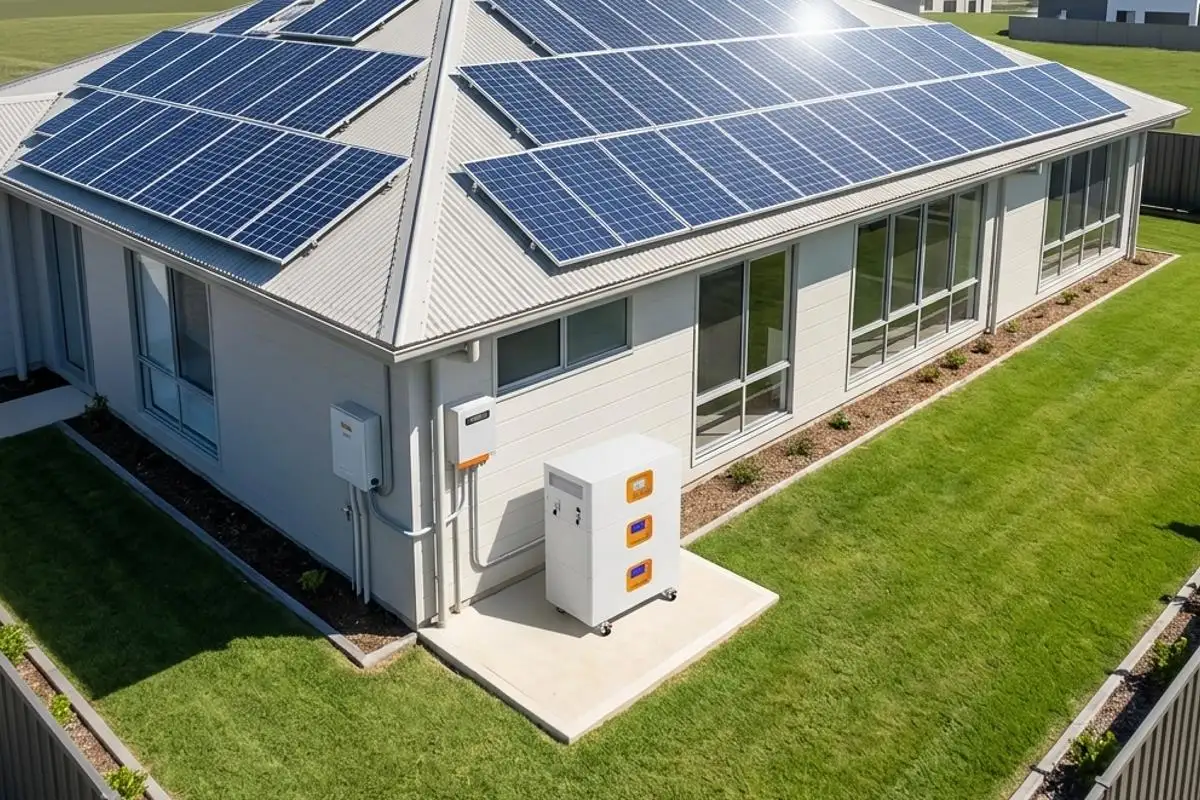

Whether you’re camping off-grid or living remotely, keeping food fresh without electricity isn’t a simple question. Whether a 200W solar panel can run a refrigerator seems like a straightforward yes-or-no, but there are actually a lot of hidden details behind it that we tend to overlook.
Can a 200W Solar Panel Really Run a Refrigerator?
Can a 200W panel really power a fridge? That’s not an easy question to answer. Why? Because one factor is fixed—the 200W panel—but another critical variable isn’t: the refrigerator itself. Fridges come in many types, including portable 12V camping/car fridges, small single-door dorm-style mini fridges, and full-size standard household double-door refrigerators. If we’re talking about a 12V camping fridge, it’s generally fine. For a small dorm fridge, it might work only under exceptionally strong and consistent sunlight—otherwise, no. And a household double-door fridge? Absolutely not.
| Fridge Type | Typical Capacity | Daily Energy Consumption | Can a 200W Panel Run It? | Conditions |
| 12V camping/off-road fridge | 30L – 60L (1–2 cu.ft) | 300 – 600 Wh | Perfectly capable | Requires 300–500Wh+ battery storage for nighttime |
| AC dorm/compact mini fridge | 50L – 130L (1.7–4.5 cu.ft) | 600 – 1200 Wh | Barely / only on sunny days | Inverter standby loss is significant; needs supplemental charging on cloudy days |
| Full-size household refrigerator | 450L – 700L+ (16–25 cu.ft) | 1500 – 2500+ Wh | Cannot handle | Needs 600W–1000W+ solar array + 2kWh+ storage |
Why Can’t a 200W Solar Panel Run a Fridge on Its Own?
There’s another crucial premise here that many casual users—including myself in the past—tend to miss: all the “yes” answers assume the 200W panel is paired with a battery. A bare 200W panel alone can barely run any fridge at all. Here’s why:
- Startup surge kills it instantly: A fridge compressor draws a huge current spike at startup—typically 3–5 times its running current. A solar panel has no peak overload capability. Without a battery to supply that instantaneous surge current, the panel’s voltage collapses, the compressor can’t kick in, and the fridge throws an undervoltage error.
- Even a slight change in light trips it: A fridge needs uninterrupted power. But solar output is highly weather-dependent—a passing cloud or even a slight misalignment in panel angle can drop production drastically, sometimes down to 30W–50W. That kind of drop isn’t exaggerated; PV output is directly tied to irradiance. With constant up-and-down fluctuations, the fridge repeatedly goes through “power-off – restart – power-off” cycles, which can easily damage the compressor or control board.
- It won’t run at night: During the day it’s fine, but at night generation is zero—the fridge shuts off, and you lose 24-hour cold storage.
- Voltage mismatch can fry the device: A typical 200W solar panel has an open-circuit voltage around 18V–24V. If you plug it directly into a 12V-rated car fridge port, it’ll instantly destroy the fridge’s main board.
So, the solar panel essentially acts as a charger. The question “Can a 200W solar panel run a fridge?” really means “Can the total daily energy from a 200W panel fully charge a battery, so that battery has enough power to run the fridge for 24 hours?” Without the battery as a buffer, the panel alone cannot independently power the fridge.
The Power Math: Daily Solar Output vs. Refrigerator Consumption
Whether a 200W panel is enough for a fridge is essentially a math comparison: if the panel’s daily output is greater than the fridge’s daily consumption, then it works.
How Much Power You Actually Get from a 200W Panel
A 200W panel in real outdoor conditions typically delivers only around 150W–170W, not a full 200W. That’s because lab test conditions are strict: 1000W/m² irradiance, 25°C cell temperature, and perfectly perpendicular light. In real life, there are losses. Even if you could keep it perfectly perpendicular, silicon PV cells are heat-sensitive—on hot summer days, output drops about 0.35%–0.4% per degree above standard. Plus, the charge controller, cables, and connectors consume some energy as well.
Also, effective peak sun hours vary by region, but you can estimate using this formula:
Daily generation (Wh) = Panel rated power (W) × Effective sun hours × 75% (total system efficiency)
| Region | Representative State/City | Avg. Daily Peak Sun Hours (PSH) | 200W Panel Daily Output (at 75% efficiency) |
| High-irradiation (very sunny) | Arizona (Phoenix), Nevada (Las Vegas), New Mexico, SoCal (Los Angeles) | 5.5 – 6.5+ h | 825Wh – 975Wh |
| Sun Belt (fairly sunny) | Texas (Houston), Florida (Miami), Colorado (Denver), Georgia (Atlanta) | 4.5 – 5.5 h | 675Wh – 825Wh |
| Moderate-irradiation | Illinois (Chicago), New York (New York City), North Carolina (Raleigh), Kansas (Kansas City) | 3.5 – 4.5 h | 525Wh – 675Wh |
| Low-irradiation (cloudier) | Seattle, Portland, Minneapolis, Anchorage | 2.5 – 3.5 h | 375Wh – 525Wh |
This table is a simplified estimate based on the National Renewable Energy Laboratory’s PVWatts calculation logic, using Peak Sun Hours (PSH) combined with ~75% system efficiency to get typical generation ranges for different regions.
How Much a Refrigerator Really Uses in a Day
As mentioned earlier, forget about full-size household fridges. A 200W panel can only handle portable car/camping fridges. A dorm compact fridge might technically work but very inefficiently, so we’ll focus only on car/camping fridges here. If you’re curious about running a fridge off a portable power station during an outage, check out our related article.
These small portable fridges are actually more energy-efficient than you’d think. Even though their nameplate power might be around 45W–60W, they don’t run at full power continuously. If you’ve watched your home fridge, you know the compressor cycles off or goes into variable-frequency holding mode once the set temperature is reached—power draw drops significantly. So don’t just multiply rated power by time.
- For a precise estimate of a portable fridge’s 24‑hour real consumption, there are two common approaches: one is an engineering method called the duty cycle estimation, which is closest to real usage:
Daily consumption (Wh) = Compressor running power (W) × 24 hours × Duty cycle
- The other is to look at the manufacturer’s energy label, which usually provides official test data.
For example, take the Dometic CFX3 35. Its specs list an average power consumption of 0.98 Ah/h. Over 24 hours:
Amp-hours: 0.98 Ah × 24 ≈ 23.5 Ah (at 12V)
Watt-hours: 23.5 Ah × 12 V ≈ 282 Wh
Using the duty cycle method, as long as you’re not constantly opening the lid to toss in warm beer, under normal camping refrigeration mode, estimating with 50W × 24h × 25% = 300Wh/day for this CFX3 35 is perfectly accurate and reliable. Both of these are far more accurate than simply multiplying the device’s rated power by hours.
Finally, compare your calculated fridge consumption with the estimated daily output from the solar panel table above—you’ll see that 200W is more than enough for a typical portable fridge.
What You Actually Need to Make It Work
As we’ve stressed, a solar panel alone cannot directly power a fridge. To keep the fridge running reliably and allow the panel to supply it properly, you need a power source or battery in between.
Three common setups:
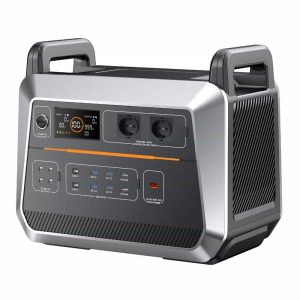
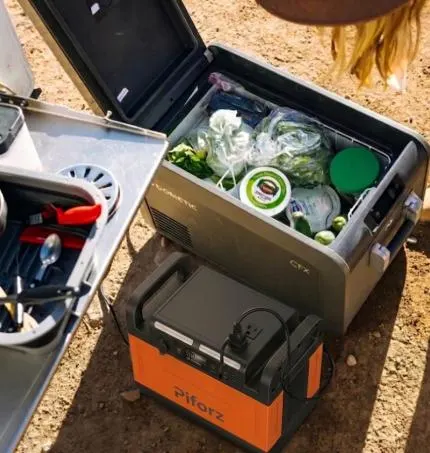
- Option 1: Solar panel + portable power station + ordinary car fridge
This is the most mainstream approach. Use the panel to charge the power station, then let the station supply stable DC power to the fridge. It’s safe, stable, and the station can also charge phones, laptops, drones, or camping lights.
- Option 2: Solar panel + fridge with built‑in battery
Some fridges, like the EcoFlow Glacier, have internal battery slots where you can insert a proprietary drop‑in lithium battery. That way the fridge powers itself without needing an external power station. With a solar panel, you can directly charge that built‑in battery. During the day, the panel powers the fridge and any excess goes into the internal battery. At night, when the panel stops producing, the fridge automatically switches to its internal battery to keep cooling.
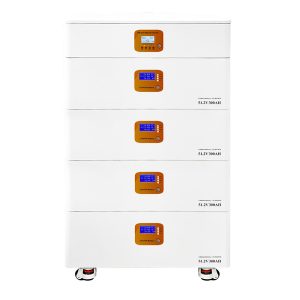
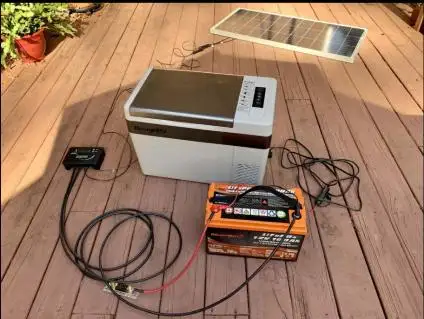
- Option 3: Solar panel + 12V LiFePO₄ / lead‑acid battery + MPPT controller
Compared to the first two, this option suits experienced DIYers who like tinkering. The panel charges a standalone battery via a controller, and the fridge draws from that battery. It’s lower‑cost and allows you to scale capacity as needed—ideal for long‑term stationary setups.
How Much Battery Do You Really Need?
How big a battery do you need to keep the fridge running 24/7?
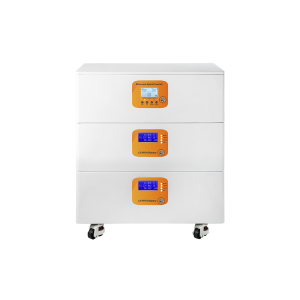
- For cooler/refrigerator mode(around 300–400 Wh/day), a 500Wh battery is sufficient.
- For freezer mode(roughly 500–1000 Wh/day), go with a battery between 500Wh and 1000Wh—that gives you a buffer for unexpected conditions.
What Happens in Real Life (Sun, Clouds, and Winter)
1. Full Sun Conditions
On a bright, sunny day, a 200W panel can easily put out 800Wh or even 1000Wh. That not only runs a portable compressor fridge with ease but also leaves extra power to charge the battery for nighttime, achieving true 24‑hour freedom.
To save a bit of juice, during peak midday sun when you have excess power, turn the fridge temperature a little lower or freeze a few bottles of water. Once the sun goes down, set it back to normal. The ice you made during the day and the chilled cabinet will help insulate the fridge, so the compressor cycles less often at night—saving you power.
2. Overcast & Rainy Days
In cloudy or stormy weather, solar output drops off a cliff—it barely contributes, so you’ll rely entirely on the battery. At that point, your best strategy is to open the fridge as little as possible to minimize cold air loss.
3. High Heat & Low Sun Extremes
In winter or high‑latitude regions, the sun angle is low, and effective daily sun hours may be less than 2.5 hours—even on clear days, you might not fully recharge what you used.
In summer, extreme heat is also problematic. When ambient temperatures exceed 35°C, the compressor works much harder, and power consumption can essentially double.
FAQ
What Size Solar Panel for a 12V DC Fridge?
Generally speaking, a 100W panel can work, but 200W is the sweet spot—not too big, not too small. These fridges typically consume 300–600 Wh/day. A 100W panel in perfect sun can generate 400–500Wh—just enough—but if it’s cloudy or hot, it won’t hold up. With 200W, you have margin: not only can you run the fridge, but you also have extra to charge the battery, giving you peace of mind.
Can a 300-Watt or 400-Watt Solar Panel Run a Refrigerator?
Absolutely—and with even more headroom than a 200W. For 12V DC fridges, 300–400W is better suited for long‑term off‑grid use or areas with frequent overcast, as it keeps the battery topped up even in poor light.
How Many Solar Panels to Run a Refrigerator and Freezer?
That depends on what you’re powering. For an off‑grid camping setup with a 12V fridge and a separate 12V freezer, together they consume about 800–1200Wh/day—recommend a 400W solar array + 200Ah LiFePO₄ battery.
For a full‑size household double‑door fridge plus an upright freezer—AC appliances that often draw 2000–3500Wh/day with huge startup surges—you’ll need 800–1200W+ of panels, at least a 3000Wh battery bank, and a 2000W+ pure sine wave inverter to handle it.
What Else Can You Run on a 200W Solar Panel?
On a sunny day, a 200W panel paired with a 100Ah lithium battery can output 800–1000Wh. After the fridge uses 350–450Wh, you’ll still have about 400–550Wh of surplus each day.
That leftover power is enough to simultaneously run these everyday small devices:
Phone charges 4–6 times (~60–90Wh) ,Laptop for 3–5 hours (~150–200Wh) ,LED camping lights for 6–8 hours (~30–50Wh) ,12V fan for 8–10 hours (~80–120Wh) ,A router running 24/7 (~100Wh).