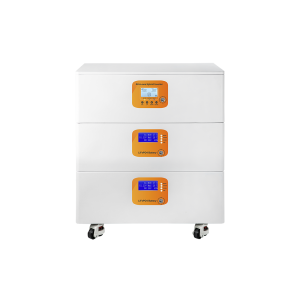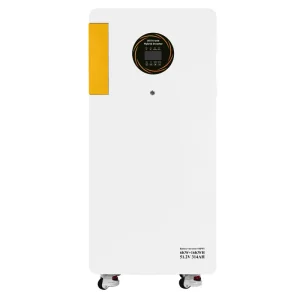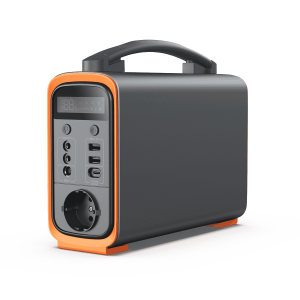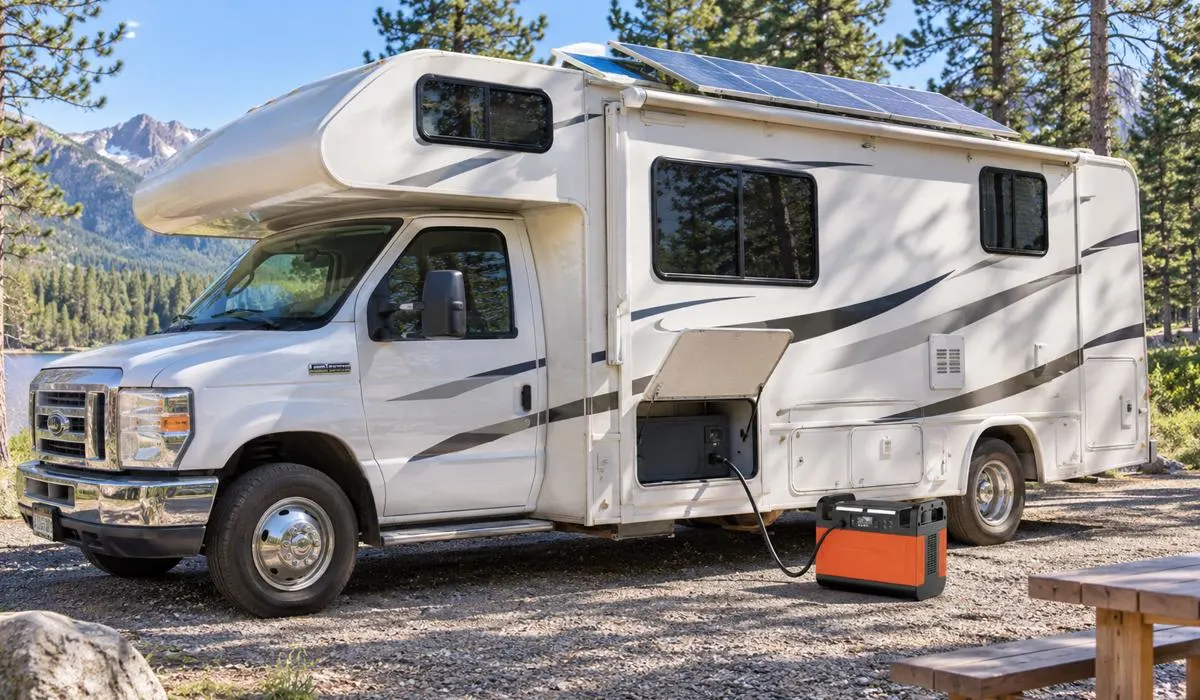

Anyone who knows the energy or energy storage industry has certainly heard of ESS and BESS. Although there is only one word of difference between the two, their scope is essentially different, and the work they do is different as well. They are not merely different names. So where exactly do they differ? Let us start by getting to know these two concepts.
Understanding ESS and BESS
First, let us take an initial look at these two systems.
What is ESS? What is it made of?
ESS itself means different things in different fields, but the most common meaning is still Energy Storage System. Its full name is Energy Storage System. It is a facility that can store electrical energy and release it again when needed. It is best at solving the mismatch between electricity production and use in time and space, thereby improving the efficiency and reliability of the entire power system.
A complete energy storage system is not just a simple energy storage device; it is a complex integrated engineering project, mainly composed of the following core parts:
1. Energy storage medium. This is the main body that actually stores energy. Electricity is a very special substance. Unlike coal or water, it cannot simply be piled up in a corner. Once electricity is generated, if it is not used immediately, it disappears. Therefore, if it is to be stored, it must be converted into another form. The most common form is storing electricity in batteries, and there are also many other forms such as flywheels, compressed air, and pumped hydro storage.
2. Underlying state management and control system. Generally, no matter what form is used to store electricity, there must be a monitoring + control system at the underlying level. Because energy storage equipment is a high-energy concentration site, this underlying system is their braking system + thermometer + throttle controller. Taking batteries as an example, their BMS system is the brain of the battery, monitoring battery status in real time and ensuring safety.
3. Energy management system. That is, the EMS system. It is the software dispatch center that decides when to charge and when to discharge. If the BMS is the brain of the battery, then it is the brain of the entire system, responsible for supervising and controlling the whole system.
4. Power conversion system. Because batteries store DC electricity, while the grid and the devices we use daily are AC, the two sides are completely incompatible. Therefore, an inverter must be used in the middle to convert and translate back and forth.
5. Auxiliary support system. In addition to the necessary internal components mentioned above, there must also be other supporting equipment, such as temperature control systems, fire suppression systems, electrical distribution cabinets, and safety monitoring equipment. Among them, the temperature control system is responsible for regulating the temperature inside the cabin and preventing batteries from overheating; the fire suppression system provides abnormal warning and automatic fire extinguishing functions; distribution and monitoring equipment ensure power distribution and operational safety. Although these facilities do not directly participate in charging and discharging, they also guarantee the safe and stable operation of the entire system.
What is BESS? What is it made of?
The full name of BESS is Battery Energy Storage System. It is an integrated facility that uses electrochemical batteries to store electrical energy and release it back to the grid or load when needed. Its typical functions include storing and discharging electricity during off-peak periods, peak shaving and valley filling, participating in grid frequency and voltage regulation, smoothing photovoltaic and wind power output, and under specific configurations it can also serve as emergency backup power and a microgrid support resource.
It is mainly composed of the following parts:
1. Battery system. This is the part responsible for actually storing electricity. Because the demand for electricity storage is very large, the capacity requirements for batteries are higher, and it is unlikely that a single battery like the small battery in a mobile phone would be enough. The batteries in a BESS are usually assembled like building blocks according to demand: the smallest cells are connected in series and parallel into modules, then assembled into battery racks, and finally into megawatt-hour-level battery stacks. At the same time, most manufacturers now use lithium iron phosphate batteries because they are relatively robust in terms of lifespan and safety.
2. Battery management system. Corresponding to the underlying monitoring system mentioned earlier, in a BESS, the BMS is specifically responsible for detecting battery status. It is responsible for real-time monitoring of the voltage, current, and temperature of each cell, estimating battery status, and providing timely protection in the event of overcharge, overdischarge, or overtemperature, safeguarding battery safety and lifespan.
3. Energy storage converter. This is also the translator mentioned earlier. Because batteries store DC electricity and the grid is AC, the two sides are incompatible, and the PCS must perform bidirectional conversion in the middle. It is responsible for rectifying AC electricity from the grid into DC electricity to charge the battery, or inverting the DC electricity from the battery into AC electricity and sending it back to the grid.
4. Energy management system. This is the brain of the entire BESS and the software dispatch center. By collecting battery status, grid demand, and electricity price signals, it decides when the system should charge and when it should discharge, thereby maximizing economic benefits or meeting grid dispatch requirements.
5. Thermal management system. Because batteries are very sensitive to temperature, the thermal management system is specifically responsible for cooling or heating the batteries to keep them within a suitable operating temperature range. Common types include air cooling and liquid cooling. Large systems now mostly use liquid cooling to prevent battery overheating and slow aging.
6. Auxiliary and fire safety systems. In addition to the core components above, there must also be supporting facilities such as distribution, monitoring, and fire suppression. Distribution is responsible for safely delivering and distributing electricity; monitoring is responsible for continuously watching for system abnormalities; fire suppression is responsible for alarming and automatically extinguishing fires at the first sign of a battery problem, preventing thermal runaway from spreading and involving the entire system.
Since their meanings are different, why does the industry often use ESS and BESS interchangeably?
At this point, you may have noticed that ESS and BESS are not only one letter apart in name; even most of their internal equipment is largely the same. This is because the two have an “included and including” relationship. ESS is the general term, and BESS is a specific branch of ESS. From the perspective of electrical architecture, for a small or medium-sized lithium battery energy storage system, whether it is hung at home as residential storage equipment, placed in a factory as commercial and industrial energy storage, or used as a mobile power source, its basic components cannot escape those few items. And precisely because of this, in actual work and the market, many people, for convenience in daily communication, simply refer to any system that can store electricity and supply power externally as ESS.
Of course, this is not the only simple reason. First, nearly all newly added energy storage projects in the past decade have been lithium batteries, and for convenience in daily communication, people directly use the more general ESS to refer to them. Second, the official names in many international safety standards are themselves ESS, so when manufacturers do certification and write manuals, they naturally follow the standards and call them that. Moreover, in commercial marketing, ESS sounds more accessible, and major companies such as Tesla also habitually use ESS as a general term, so the market follows suit—it is convenient and catchy.
However, it is fine to mix them up in daily life, but in specific technical and comparison scenarios, ESS and BESS must be strictly distinguished. For example, when comparing the cost of batteries with pumped hydro storage, or when dealing with battery-specific technical specifications such as cell thermal runaway and BMS, the industry must seriously write BESS in order to precisely refer to it and distinguish it from other forms of physical energy storage.
What scenarios are they generally used in respectively?
Although they are very closely related, in practical applications BESS and ESS are still more active in their own respective use scenarios.
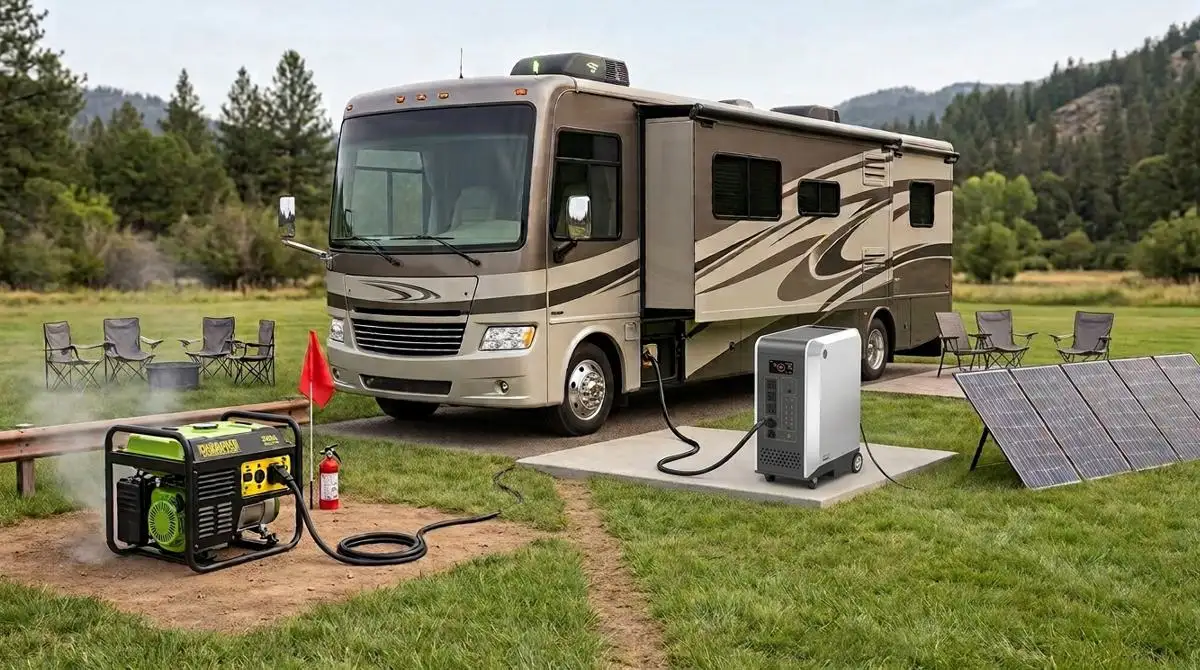
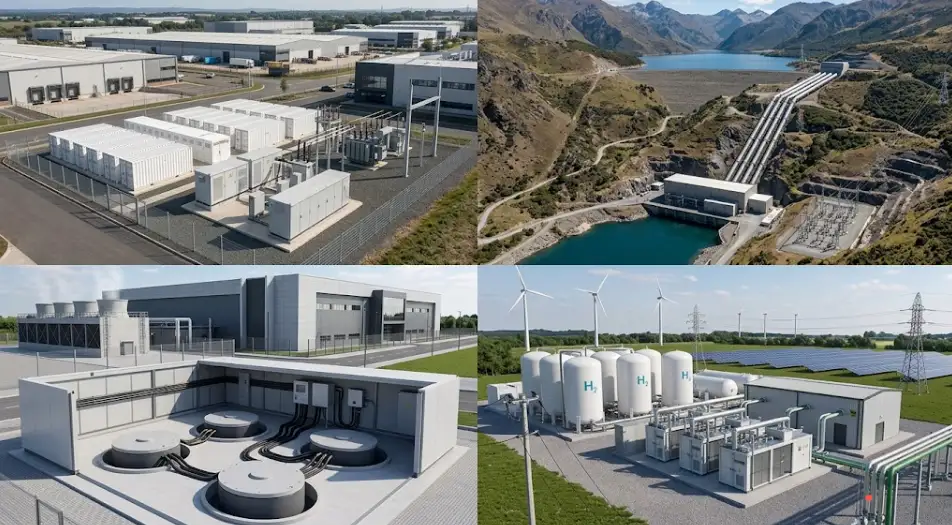
- BESS: The biggest advantage of battery energy storage equipment is that it can be moved at will and is very convenient. Its commonly used scenarios are mainly around our daily lives or as a “reservoir” for new energy.
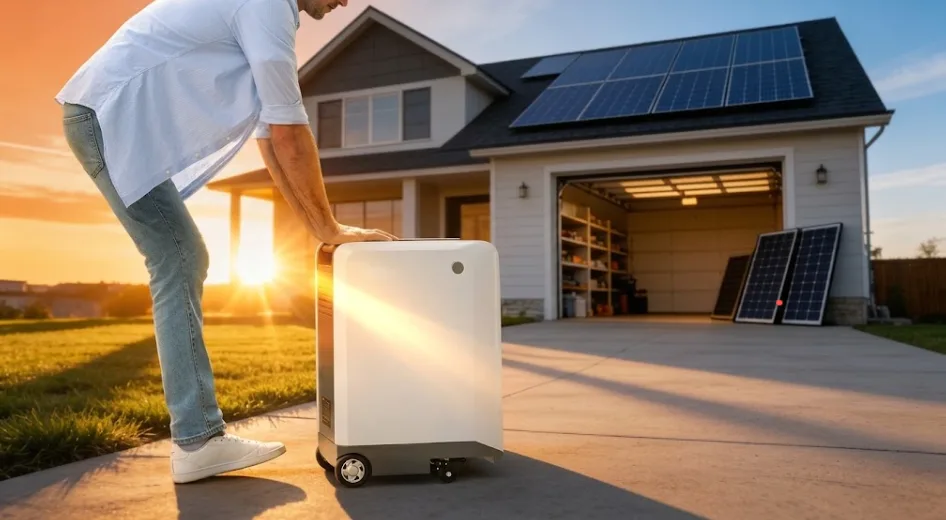
Because it is not terrain-sensitive, flexible to place, and highly safe, it can be placed in commercial and industrial parks and office buildings. It is usually placed in distribution rooms or open spaces in factory areas, charging at night when electricity prices are low and discharging during the day when prices are high to reduce electricity costs, while also serving as emergency backup power for precision equipment like computers. In homes and residential photovoltaic systems, it is often installed in garages or on exterior walls, storing surplus rooftop solar power during the day for use at night, and can also seamlessly switch to supply power during extreme weather outages.
It also has a place in new energy generation such as photovoltaic and wind power stations. Although solar and wind power can generate electricity, they are too dependent on the weather and are often unstable. Battery energy storage systems can act as a “buffer” here: when too much electricity is generated, BESS helps store it; when too little is generated or output is unstable, the battery energy storage system makes up for it. It is responsible for smoothing generation fluctuations, adjusting the time gap between electricity supply and demand, and providing grid stability support.
- ESS, on the other hand, is mostly used for large grid support or extreme physical environments.
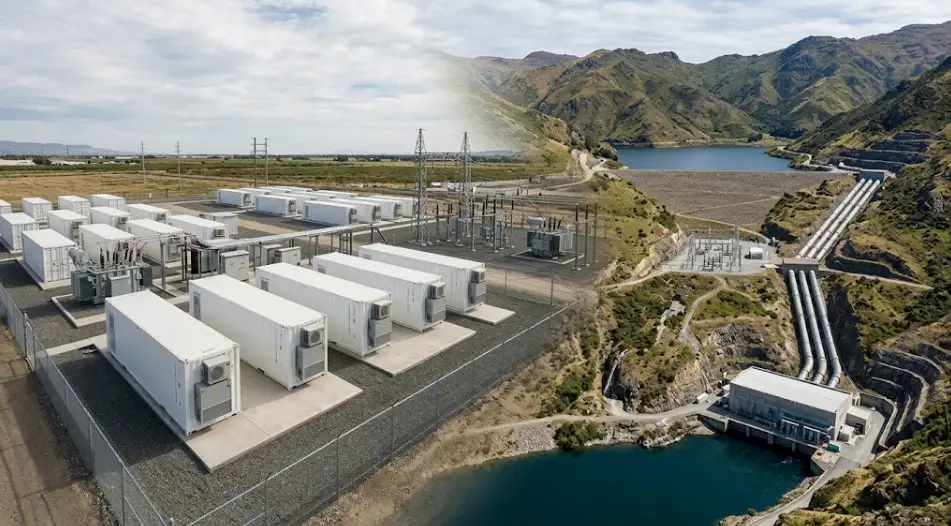
For example, pumped hydro storage and large compressed air systems must be built in places with mountains and water or underground salt caverns, where huge amounts of energy can be generated, and they can generate electricity for 6–10 hours at a time. They are mainly used for peak shaving in national large grids: when there is excess electricity, it is stored; when there is not enough, it is released.
There is also flywheel energy storage. It has no chemical reaction and relies purely on a super-heavy rotor physically spinning. Whenever needed, it can release electricity immediately without waiting even a second, with millisecond-level response speed. It is specially placed in subway stations, chip factories, and supercomputing centers to prevent voltage fluctuations or recover energy from subway braking.
Hydrogen energy storage uses surplus electricity to electrolyze water into hydrogen and store it. Its characteristic is that it can store energy for a particularly long time—across months or even quarters. It mainly solves the problem of insufficient wind and solar power in winter and can also provide feedstock for industry.
BESS vs. ESS: In-Depth Comparison of Core Pros and Cons
Many people have an illusion: BESS is so popular now, will those traditional ESS eventually be eliminated? The answer is: not at all.
Their relationship is like the relationship between a sports car and a heavy truck: similar but symbiotic. A sports car starts very fast and is suitable for weaving flexibly through the city; a heavy truck, although cumbersome and slow, is indispensable for long-haul heavy loads.
| Comparison item | Battery energy storage (BESS) | Traditional energy storage (such as pumped hydro) |
| Charge/discharge efficiency | 85% ~ 90% | About 70% ~ 75% |
| Response speed | Millisecond level (instant start) | A few minutes to over ten minutes |
| Equipment lifespan | 8 ~ 15 years | 30 ~ 50 years or more |
| Continuous discharge duration | Usually 1 ~ 4 hours | 8 hours to several days |
| Installation conditions | Completely unrestricted by location | Extremely picky (requires mountains, water, and elevation difference) |
| Construction period | A few months | Often 3 ~ 8 years |
- BESS’s core pros and cons
The biggest advantage of BESS is that it is fast and flexible. Batteries are purely chemical reactions and have no mechanical parts. Small grid fluctuations have little impact on ordinary households, but they are fatal to certain high-end factories, and only batteries can save the day. For example, in precision manufacturing plants and data centers, a one-second power outage can ruin machines, and at such times they can only rely on batteries. More importantly, it is not location-sensitive; it can be placed anywhere, and operation is convenient—connect the wires and it works. Not only can households use it, factories with open space can place it, and desert photovoltaic power stations can also place it. Moreover, it can be stacked according to demand; if more capacity is needed, more batteries can be purchased to add on.
Of course, it also has its own disadvantages. The first is the battery itself. Like mobile phone batteries, it ages. With high-intensity charging and discharging every day, capacity drops every year, and batteries generally need to be replaced after about 8–10 years. The second is fire risk. Once a lithium battery short-circuits and heats up, thermal runaway is very difficult to extinguish and can affect nearby batteries, so fire suppression and temperature control must now be strictly enforced. In addition, the capacity of battery storage must be bought with real money. The longer you need it to last, the more batteries you have to buy, and the more expensive it becomes. If it is too expensive, it is simply not worth it; it is most suitable for reducing electricity bills or serving as emergency power.
- ESS’s pros and cons
Now let us look at traditional energy storage, which is particularly large-scale. Take the relatively common pumped hydro storage station as an example. Its biggest advantages are low power generation cost and long service life. Pumped hydro storage works by pumping water to an upper reservoir at night when electricity is cheap, and releasing water to drive turbines to generate electricity during the day when electricity is expensive. Water does not age in capacity like batteries; once a dam is built, it can be used for fifty or sixty years or even a hundred years. Once built, when the cost is spread over the electricity generated each day, it is so cheap that batteries simply cannot compare. But even so, it is not something ordinary people can afford, and even ordinary enterprises cannot do it at all, because it is too heavy and too slow. It starts with finding a mountain with an elevation difference, with a reservoir above and a reservoir below, and then requires lengthy environmental assessment and geological exploration. Approval plus construction takes five or six years, and investment often runs into billions to tens of billions. For ordinary commercial and industrial enterprises, factory parks, or distributed photovoltaic systems, battery energy storage is still the fastest and most cost-effective.
Why do people often call to “Stop Project BESS”?
If you have searched for energy storage-related news on Google, or have been following the implementation of large new energy projects in Europe and the United States, you will often come across slogans like “Stop Project BESS.” In many local hearings, even residents will hold banners and strongly protest against container energy storage stations being built near their homes.
This makes many people wonder: isn’t battery energy storage green and environmentally friendly new energy? Why would people resist it so strongly?
It turns out that there are many pain points that consumers and project developers pay special attention to, but many equipment manufacturers have not responded accordingly, and some even avoid talking about them on their official websites. This has created such a situation. Residents’ protests mainly stem from the following three practical concerns:
- Fear of fire and toxicity: Ordinary residents or consumers are afraid that these large batteries will explode, because once a lithium battery catches fire, not only does the fire spread extremely quickly, but ordinary water cannot put it out at all. What is even more frightening is that when it burns, it also releases highly toxic smoke such as hydrogen fluoride (HF).
- Fear of low-frequency noise harassment: Batteries are afraid of heat, so huge air conditioners and fans need to be installed outside the containers for heat dissipation. These machines run all day, and late at night when everything is quiet, they emit continuous low-frequency noise, which is very torturous.
- Fear that houses and land will depreciate: No one wants dozens of large boxes that may catch fire and make noisy sounds suddenly erected next to their backyard or farmland. This not only makes houses hard to sell but also hard to rent out, because no one wants to live in such an environment for the long term.
So what about now? Has the problem been solved? Many equipment projects nowadays have been upgraded. Heat dissipation no longer uses large fans but fully enclosed water-cooled air conditioners, with extremely precise temperature control and very quiet operation that does not disturb residents. Gas sensor warning systems have also been installed, which can instantly cut off power and spray extinguishing agent when trace gas is detected tens of seconds before a fire, killing the fire in the cradle. Moreover, regular projects must also pass the extremely strict UL 9540A explosion-proof test, ensuring that even if one battery inside the container completely fails and burns, it will absolutely not trigger a cascading explosion.
Does Your Project Actually Need BESS or Another ESS?
1. Look at the size of the space. Battery energy storage is like a container, occupying little space. It can be placed in factory open space, basements, or even rooftops, and is very flexible. But if you want to build pumped hydro storage or compressed air storage, you need to see whether there are suitable mountains, reservoirs, or abandoned salt caverns. If you do not have such geographical conditions, no matter how much you invest, it will be useless.
2. Look at the electricity duration requirement. If you just want to cover a few seconds when the grid blinks, or charge and discharge for two or three hours a day to earn the price difference, then batteries are definitely the first choice. But if you need to discharge continuously for 10 hours, or even last for several days, then by all means do not use batteries, because the cost will be so high that you will doubt life itself. For such long-duration needs, you still have to rely on pumped hydro storage, compressed air, or hydrogen.
3. Look at the core application purpose. If you want to earn electricity price differences, control factory electricity peaks, support your own rooftop photovoltaic system, or do millisecond-level grid frequency regulation, batteries have the best cost-performance ratio. But if you want to smooth fluctuations across the entire large grid, or produce green hydrogen for heavy industry, then you need large-scale physical energy storage.
4. Look at investment and cycle. BESS can be built and connected to the grid in a few months, with relatively flexible initial investment, suitable for commercial and industrial users and private capital. But pumped hydro storage is typical large-scale infrastructure. Investment is basically billions to tens of billions, the construction period is as long as 5–8 years, and it must be led and arranged by the state or large grid companies.