
In recent years, RV travel has become increasingly popular, and the scene at campgrounds is changing too. In the past, the first thing RV owners did after pulling into a campsite was look for an electrical hookup and connect to shore power. Now, many owners unload a generator or a high-capacity portable power station from their storage compartment to power their air conditioner and other appliances.
The reasons are practical. Campground electrical hookups are limited, so waiting for an available spot is common. When parking overnight in remote areas, there are often no outlets available at all. In summer, temperatures inside an RV can climb above 40°C (104°F), making it uncomfortable to stay inside without air conditioning. As a result, more RV owners are considering bringing their own power equipment, with generators and portable power stations both becoming popular options.
What Types of Generators Can Power an RV Air Conditioner?
Portable fuel-powered generators are the most common power solution for RV air conditioners. They run on gasoline or propane. Their advantages include high power output, long runtimes, and relatively low prices. The drawbacks are high noise levels (typically above 70 decibels, roughly equivalent to a vacuum cleaner), exhaust emissions, the need for proper ventilation during operation, and regular maintenance. The first time I heard someone running one at a campground, I was three campsites away and still couldn’t sleep because of the noise. Many campgrounds also explicitly prohibit open-frame fuel-powered generators, especially at night. However, if you mainly park in remote areas rather than campgrounds, you can be more flexible about noise. What often puts people off is maintenance: a carburetor can easily develop problems if the generator sits unused over the winter.
Built-in RV generators are integrated into the vehicle at the factory or installed later. They draw fuel directly from the RV’s fuel tank and start at the push of a button. Like central air conditioning at home, they operate without requiring you to handle equipment or disturbing your neighbors with excessive noise. With outputs ranging from 3,500W to 8,000W, they can easily power multiple air conditioners. However, they are typically installed as part of the RV’s original setup, and they come at a cost: high purchase prices, heavy weight, and space requirements. Maintenance also requires professional service. Owners rarely run them at campgrounds at night, generally using them while driving or during the day to recharge batteries. If your RV doesn’t already have one, retrofitting a generator can be costly and complicated. It’s more of a built-in feature to consider when buying an RV than an option you’d actively choose on its own.
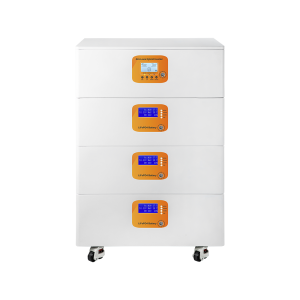
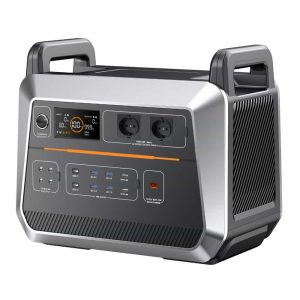
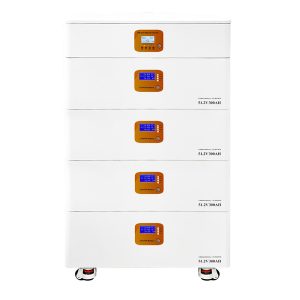
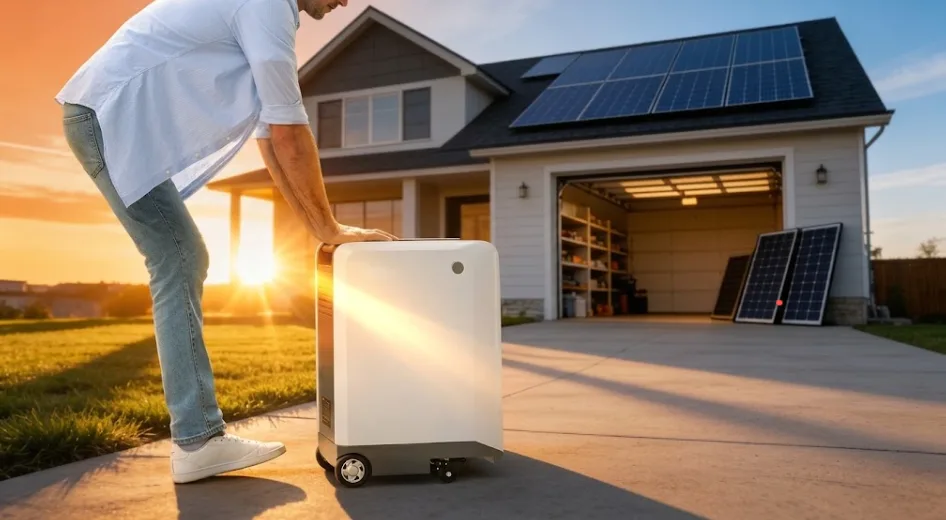
Portable power stations + solar panels have seen the fastest growth in use in recent years. Think of a portable power station as a large power bank: it provides pure sine wave output, produces no noise or exhaust emissions, can be used inside an RV, and requires virtually no maintenance. With solar panels, you can recharge it during the day. However, like a power bank, it has limited battery capacity, so it may not be able to run an air conditioner throughout the entire night. Its startup power demand may also exceed its continuous output limit, so you need to leave enough headroom when choosing a model. An air conditioner equipped with a soft starter requires a much smaller startup surge. In practice, though, the biggest drawback isn’t whether the power station can run the air conditioner, but whether you can recharge it in cloudy weather. It may fully recharge in a single sunny day, but after two consecutive cloudy days, you’ll need to conserve power.
What Determines Whether a Generator Can Run an RV Air Conditioner?
Several factors determine whether a generator can run an RV air conditioner.
The most important are starting wattage and running wattage. An air conditioner’s compressor can draw three to five times its running wattage when it starts. An air conditioner with a running wattage of 1,200W may require more than 4,000W to start. The generator’s continuous output must cover the running wattage, while its peak output must be sufficient to handle the startup demand.
Many newer RV air conditioners also come equipped with soft starters, which can reduce starting current by 50% to 70%. This means the same generator may have a much easier time powering an air conditioner with a soft starter than one without it.
The RV’s electrical system also matters. RVs with 30-amp systems can typically support only one air conditioner, with a total power limit of approximately 3,600W. A 50-amp system can support two air conditioners, with a total power limit of approximately 12,000W. The generator’s output must match the RV’s electrical system. An oversized generator may offer little benefit for a 30-amp RV, while an undersized generator may not be able to run two air conditioners in a 50-amp RV.
You also need to consider which other appliances will be running at the same time. This is closely related to the first factor: the first concerns the air conditioner’s power requirements, while this one considers the power requirements of all your electrical devices. The air conditioner isn’t the only appliance drawing power. The refrigerator, microwave, water heater, and chargers may all be running simultaneously. If the total load exceeds the generator’s continuous output, it may overload during operation even if the air conditioner starts successfully.
Finally, environmental conditions can also have a significant impact. Both altitude and temperature affect generator performance. At high altitudes, thinner air reduces the actual output of fuel-powered generators. High temperatures can also affect battery discharge performance and cycle life.
What Size Generator Do You Need for an RV Air Conditioner?
When choosing a generator size, focus on three things: peak starting power determines whether it can start the air conditioner, continuous output determines whether it can keep it running reliably, and battery capacity (or fuel tank size) determines how long it can run.
Portable Fuel-Powered Generators
To run one RV air conditioner, consider a model with at least 3,000W of continuous output and 5,000W of peak output. For two air conditioners, start with at least 5,000W of continuous output and 6,000W of peak output. However, higher power output also means more noise and weight, making the generator harder to move in and out of storage. The main limiting factor here is startup surge: an air conditioner’s compressor can draw two to three times its running wattage when it starts. If the peak output is insufficient, the compressor may not start. Since higher output also means more noise and weight, there’s no need to buy an oversized generator. Choose the appropriate size based on the number of air conditioners you need to run.
Built-In RV Generators
Built-in generators typically start at around 3,000W, with 4,000W to 8,000W being common for medium and large RVs. A 3,000W to 4,000W model is sufficient for one air conditioner, while a model rated at 5,500W or higher is a safer choice for two. Built-in generators generally offer higher power ratings than portable models, so startup surge is usually not an issue. Their real limitations are cost, weight, and maintenance, which requires professional servicing. This is the biggest difference between built-in generators and the other two types.
Powered Portable Power Stations + Solar Panels
When choosing a portable power station to run an RV air conditioner, two numbers matter: peak output power determines whether it can start the air conditioner, while battery capacity determines how long it can run.
Most RV owners who use portable power stations install a soft starter on their air conditioner to reduce the startup surge. This can make it possible to run the air conditioner with a portable power station rated for 3,500W to 4,000W of peak output. Without a soft starter, the required peak output may exceed 7,500W. Portable power stations in this range tend to be heavy and expensive, so relatively few people choose them for this purpose.
Capacity is another consideration. Even if the power output is sufficient to start the air conditioner, battery capacity determines how long it can run:
Runtime (hours) = Battery Capacity (Wh) × 0.85 ÷ Air Conditioner Running Wattage (W)
| Battery Capacity | Estimated Runtime |
| 2000Wh | Approximately 1.1 hours |
| 3000Wh | Approximately 1.7 hours |
| 5000Wh | Approximately 2.8 hours |
This is the sizing logic for portable power stations in this scenario: a peak output of 3,500W–4,000W and a capacity of at least 3,000Wh are a practical starting point for running one RV air conditioner. With a smaller capacity, the air conditioner may start but won’t run for long. With lower peak output, it may not start at all.
The advantages of portable power stations are also reflected in this sizing choice. To run the same air conditioner, a fuel-powered generator needs at least 3,000W of continuous output, weighs dozens of kilograms, produces noise levels above 70 decibels, and must be operated outdoors in a well-ventilated area. A portable power station with 3,500W of peak output and a 3,000Wh capacity typically weighs around 30kg. It produces no exhaust emissions, can be used beside an RV overnight, and can be recharged by solar panels during the day. It isn’t the most powerful option, but for overnight stays at campgrounds, quiet operation, and short periods of air conditioning, it offers the best balance of size and user experience.
Will a 5,000-Watt Generator Run Two RV Air Conditioners?
If each RV air conditioner typically has a running wattage of 1,000W to 1,500W, running both simultaneously requires a continuous output of 2,000W to 3,000W.
A 5,000W generator provides 5,000W of continuous output, with peak output typically around 5,500W to 6,000W. If neither air conditioner has a soft starter and their startup times are staggered, one unit may draw a startup surge of 4,000W to 7,500W while the other is already running at 1,500W. This could bring the total instantaneous load to 5,500W to 9,000W. If the generator’s peak output is only 5,500W, it will be operating right at its limit or beyond it. If peak output exceeds 6,000W, it is more likely to handle the surge.
If you plan to use a 5,000W generator to power two RV air conditioners, it’s best to install soft starters on both units first. Soft starters can reduce startup surges to around 1.5 to 2 times the running wattage, bringing the combined startup demand for both air conditioners down to 3,000W to 6,000W. This makes it much easier for a 5,000W generator to handle the load. You should also stagger startup times: turn on the first air conditioner, wait until it is running steadily, and then start the second to avoid both units starting simultaneously.
Which Generator Type Is Best for Your RV Air Conditioner?
Each of the three generator types has its own ideal use cases, and there is no single best option for everyone. Choose based on your specific needs and how you plan to use your RV.
If you’re staying overnight at a campground, want quiet operation, and don’t need to run the air conditioner all night, a portable power station may be the right choice. It’s quiet, produces no exhaust emissions, can be used inside or outside the RV, and can be recharged with solar panels during the day to cover the hottest hours from evening into the night. However, make sure its peak output is sufficient to start the air conditioner (a soft starter helps considerably), and keep in mind that battery capacity is limited. Models designed for RV use, such as the Piforz PT3650S, offer peak output and capacity suited to running one air conditioner equipped with a soft starter for a few of the hottest hours. But if you need to run two air conditioners or expect several consecutive cloudy days, a fuel-powered generator is still the better choice.
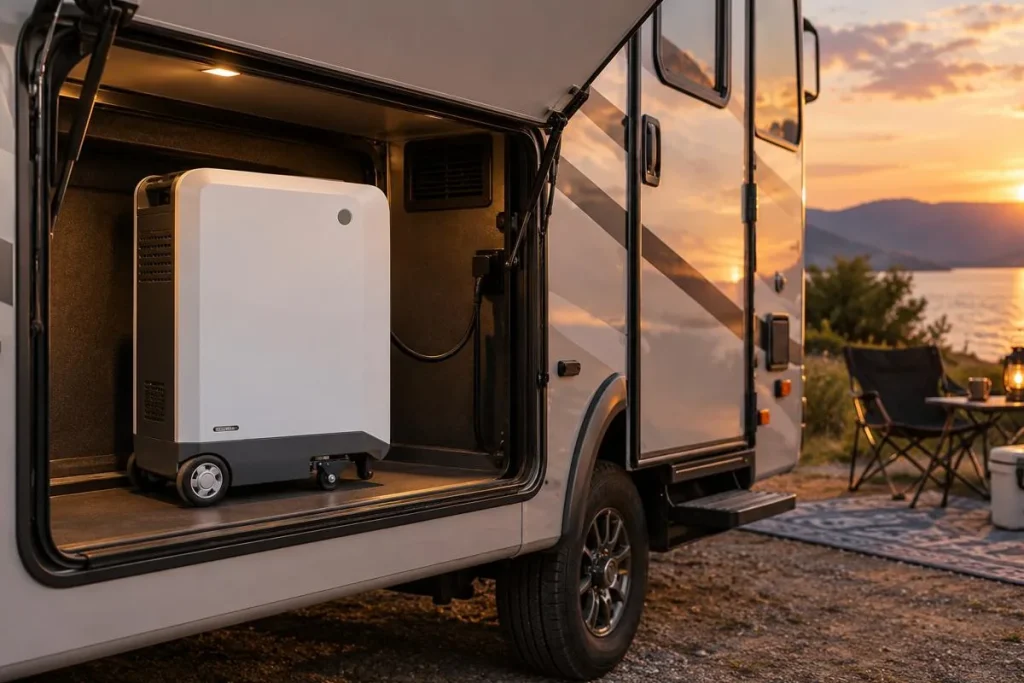
If you park in remote areas and need to run high-power appliances for extended periods, choose a fuel-powered generator. As long as fuel is available, it can keep running, and it can reliably power two air conditioners. This is an advantage that’s hard to match. The trade-off is that you must be willing to deal with the noise and regular maintenance, and you should never use one at a campground where it is prohibited.
If your RV already has a built-in generator, there’s no need to choose another option. Just press the button to start it, and it should have no problem running one air conditioner. However, built-in generators are more common in medium and large RVs and are rarely found in small travel trailers. If your RV doesn’t have one, retrofitting it can be costly and complicated. In other words, it’s usually a feature to consider when buying an RV, rather than something worth installing separately.