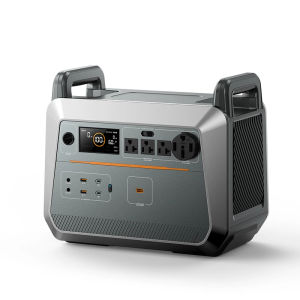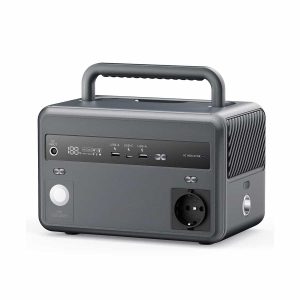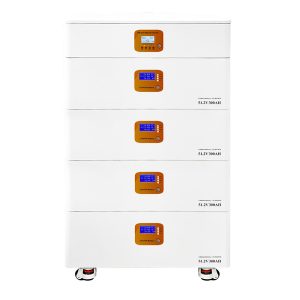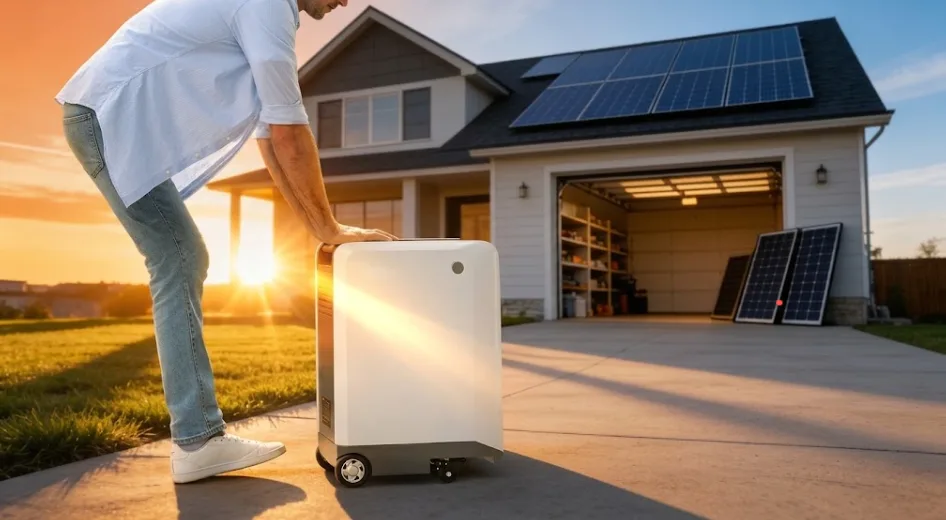
The short answer to this question is actually quite simple: any appliance that exceeds the inverter’s power limit cannot be powered by it. But in reality, it’s more complicated than that. Some appliances may seem like they should work, but the inverter immediately trips its protection as soon as they start; others may run barely well enough, but drain the battery within minutes, making them impractical.
A portable solar generator is not designed to take over your entire home’s power supply. It is designed to keep essential devices running when you need them most, while also being portable enough to take with you when camping.
Today, we’ll figure out which appliances you definitely can’t run, which ones aren’t worth running even if you can, and how to determine what your particular power station can handle. We’ll use specific appliance names and wattage figures, so you can compare them with your own situation.
What Appliances Can a Portable Solar Generator Not Run?
The first category is high-power heating appliances, such as tankless electric water heaters, electric underfloor heating systems, and large electric ovens. Their power consumption is typically above 3000W, far exceeding the continuous output limit of most portable power stations. It’s not a matter of whether the battery is large enough—the inverter simply cannot deliver that much power, so plugging one in will trigger overload protection.
The second category is central air conditioning systems. A central air conditioner typically consumes around 3000–3500W while running, and its startup surge can easily reach 5000–6000W or more. A portable solar generator simply cannot handle it. Window AC units or small inverter air conditioners rated at 1000W or less may be manageable by some higher-power models, but central air conditioning is out of the question.
The third category is motor-driven appliances with extremely high startup surges, such as deep-well pumps and large air compressors. These appliances can require 3–7 times their running power when starting up. An RV air conditioner with a running power of 1500W, for example, may require more than 3700W of instantaneous power at startup. If the power station’s peak output isn’t high enough, the appliance simply won’t start, and the inverter will immediately trip its protection.
| Appliance Category | Typical Power | Main Limitation |
| High-Power Heating Appliances | 1,200–3,000W+ | High power draw and continuous consumption can exceed the inverter’s output and quickly drain the battery |
| Electric Kettle | 1,500–2,000W | Can run for short periods, but consumes power quickly and is not suitable for frequent use |
| Space Heater | 1,500–2,500W | Continuous high-power operation drains the battery very quickly |
| Induction Cooktop / Electric Ceramic Cooktop | 1,500–3,000W | Some models exceed the rated output of portable power stations |
| Electric Oven / Air Fryer | 1,200–2,500W | High heating power means continuous operation can quickly drain the battery |
| Large Air Conditioners | 1,500–7,000W+ | High running power plus startup surge; some units also require 240V |
| Central Air Conditioner | 3,000–7,000W+ | Power consumption and startup surge typically far exceed the capabilities of portable power stations |
| Large Window / Split Air Conditioner | 1,500–2,500W+ | High startup power may exceed the inverter’s peak output |
| Electric Dryer / Large Oven | 2,000–6,000W+ | Continuous high power consumption typically exceeds the output capacity of portable solar generators |
| Electric Vehicle Charger | 1,200–12,000W | Level 1 may be usable with limitations but drains the battery quickly; Level 2 typically far exceeds the capabilities of portable power stations |
Some appliances fall within the inverter’s rated output range, but the battery capacity simply can’t keep up. Even if the appliance can run, it may run out of power in a short time—so what’s the point of having backup power?
Heating appliances and motor-driven appliances are the two major categories where portable generators are most likely to run into problems. The former draw high continuous power, while the latter require a large amount of power to start up.
Why Can’t a Portable Solar Generator Run These Appliances?
The fundamental reason a portable solar generator can’t power certain appliances comes down to physical limitations: the inverter has a maximum power output, and the battery has a maximum energy capacity. These two hard limits can’t simply be overcome by buying a better model, unless you’re willing to spend several times more on a higher-power unit—which would already be beyond the scope of a portable power station. Let’s break down how these limitations work.
Limitation 1: Inverter Power Output Limit
Continuous output power is the amount of power a device can deliver continuously. Take a portable solar generator with a rated output of 1500W as an example. It can only continuously deliver up to 1500W. If you plug in a tankless water heater (3000W), the inverter will immediately trigger overload protection and cut off the output because the appliance requires more power than the hardware can provide. This isn’t a matter of insufficient battery charge—even with a fully charged battery, the inverter simply doesn’t have a large enough channel to deliver that much power.
Peak output power is the maximum instantaneous power the device can handle for a very short period. Motor-driven appliances such as refrigerators, air conditioners, and water pumps require much more power when starting than they do during normal operation. This instantaneous demand is known as startup current or surge current and is typically 3 to 7 times the running power. Many solar generators also have a peak power rating, so make sure to check it before use.
Limitation 2: Battery Capacity Limit
Battery capacity is limited by the law of conservation of energy. The battery capacity of a portable power station is typically measured in watt-hours (Wh), which represents the total amount of energy the battery can store and release under specific conditions. Taking Piforz’s ST2000 with its 2160Wh capacity as an example, based on 80% inverter conversion efficiency and usable battery capacity, the available energy is approximately 1728Wh.
If you connect a 1500W electric kettle, the theoretical runtime is 1728Wh ÷ 1500W = 1.15 hours. In actual use, however, the available runtime will usually be shorter due to factors such as inverter efficiency and the battery’s discharge characteristics. In a situation like this, a single use can consume more than half of the battery’s capacity, leaving little power for other devices. This isn’t a question of whether the appliance can start, but whether it’s worth using. For purely resistive loads that rely on high current for extended periods, such as heating appliances, a portable power station has limited energy reserves.
Limitation 3: Inverter Safety Protection Mechanisms
Portable solar generators come with multiple built-in protection features as a safety measure, not because of a malfunction. When the system detects an overload (power exceeding the rated limit), overcurrent (current exceeding the safe limit), short circuit, or other abnormal conditions, the inverter automatically cuts off the output to prevent damage to the power station and connected appliances. After protection is triggered, the device may need to be restarted before it can resume operation.
How to Check If Your Solar Generator Can Run an Appliance
Determining whether a solar generator can power a particular appliance really comes down to three steps: check the power, compare the numbers, and make a decision. You don’t need an electrician’s license or complicated calculations—just check the appliance manual against the power station’s specifications.
First Step: Check the Appliance’s Running Power and Startup Power
Check the label on the back of the appliance or consult the manual for power-related figures. These are usually listed as rated power, input power, or maximum power, with the unit shown as W (watts). For motor-driven appliances such as refrigerators, air conditioners, and water pumps, you also need to look for the locked-rotor current (LRA) or starting current. This figure determines how much instantaneous power the appliance needs when starting.
For refrigerators, air conditioners, water pumps, and similar appliances, startup power is typically 3–7 times the running power. If the manual only lists the running power and doesn’t specify startup power, estimate it as running power × 5. If you can’t find any power rating, contact the seller for information, or use a multimeter or plug-in power meter to measure the appliance’s actual power consumption while running.
Second Step: Compare It With the Inverter Output
Now compare the figures you’ve found with the specifications of the solar generator:
- Running power ≤ inverter continuous output power → Condition one is met, so the appliance can run steadily.
- Startup power ≤ inverter peak output power → Condition two is met, so the appliance can start successfully.
If the running power exceeds the continuous output → the inverter will trigger overload protection as soon as you plug it in, and the appliance cannot run.
If the startup power exceeds the peak output → the motor won’t be able to start and will either trigger protection or remain stuck in the startup state.
Third Step: Calculate How Long the Battery Can Last
Being able to power an appliance doesn’t mean it can run for long. Use the following formula to estimate the runtime:
Estimated runtime (hours) = (Battery capacity (Wh) × 0.85) ÷ Load power (W)
0.85 is an estimated inverter conversion efficiency. If the calculated runtime is shorter than your expected usage time, the battery capacity isn’t sufficient. You’ll need a higher-capacity power station or reduce the load (for example, by avoiding running multiple appliances at the same time).
| Comparison Result | Conclusion | What to Do |
| Running power > rated output power | Cannot run | Switch to a higher-power solar generator or forgo using this appliance |
| Running power ≤ rated output power, but startup power > peak output power | Can run but cannot start | Install a soft starter to reduce startup current, or switch to a model with higher peak output |
| Running power ≤ rated output power, startup power ≤ peak output power, but battery capacity cannot support the expected runtime | Can run but not for long | Reduce the expected runtime or switch to a model with a larger battery capacity |
| All conditions pass | Can be used normally | Configure the runtime and load according to your actual needs |
Real-World Examples
Now that we’ve covered the theory, let’s look at a few real-world configuration examples. All the data below comes from actual measurements or product specifications rather than estimates. In real-world use, factors such as inverter efficiency, temperature, and cable losses will affect the final results. The figures below are based on actual usage scenarios and can be used as a reference when making a decision.
Case 1: Weekend Camping
User setup: The Jackery Explorer 1000 is rated for 1000W continuous output, 2000W peak output, and has a battery capacity of 1002Wh. For a two-day, one-night camping trip, the user wants to bring a 60W portable car refrigerator (actual running power around 45W–60W), two smartphones, one laptop, and two LED camping lights.
Actual performance: The portable refrigerator consumed around 50W while running, using approximately 0.6kWh of electricity per day. Total power consumption for the entire weekend was about 0.8kWh. The 1002Wh Jackery battery was enough when fully charged before departure, with no need for recharging during the trip. The refrigerator’s startup surge was within the unit’s capabilities, so the inverter did not trigger its protection.
Case 2: Emergency Backup During a Home Power Outage
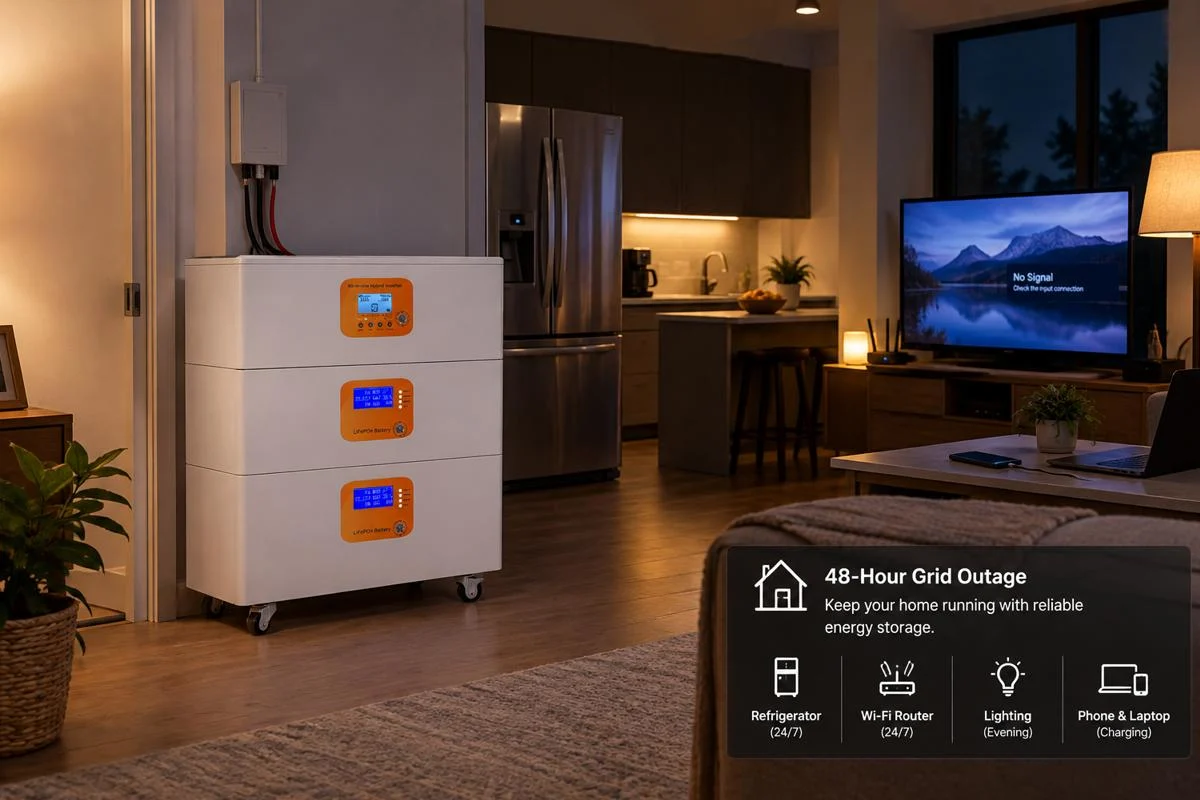
User setup: The Piforz ST2000 is rated for 3000W continuous output, 6000W peak output, and has a battery capacity of 2160Wh. During a power outage, the user wants to power a full-size refrigerator (around 150W while running, with a startup surge), a WiFi router (around 20W), three LED lights (30W total), one laptop (around 60W), and one smartphone charger (around 20W).
Actual performance: The refrigerator runs intermittently. With normal door-opening frequency, the compressor’s operating cycle was approximately 1:1.5, resulting in an average power consumption of around 100W.
This puts the total load at around 240W, which easily lasted through the six-hour outage without needing to recharge. If two additional 200W solar panels are used for recharging, based on 4–5 hours of effective sunlight per day and an overall conversion efficiency of 85%, they can replenish approximately 680Wh to 850Wh per day (400W × 4.5h × 0.85). Actual net consumption is around 1.2–1.3kWh per day, so the 2160Wh battery can provide approximately 1.5 to 2 days of backup.
The ST2000’s 6000W peak output can easily handle the refrigerator’s startup surge. Even when the refrigerator starts, the other appliances won’t experience noticeable voltage fluctuations.
Case 3: RV Travel
User setup: The EcoFlow DELTA Pro has a rated output of 3600W, peak output of 7200W, and a battery capacity of 3600Wh, paired with a 400W solar panel. During an RV trip, the user needs to use a 1000W microwave to heat breakfast and a 700W rice cooker to cook meals. Other appliances include a portable refrigerator, lights, smartphone chargers, and more.
Actual performance: Running the 1000W microwave for 5 minutes consumed approximately 85Wh, while running the 700W rice cooker for 40 minutes consumed around 470Wh. The two appliances were not used at the same time. Including the portable refrigerator (around 50W) and other small devices, daily electricity consumption was approximately 1.5kWh. The solar panel replenished around 1.2kWh per day on sunny days, essentially covering daytime power consumption. Although the two high-power appliances cannot be operated simultaneously, having the solar panel recharge the battery meant there was generally no need to find a campground with a power hookup.
What Are the Downsides of Portable Solar Generators?
A portable solar generator is a very useful piece of equipment, but it isn’t a one-size-fits-all solution.
| Limitation | Specific Impact | Impact on Users |
| Limited Output Power | Portable models typically have a rated output of 1000W–3600W. Although peak output is higher, it can only be sustained for a few seconds | Cannot power high-power appliances such as tankless water heaters, central air conditioners, and large electric ovens; multiple high-power appliances cannot be operated simultaneously |
| Limited Battery Capacity | Common capacities range from 500Wh–3600Wh. Larger models (such as those above 3000Wh) are significantly heavier and more expensive | High-power appliances such as microwaves and induction cooktops can only be used for short periods; continuously running heating or cooling appliances will quickly drain the battery |
| Long Charging Time | Wall charging typically takes 2–6 hours; solar charging speed depends on sunlight and panel output | If the battery runs out during an emergency, it cannot be quickly recharged; when relying solely on solar power, charging can be slow or even impossible on cloudy days or during winter |
| Trade-Off Between Weight and Portability | Models above 1000Wh typically weigh more than 10kg, while models above 2000Wh commonly weigh more than 20kg. 3000Wh-class models can weigh 30kg or more | Difficult to move, especially for users with limited strength or those who need to carry the unit up and down stairs; models with wheels are easier to roll but still need to be lifted into and out of vehicles or over steps |
| Limited Solar Charging Speed | A single unit has limited solar input power (typically 200W–1200W), while portable folding panels with limited surface area are further constrained in output | Fully recharging solely with solar power takes a long time; charging a 2000Wh unit to full capacity on a sunny day may take 4–6 hours or even longer |
| Reduced Performance at High Temperatures | Lithium batteries may have limited or suspended charging at high temperatures, while an overheated inverter may reduce its output or shut down | When exposed to the sun outdoors or inside a vehicle during summer, the unit may not charge properly or may need to cool to a safe temperature before use, affecting reliability |
| Limited Expandability and Upgrade Options | Most are standalone all-in-one units and do not support external expansion batteries, or only offer limited expansion with specific models from the same brand | If you need longer runtime later, you cannot simply add more batteries and may need to replace the entire unit, limiting flexibility in your initial investment |
| Still Relatively Expensive | High-quality 2000Wh-class models typically cost $1,000–$3,000, with solar panels sold separately | The upfront cost is still higher than that of a similarly powered gasoline generator |
Understanding the drawbacks of portable power stations can help you make a better-informed decision.
We now have a clear understanding of what portable solar generators cannot do: any appliance that exceeds the inverter’s power limit cannot be powered, especially high-power or high-startup-surge appliances such as tankless water heaters, central air conditioners, large electric ovens, and deep-well pumps. There are also some appliances that a portable power station can technically run but aren’t practical because they can drain the battery in a short time.
When choosing a model, remember these three hard requirements: running power must not exceed the rated output, startup power must not exceed the peak output, and expected energy consumption must not exceed 85% of the battery capacity. All three conditions must be met before you can say that a power station can run the appliance. If even one condition fails, the appliance may either not start at all or may run out of power before it reaches the runtime you need.
Finally, let’s come back to a more fundamental question: why do you need it? If you’re preparing for occasional short power outages and just want to keep your refrigerator and internet running, a 1000Wh–2000Wh model is usually enough. If you need to live off-grid for extended periods or power high-wattage appliances, you may need more than a portable power station, you may need a permanently installed home energy storage system or a gasoline generator. That’s an entirely different category of product. Understanding your actual needs is more important than studying specifications.