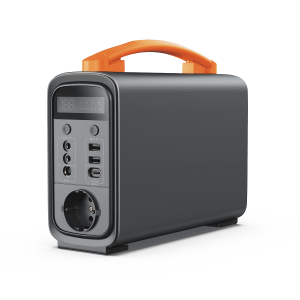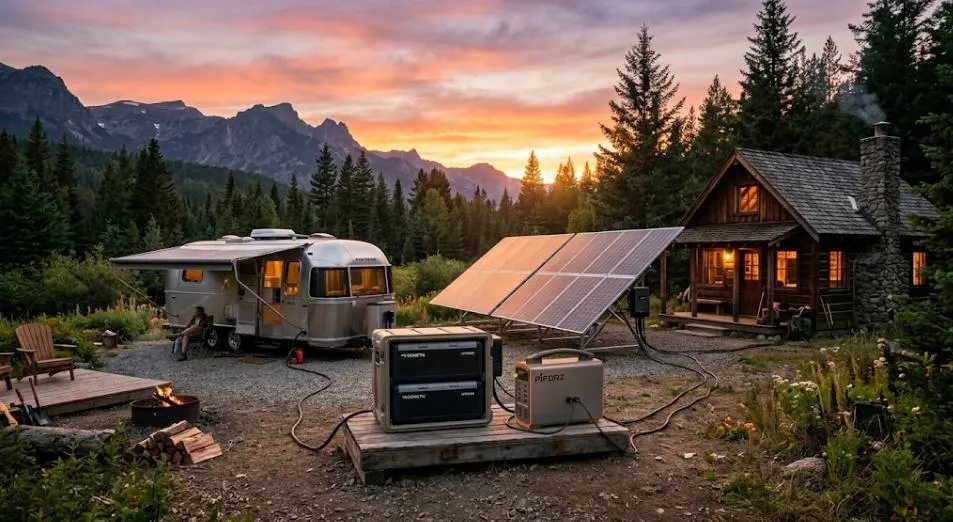

When we are camping in cold outdoor conditions, facing unexpected power outages, or staying in temporary spaces without access to the grid, a space heater becomes an essential device for warmth. But how do we power a space heater when there is no grid connection? With advances in technology, portable power stations have become a popular solution for home backup, camping, and emergency power supply.
This article provides practical guidance on choosing the right portable power station for a space heater and helps you select the most suitable model based on real-world needs.
1. Can a Portable Power Station Run a Space Heater?
Yes, it can—but only if the portable power station’s output power is sufficient to cover the heater’s rated wattage. If you connect a low-power unit that cannot meet the heater’s requirements, it may shut down or overload. For safe and reliable use, you should choose a high-power portable power station with stable output.
| Space Heater Power | Minimum Power Station Output | Recommended Battery Capacity | Approx. Runtime |
| 500W | 700W+ | 500–1000Wh | 0.8–1.7 hrs |
| 750W | 1000W+ | 1000–1500Wh | 1.1–1.7 hrs |
| 1000W | 1200W+ | 1500–2000Wh | 1.3–1.7 hrs |
| 1500W | 1800–2000W+ | 2000Wh+ | ~1.1 hrs |
| 2000W | 2500W+ | 3000Wh+ | ~1.3 hrs |
The runtime is estimated based on 85% usable battery capacity and continuous heating.
2. What Size Portable Power Station Do You Need to run a Space Heater?
2.1 Understanding Heater Wattage Requirements
Before choosing the best portable power station for space heater, you need to understand the power requirements of your device. Most space heaters operate between 900W and 1500W, and the exact wattage is usually listed in the product specifications. If your power station cannot match this requirement—for example, a portable power station 1000w trying to run a 1500W heater—the heater will not function properly.
2.2 Surge Power and Rated Output
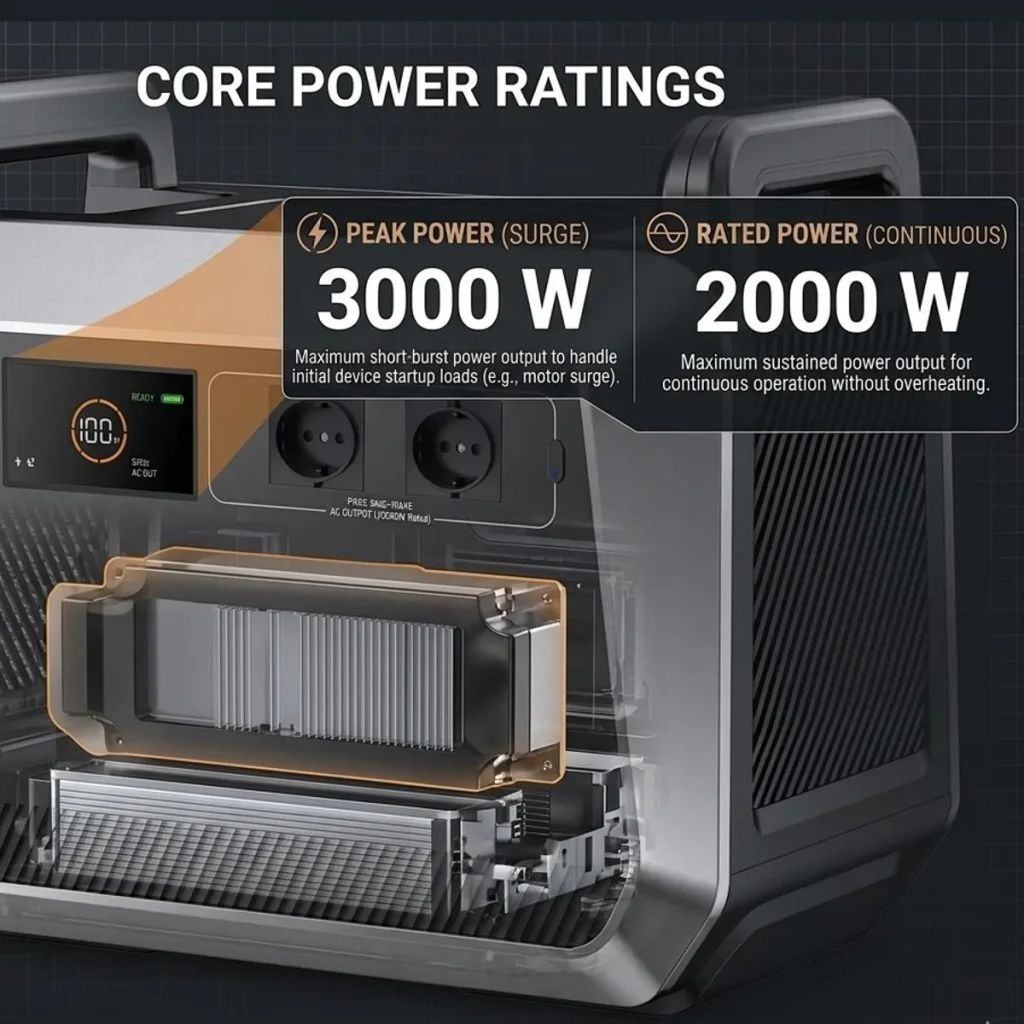
While rated power is important, surge power is less critical for space heaters. Unlike refrigerators, space heaters do not have compressors and therefore do not require high startup surge power. They are resistive heating devices, meaning their power consumption is relatively stable once turned on.
A 1500W heater typically draws close to 1500W immediately upon startup. Although the built-in fan may create a small additional surge, it is minimal and not a deciding factor when choosing a power station. Therefore, if your primary goal is to run a space heater, you do not need to focus heavily on surge power.
3. How Long Will a Portable Power Station Run a Space Heater?
You can use the following formula to roughly estimate how long a portable power station can run a space heater:
Runtime (hours) ≈ Battery capacity (Wh) × 0.85 ÷ Heater power (W)
Why multiply by 0.85? Because converting DC power to AC through the inverter results in some energy loss, so the actual usable energy is typically around 85%. Ambient temperature and battery age can also affect the actual runtime, so this figure can be considered a reasonably conservative estimate.
For example, a 2000Wh portable power station powering a 1500W space heater would provide approximately:
2000 × 0.85 ÷ 1500 ≈ 1.13 hours
In other words, it can run for a little over an hour. Most small space heaters on the market have a power rating of around 1500W. If you plan to use one for heating during a winter power outage, it is recommended to choose a portable power station with at least 2000–3000Wh of capacity and make sure the inverter’s continuous output can handle 1500W. With a smaller battery capacity, the power may run out before the space has had much time to warm up.
4. Best Use Cases for a 2000W Portable Power Station
4.1 Best portable power station for home backup
A portable power station 2000W can provide short-term heating during unexpected outages. Its relatively high output also allows you to run other essential devices at the same time. It is especially suitable for maintaining comfort in small rooms and powering critical appliances like space heaters.
4.2 Best portable power station for RV
In RV living, a 2000W portable power station can power heating devices in cold weather and serve as a reliable backup when off-grid. It can support most appliances inside the RV, making it a practical and cost-effective solution.
4.3 best portable power station for camping
Although space heaters are not commonly used during camping, a 2000W portable power station is still very useful. It can power devices that enhance the camping experience, such as induction cookers, mini fridges, and coffee makers.
4.4 Not Ideal For Long-Term Heating
It is important to note that portable power stations are not designed for continuous heating. Space heaters consume a large amount of energy, making long-term operation impractical without recharging. If you need extended runtime, pairing the system with solar panels is necessary.
4.5 Can a Portable Power Station Run a Space Heater Overnight?
Usually not, unless the battery capacity is so large that it no longer falls into the category of a portable power station.
A space heater is one of the most demanding loads for a battery system because it converts electricity directly into heat, consuming power much faster than most other household appliances. Let’s look at how much energy a typical 1500W space heater requires:
| Runtime | Energy Required (1500W Space Heater) |
| 30 minutes | 0.75 kWh |
| 1 hour | 1.5 kWh |
| 2 hours | 3.0 kWh |
| 4 hours | 6.0 kWh |
| 8 hours | 12.0 kWh |
A typical high-capacity portable power station on the market has around 2–3kWh of capacity. At this capacity, a 1500W space heater can run for only about 1.5–2 hours at most. To run it for a full night (8 hours), you would need at least 12kWh of battery capacity, which is already approaching the configuration of a fixed home energy storage system rather than a portable power station.
A more practical approach is to use the space heater only for a short period to raise the room temperature, then switch to an electric blanket or low-power heated foot pad to maintain warmth. If you really need long-term heating during a power outage, consider a home gas heating system. Its thermal efficiency is much higher than that of electric resistance heating and it consumes far less battery power.
5. Best Portable Power Station for Space Heater
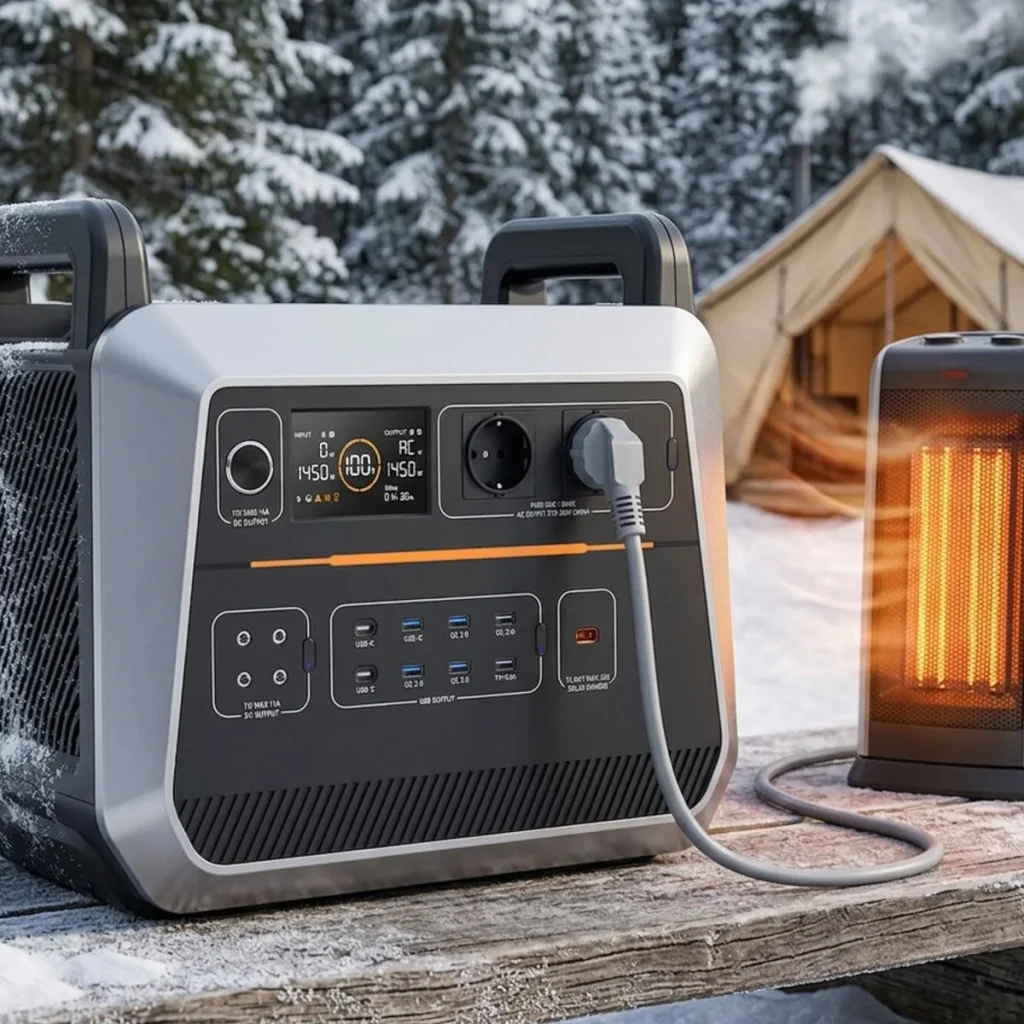
When pairing a portable power station with a space heater, there is one core trade-off: space heaters are heavy power consumers, while portable power stations have limited capacity and output. For most portable power stations, they can run a space heater, but not for very long.
So when choosing a power station, don’t focus on how long it can run the heater. Instead, think about your actual use case: do you need emergency heating for one or two hours, or do you want to keep warm through the entire night?
Three Key Specifications When Choosing a Power Station for a Space Heater
The rated output power must be higher than the heater’s power. Most space heaters on the market are rated at 1500W. The power station’s continuous output must be able to handle this, and ideally, you should leave a 20%–30% margin to avoid overheating protection caused by prolonged operation at full load.
Battery capacity determines how long it can run. A 2000Wh power station running a 1500W space heater has a theoretical runtime of about 1.1 hours.
Intermittent heater operation can extend runtime. Once the heater reaches the set temperature, its thermostat will shut off the heating element. In a well-insulated room, the duty cycle may be only 30%–50%; in a drafty room, it may reach 60%–80%. This means the actual runtime may be somewhat longer than the formula suggests.
The following table recommends portable power stations based on different needs.
| Power Station Model | Capacity | Continuous Output | Estimated Runtime with a 1500W Space Heater | Weight | Best For |
| Piforz ST2000 | Approx. 2073Wh | 2200W | Approx. 1.1–1.5 hours | Approx. 27kg | Getting through the coldest 1–2 hours during a power outage, or pairing with a low-power heater |
| EcoFlow DELTA Pro 3 | 4096Wh | 4000W | Approx. 2–2.5 hours | 51.5kg | Extended power outages, with expandable batteries for keeping key areas of the home warm |
| Jackery Explorer 2000 v2 | 2042Wh | 1500W | Approx. 1.1 hours | Approx. 22kg | Medium-capacity backup for short-term emergencies or use at the 750W low setting |
| Anker SOLIX C1000 | 1056Wh | 1800W | Approx. 35–40 minutes | 12kg | Lightweight and fast charging; suitable for low-power heating devices or heated blankets |
If You Really Need Electric Heating, There Are Better Ways to Use It
Use the low setting. Most space heaters have a 750W low setting, which can roughly double the runtime. A 2000Wh power station running a 750W space heater can last for more than 2 hours, making it much more practical than using the high setting.
Use a heated blanket instead of a space heater. A heated blanket typically consumes only 50–100W, about one-tenth the power of a space heater. With the same 2000Wh power station, a heated blanket can run for more than ten hours, while a space heater lasts only a little over an hour.
Insulate first, then heat. Seal doors and windows, close the curtains, and wear warm clothing. The better the room retains heat, the less often the heater needs to run, which means lower actual power consumption.
6. Final Verdict: What Size Do You Really Need?
For most users, a 2000W portable power station is the most practical option. It provides enough power to safely and reliably run a space heater while maintaining portability and affordability. In most real-world scenarios, 2000W offers the best balance between performance and cost.
Of course, depending on your specific heater, you may choose a larger or smaller unit.