When it comes to classifying solar systems, you can find all kinds of answers online, but they all tend to follow the same pattern: grid-tied, off-grid, and hybrid. However, once you actually have to choose a system, you’ll quickly realize that simply knowing these three terms is nowhere near enough. They don’t really answer the most important question: Which type of solar system is right for your home?
Ultimately, how a solar system is classified depends on the dimension you’re looking at. Whether it is connected to the grid is one way to classify it, whether it has battery storage is another, and whether it is installed on a rooftop or on the ground is yet another. The same system can belong to multiple categories at the same time when viewed from different perspectives.
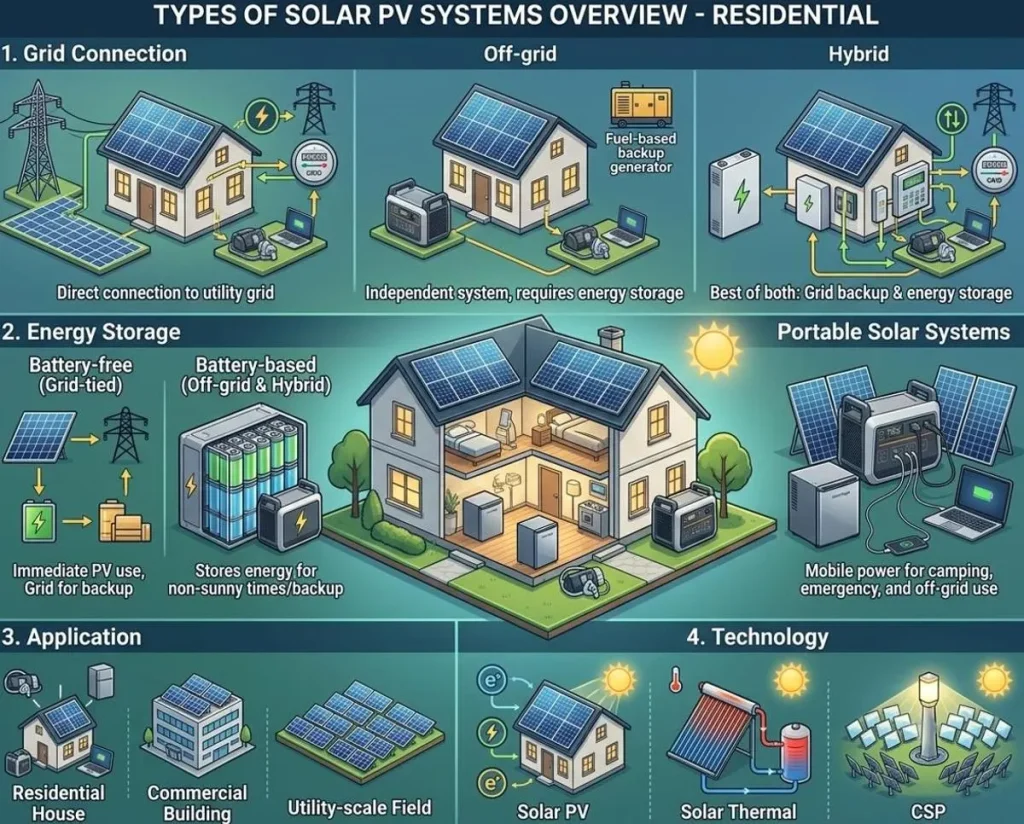
So, I’ll break down solar systems from four different dimensions: classification by grid connection, by energy storage configuration, by application scenario, and by technology type. Each dimension answers a different question.
In the end, we’ll come back to the most practical question: For residential users, which combination is actually the best choice?
How Many Types of Solar Systems
Before answering this question, we first need to clarify one thing: the number of types depends on the criteria you use to classify them. Solar systems aren’t like animal taxonomy, with a universally recognized hierarchy of “kingdom, phylum, class, order, family, genus, and species.” Instead, they can be divided along different dimensions, with each dimension producing several categories, and these classifications overlap with one another. A single system can simultaneously be grid-connected, equipped with energy storage, rooftop-mounted, and based on monocrystalline silicon.
| Classification Method | Types |
| Grid connection | Grid-tied, Off-grid, Hybrid |
| Energy storage | Battery-free, Battery-based, Portable solar systems |
| Application | Residential, Commercial, Utility-scale |
| Technology | Solar PV, Solar thermal, CSP |
Each classification answers a different question. Grid connection tells you where the electricity goes, energy storage configuration tells you how the electricity is stored, application tells you who it is used for, and technology tells you how sunlight is converted into usable energy.
The Three Main Types of Solar Systems (Based on Grid Connection)
When classified by grid connection, there are three types of solar systems: grid-tied, off-grid, and hybrid. This is the most common and basic classification because it directly determines how the system is used, how it is installed, and how its economics work.
Grid-Tied Systems
The logic behind a grid-tied system is simple: the electricity generated by the solar panels is fed directly into the grid, and your home draws electricity from the grid when needed. It doesn’t require batteries. If you generate more electricity than you use during the day, the excess can be sent to the grid, while at night or on cloudy days, you draw electricity from the grid.
The advantage of this setup is that it requires fewer components and has lower costs and a simpler system design, because the grid itself effectively serves as your energy storage.
But it has one major drawback: when the grid goes down, a grid-tied system will also stop supplying power. This isn’t a equipment failure; it’s a mandatory safety requirement designed to prevent electricity from your home from being fed back into power lines and putting utility workers at risk.
So, a grid-tied system solves the problem of reducing electricity bills, not the problem of having power during an outage.
Off-Grid Systems
An off-grid system has no connection to the utility grid. Electricity generated by the solar panels is stored in batteries, and you then draw power from the batteries when needed.
All your electricity comes from your own generation, storage, and management, so it doesn’t matter whether the grid is operating or not. This setup is suitable for remote areas, locations without grid coverage, or people who deliberately choose to live independently from the grid.
However, it places much higher demands on system design and capacity. You need to consider what happens during several consecutive cloudy or rainy days, as well as shorter daylight hours in winter.
Hybrid Systems
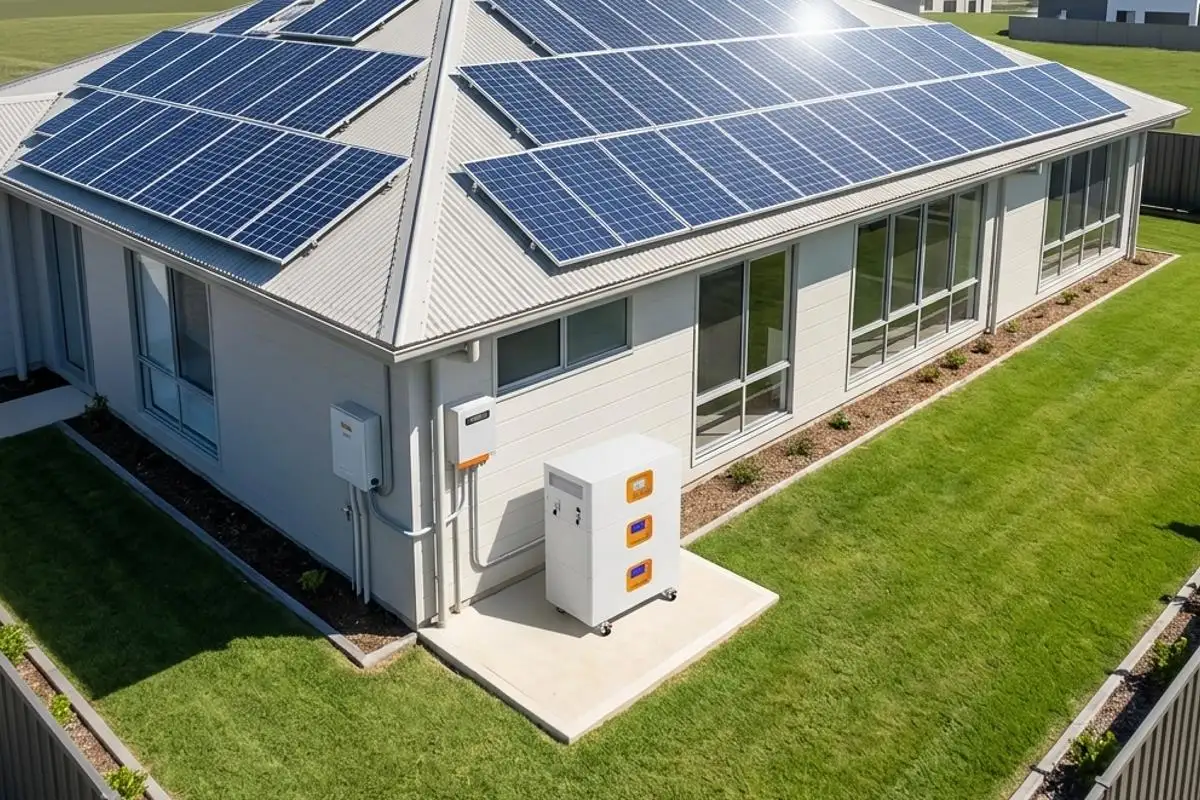
A hybrid system combines the features of grid-tied and off-grid systems. It is connected to the grid and equipped with batteries, and it can automatically switch between the two modes.
When the grid is operating normally, it works like a grid-tied system, using solar power for your own needs and sending excess electricity to the grid. When the grid goes down, it automatically switches to off-grid mode and draws power from the batteries to continue supplying electricity to your home.
This setup addresses both goals: reducing electricity bills and providing backup power during outages.
Solar System Types Based on Energy Storage
When classified by energy storage configuration, solar systems can be divided into three types: solar systems without energy storage, battery energy storage systems, and portable solar systems.
This classification overlaps with the grid-connection categories discussed in the previous section, but the perspective is different. Here, the focus is on whether electricity is stored, where it is stored, and how it is used.
Systems Without Energy Storage
These systems do not use batteries. The electricity generated by the solar panels is either used directly by the home or sold to the grid, with no intermediate storage.
A typical example is a pure grid-tied system. The advantages of this type of system are fewer components, lower upfront costs, and simpler maintenance. However, it cannot provide power during an outage. When the grid goes down, the system automatically shuts down.
Battery Energy Storage Systems
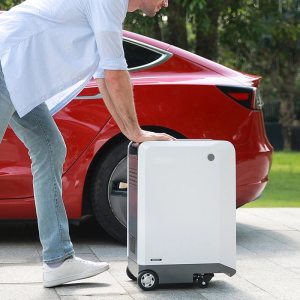
These systems include energy storage batteries and rely on the batteries as the core energy buffer. Both grid-connected hybrid systems with batteries and fully off-grid systems fall into this category. What they have in common is that the batteries regulate the balance between electricity supply and demand.
With batteries, the system can charge them during off-peak hours when electricity prices are lower and discharge them during peak hours to reduce electricity costs. It can also automatically switch to backup power mode when the grid goes down.
Portable Solar Systems
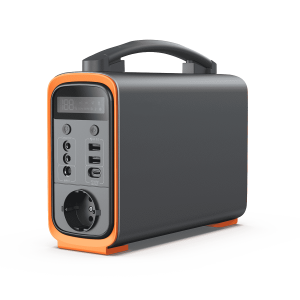
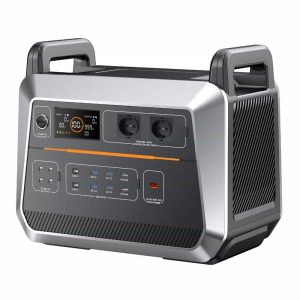
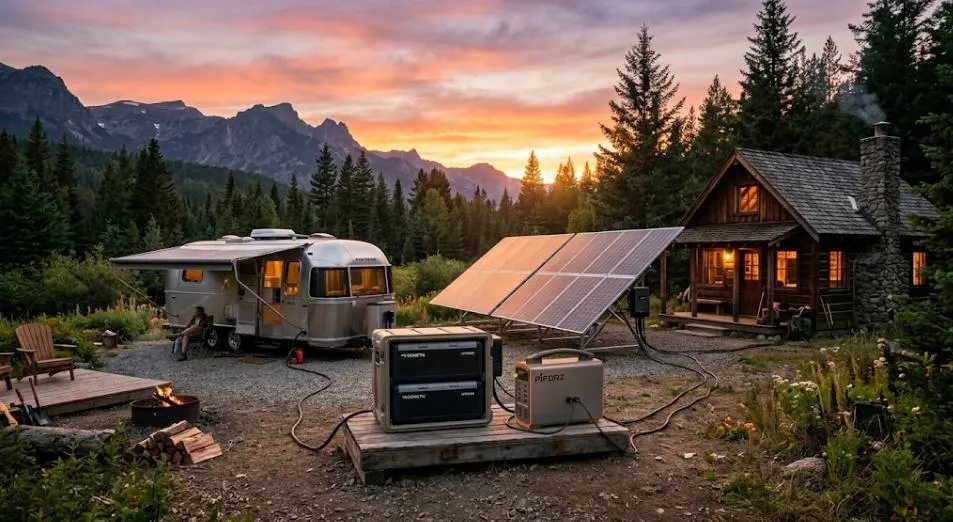
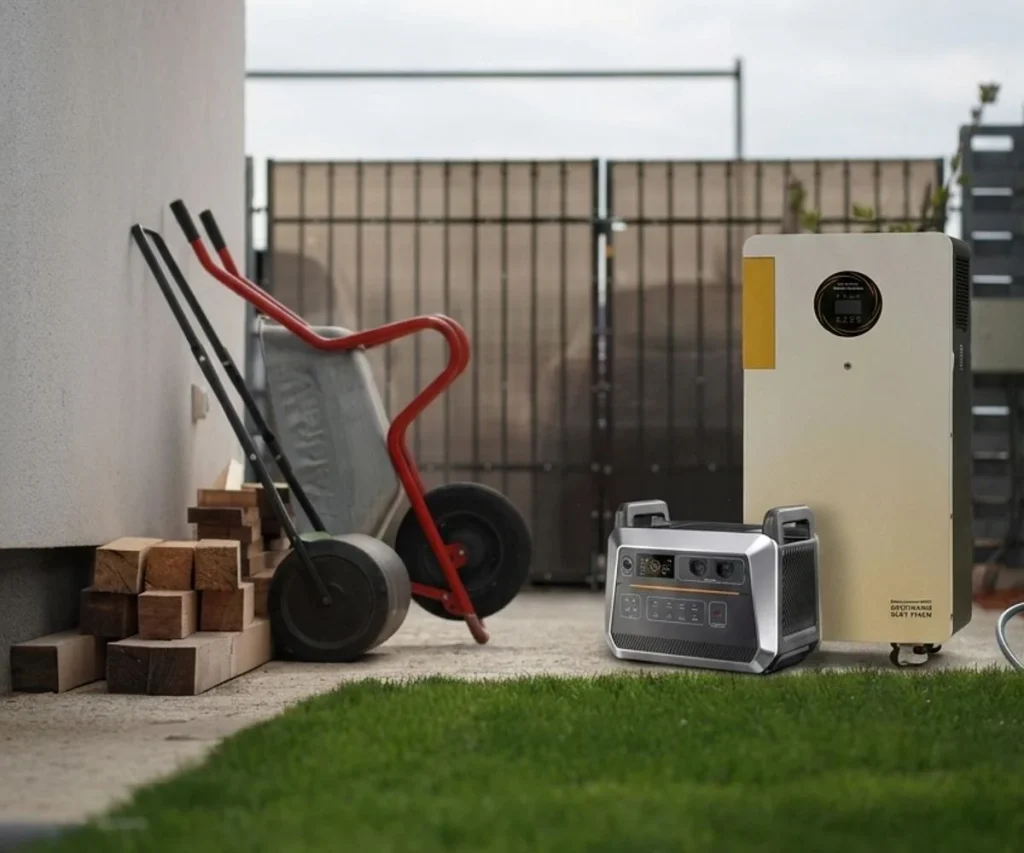
These systems integrate solar panels, a battery, an inverter, and output ports into a single portable unit, creating a self-contained power source that can be used right away. In other words, they are portable power stations.
Unlike permanently installed home energy storage systems, portable solar systems are designed for mobile applications, such as camping, RVs, outdoor work, and temporary emergency power. Their capacity typically ranges from 200Wh to 3kWh, which is much smaller than that of home energy storage systems, but their key advantage is flexibility: unfold the solar panels to start charging, plug in your devices, and start using them.
Types of Solar Systems Based on Applications
When classified by application, solar systems can be divided into three types: residential, commercial, and utility-scale. This dimension focuses directly on where the system is installed, who it serves, and how large it is.
The same equipment can have completely different classifications and design considerations when installed on a single-family home versus on a factory rooftop.
Residential Solar Systems
These are solar systems installed on the roofs of single-family homes, townhouses, or small apartment buildings. Their capacity typically ranges from 3kW to 15kW, and they may or may not include batteries. The core goal of a residential system is to meet everyday electricity needs while reducing electricity costs, while also taking advantage of government or utility incentives to shorten the payback period.
Commercial Solar Systems
These are larger solar systems installed on the roofs or grounds of factories, shopping malls, office buildings, or agricultural greenhouses, typically with capacities above 50kW and at a much larger scale than residential systems.
These projects usually require more complex technical solutions, including rooftop structural load assessments, approvals for electrical capacity upgrades, and storage capacity planning based on demand management and electricity pricing strategies.
The economics of commercial systems are more straightforward: they reduce peak electricity costs through on-site generation, generate revenue by selling excess electricity to the grid, and can earn additional income by participating in electricity markets with energy storage.
Utility-Scale Solar Power Plants
These are large ground-mounted solar power plants developed by energy companies or power operators, with capacities ranging from 10MW to several hundred MW and land areas equivalent to hundreds of football fields.
These systems typically either do not include batteries or are equipped with large-scale energy storage systems that serve as independent grid-regulation resources. They use single-axis or dual-axis tracking systems to maximize power generation efficiency.
The goal of these projects is not to meet the electricity needs of a particular building, but to feed electricity directly into the grid and operate as part of the regional power supply. The key decision metric for these projects is the levelized cost of electricity (LCOE), with the main focus on entering the grid at the lowest possible cost per unit of electricity generated and participating in electricity market bidding and dispatch.
Residential, commercial, and utility-scale systems may sound like categories based simply on size, but the underlying equipment selection, installation approach, permitting process, and payback logic are actually completely different.
If these categories are confused—for example, applying the economic model of a residential system to a commercial project—the resulting financial returns could be inaccurate, which could in turn lead to misguided investment decisions. Understanding this classification ensures that you are looking at the right data for the system in question.
Types of Solar Systems Based on Technology
When classified by technology, solar energy systems can be divided into three types: solar photovoltaic (Solar PV), solar thermal, and concentrated solar power (CSP).
The first one is probably very familiar to you, while the latter two may be less familiar. Let’s take a closer look at each of them.
Solar Photovoltaic Systems
This is currently the most common type. According to the IEA, solar PV accounted for more than three-quarters of global renewable energy capacity additions.
PV systems use the photovoltaic effect of semiconductor materials to convert sunlight directly into DC electricity, which is then converted into AC electricity through an inverter for use by homes or the grid. The blue or black panels you commonly see on rooftops and large ground-mounted PV arrays are all part of this category.
With relatively low technical barriers, highly standardized components, and rapidly declining costs, it is currently the mainstream approach to solar energy utilization. It is widely used in residential, commercial, and large-scale ground-mounted power projects.
Solar Thermal Systems
Solar thermal systems do not generate electricity. Instead, they use solar radiation to directly heat a liquid, usually water or an antifreeze solution, for domestic hot water, space heating, or pool heating. The evacuated tube collectors or flat-plate collectors you see on rooftops are examples of solar thermal systems.
They are suitable for homes, hotels, hospitals, and other applications with high hot water demand. Solar thermal systems themselves do not generate electricity. If both electricity and hot water are needed, they must be used in combination with a solar PV system or the grid.
Concentrated Solar Power Systems
CSP uses lenses or arrays of heliostats to concentrate sunlight from a large area onto a receiver tower or collector tube, generating high temperatures that can reach 400°C–1000°C and drive a steam turbine to generate electricity.
The difference between CSP and solar thermal is that solar thermal directly produces heat for applications such as domestic hot water, while CSP generates heat and then converts it into electricity that can be supplied to the grid. CSP is typically combined with molten salt energy storage to store excess thermal energy, allowing it to continue generating electricity for several hours after sunset. This is difficult for solar PV combined with batteries to replicate because batteries store electricity rather than heat. Thermal storage can also be more cost-effective at large scales.
However, CSP has demanding site requirements, requiring large areas of flat land and abundant direct sunlight. It is not suitable for ordinary households and is mainly used for large-scale power generation projects. In the global renewable power generation mix, CSP accounts for a much smaller share of installed capacity than solar PV, but it offers unique advantages in energy storage dispatch and stable power output.
In the residential solar market, PV has an overwhelming lead. Solar thermal still has a place in the water heating sector, but its market space is increasingly being squeezed by the combination of solar PV and heat pumps. If you are considering a residential solar solution, you are most likely choosing among different types of PV systems.
This section is simply intended to give you a clear framework and help you understand which needs each technology is designed to address.
Which Type of Solar System Is Best for a Home?
This question is difficult to answer in one sentence because the best option depends on your home’s actual conditions: how reliable the grid is, whether your roof has a good orientation, how high your electricity bills are, and how much a power outage would affect you. Different conditions can point to completely different answers.
From the classifications discussed in the previous sections, a residential solar system is essentially the result of combining multiple dimensions:
- By grid connection: grid-tied, off-grid, hybrid
- By energy storage configuration: without batteries, with batteries
- By technology: solar PV (main), solar thermal (supplementary)
Combining these three dimensions, the most common configurations for residential applications are the following four:
- Stable grid, few or no outages, and you only want to reduce your electricity bill → Grid-tied without energy storage. The cheapest option, with a simple system and a payback period of just a few years.
- Unreliable grid, occasional outages, and you want to reduce electricity costs while also having backup power → Grid-tied + energy storage (hybrid system). This is the mainstream choice: solar power during the day, battery power at night, and automatic switching to backup power during an outage. The preferred option for most homes.
- Remote area, no grid access, or you deliberately want complete energy self-sufficiency → Off-grid system. You generate and store all your own electricity and must have a generator as backup. This is the most expensive and complex option.
- High hot water demand, good sunlight, and a desire to maximize solar energy utilization → Solar PV + solar thermal hybrid. Solar PV generates electricity while solar thermal heats water, with the two independent systems working together. From an energy-efficiency perspective, this combination has a shorter energy conversion chain and lower losses.
If your situation falls somewhere between the first three options, ask yourself one question first: How much would a power outage affect you? The answer determines whether it is worth spending extra money on a battery.