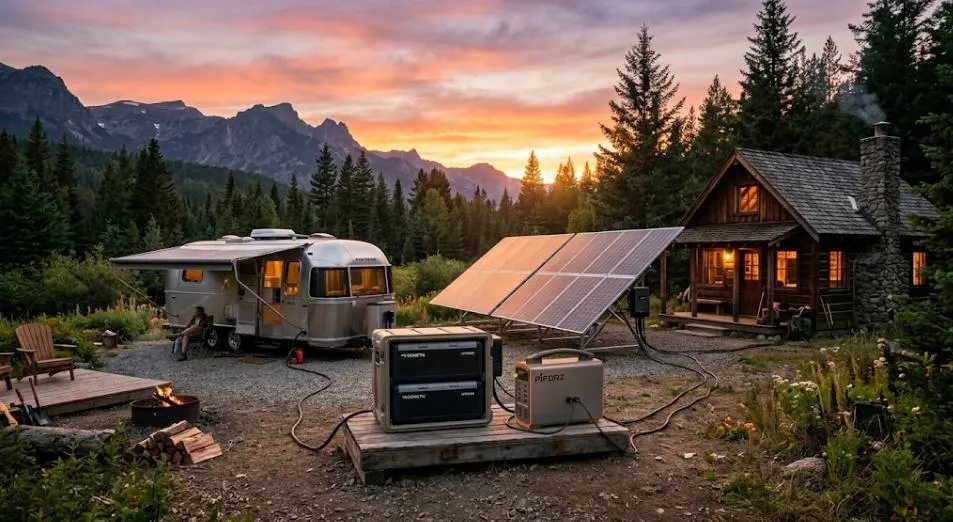

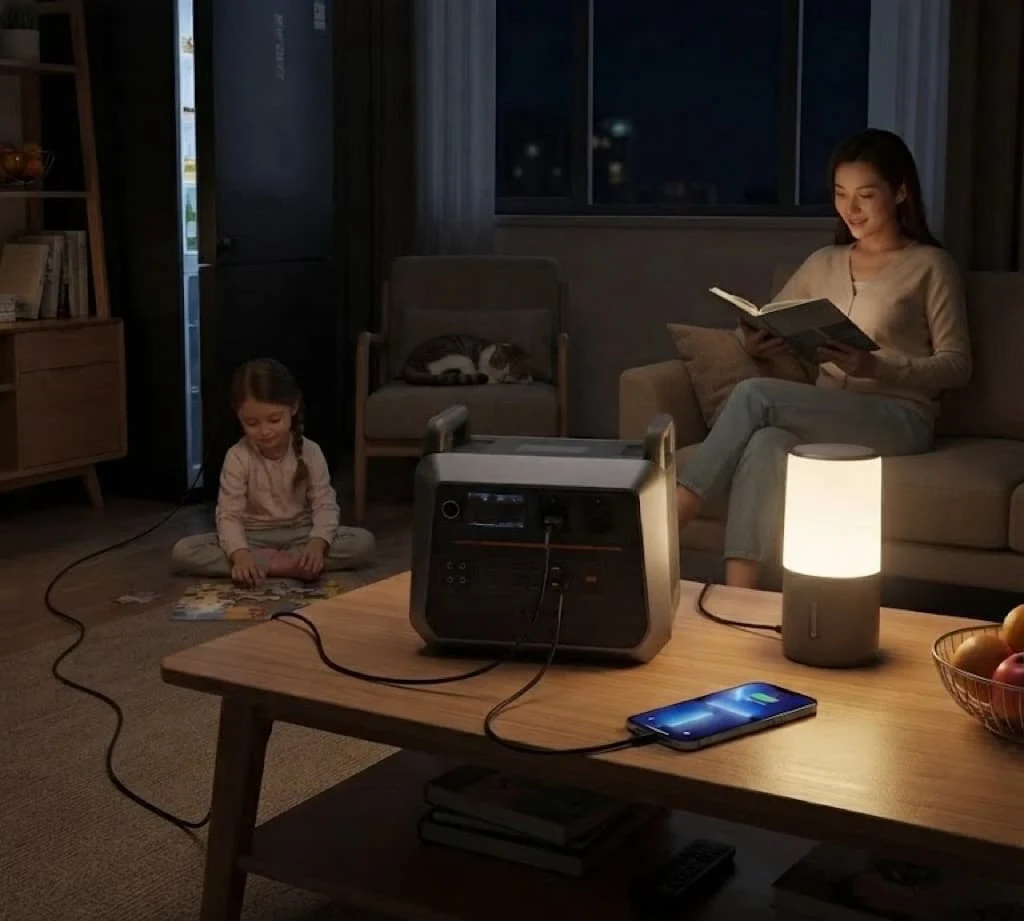
During a power outage, the runtime of a battery backup can range from just a few minutes to dozens of hours. This mainly depends on the type of backup battery, its capacity, and the devices being powered.
For example, many people keep a small computer UPS at home or on their office desk to prevent important data loss caused by sudden power outages, but these devices usually only provide power for a few minutes. In contrast, portable power stations and home energy storage systems can keep essential devices running throughout the night or even for an entire day during an outage. Larger-capacity systems can even provide power for several days.
Therefore, instead of asking how long a battery backup can last, it is better to first understand the factors that affect backup runtime and choose a suitable-capacity battery backup based on the outage duration, the devices that need power, and your budget.
What Determines How Long a Battery Backup Lasts?
The main factors that determine how long a battery backup can last include the following:
- Battery capacity:
Battery capacity is usually shown in the specifications with the units Wh or kWh. The larger the battery capacity, the more electricity it can store and the longer it can provide power. Under the same load, doubling the battery capacity will also double the runtime. - Power consumption of connected devices:
Even with the same battery capacity, the runtime will vary depending on the devices being powered. For example, a 1000Wh portable power station can power a 10W router for many hours, but it may only run a 150W refrigerator for a few hours. If it is used to power a 1500W electric heater, the stored energy could be depleted within just a few dozen minutes. - Battery Depth of Discharge (DOD):
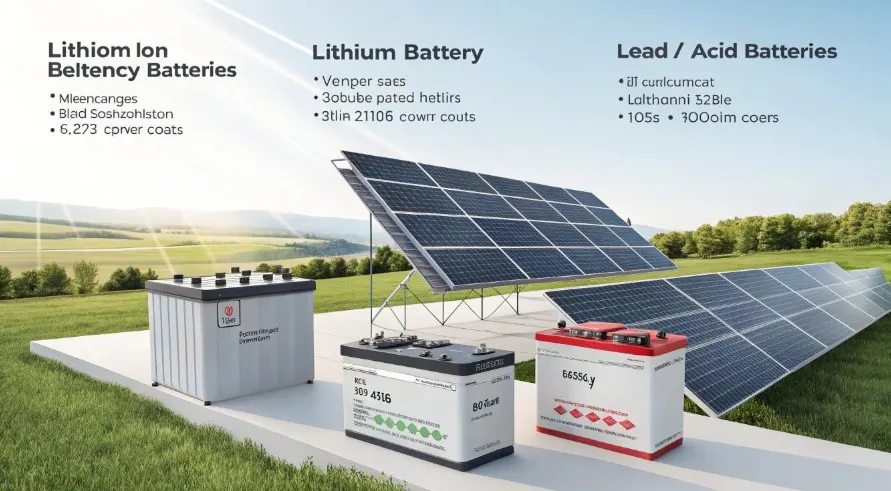
Different battery types may support different depths of discharge. For example, LiFePO4 batteries typically support around 80%-90% usable depth of discharge, while traditional lead-acid batteries are usually limited to around 50% to extend their lifespan. As a result, the actual usable energy is significantly lower compared with a LiFePO4 battery of the same capacity. - Inverter efficiency:
During actual use, the electricity needs to pass through the inverter for conversion, which results in some energy loss. Inverter efficiency is typically around 85%-95%. - Battery health condition:
As a battery is used and goes through more charge and discharge cycles, its capacity will gradually decrease as the battery ages. When an aging battery’s capacity drops to 70%, it means that even when fully charged, the available energy is only 70% of what a new battery could provide. Since the usable energy decreases, the runtime will naturally become shorter as well.
Comparing Different Backup Power Sources: How Long Can They Last During a Power Outage?
The main types of backup power sources include small computer UPS systems, portable power stations, and home energy storage backup batteries. These three solutions are closely related to our daily lives. A small computer UPS can keep a computer running for a short period immediately after a power outage, preventing important data and files from being lost due to sudden shutdowns.
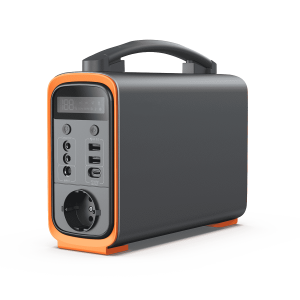
Portable power stations fall into the medium-capacity category and are commonly used for charging and powering small appliances during outdoor activities, camping trips, and power outages. Home energy storage backup batteries, on the other hand, are designed to provide enough power to support household appliances throughout the home.
| Backup Power Type | Capacity | Backup Runtime | Suitable Applications |
| Computer UPS | 300VA-1500VA (approximately 180W-980W) | 5-30 minutes | Computers, safe shutdown, network equipment |
| Portable Power Station | 300Wh-2000Wh | 2-24+ hours | Home power outages, camping, outdoor work |
| Home Battery Backup | 5kWh-20kWh+ | 1 day to several days | Whole-home backup power, long-term outages |
For example:
If there is a power outage at home and we need to keep the following devices running:
- Refrigerator (150W)
- WiFi router (15W)
- 4 LED lights (40W)
- Phone charging (20W)
The total power consumption is 225W. Based on the formula:
Runtime = Battery Capacity × Efficiency ÷ Typical Essential Home Loads
A standard UPS may only last for a few minutes.
However, a 2000Wh portable power station could theoretically provide power for around 8 hours. (It is important to note that refrigerators are compressor-based appliances and do not continuously run at 150W. They start and stop intermittently, so in real-world use, a portable power station or home energy storage system can usually provide a longer runtime than the theoretical calculation.)
A 5kWh home battery backup system could support these essential loads for around 20 hours.
However, if additional high-power appliances are added at the same time (such as electric heaters, microwaves, or electric kettles), even a 2000Wh portable power station may only last one to two hours when powering these devices simultaneously.However, it should be noted that these figures are estimates; actual times may vary depending on equipment start-stop cycles and system efficiency.
Why Do Their Runtime Differences Vary So Much?
Many people notice that UPS systems are also a type of backup power source. So why can a UPS usually only last for a few minutes, while a portable power station can run for several hours, and a home battery backup system can even provide power for several days? The reason the runtime difference is so large is that they are designed for different purposes and applications:
Computer UPS:
The purpose of a UPS is to instantly switch to backup power when a sudden power outage occurs, ensuring that connected devices continue running without interruption. Standard household UPS systems usually use sealed lead-acid batteries, which are inexpensive and provide fast response times (millisecond-level switching). However, their capacity is generally only from a few dozen Wh to a few hundred Wh.In addition, household UPS systems usually output a modified sine wave instead of a pure sine wave, making them suitable mainly for devices with built-in switching power supplies, such as computers and monitors. If used to power household appliances with compressors, such as refrigerators and air conditioners, the capacity is usually insufficient, and the high startup current of these appliances may trigger the UPS overload protection. Therefore, UPS systems are generally not recommended for powering these types of household appliances.The original purpose of a UPS is not to provide long runtime. Its main advantage is fast switching speed, giving users enough time to save files and safely shut down their devices.
Note: A switching power supply (SMPS) converts the AC power from a wall outlet into the DC power required by the internal circuits of a device. You may wonder, what does this have to do with modified sine waves? A modified sine wave is a simplified version of a pure sine wave. A switching power supply converts AC power (whether pure sine wave or modified sine wave) into pulsed DC power and then smooths it into a more stable DC voltage for normal operation. For devices with built-in switching power supplies, as long as sufficient voltage and power are provided, they can usually operate normally with a modified sine wave output.
Portable Power Station:
Unlike UPS systems, portable power stations are designed primarily for providing long-term power to a wide range of appliances. To achieve portability and flexibility, they usually use lithium batteries (mainly LiFePO4 batteries), which offer higher energy density and lighter weight.
More importantly, portable power stations provide pure sine wave output because they need to power a much wider variety of devices, including not only computers, monitors, and WiFi routers, but also refrigerators, medical equipment, projectors, and more. Many household appliances cannot operate properly without a pure sine wave output.
In terms of capacity, portable power stations are also much larger than UPS systems. They typically come with battery capacities ranging from 300Wh to 2000Wh or even higher. They can continuously power devices such as refrigerators, lighting, WiFi routers, and laptops for several hours, making them suitable for home power outages, camping, and outdoor work.
For home workshops, small businesses, and outdoor work environments, backup power can also help keep computers, monitors, control systems, and other CNC router machine running during unexpected power outages.
Home Battery Backup:
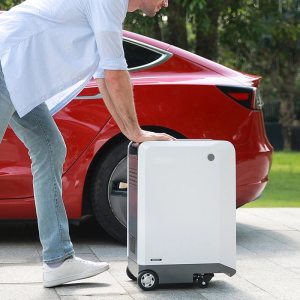
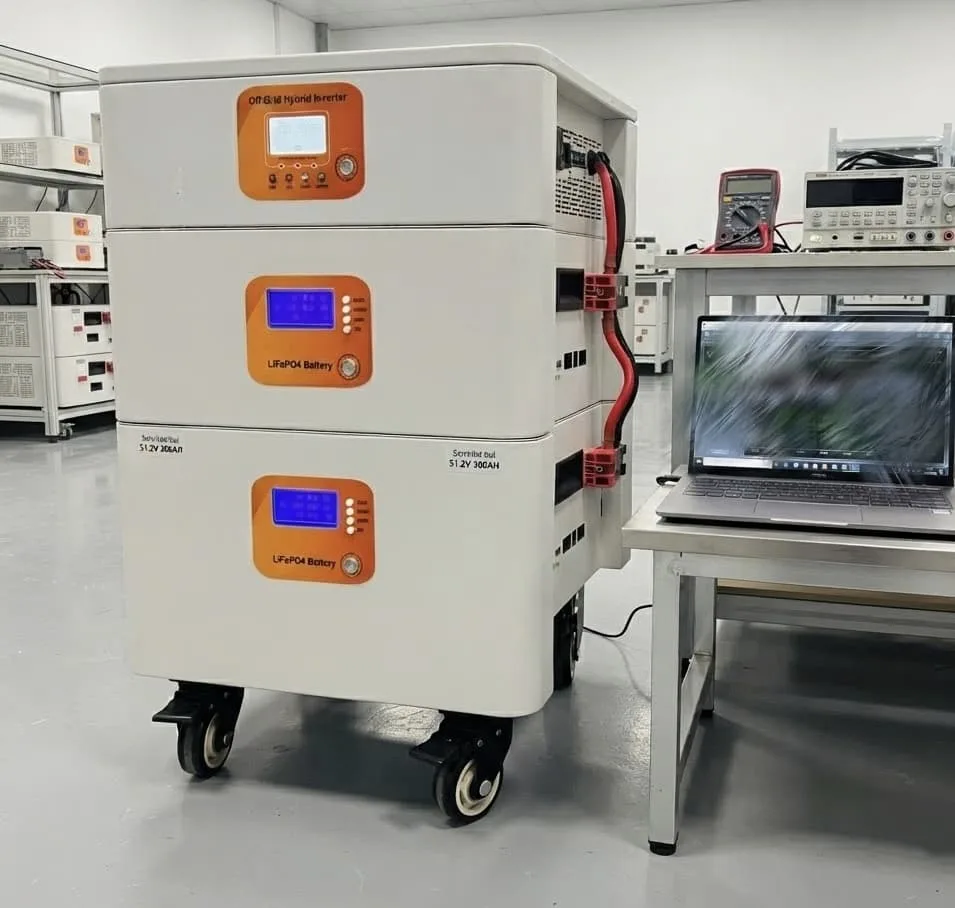
A home battery backup system is mainly designed to provide backup power for the entire household. It offers more complete functionality—not only protecting computer data from being lost or providing power for a few hours, but also keeping household appliances running during extended power outages.
It has a much larger energy storage capacity than UPS systems and portable power stations. These systems usually adopt a modular design, starting from 5kWh and expandable to dozens of kWh. For example, a 10kWh home battery system can run a standard refrigerator for 2-3 days, or power a refrigerator, WiFi router, and lighting at the same time for 1-2 days.
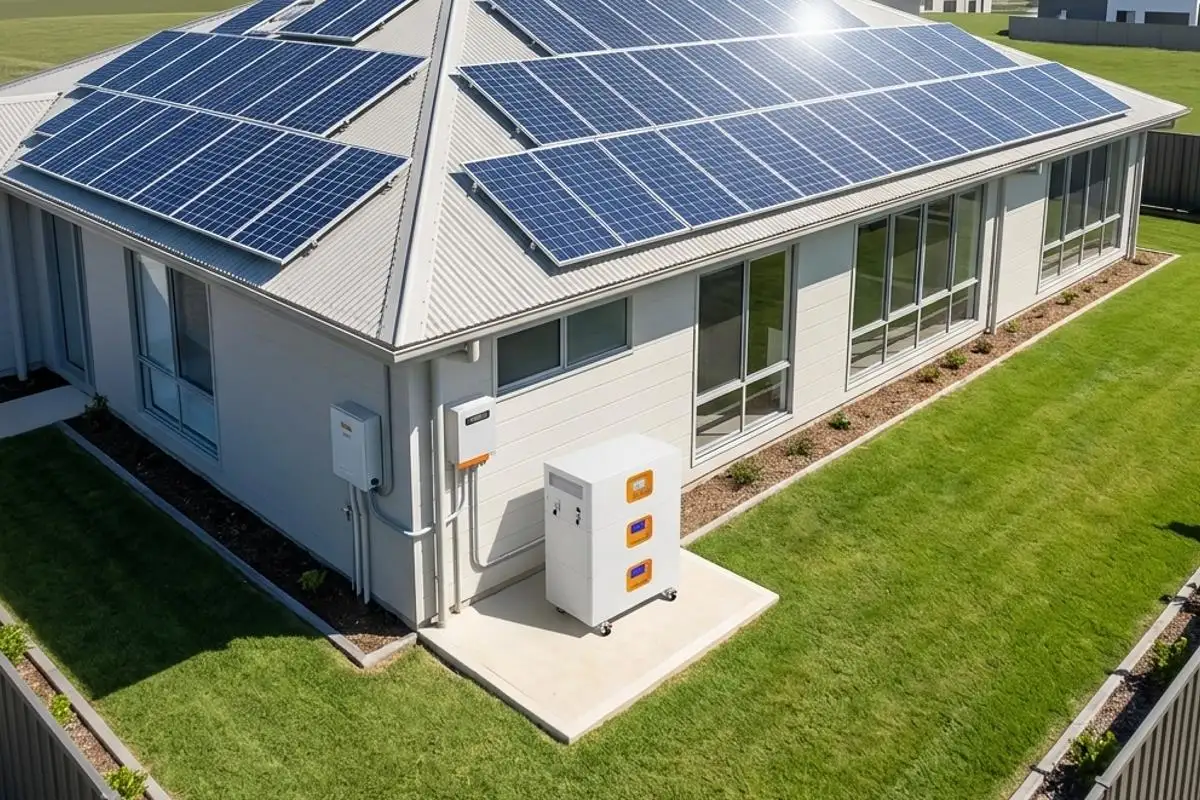
In addition, it can be paired with solar panels for charging. For example, if a power outage lasts for several days and the stored energy is depleted, solar panels can continue recharging the battery during the daytime, allowing the stored energy to be used at night.
The main purpose of a home battery backup system is to allow people to keep their household appliances operating normally, even during power outages that last for several days.
How to Calculate Battery Backup Runtime for Home Appliances?
I believe many people may use the following formula to calculate how long a backup battery can power household appliances:
Theoretical runtime (hours) = Usable battery capacity (Wh) ÷ Actual average power consumption of the device (W)
There is nothing fundamentally wrong with this calculation method. However, I would like to explain it from another perspective: calculating the runtime of a backup battery by first determining the energy consumption of household appliances.
Most households use appliances such as refrigerators, lighting, and kitchen appliances. Some households in Southeast Asia may also use water pumps and window air conditioners.
We can first calculate the operating time and energy consumption of household appliances:
| Appliance | Power Consumption | Actual Daily Runtime | Daily Energy Consumption (kWh) |
| Refrigerator | Average operating power: 100-250W | Approximately 8-12 hours | 0.8-1.2 kWh |
| Window Air Conditioner | 500-1500W | Depends on usage duration in summer or winter | Calculate based on actual operating time |
| Rice Cooker | 500-700W | 20-30 minutes/use | 0.2-0.3 kWh/use |
| Water Pump | 700-2000W | Based on actual operating time | Depends on usage frequency |
| LED Lights ×4 | 32-40W | 6 hours/day | 0.2-0.25 kWh |
| WiFi Router | 5-10W | 24 hours | 0.12-0.24 kWh |
| Microwave Oven | 950-1500W | 10 minutes/use | 0.16-0.25 kWh/use |
| Laptop + Mobile Phones | 50-100W | Charging for 2-4 hours | 0.2-0.4 kWh |
The following three appliances are special cases: refrigerators, window air conditioners, and water pumps.A refrigerator remains plugged in 24 hours a day, but the actual compressor operating time may only be around 8-12 hours, because the compressor runs intermittently. For more details, you can refer to another article: How Long Can a Battery Backup Run a Refrigerator?
The energy consumption of a window air conditioner depends on household usage and seasonal changes. For example, in Southeast Asia, where summer temperatures are high, an air conditioner may run 12 hours or more per day. In temperate regions, it may only be used during the hottest days of the year.
The energy consumption of a water pump also needs to be calculated based on your actual usage. Another important factor is its startup surge power. For example, a 1/2 horsepower deep well pump may consume around 750W during operation, but its startup surge can exceed 1500W. A 2 horsepower pump may have a startup surge as high as 9680W. Although this surge only lasts for one or two seconds, if the backup power supply does not have sufficient peak output power, the water pump will not be able to start.
Then, add up the estimated energy consumption of all appliances to get the total energy demand, and use this total value to determine the appropriate capacity of the backup power system.
Why Is the Actual Runtime of a Battery Backup Always Shorter Than the Theoretical Runtime?
Many users find that when calculating the runtime of a battery backup, the actual operating time is shorter than the theoretical calculation. Why does this happen? The reason is that real-world factors are often overlooked when estimating battery backup runtime:
The calculation assumes an inverter efficiency of 90%, but under actual load conditions, the efficiency may only be around 80%-85%.
The calculation assumes the battery can be completely discharged, but the battery BMS may disconnect the output when the battery reaches around 90% discharge to protect the battery.
The backup power system itself also consumes energy through components such as the inverter standby power, display screen, and cooling fans. For example, if a power station has a 15W standby power consumption and runs for 8 hours overnight during a power outage, it will consume 120Wh of energy by itself.
Resistance losses in cables can also reduce the available energy.
Startup surges from appliances can cause additional energy consumption. For example, when devices such as air conditioners and refrigerators frequently cycle on and off, the startup surge can consume extra power.
The power consumption of the same device can vary depending on its operating mode. For example, a laptop may only consume 50-100W in standby mode but can exceed 150W when running demanding tasks or playing games.
How to Measure the Actual Energy Consumption of Household Appliances?
Since calculations based on estimated data can differ from real-world results, is there another way to know the minimum battery capacity needed for your home backup power system?
Yes. You can also use a power meter to measure the actual energy consumption of your appliances.
You can purchase a plug-in power meter online (such as Poniie or Kill A Watt) and plug it between the appliance and the wall outlet. After 24 hours, you can directly read the actual energy consumption data. This is the most accurate method, and it is usually more reliable than checking the user manual, looking at the nameplate rating, or searching online.
Measuring for 24 hours can cover a complete operating cycle, but keep in mind that if the refrigerator happens to be in a period when the compressor does not start, the measured data may be lower than the actual average consumption. Therefore, it is recommended to measure for 48-72 hours for more accurate results, or set up the power meter and record the readings regularly over several days, then calculate the average value. This allows you to better understand your household’s actual energy usage habits.
How to Choose the Right Battery Backup?
Step 1: Determine How Long You Need Backup Power
If you only need power for a few minutes: Choose a UPS. It is suitable for desktop computers, NAS devices, and routers, ensuring that important data is not lost during a sudden power outage.
If you need power for several hours: Choose a portable power station to run devices such as refrigerators, WiFi routers, lights, and mobile phones.
If you need power for more than one day: Choose a home battery backup system. It can provide power for the entire home and is suitable for long-term power outages.
Step 2: Consider Which Devices You Need to Power
| If you need to power: | Recommended Capacity: |
| Mobile phones, WiFi, lighting | 300-500Wh |
| Refrigerator + basic devices | 1000-2000Wh |
| Refrigerator + water pump / air conditioner | 2000Wh+ |
| Whole-home backup for one day | 3-5kWh |
| Whole-home backup for multiple days | 10kWh+ |
Step 3: Choose the Battery Type
Prioritize LiFePO4 batteries. They offer a cycle life of up to 3,000-6,000 cycles, support 80%-90% depth of discharge, and provide excellent safety performance. Although they have a higher upfront cost compared with lead-acid batteries, their lifespan is more than 10 times longer, making them more cost-effective in the long run.
Step 4: Confirm Charging Methods and Expandability
When choosing a backup battery, it is better to select a system that supports solar charging. If a power outage lasts for a long time and the battery capacity is not enough, you can continue using solar energy to recharge the battery while powering your devices.
A backup battery system that supports parallel expansion is also a better choice. When your household electricity needs increase in the future, such as adding a new refrigerator, purchasing an electric vehicle, or adding more appliances, you do not need to replace the entire system. You only need to purchase additional batteries of the same model and connect them in parallel to expand the capacity.
Summary: For homeowners who need backup power for several hours or even an entire day, a LiFePO4 portable power station with solar charging capability can be a practical solution. For longer-lasting power outages, an expandable home battery system can provide greater capacity to meet the basic energy needs of a household.
Frequently Asked Questions:
Q1: How long can UPS last without power for a PC?
A typical UPS can usually power a computer for only 3-15 minutes during a power outage. If the computer has very low power consumption (such as a low-power mini PC with a monitor), some UPS systems may last around 30 minutes to 1 hour.
For example, a standard 1500VA UPS (approximately 900W output) can usually run for only 3-5 minutes at full load (close to 900W). Even at half load (around 450W), the runtime is only about 10-14 minutes. Its main purpose is to give users enough time to save files and safely shut down the computer, not to provide all-day backup power.
Q2: Can a battery backup last 8 hours?
Yes, but only if you choose the right type of backup power system instead of a UPS.
A UPS system cannot provide power for 8 hours. The reasons are explained in Q1.
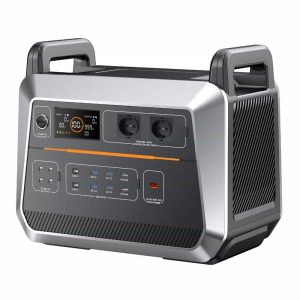
A portable power station can. A 1000Wh device powering a standard refrigerator (with an average power consumption of 120W) can typically run for around 7-14 hours. A portable power station like PF2000 with a 2073Wh capacity, which has been tested, can cover a 14-hour power outage while continuing to power a refrigerator, network equipment, and lighting.
A home battery system can certainly provide 8 hours or more of backup power. A 10kWh home battery system can typically provide 12-24 hours of backup time for essential loads such as a refrigerator, WiFi router, lighting, and phone charging.
If you want to maintain power throughout an entire night, you should choose a portable power station (1000Wh or higher) or a home battery backup system.
Q3: How to tell if a battery backup is going bad?
If you notice that your backup power runtime has become significantly shorter, there are unusual warning signals, or the battery casing has changed shape, it may indicate that the battery is reaching the end of its life.
For example, if the battery previously lasted two hours but now only runs for half an hour, this is a clear sign of battery capacity degradation. If it continuously makes beeping alarm sounds, the indicator lights flash abnormally, or the display shows messages such as “Replace Battery”, these are warning signals from the battery system.
The most dangerous signs are physical changes such as swelling, bulging, deformation, or leakage and corrosion around the power ports. In these situations, do not continue using the battery. Stop using it immediately, as it may indicate internal damage and could potentially create a fire risk.
Regularly checking your backup battery is important to avoid discovering that it has failed only when a power outage occurs. In general, lead-acid batteries usually need replacement after 2-3 years, while LiFePO4 batteries can last much longer.