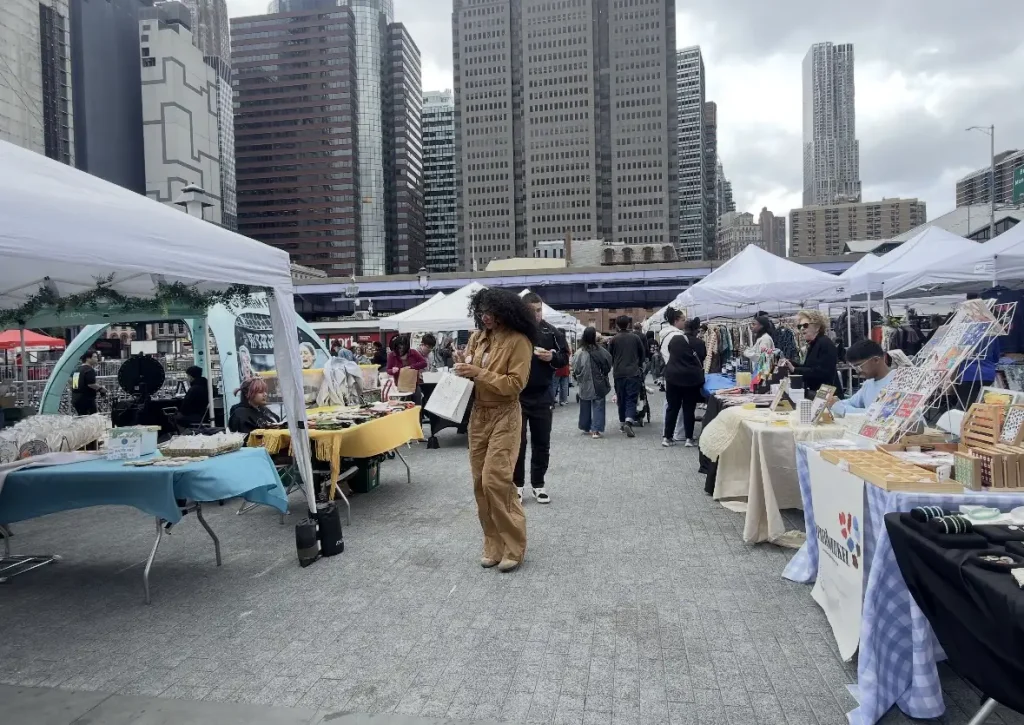
Many companies and small business owners expand their operations into craft fairs, maker markets, and industry trade shows to quickly increase brand awareness or boost sales. For example, businesses that offer custom leather products, personalized laser-engraved tumblers, or on-site heat-pressed T-shirts can use live customization services to quickly build customer trust and create significant profit margins.
However, once your tools are away from a traditional power outlet, finding a stable and reliable power source becomes a major challenge.
Many vendors may be used to simply paying an expensive electricity fee to the market organizers. As a result, before selling even a single product, their event profits may already be reduced by the cost of electricity. Moreover, even if you pay for access to power, the on-site electricity supply is not always reliable. When you share the same circuit with other booths and both sides plug in high-power appliances at the same time, the power can suddenly trip and shut off.
At this point, having a portable power station that fits your booth’s needs and allows you to operate independently off-grid can solve most of these problems.
Why Choose a Portable Power Station Instead of a Gas Generator?
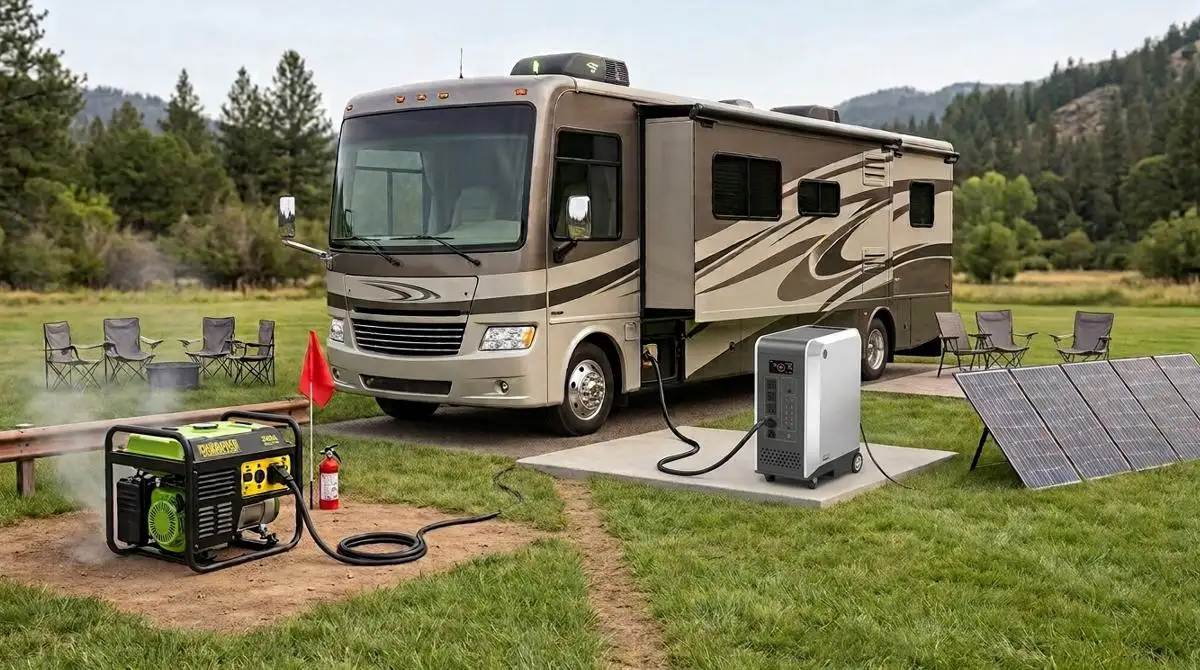
Although traditional fuel generators can provide high power output, they are no longer a practical option for many artisans and market vendors:
Noise issues: Fuel generators are extremely loud when running, even louder than a lawn mower. When you are introducing your products to customers, the noise can seriously affect their experience and disrupt the sales atmosphere. In contrast, portable power stations operate with almost no noise, creating a much better on-site experience for customers.
Emissions and venue restrictions: Fuel generators produce carbon monoxide, and many municipalities and national parks prohibit the use of gasoline generators. In addition, the unpleasant exhaust fumes can ruin the warm and premium shopping atmosphere of a craft fair. Portable power stations, however, produce zero emissions, so you do not have to worry about exhaust. They can even be placed under a table without disturbing people nearby.
Convenience: Fuel generators require you to carry fuel tanks, perform oil changes and maintenance, and manually pull a cord to start them. You also have to load and unload them for every event. A portable power station, on the other hand, only needs to be fully charged at home before the event. Once you arrive at the venue, simply plug in your equipment and start using it.
| Portable Power Station | Gasoline Generator | |
| Advantages | Quiet operation without disturbing customer interactions; zero exhaust emissions indoors; no need to store fuel; extremely low daily maintenance requirements; stable pure sine wave output; easy to move between venues | Can run continuously as long as fuel is available; usually provides higher maximum output power at the same budget; lower initial purchase cost; quick fuel replenishment |
| Disadvantages | Limited battery capacity and requires recharging; higher initial equipment investment; performance may decrease in extremely hot or cold environments | Loud operation noise; exhaust emissions limit indoor use scenarios; inconvenient fuel transportation; requires regular engine maintenance |
What Equipment Do You Need to Power at a Craft Fair?
Different types of booths have different power requirements. You should evaluate your electricity needs based on the specific equipment you will use at your booth. First, let’s calculate the load requirements based on different categories of craft fairs:
Light load:
POS machines/card readers, LED string lights, and phone/tablet charging are generally between 50-150W. Any entry-level portable power station can easily handle these devices.
Heavy load:
| Equipment | Typical Power Range | Suitable Craft Category | Recommended Portable Power Station Rated Power |
| Heat press machine / heat transfer machine (T-shirt customization) | 400-1800W (common 15×15 inch models: 1000-1400W; mini hat models: around 400W) | Custom apparel | Mini hat models: 1000W+ rated power; common 15×15 inch models: at least 2000W rated power to avoid choosing a unit that operates too close to the 1400W limit |
| Electric pottery wheel | 280-450W | Pottery / Clay crafts | 800W+ rated power. Although the device itself does not consume much power, additional capacity is needed to handle motor startup surges |
| Heat gun (for removing resin bubbles) | 300-1500W | Resin crafts | Low-power models: 800W+ rated power; high-power models (1500W range): 2000W+ rated power |
| Sewing machine | 70-100W | Leather goods / Textiles | 300W+ rated power is sufficient |
| Iron (for shaping leather/fabric) | Around 1000W | Leather goods / Textiles | 1500W+ rated power |
| Handheld fiber laser marking machine (complete unit) | Around 500W | On-site engraving for metal accessories | At least 1500W rated power is recommended. Avoid choosing a power station with a rated output only slightly higher than 500W, as the safety margin is too small |
| UV laser engraving machine (complete unit) | Around 480W | On-site engraving for wood/crystal/acrylic products | At least 1500W rated power |
You can use the following two formulas to calculate your required power capacity:
Total power (W) = Sum of the power ratings of all devices running simultaneously
Required energy capacity (Wh) = Total power (W) × Operating time (hours)
It is important to note that the actual power consumption required at a market or trade show may be lower than the theoretical calculation. If you choose a portable power station based on the theoretical value, the actual runtime in real-world conditions may be longer than expected.ble power station with enough capacity to handle your equipment’s startup surge, not just its continuous running wattage.
Why Does a Portable Power Station Often Last Longer Than the Math Suggests?
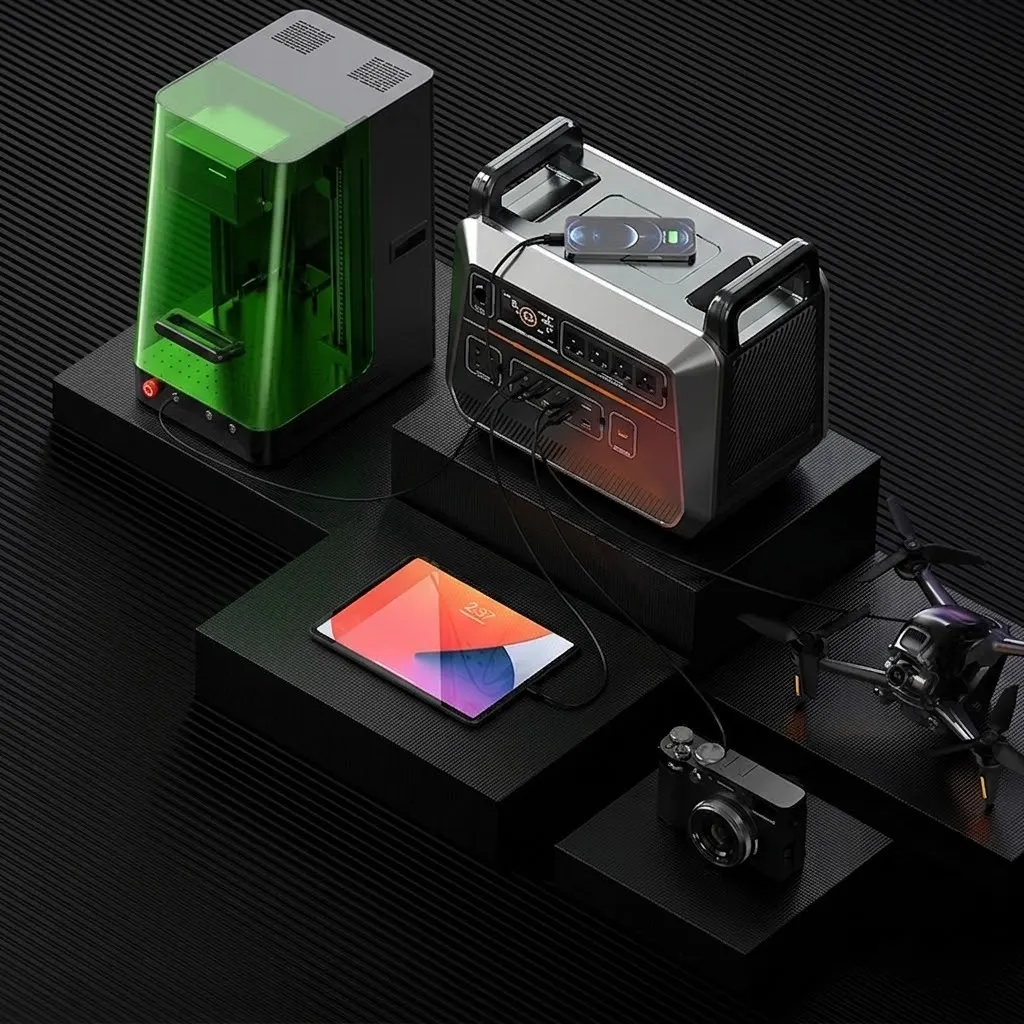
We have a customer who uses our Piforz PF2000 (2073Wh capacity, 2200W rated output)to power his ComMarker Omni X UV laser engraver at trade shows. This mobile engraving machine allows creators to showcase personalized products directly to customers and explore new opportunities in the laser engraving business..Based on actual usage, the PF2000 was able to fully support this machine’s work throughout a full day at the exhibition.
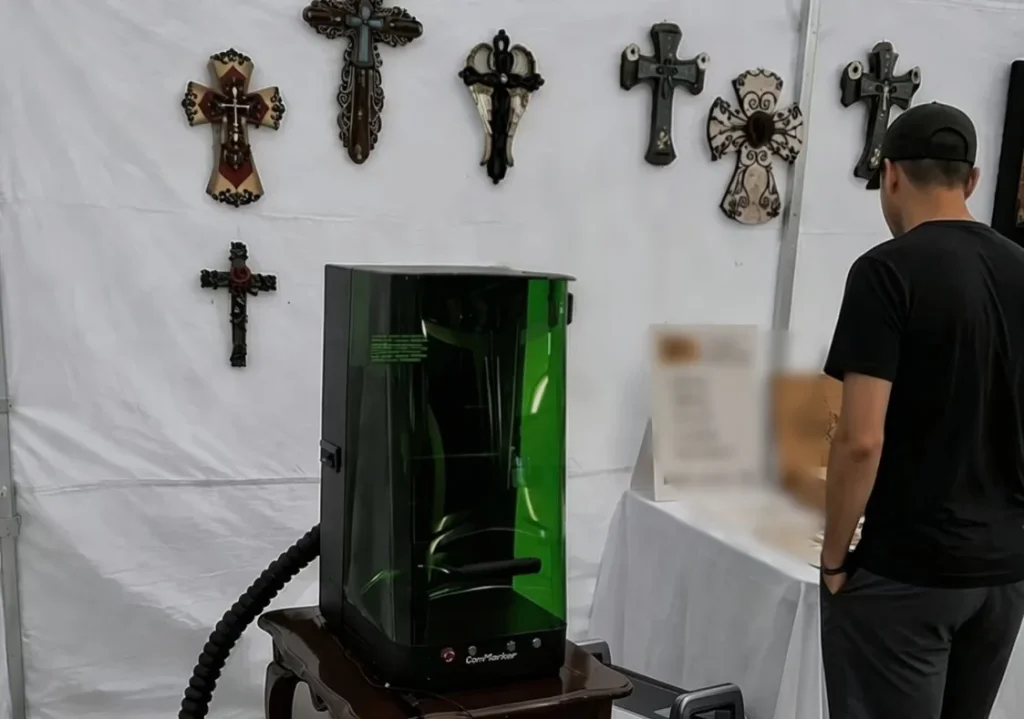
The laser module of this engraving machine has a rated power of only 6W or 12W, but the machine’s actual maximum input power is 480W.
If we calculate based on the assumption that this machine continuously consumes 480W of power throughout an entire 8-hour trade show day, the PF2000 would only be able to run for about 3.7 hours with an inverter efficiency of 85%, which would clearly not be enough to support a full day of operation.
So, what is actually happening here? This is where we need to explain something important. When calculating the required energy capacity, we usually calculate based on the assumption that the machine operates continuously for 8 hours without interruption. However, this is not how craft fairs actually work in real-world situations.
In actual operation, the machine does not maintain 100% engraving efficiency all the time. Typically, a customer transaction works like this: greeting the customer, explaining the design concept in detail, placing the item on the workbench, starting the laser equipment for one or two minutes of engraving, then chatting with the customer, collecting payment, and finally preparing for the next customer.
The laser equipment itself may only be actively working for a small portion of each hour. The rest of the time, it remains powered on but idle, consuming only a fraction of its peak power.
Assuming that at the market, the machine actually operates for 3 hours and remains in standby mode while interacting with customers for a total of about 5 hours, the power consumption can be calculated as follows:
| Activity | Time | Power draw | Energy used |
| Active engraving | ~3 hours total | 480W | 1440Wh |
| Powered on, idle between customers | ~5 hours total | ~40W | 200Wh |
| Total for the day | 8 hours | — | ~1640Wh |
This is why a portable power station with around 2000Wh capacity can support this laser engraving machine throughout a full day at an exhibition. Moreover, if you participate in multi-day events, you can recharge it during lunch breaks or after returning to your hotel in the evening. With fast charging, 1.5 to 2 hours is enough to replenish the power.
Therefore, for most ComMarker users participating in craft fairs or trade shows, a 2000Wh portable power station is a highly worthwhile choice.
Why Precision Equipment Demands a High-Quality Portable Power Station
1. Must have pure sine wave output:
Devices like laser engravers have core components such as precision motion systems and control boards, which are extremely sensitive to power quality. Some low-cost portable power stations on the market use modified sine wave output. This type of waveform is not smooth and may appear to work normally, but it can cause serious damage to precision equipment. If a laser engraver is powered by a modified sine wave source, it may result in blurry edges, positioning errors, and reduced engraving quality. It may also cause sensitive control boards to misjudge signals, freeze, or even burn out.
2. Startup peak power and BMS:
Laser engravers/markers contain multiple components, including lasers, cooling fans, and control boards. When powered on, they can generate a large surge current, with the current instantly rising to several times or even more than ten times the normal operating current. If the power station does not have sufficient peak power output, it may trip immediately during startup. At this point, the battery management system (BMS) of the portable power station becomes critical. A high-quality BMS can briefly allow this high current to pass, while a poor-quality BMS may mistakenly identify it as a short circuit or overload and immediately cut off the output.
3. LiFePO4 is more suitable for long-term, frequent use
Most modern portable power stations use lithium iron phosphate (LiFePO4) batteries. Compared with the commonly used ternary lithium batteries from earlier generations, LiFePO4 batteries offer longer cycle life and better thermal stability. They are also better suited for scenarios like trade show booths, where frequent charging and discharging and long-term intensive use are required. When purchasing, make sure the product specifications clearly indicate that the battery type is LiFePO4, as this determines whether the portable power station can withstand long-term use.
Things to Confirm Before Purchasing
- Confirm that the power station clearly states pure sine wave output, rather than “modified sine wave” or leaving the waveform type unspecified.
- Check the actual input power requirements of your equipment and compare them with the portable power station’s rated output power, leaving enough safety margin.
- Confirm whether the portable power station is equipped with a reliable BMS that provides comprehensive protection, including overcharge, over-discharge, short-circuit, and temperature protection.
- Confirm that the portable power station uses a LiFePO4 battery.
7 Tips for Choosing the Best Portable Power Station for Your Booth
1. Choose pure sine wave output
Not only laser equipment needs it. As long as your booth uses tools with motors (such as pottery wheels and sewing machines) or precision electronic devices, pure sine wave output should be a basic requirement. When choosing a portable power station, make sure the product specifications clearly state “Pure Sine Wave”. Avoid products with vague descriptions or those that do not specify the waveform type.
2. Make sure the power station matches the peak surge power of your equipment
Devices with motors or heating elements often require significantly more power at startup than during normal operation. When purchasing a power station, do not only check whether the rated output power is sufficient. You should also confirm whether the power station’s peak/surge output power can handle the startup surge of the most power-hungry device at your booth.
3. Consider weight and portability
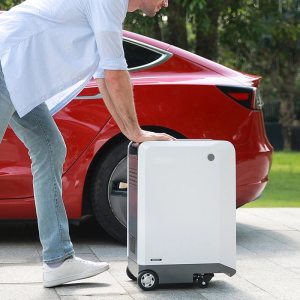
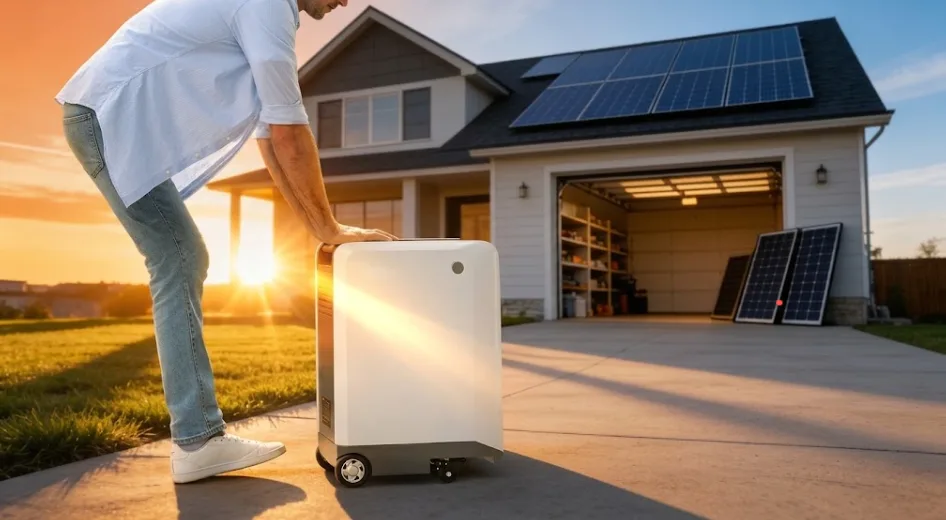
Craft fairs and trade shows usually mean you will need to carry the equipment yourself, load and unload it from your vehicle, and walk some distance to your booth. Larger-capacity power stations are often heavier. Models with wheels or well-designed handles are much more convenient for booth setup and teardown.
4. A portable power station with fast charging is more practical
If you’re attending a two- or three-day weekend market, it’s important to plan ahead for recharging your portable power station.
Lunch breaks at exhibitions usually only last one or two hours. If the power station does not support fast charging, it may take several hours to fully recharge, making it difficult to replenish power during the event. Fast charging capability (for example, Piforz products can be fully charged in 1.5 to 2 hours) can significantly improve practical usability in these situations.
5. A portable power station that supports solar charging is a better choice
If your charging conditions are limited, such as having few available power outlets nearby or facing unexpected situations, a portable power station with solar charging support provides an additional layer of backup. As long as the power station supports solar input, you can use a solar panel to continuously recharge it while running your booth during the day. This is especially suitable for multi-day events where there is no stable power supply available on-site.
6. Choose the correct voltage
Power standards may vary between different regions and venues. Make sure the output voltage and frequency of your power station match your equipment. If you frequently participate in exhibitions across different states or countries, this is especially important to confirm in advance to avoid equipment failures caused by voltage incompatibility.
United States and Japan: 110-120V AC output
Europe, Australia, and most Asian countries: 220-240V AC output
7. Pay attention to the IP protection rating
If you frequently participate in outdoor craft fairs or markets, the protective features of the power station itself are also important. Check whether the product specifications include an IP protection rating (for example, IP65 indicates strong dust and water resistance). A higher rating means the power station has better resistance against risks such as sudden light rain, dust, or accidental splashes. If you regularly operate your booth outdoors without any shelter, this factor deserves special attention.
Best Practices for Using a Portable Power Station at Craft Fairs
Perform a complete test at home in advance. Before the event, connect all the equipment you plan to use to the power station at the same time and run a full test to confirm that the power station can operate everything stably.
Place the power station underneath the table, toward the back, and away from customer walking areas.
Keep the portable power station away from drinks and humid environments. Place it in a location where it is unlikely to be knocked over or exposed to rain or spilled beverages.
Avoid direct sunlight to prevent overheating.
Use cable organizers or heavy-duty tape to secure cables to the ground and prevent tripping hazards.
Do not use cheap orange household extension cords, as they may cause voltage drops and fire risks under heavy loads.customers, and growing your business.