
In late January 2026, a powerful winter storm swept across the eastern and southern United States. According to CBS News, heavy snow, freezing rain, and extreme cold temperatures left hundreds of thousands of customers without power, forced the cancellation of numerous flights, and affected nearly 180 million people. The event served as a wake-up call for many Americans, highlighting just how essential it is to have a reliable backup power source at home.
Having worked in the energy storage industry for five years, I’ve met countless customers who only started looking for a backup battery after experiencing a power outage. It seems that many people don’t realize how dependent they are on electricity until it’s suddenly gone. One of my long-time customers was directly affected by this storm.
That’s exactly why I decided to write this article. The real question isn’t whether a power outage will happen—it’s when. With extreme weather becoming more frequent in recent years and aging power grids facing increasing pressure, power outages are no longer rare events; they’re becoming a reality that every homeowner should prepare for.
Real Experience
On January 25, when reports of power outages first started coming in, one of my customers immediately pulled out the 300W portable power station she normally used for camping and charged it to full overnight.
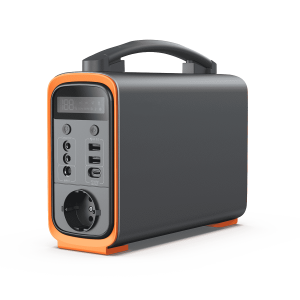
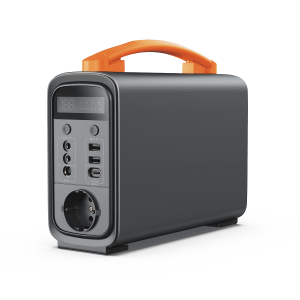
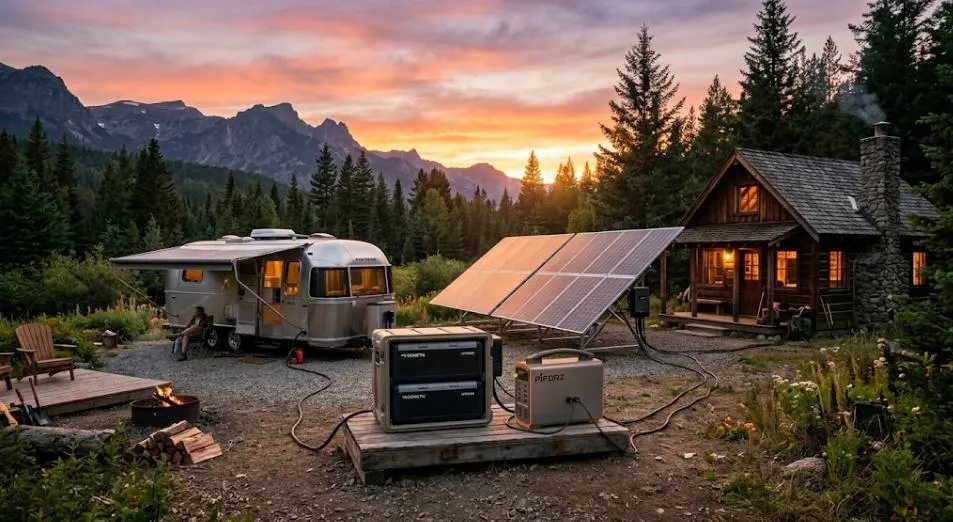
To be honest, her Piforz GT300, with its 300W output and 307Wh battery capacity, was perfectly adequate for camping—powering a smartphone, drone, camera, and a few LED lights. But when it came to keeping a home running during a blackout, it simply wasn’t enough.
During the outage, the power station was used to run four 10W LED lights, a 10W Wi-Fi router, and charge a smartphone. It lasted for only about four hours before the battery was completely drained. Unfortunately, that particular power outage lasted five hours, leaving the house in complete darkness for the final hour.
When the power finally came back, she contacted me with a question that many homeowners eventually ask:
If the next outage happens, how large of a backup power system do I actually need? Clearly, 300W wasn’t enough. Would 1000W be sufficient? Or would she need 2000W? How much energy does it really take to keep essential appliances like a refrigerator, router, lights, and phones running for an entire day?
That’s why a power outage is about much more than simply losing the lights.
Within just a few hours, food inside the refrigerator begins to spoil. Once the router shuts down, the entire household loses internet access. If your phone runs out of battery, you may not even be able to check when power will be restored. Most importantly, for families relying on medical equipment such as oxygen concentrators or CPAP machines, a power outage isn’t just inconvenient—it can become a serious safety risk.
How to Determine the Backup Power Capacity You Need
Before choosing a specific backup power solution, you first need to understand your own electricity needs. This comes down to two key questions:
Which Devices Need Power?
During a power outage, you don’t need to keep every appliance in your home running. Instead, ask yourself: Which devices would cause real problems if they lost power?
For most households, the essentials include:
- Refrigerator (to keep food from spoiling)
- Wi-Fi router (so you can stay connected)
- A few LED lights (so you’re not left in the dark)
- Mobile phones (to stay in touch and receive updates)
- In winter: An electric heater or electric blanket (low-power models)
- In summer: An electric fan
- If anyone relies on medical equipment: An oxygen concentrator, CPAP machine, or other essential medical devices
The power consumption of these devices varies significantly. The following table provides approximate wattage values for some common household appliances for reference only.
| Essential Appliance | Typical Power | Priority Level |
| Refrigerator | 150–300W | High |
| Wi-Fi Router | 10–20W | High |
| LED Lights | 10–40W | High |
| Phone | 5–20W | High |
| Electric Blanket | 50–150W | Medium |
| Small Space Heater | 500–1500W | Medium |
| Electric Fan | 30–100W | Medium |
| Oxygen Concentrator | 300–600W | Critical |
| CPAP Machine | 30–90W | Critical |
| TV | 80-150W | Low |
| Microwave Oven | 800-1500W | Medium |
So, the first step is to make a list of every device you absolutely need to run during a power outage. Then, add up their power ratings to determine your baseline power requirement.
For example, let’s say you want to keep the following appliances running during an outage:
- Four 10W LED lights
- One 200W refrigerator
- One 10W Wi-Fi router
- One 1,000W microwave oven
If all of these devices are operating at the same time, your total running power requirement would be approximately 1,250W.
How Long Do You Want Your Backup Power to Last?
There’s a simple formula for estimating the battery capacity you’ll need:
Required Capacity (Wh) ≈ Device Power (W) × Runtime (Hours)
Using the previous example, let’s assume you want to keep your essential devices running for 3 hours, while the microwave is only used for about 0.5 hour.
Your calculation would be:
- Essential loads: 250W × 3h = 750Wh
- Microwave: 1,000W × 0.5h = 500Wh
Total required capacity = 750Wh + 500Wh = 1,250Wh
This means your backup power station should have a battery capacity greater than 1,250Wh.
However, 1,250Wh is only the theoretical minimum. In a real-world power outage, you also need to account for:
- Inverter losses (typically 10–15%)
- Reduced battery performance in cold weather (A study on automotive LiFePO₄ batteries have shown noticeable performance degradation at 0°C and −10°C.)
- Startup surge currents from appliances such as refrigerators and air conditioners (According to HVAC engineering references, compressor startup current is typically 4–6 times the normal running current.)
For this reason, a good rule of thumb is:
Recommended Battery Capacity = Theoretical Capacity × 1.2
Using the example above:
1,250Wh × 1.2 = 1,500Wh
So, you should choose at least a 1,500Wh battery. If your budget allows, a 2,000Wh power station will provide a much more comfortable safety margin.
Match Your Backup Needs to the Right Power Supply
After understanding the selection process above, you can use the table below to quickly identify the most suitable backup power solution based on your situation.
| Scenario | Recommended Solution | Why |
| Apartment | Portable Power Station | Simply plug it into your refrigerator and router during a power outage. Store it in a closet the rest of the time, and take it with you easily if you move. |
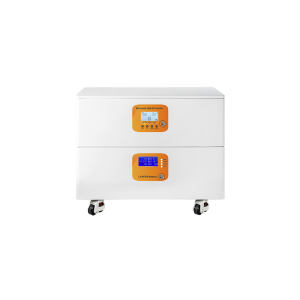
| Typical Home (Short Outages) | Home Battery System | Ideal for homeowners who typically experience outages lasting half a day to one day. A 5–10kWh system automatically switches over during an outage, keeping your refrigerator, internet, and lighting running without manual intervention. Quiet, emission-free, and hassle-free. |
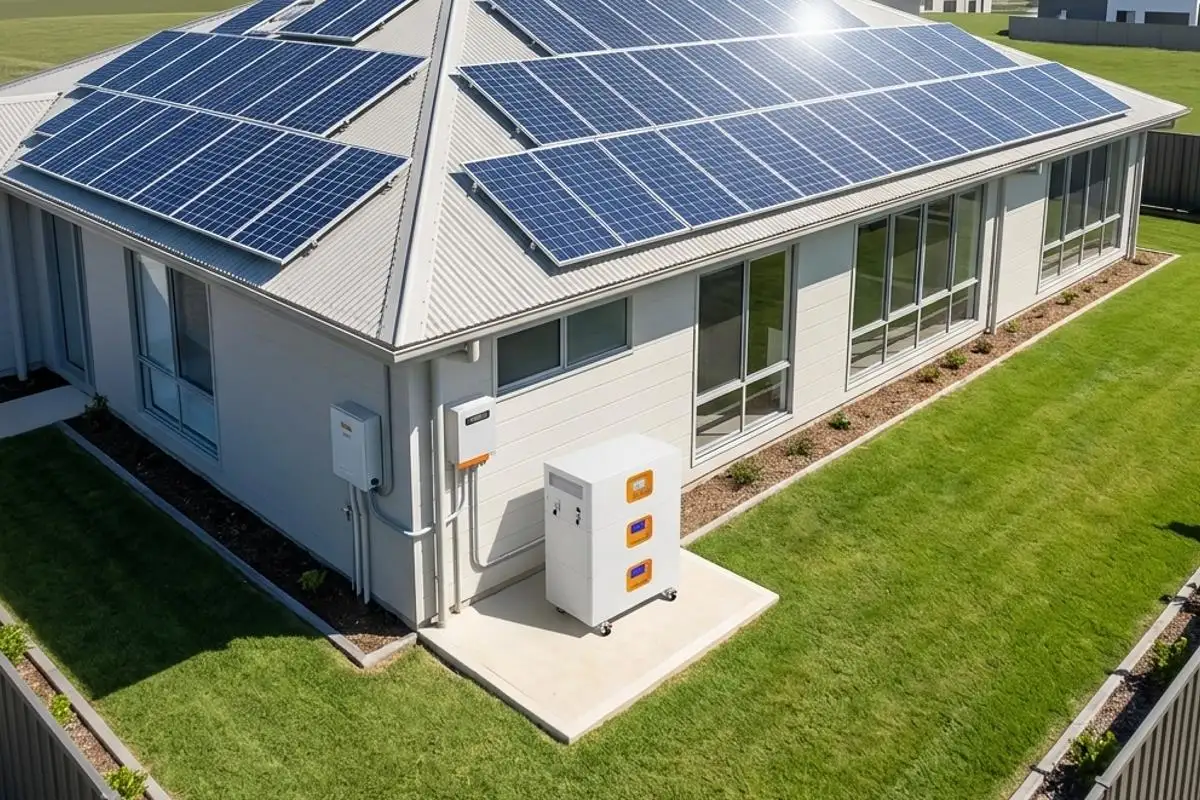
| Frequent Power Outages (More Than One Day) | Solar Panels + Battery | If outages are common, a battery alone may not last through the second day. Adding solar panels allows you to recharge during the day and use stored energy at night. As long as there isn’t prolonged cloudy weather, the system can theoretically keep running until grid power returns. |
| Remote Areas (Unstable Grid) | Solar Panels + Battery + Generator | In locations where outages may last for days or even weeks, a battery and solar panels can handle most situations. However, it’s still advisable to keep a generator as a backup for extended periods of poor weather. |
| Homes with Medical Equipment | UPS + Portable Power Station | Critical devices such as oxygen concentrators and CPAP machines cannot tolerate even a fraction of a second of power interruption. Use a UPS for seamless power transition, then rely on a portable power station or home battery system for extended backup runtime, providing dual-layer protection. |
How Your Backup Power Strategy Changes with Outage Duration
The table above recommends a solution based on your specific situation. If you’re still unsure, another simple approach is to choose based on how long your power outages typically last.
Power Outages Lasting 1–3 Hours:
For short outages like these, you don’t need a large backup system. A power bank is enough to keep your phone and a few lights running until electricity returns. Food in the refrigerator will stay cold, so there’s no need to worry about it.
Power Outages Lasting 4–8 Hours:
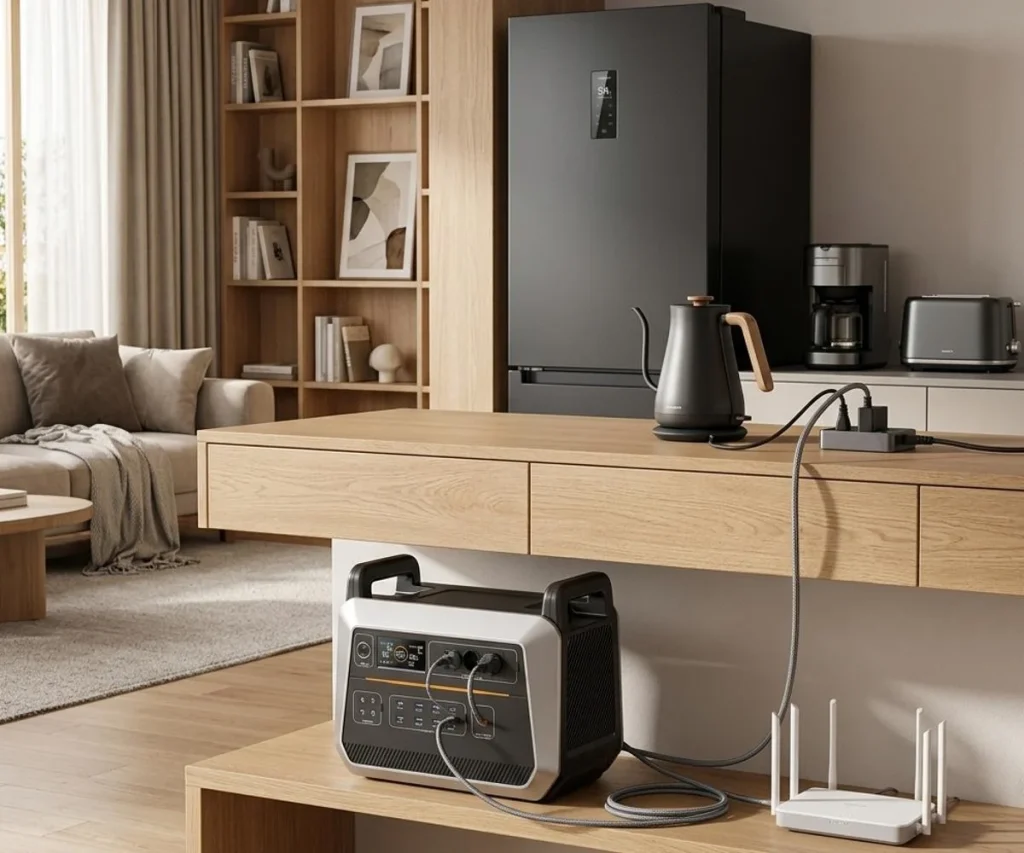
Once an outage lasts about half a day, your refrigerator becomes a priority. A 1,000–1,500Wh portable power station can keep your refrigerator running while also powering your router and a few lights. There’s no need to back up the entire house—just focus on your essential appliances.
Power Outages Lasting One Day:
At this point, you need a more capable solution. A portable power station with at least 3,000Wh of battery capacity can typically handle your refrigerator, router, lighting, and occasional use of a microwave or induction cooktop throughout the day. Keep in mind that without solar panels, once the battery is depleted, you have no way to recharge it during the outage.
Power Outages Lasting 2–3 Days:
A battery alone is no longer enough. You’ll need solar panels to recharge the battery during the day. A permanent solar-plus-battery backup system allows you to generate electricity during daylight hours, store it, and use it at night, creating a continuous energy cycle. As long as the weather is reasonably good, the system can keep operating indefinitely.
Long-Term or Frequent Power Outages:
If your local grid is unreliable—with dozens of outages each year or outages lasting several days at a time—portable power stations are no longer the best solution. A whole-home battery backup system is a much better investment. It automatically switches over during outages, powers your home’s essential circuits, and recharges itself every day. While the upfront cost is higher, it’s the only solution that provides true peace of mind.
If You Need to Run High-Power Appliances:
If your goal is to power equipment such as a central air conditioner, electric water heater, electric stove, or well pump, a fuel-powered generator is still the more practical choice. A battery system capable of supporting these heavy loads would require significantly more battery capacity, making it much more expensive. Although generators are noisy, produce exhaust emissions, and require fuel storage, they remain the most practical solution for operating high-power appliances during extended outages.
What Should You Prepare for a Power Outage?
Besides having a backup power source, you should also prepare:
Lighting: Keep two flashlights or headlamps at home, along with a camping lantern. A headlamp is especially useful because it keeps both hands free. Store a few extra batteries, or choose USB-rechargeable models so you can recharge them with your backup power supply during an outage.
Phones and Internet: After the power goes out, your phone becomes your primary connection to the outside world. Make sure it stays charged whenever possible.
Water and Food: Keep several cases of bottled water at home—enough for two to three days. For food, stock up on items that require no cooking, such as crackers, bread, canned food, and energy bars.
Backup Power for Medical Equipment: If someone in your household relies on an oxygen concentrator, ventilator, CPAP machine, or electric wheelchair, backup power isn’t optional—it’s essential. Calculate the device’s power consumption and required runtime in advance, then purchase a portable power station with sufficient capacity or install a solar panel system paired with a large home battery.
The U.S. Department of Homeland Security also recommends checking with your local government for nearby warming or cooling centers during periods of extreme heat or cold.
Preparing a backup power plan isn’t about worrying—it’s about being responsible. Start by identifying which appliances you need to keep running during an outage, estimate how long you’ll need backup power, and then choose a solution that fits both your needs and your budget. Hopefully, this guide helps you get everything ready before the next outage happens. To learn more about how to choose a backup power source during a power outage, click here.