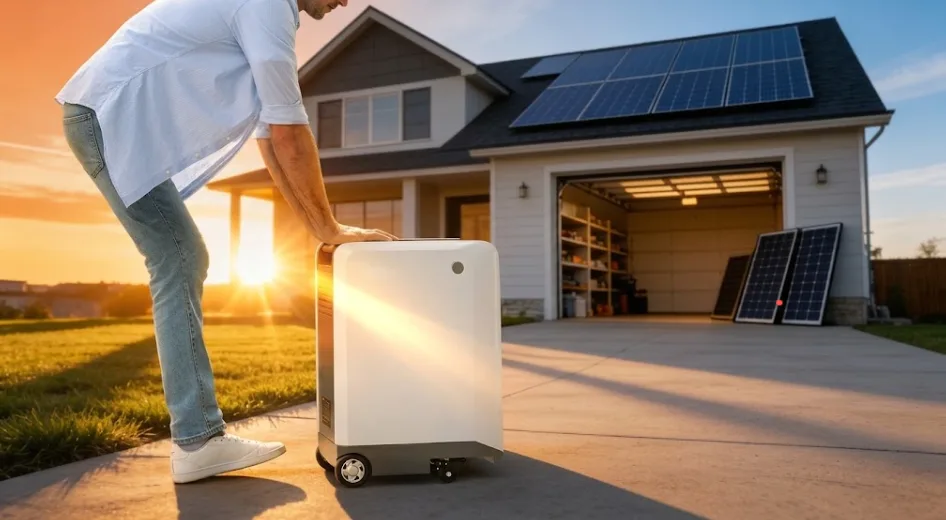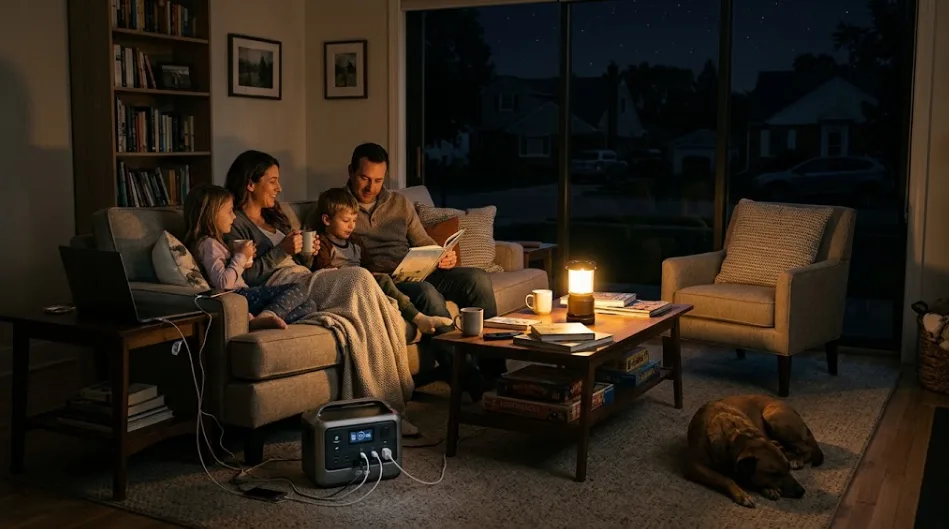
What should you do when the power goes out at home? What if your phone dies while camping? What if your RV refrigerator stops cooling during a road trip? These situations may seem different, but they all point to the same solution: energy storage.
However, once you start researching energy storage solutions, it’s easy to get overwhelmed by all the technical jargon. Don’t worry—you don’t need to be an electrical engineer to make the right decision.
Our team has helped more than 3,000 households, from apartment residents to off-grid homesteaders, and we’ve spent over a decade working in this industry. In this article, I’ll cut through the marketing hype and compare the most common energy storage options in plain language: portable power stations, home battery systems, solar battery storage, and generators.
Each option has its own strengths, weaknesses, and ideal users. Whether you’re looking for apartment backup power, RV camping power, or a way to reduce your electricity bills, you’ll find the solution that best fits your needs.
What Is Energy Storage?
Simply put, energy storage means storing electricity when it is generated and using it later when needed. It sounds simple, but its role in modern power systems is much more important than most people realize.
Electricity is generated and consumed almost instantly. If it isn’t used immediately, it goes to waste. Unlike water, electricity can’t naturally flow into a reservoir and wait to be used later. Energy storage technologies essentially create an artificial “reservoir” for electricity.
Batteries aren’t the only way to store energy. Other methods include:
- Pumped hydro storage: Uses excess electricity to pump water uphill, then releases it through turbines during peak demand.
- Compressed air energy storage: Compresses air into underground caverns and releases it later to drive turbines.
- Flywheel energy storage: Stores energy in a rapidly spinning flywheel and responds extremely quickly to stabilize grid frequency.
Energy storage is commonly used for:
- Backup power: When the grid goes down, stored electricity automatically keeps refrigerators, routers, and medical devices running. Homes, offices, and hospitals all rely on it.
- Renewable energy storage: Solar and wind power are intermittent. Energy storage smooths out fluctuations by storing excess energy and releasing it when generation drops.
- RV travel: When you’re away from shore power, batteries keep refrigerators, lights, and water pumps running.
- Camping: Portable power stations have become standard camping gear. They charge phones, drones, and laptops during the day, then power lights and fans at night.
- Off-grid living: In remote locations where grid access is unavailable or expensive, solar panels combined with battery storage provide complete energy independence.
How to Store Electricity at Home
Home energy storage may sound high-tech, but there are really only three ways to store energy: batteries, thermal storage, or mechanical storage. For most homeowners, the latter two are impractical—you probably aren’t going to build a pumped hydro plant or install a flywheel system in your backyard. So when people talk about home energy storage, 99% of the time they’re talking about batteries.
So how exactly do you store electricity at home? It can be broken down into three steps:
Step 1:
Choose a storage medium. The easiest and most practical option for homeowners is a battery bank. LiFePO4 batteries are currently the mainstream choice for residential systems. When choosing one, you only need to pay attention to two numbers: battery capacity (how many kWh) and cycle life (how many times it can be charged and discharged).
Step 2:
Install an inverter to act as a “translator.” Batteries store DC power, but your refrigerator, lights, and router all run on AC power. The inverter’s job is to convert DC electricity into AC electricity so the energy stored in the battery can actually be used. The main specifications to pay attention to are the inverter’s rated power and surge power.
Step 3:
Hire a professional installer. Once the battery and inverter are ready, they need to be connected to your home’s electrical system. When grid power is available, electricity follows its normal path. When an outage occurs, an automatic transfer switch redirects power from the grid to the battery system.
For more detailed information, click here.
Quick Comparison of Energy Storage Options
| Type | Best For | Capacity Range | Advantages | Disadvantages |
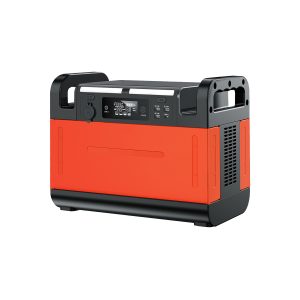
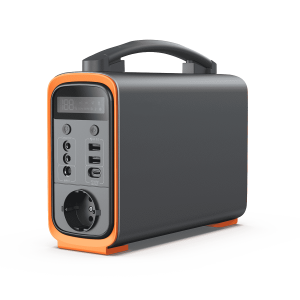
| Portable Power Station | Camping, short trips, emergency backup | 0.2–3kWh | Portable, easy to use, quiet | Limited capacity, can’t run large appliances |
| Home Battery System | Home backup, solar integration | 5–20kWh | Automatic switching, silent, expandable | Expensive, requires installation, not portable |
| Solar Battery Storage | Long-term savings, off-grid living | Depends on battery capacity | Free energy, ideal for long outages | Highest upfront cost, weather dependent |
| Generator | High power, extended outages | Depends on fuel tank size | Affordable, powerful, long runtime | Noisy, emissions, fuel and maintenance required |
Portable Power Stations
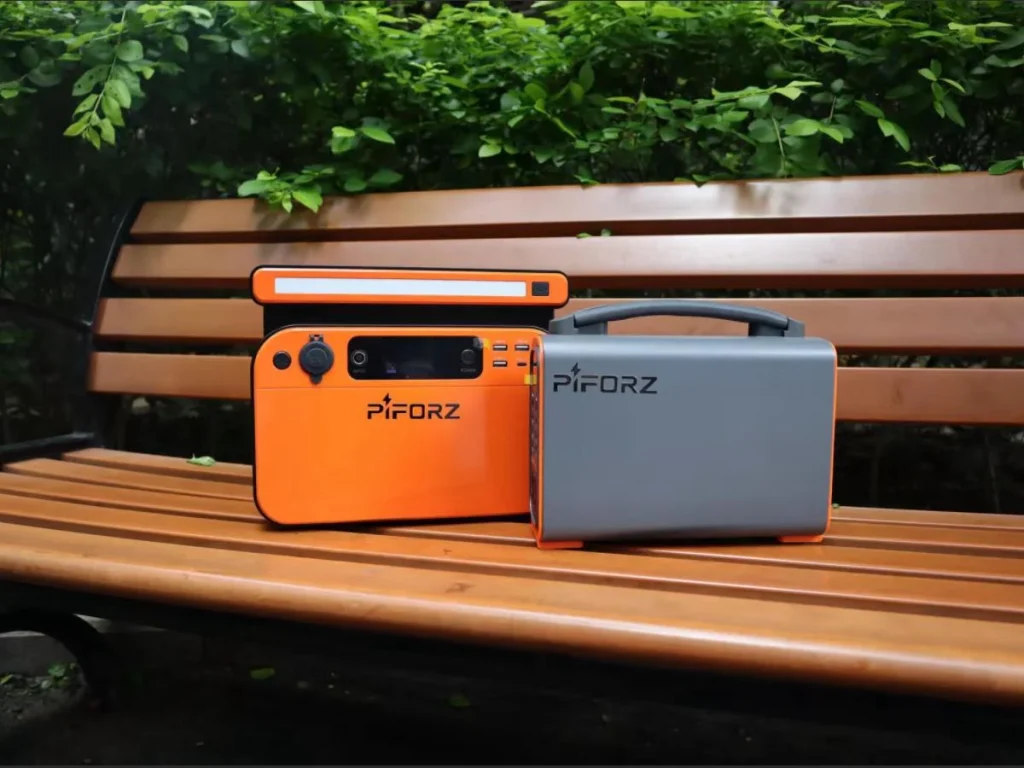
Portable power stations follow a simple process: store, convert, and use.
The battery stores electricity. The inverter converts DC power into AC power. Multiple output ports allow you to connect devices.
When charging from the grid or solar panels, electricity is stored in the battery. When you need power, the battery releases DC electricity, which the inverter converts into household-style AC power.
Since there is no engine and no fuel involved, operation is extremely quiet.
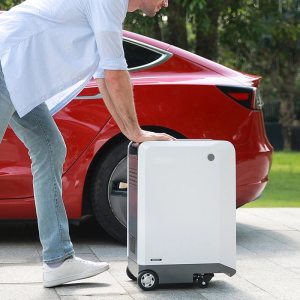
In terms of advantages, portability is the biggest one. You can put it in your trunk or carry it by the handle.
Another advantage is that it produces no noise and no exhaust fumes. You can safely use it inside a tent, in your vehicle, or even indoors without worrying about carbon monoxide poisoning.
It is also very easy to operate—just turn it on and plug in your devices. There is virtually no learning curve.
Its disadvantages are also tied to its portability. It cannot power large, high-wattage appliances, and its battery capacity is relatively limited. This makes it ideal for temporary emergencies or short outdoor trips, but unrealistic as a primary whole-home backup solution.
There are also efficiency losses. When electricity is charged into the battery from the grid and then discharged for use, around 10% of the energy is typically lost in the process. That is unavoidable.
Applicable scenarios:
- Camping is the most typical use case. Use it to power camping lights at night, charge phones and cameras throughout the day, run a portable refrigerator to keep drinks cold, or even operate a small electric grill to cook a few steaks. Many people also bring a mini projector and hang up a white sheet to watch movies outdoors at night. It’s a much better experience than staring at your phone in the dark.
- Tailgating before a football game is another great use case. If you’re worried about ice melting in the cooler, a portable power station can keep a mini fridge or beverage dispenser running all afternoon. If you want to take things up a notch, you can even bring a small electric griddle or kettle to cook hot dogs and make coffee on-site. No need for an open flame and no need to hunt for power outlets—any spot in the parking lot becomes your territory.
- Weekend getaways are another perfect fit. Some cabins and campgrounds don’t offer electrical hookups, but a portable power station can keep your phones, laptops, and drone batteries charged. In the morning, you can use a small electric kettle to boil water for noodles or coffee, and at night, you can power an electric air pump for your inflatable mattress. A 1000Wh-class power station can easily handle these small conveniences. The best part is that, unlike a generator, you don’t have to haul around gasoline. It’s quiet, clean, and always ready in the trunk.
Battery Energy Storage Systems
Battery Energy Storage Systems (BESS) work much like portable power stations, except they’re larger and designed for permanent installation. The core components are still batteries and an inverter. The biggest difference is that a BESS is permanently installed and connected directly to your home’s electrical panel.
When the grid fails, the system detects the outage and switches to battery power within 10–20 milliseconds—fast enough that you likely won’t even notice.
Its advantages are mainly concentrated in several areas.
First is automation. Once installed, you hardly need to think about it, unlike a portable power station that requires manual setup and connections.
Second, it offers much larger capacity. Most systems start at around 5kWh, with 10kWh to 20kWh being common, and larger systems can reach 40–50kWh, enough to power a typical household for one or even several days.
Third, it can handle high-power appliances. Quality systems can provide 5kW, 10kW, or even higher output power, making it possible to run air conditioners, electric water heaters, induction cooktops, and other major household loads.
The disadvantages are also obvious.
The biggest drawback for most people is the cost. A decent 10kWh system with installation typically costs several thousand to tens of thousands of dollars.
Installation is another challenge. If you want the system connected to your home’s electrical circuits, professional installation is required.
In addition, batteries do not last forever. Their performance gradually declines over time.
Solar Battery Storage Systems
A solar-plus-battery system combines battery storage with solar panels. During the day, when sunlight is available, the solar panels generate electricity and store it in the battery for use at night or during power outages. Without a battery, solar panels alone cannot provide backup power during a nighttime outage because they are unable to generate electricity without sunlight. However, with a battery in place, the solar panels can continue charging the battery and powering your home during an outage. As long as there is sunlight during the day, the system can theoretically keep running for a very long time.
Its main advantages include:
Reducing electricity bills. During periods of high electricity prices, solar generation can offset grid usage, helping you save money on your utility bill.
Backup power during outages. If solar panels are available, they can keep charging the battery and help the system survive long-term outages. The switchover process is fully automatic. When the grid goes down, the battery instantly takes over. When the sun comes out, solar generation starts replenishing the battery. You don’t need to manually plug in or switch anything. For people who regularly experience outages lasting a day or two, or who live at the end of an unstable power distribution line, this can be a genuinely essential solution.
Off-grid living. This is the most extreme application of a solar-plus-battery system. In an off-grid setup, your home is not connected to the utility grid at all. Instead, you generate and store all of your own electricity. In this case, the system design must be very different from a typical backup system. The battery bank must be large enough to support at least two to three days of cloudy weather, and the solar array must be oversized—not only to meet daily electricity needs but also to fully recharge the batteries.
For remote mountain regions, farms, or people who simply want complete energy independence, this is the only practical solution. For households in cities with reliable grid access and infrequent outages, however, a fully off-grid system is usually unnecessary.
Generators as an Energy Storage Alternative
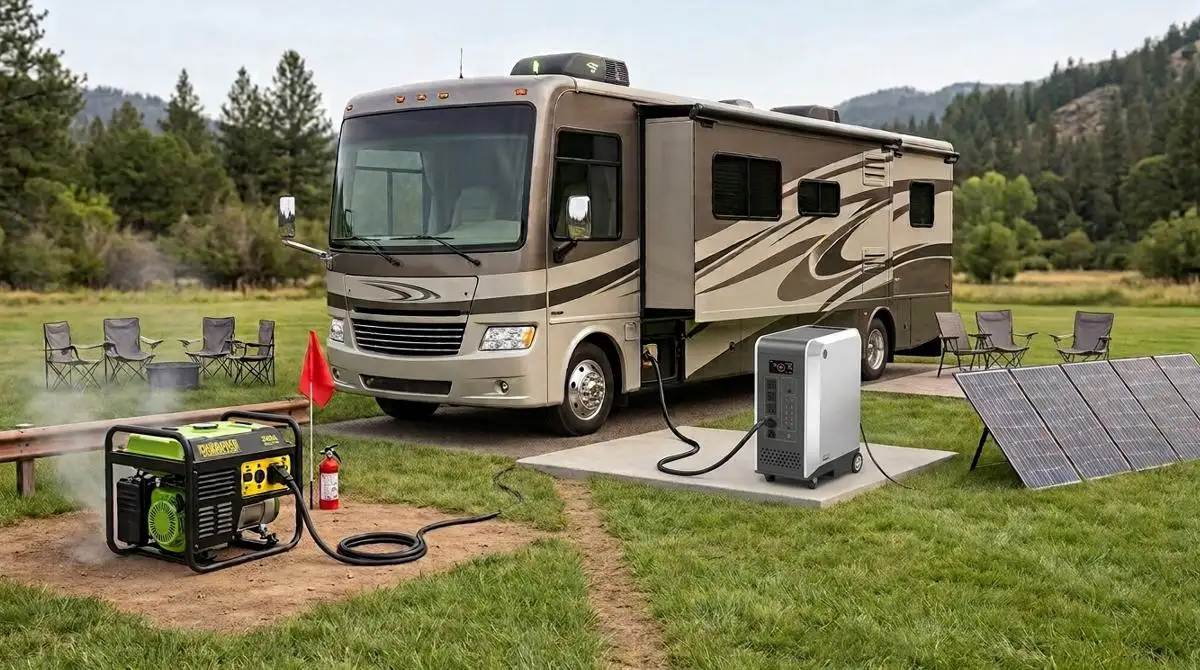
Strictly speaking, a generator is not energy storage. Energy storage means storing electricity and using it later, while a generator burns fuel and produces electricity on demand. It functions more like a miniature power plant. However, whenever people discuss home backup power, generators and batteries are inevitably compared.
I’ve spent years creating content about residential energy products and have spoken with installers, and real users. The information in the comparison table below reflects the conclusions that most people only truly appreciate after making the wrong purchase at least once.
| Feature | Battery Storage System | Generator |
| Noise | Low. Even when the cooling fan is running, a quality battery system typically operates at only 30–40 dB. If installed in a basement or garage, it is usually barely noticeable inside the house. | High. Most generators operate at 70–80 dB or more, comparable to a lawn mower. Conversations nearby often require raised voices, and nighttime operation can easily disturb neighbors. Even so-called “quiet” models usually reduce noise by only a few decibels. |
| Maintenance | Low. Once a LiFePO4 battery system is installed, it requires very little attention. The built-in Battery Management System (BMS) automatically monitors voltage, temperature, and system health. Most systems can operate for years with minimal maintenance. | High. Generators require regular servicing. Engine oil typically needs to be changed every 50 hours of operation, spark plugs replaced periodically, and stored fuel managed carefully. Gasoline can degrade after several months, and neglected generators often fail to start when they are needed most. |
| Indoor Use | Yes. Battery systems produce no exhaust fumes, no carbon monoxide, and involve no fuel combustion. They can be safely installed in locations such as basements, utility rooms, garages, or other indoor spaces when installed according to manufacturer guidelines. | No. Generators must never be operated indoors. They produce carbon monoxide and other exhaust gases that can be deadly in enclosed spaces. Generators should always be used outdoors, positioned well away from doors, windows, and air intakes. |
| Fuel Requirement | No fuel required. Energy is stored from the electrical grid or solar panels. As long as the battery is charged before an outage, it is ready to provide backup power when needed. | Fuel required. Gasoline, diesel, or natural gas is necessary for operation. Fuel must be stored, replenished, and maintained properly. Gasoline can deteriorate over time, while natural gas systems depend on a functioning gas supply infrastructure. |
After reviewing the comparison, the conclusion is actually quite simple.
If you want something quiet, automatic, low-maintenance, and hassle-free, choose a battery system—but be prepared to spend more money.
If you want lower upfront cost, high power output, and the ability to run for days as long as fuel is available, choose a generator.
Many people ultimately choose both: a battery system as their primary backup and a small generator as a last-resort backup. After all, nobody wants to be sitting in the dark on the third day of a power outage during a week of cloudy weather.
How Much Energy Storage Capacity Do You Need?
This is actually one of the most practical questions in the entire buying process because capacity directly determines how much money you spend, how long the system will run, and whether it will be sufficient during a power outage.
Many people start by asking, “What battery size should I buy?” But that question itself is a bit misleading. First, you need to figure out what you want to keep running during an outage rather than choosing the storage system first.
So how do you calculate it? We can break it down into three steps.
Step 1: Make a list of the appliances you absolutely need during a power outage. Most people don’t need whole-home backup.
Keeping a few essential loads running is enough: LED lights for illumination, phones and routers for communication, and a refrigerator for food preservation. If you have medical equipment such as an oxygen concentrator or CPAP machine, those should be included and given the highest priority.
Step 2: Estimate how much electricity these appliances consume per hour.
Here are some reference values based on real-world experience rather than laboratory conditions: a refrigerator typically draws 150–300W, but because it cycles on and off, its actual average consumption is usually only around 50–60Wh per hour. LED lights consume about 5–10W each. A laptop charger uses around 40–50W. An oxygen concentrator typically consumes 200–300W.
Add up the loads and multiply by the number of hours you want to stay powered, and you’ll have a rough idea of how much energy capacity you need.
Step 3: Account for startup surges and safety margin.
Appliances such as refrigerators, water pumps, and air conditioners can draw several times their normal running power during startup. If the inverter can’t handle that surge, it may immediately trigger protection mode.
So when choosing a battery system, don’t just look at battery capacity—make sure the inverter’s surge output rating is sufficient as well.
Which Energy Storage Option Is Right for You?
After covering all of that, you’re probably wondering which option is actually right for you. So let’s get down to the most practical question: with so many choices available, which one should you buy?
Let’s break it down by different scenarios:
- Apartment dwellers: Portable power stations. Since you usually can’t modify the electrical panel in an apartment, a 1000–2000Wh portable power station placed in a corner can provide backup power during outages and can easily move with you when you relocate.
- Home backup: Battery energy storage systems. A system with around 15kWh of battery capacity can switch automatically and operates silently. If you own your home and have the budget, this is the most hassle-free option. If your budget is tighter, you can also consider a portable power station with manual switching. You’ll need to bring it out and connect devices yourself during an outage, which is less convenient but much cheaper. Or you can choose a generator if you don’t mind the noise and maintenance.
- Camping: Portable power stations. They’re quiet, lightweight, and can be paired with solar panels. Don’t bring a generator to a campground—it will keep everyone awake and produce carbon monoxide emissions.
- RV travel: If you only take your RV out occasionally on weekends, a portable power station is usually enough. You can take it out when parked and recharge it when you get home. If you live full-time in an RV or regularly travel for weeks at a time, then a solar-plus-battery system becomes worth considering. Install solar panels on the roof and a fixed battery bank under the floor or beneath the seats, and you’ll be generating power wherever the sun shines.
- Off-grid living: A solar-plus-battery energy storage system is the only serious solution. And it can’t be undersized. You’ll need enough solar panels, enough battery capacity to survive two or three cloudy days, and an inverter specifically designed for off-grid operation. Many people also keep a generator as a backup in case of a week of continuous cloudy weather.
- Long-term outages: Long outages are different from ordinary home backup scenarios. Typical backup systems are designed for outages lasting half a day or a day, after which grid power returns. Long-term outages may last several days or even a week, or occur in areas where the electrical grid is particularly unreliable. In these situations, a battery system alone may not be enough because once it’s depleted, you have no way to recharge it. A combination of solar panels, batteries, and a generator is the most reliable solution. If your budget is limited, start with a generator. As long as you have fuel, it can keep running. Once a battery runs out of power, it truly is empty.
Common Concerns About Battery Energy Storage Systems
Although battery energy storage systems are becoming increasingly popular, many people still have a few concerns before deciding to install one.
1. The Cost Is Too High
This is the most frequently asked question. A home energy storage system does require a significant upfront investment. Depending on the capacity and configuration, costs can range from several thousand dollars to well over ten thousand dollars. However, what you’re really buying is safety and comfort during power outages. In addition, these systems can help reduce electricity costs by avoiding peak-rate power usage.
2. Batteries Have a Short Lifespan
Many people worry that they’ll need to replace the battery after just a few years. That’s an outdated perception. Lead-acid batteries may only last around three years, but modern LiFePO4 batteries typically offer 3,000–6,000 charge-discharge cycles. What does that mean? If you perform one full cycle per day, the battery can last roughly 8–16 years. And it doesn’t suddenly stop working after a certain number of years—it gradually loses capacity over time. Even after 10 years, it may still retain around 80% of its original capacity and continue functioning normally, just with less energy storage.
3. Safety Concerns
LiFePO4 batteries are now the mainstream choice for residential energy storage. According to industry research, when thermal runaway occurs, NCM lithium-ion batteries can catch fire and release large amounts of smoke and sparks, while LFP lithium-ion batteries typically release large amounts of white smoke. NCM batteries present a higher level of risk and experience more aggressive thermal runaway reactions.
In addition, a properly designed BMS provides multiple layers of protection, including overcharge protection, over-discharge protection, short-circuit protection, and over-temperature protection. As long as you purchase products from reputable manufacturers, the likelihood of an accident is extremely low.
4. Installation Is Complicated and Takes Up Space
It’s true that home battery systems require professional installation. However, they don’t take up as much space as many people imagine. A 16kWh system is roughly the size of a small refrigerator and can easily fit in a garage or basement.
5. Can It Really Save Me Money?
If the system is paired with solar panels, it can indeed help reduce electricity bills significantly. However, if you’re thinking of it purely as an investment product, it’s generally not recommended. Its primary purpose is to provide backup power. Saving money is simply a secondary benefit. Recovering the full system cost through electricity bill savings alone typically takes a very long time.
There is no perfect energy storage solution—only the solution that best fits your situation. Choose based on your actual needs. If you’re still unsure, start with a portable power station and see how it fits into your lifestyle. Once you’ve used one, you’ll have a much clearer understanding of what you truly need.