
In the summer, a power outage means more than just worrying about the food in your refrigerator or your phone running out of battery. It also means dealing with unbearable heat. If your air conditioner has no power, you’ll be sweating even while sitting still, let alone trying to sleep. That’s why many people ask the same question: can a home backup battery system power an air conditioner?
The answer is yes, but not in the way most people imagine.
I have been working in home energy sales and after-sales service for 5 years. I’ve spoken with many users. We once received a question from a customer who tried running an 8,000 BTU portable air conditioner with a 3,000Wh portable power station. Although the unit could start successfully, the battery was completely drained in less than three hours of continuous operation.
The issue wasn’t the battery itself. The real problem was a lack of clear understanding between power requirements and actual energy consumption.
So in this article, I want to clearly explain several key questions: what an AC battery backup actually is, which appliances it can power, whether it can realistically run an air conditioner, how long it can run one, and what size system you truly need.
What Is an AC Battery Backup and How Does It Work?
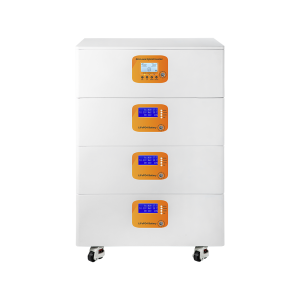
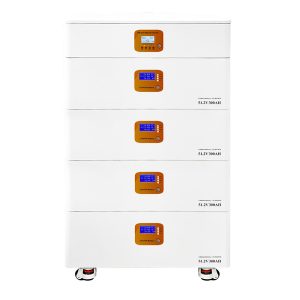
An AC battery backup is essentially a home battery system that can store electricity, output AC power, and automatically take over during a power outage. It integrates a battery pack, an inverter, and a BMS (Battery Management System).
AC stands for alternating current, which is the type of electricity supplied by the outlets in our homes. But why do household appliances use AC power? The electrical grid adopted AC in the early days of power development because it can be easily stepped up or down using transformers, significantly reducing energy losses during long-distance transmission. As a result, the wall outlets in our homes and the vast majority of high-power household appliances are designed around AC power standards.
The purpose of an AC battery backup is to keep your existing appliances—such as refrigerators, lights, routers, and even air conditioners—running during a power outage. There’s no need to replace plugs or rewire your home. Your appliances can continue operating just as they normally would.
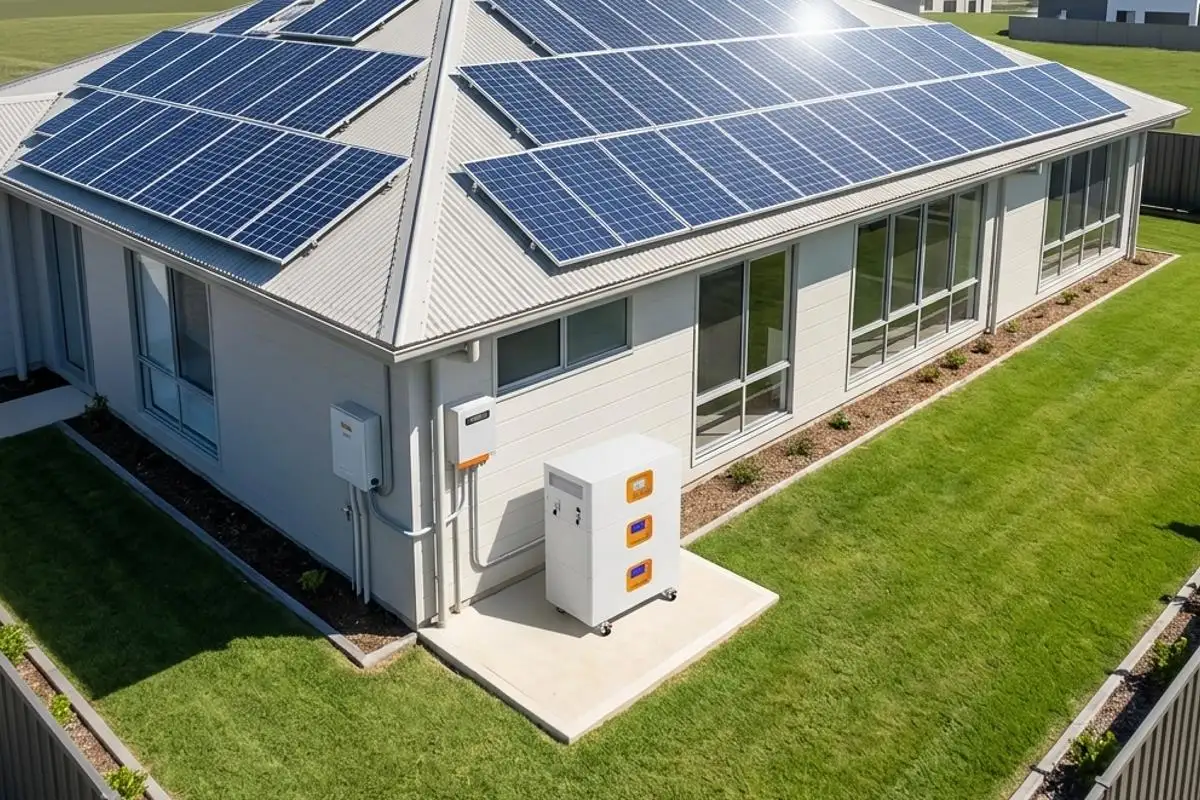
Its working process is roughly as follows: when the grid is operating normally, the battery system charges itself from the grid while electricity flows directly from the grid to power your home. During this time, the battery remains on standby. If the grid goes down, the battery begins supplying power to designated household circuits through the inverter. Once grid power is restored, the transfer switch automatically switches back to grid power, and the battery starts recharging, preparing for the next outage.
What Appliances Can an AC Battery Backup Run?
The table below is sorted from the lowest to the highest running power. It also shows the startup surge and whether the device can realistically be powered by a battery system. You can use it to compare the appliances in your own home.
The actual power requirements may vary depending on the specific model, so you should still check the label or manual of your equipment. The table below is for reference only.
| Appliance Type | Typical Running Power | Startup Surge | Can an AC Battery Backup Run It? |
| LED Lights, Wi-Fi Routers, Phone Chargers | 5–30W | None | Easily |
| Refrigerators, Freezers, Circulation Pumps | 150–400W | Yes (3–5× running power) | Yes, but the inverter should have sufficient surge capacity |
| Microwaves, Coffee Makers, Rice Cookers | 600–2,000W | Minimal | Yes |
| Electric Kettles, Hair Dryers, Space Heaters | 1,200–1,500W | None | Yes |
| Air Conditioners (Window, Portable, Mini Split) | 500–2,000W | Yes (3–7× running power for some models) | It depends on the battery and inverter size |
| Central Air Conditioners, Tankless Water Heaters | 3,000–10,000W+ | Yes | Possible, but they consume a large amount of energy |
Can You Run an Air Conditioner on a Battery?
As we mentioned earlier, an AC battery backup can power an air conditioner, but the conditions are much stricter than most people expect. It’s not as simple as running your AC freely whenever the power goes out.
There are two main reasons why air conditioners are difficult to power with batteries: high power consumption and large startup surges. High running power means high energy usage, while large startup surges mean that if the inverter is not powerful enough, the air conditioner may not start at all.
According to air conditioner manufacturers, BTU (British Thermal Unit) is a measurement of an air conditioner’s cooling capacity. The higher the BTU rating, the more heat the unit can remove within a given period of time, which generally means greater cooling performance.
To give you a clearer picture, let’s use a typical 16kWh home battery storage system (such as the PIFORZ 6kW + 16kWh system) as an example and estimate the real-world runtime of three common types of air conditioners.
Window Air Conditioner
Window air conditioners are the most common type and also the easiest to run with a battery system. The reason is simple: they have relatively low power consumption, a straightforward design, and less demanding startup surges than split-system units.
For example, the LG 8,000 BTU Window Air Conditioner consumes about 730W during operation. Its startup surge is typically three to four times its running power, or roughly 2,000–4,000W. This means the inverter in your battery system must be able to handle at least a 4,000W short-term surge; otherwise, the air conditioner may trip the protection circuit as soon as it starts.
If you’re only running this air conditioner, a 6kW inverter can handle it comfortably, and even running two units simultaneously would not be a problem. On the battery side, the calculation is straightforward:
16kWh ÷ 730W × inverter efficiency
Based on this calculation, the system could theoretically power the unit for approximately 18–20 hours. That’s enough to get through an entire day and a full night of cooling.
Portable Air Conditioner
Portable air conditioners are generally less efficient than window units because both the compressor and much of the heat-generating equipment are located indoors.
For example, the Frigidaire 10,000 BTU Portable Air Conditioner has a running power consumption of approximately 1,050W and a startup surge of around 2,500–3,000W. Because the entire unit operates indoors and the compressor has less efficient heat dissipation, portable air conditioners typically consume more electricity than window units with a similar cooling capacity.
That said, a 6kW inverter can still power it without any difficulty. The main tradeoff is reduced runtime:
16kWh ÷ 1,050W × inverter efficiency
This works out to roughly 13–15 hours of continuous operation under typical conditions. In real-world use, the runtime can be even longer because the compressor does not run continuously. As nighttime temperatures drop, the compressor cycles on and off less frequently, reducing overall energy consumption and extending battery life.
Mini Split Air Conditioner
The Pioneer Diamante Essenza 17,000 BTU Mini-Split Air Conditioner has a maximum power consumption of up to 1,770W. However, mini-split systems have an important advantage. If the unit uses inverter technology, it has virtually no large startup surge because the compressor gradually ramps up its power output. If it is a non-inverter model, the startup surge can reach 4,000–5,000W.
A 6kW inverter can handle an inverter-driven mini-split with ease, and it is still capable of supporting a non-inverter model, although the startup load will be much closer to its limits.
For runtime, the calculation is:
16kWh ÷ 1,770W × inverter efficiency
This translates to approximately 9–10 hours of continuous operation. In other words, a 16kWh home battery system can comfortably provide cooling throughout an entire night.
Four tips:
1. Pay attention to inverter surge capacity, not just running power. Among the three air conditioners above, both fixed-speed window units and portable air conditioners can produce startup surges that are two to three times their running wattage. A 6kW (6,000W) inverter can handle even higher short-term peak loads, so powering these air conditioners is generally not a problem. However, if you plan to start multiple units at the same time, it is best to stagger their startup times.
2. A pure sine wave inverter is a must. Modified sine wave inverters can make compressors noisier, generate more heat, and in some cases prevent the air conditioner from starting altogether.
3. Don’t only consider the air conditioner. During a power outage, you’ll usually want to keep other essential appliances running as well, such as a refrigerator, router, and lights. Together, these typically add around 200W of load. Fortunately, a 16kWh battery can handle these additional loads for a long time because air conditioners do not run continuously. Once the set temperature is reached, the compressor cycles off, so real-world runtime is often longer than the theoretical estimate.
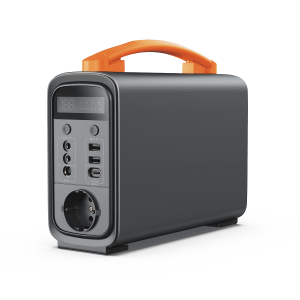
4. Don’t expect a small portable power station to run an air conditioner. Many people ask whether a 300W portable power station can power an air conditioner. The answer is no—the power gap is simply too large.
Most portable power stations in the 300W–2,000W range cannot reliably run an air conditioner. If you want stable air conditioner operation, you’ll typically need an inverter rated at 3,000W or higher and a battery capacity of several kilowatt-hours. As a result, many users ultimately choose a larger home backup battery system for this type of application.
AC Battery Backup vs Generator
| Scenario | Recommended Solution |
| Short power outages (a few hours) and you want to run an air conditioner quietly | Battery Backup |
| Extended outages (several days) and you have outdoor space for a generator | Generator |
| You already have solar panels and want to reduce long-term energy costs | Battery + Solar |
| Limited budget and power outages only occur once or twice a year | Generator |
| Living in an apartment or townhouse where generators are not practical or permitted | Battery Backup |
| Need to power multiple high-demand appliances simultaneously, such as air conditioners, electric stoves, and electric water heaters | Generator (or a large-capacity battery system) |
Using a 6kW + 16kWh battery system versus a 3,000W gasoline generator to power an 8,000 BTU window air conditioner (730W running power, approximately 2,000W startup surge):
- Startup: Both systems can start the air conditioner successfully. The battery system’s 6kW inverter has more than enough headroom, while a 3,000W generator with a peak output of around 3,600–4,000W can also handle the startup surge.
- Runtime: A 16kWh battery can provide approximately 18–20 hours of operation. A generator with a 5-gallon fuel tank can typically run for about 8–12 hours under a moderate load, but it will require refueling during extended outages.
- Noise: The battery system operates with very little noise. A generator typically produces around 75 dB of sound, and the low-frequency engine noise is often noticeable indoors even when the unit is placed outside a window.
- Safety: A battery system can be used indoors without safety concerns. A generator must always be operated outdoors and away from doors and windows; otherwise, carbon monoxide could potentially enter the home.
Common AC Battery Backup Sizes and Costs
Entry-Level (5–10kWh): $5,000–$10,000. Suitable for powering a window air conditioner or a small mini-split system, while keeping a refrigerator, router, and a few lights running. Typically provides backup power for several hours up to half a day.
Mid-Range (10–20kWh): $8,000–$15,000. Can support a standard mini-split air conditioner (such as a 12,000 to 18,000 BTU unit) while maintaining other essential household loads. Typically provides 8–12 hours of backup power.
Whole-Home Level (20–40kWh+): $10,000–$30,000. Capable of powering a central air conditioning system or multiple air conditioners, while supporting normal household electricity usage for 1–2 days or even longer.
How to Choose the Right AC Battery Backup
Basic Devices
You only need to keep your Wi-Fi, phone charging, lighting, and a laptop running during a power outage. These loads typically total around 300–500W. In this case, there’s no need to spend a large amount of money on a high-capacity battery system. A suitably sized portable power station is usually sufficient.
Refrigerator
A refrigerator is one of the appliances people most want to keep running during a power outage. A typical household refrigerator consumes about 150–250W during normal operation, but the compressor creates a startup surge when it kicks on. Therefore, when choosing a backup battery for a refrigerator, you should pay attention not only to battery capacity but also to the inverter’s surge power rating.
Air Conditioner
Air conditioners are among the most demanding appliances in a home backup setup. When selecting a backup power solution for an air conditioner, you need to consider both the battery capacity and the inverter’s rated and surge output power. For more details, refer to the previous section.
Whole-Home Backup
If your goal is to make a power outage feel like nothing happened—keeping all circuits running normally and allowing you to use central air conditioning, an electric stove, a washing machine, and a dryer without restrictions—then you’ll need a backup battery system with both high power output and large battery capacity.
Once you’ve identified your use case, avoid buying a system that’s either unnecessarily large or frustratingly undersized.
Here’s a simple three-step method to determine the right size:
Step 1: List your essential loads during a power outage.
(Must-have: Refrigerator 200W + Router 20W + Three Lights 30W = 250W)
Step 2: Decide whether to include comfort loads.
(Optional: Inverter mini-split air conditioner, running power approximately 800W)
Step 3: Calculate the total power requirement and startup surge.
Total running load = 250W + 800W = 1,050W
Assuming the inverter air conditioner has no significant startup surge and the refrigerator has a 1,000W startup surge, the inverter should have a rated output of at least 2kW.
If you want the system to run for 10 hours:
1,050W × 10h = 10,500Wh = 10.5kWh
After accounting for inverter efficiency losses, you would need at least a 12kWh–15kWh battery system.
After reading the above, we know that powering an air conditioner during a power outage is not impossible; the key is to properly match the inverter’s surge capacity with the battery’s kilowatt-hour capacity.
Unsure which capacity to choose? We’ve already helped hundreds of families calculate this. Send us your air conditioner model and outage duration, and we’ll help you figure it out. Click here to get a free configuration plan.