
I’ve seen many homeowners struggle with one question before installing solar: not whether to install it, but how large the system should be. They worry that 5kW won’t be enough, 10kW seems like it might work, and 15kW might be more than they actually need.
In the U.S. residential market, 15kW is already considered a relatively large solar system. A typical solar system for a single-family home is usually around 5kW to 10kW, while systems of 15kW or more are generally used by larger homes with higher electricity consumption, such as those with central air conditioning, pool pumps, or electric vehicle charging.
So, let’s take a look at whether a 15kw solar system is suitable for your home’s energy needs.
What Is a 15kW Solar System?
When people talk about a 15kW solar system, many assume it means the system can generate 15kW of power. But this isn’t quite accurate, because there are three different parameters in a solar system that can all be expressed in kW, and they refer to completely different things.
| Parameter | Unit | What It Means |
| PV array capacity | kW | The maximum power of the solar panels under rated conditions, which determines how much electricity the system can generate over time |
| Inverter output power | kW | The maximum power the system can provide to loads at the same time, which determines how many devices can run simultaneously |
| Battery output power | kW | The maximum power the battery can deliver at the same time, which determines how much load the battery can support |
In this article, a 15kW system refers to a PV array with a total installed capacity of 15kW. This is the most common usage in the industry. When you hear someone say, “I installed a 15kW system,” they usually mean they have 15kW worth of solar panels installed on their roof.
15kW vs. 15kWh: What’s the difference?
These two units are often confused, but they are completely different. 15kW is power (speed), while 15kWh is energy (total amount).
Think of it in terms of eating: kW is like how quickly you eat, indicating how fast you can consume food at a given moment; kWh is like the capacity of your stomach, indicating how much you can hold in total.
When these two units are applied to a solar system, 15kW refers to the power of the solar panels or inverter, which determines how quickly electricity can be generated or delivered. 15kWh refers to the battery’s capacity, which determines how much electricity can be stored.
A 15kW solar system can be paired with a 10kWh battery or a 30kWh battery. The power of the solar panels determines how quickly electricity is generated, while battery capacity determines how long that stored electricity can last. The two are not directly tied to each other and can be selected independently.
Based on the points above, a complete 15kW solar system includes the following core components:
- Solar panels: Total capacity of 15kW. Based on 400W to 500W per panel, you would need approximately 30 to 38 panels.
- Inverter: Converts the DC electricity generated by the solar panels into AC electricity for household use. A 15kW system typically uses an inverter around 15kW, or a slightly undersized inverter (for example, 15kW of solar panels paired with a 12kW inverter), because the system rarely operates at its maximum output continuously.
- Battery: If you need backup power during outages or want to use stored electricity at night, you can add a battery storage system. A 15kW system typically uses a battery with a capacity of 10kWh to 30kWh, depending on how long you want the power to last.
How many solar panels are in a 15kW system?
It depends on the power rating of each panel. Most residential solar panels today are rated between 400W and 500W.
With 400W panels, you would need 15,000W ÷ 400W = approximately 38 panels.
With 450W panels, you would need 15,000W ÷ 450W = approximately 34 panels.
With 500W panels, you would need 15,000W ÷ 500W = 30 panels.
In terms of physical space, assuming each panel is approximately 2 square meters, 30 to 38 panels would require 60 to 76 square meters of roof space. However, this does not include the spacing between panels or access paths for maintenance. If you have a pitched roof, the usable area is typically smaller than the horizontal projected area. On a flat roof, additional spacing is needed between rows to prevent shading, so the actual space required will be larger.
So, the first hurdle for a 15kW system isn’t the cost, it’s whether your roof is large enough. Many residential roofs have only 30 to 50 square meters of usable space, which may not be enough to fit all the panels needed for a 15kW system. This is the first thing you should verify when sizing the system.
How Much Power Does a 15kW Solar System Produce?
15kW is the rated power of the solar panels under standard test conditions, meaning the peak output measured in a laboratory under specified ideal light and temperature conditions. Actual energy production will always be lower than this figure because of factors such as sunlight hours, weather, orientation, temperature, and system losses.
Under perfect sunlight conditions, a 15kW system can produce close to 15,000W of power around midday. So, 15kW is not a continuous output figure, but a reference for peak output.
The formula for calculating how much electricity the system can generate per day is:
Daily energy production (kWh) = System power (kW) × Average effective sunlight hours (h) × System efficiency
In most parts of the U.S., average effective sunlight is between 4 and 5.5 hours per day. Taking into account inverter losses, cable losses, dust, temperature-related derating, and other factors, system efficiency is typically estimated at 0.75 to 0.85. Using 5 hours of sunlight and 0.8 efficiency as a mid-range example: 15kW × 5h × 0.8 = 60kWh/day
However, this figure can vary significantly by location and season. The Southwest, including Arizona and Southern California, receives stronger sunlight and may reach 65–70kWh/day, while areas in the Northeast and Northwest may produce only 45–55kWh/day. With shorter daylight hours in winter, energy production may be 30%–50% lower than in summer.
Therefore, daily energy production is approximately 45–70kWh, monthly production is approximately 1,350–2,100kWh, and annual production is approximately 16,000–25,000kWh. The average U.S. household consumes around 10,500kWh of electricity per year, so a 15kW system can cover or even exceed this amount in most areas.
Key factors that affect energy production:
Sunlight hours are the most direct factor. For the same 15kW system, annual energy production can differ by more than 40% between Arizona and Seattle.
Orientation and tilt determine how efficiently the panels receive sunlight. A south-facing orientation with a tilt close to the local latitude is generally considered ideal. Facing east or west can result in a 10%–20% reduction, while north-facing panels are generally impractical.
Shading is one of the most underestimated factors. A tree, utility pole, or even a vent pipe on a neighboring roof can significantly reduce the output of an entire string of panels. This is also why smart solar panels can recover 10%–25% of energy production on complex roofs.
Temperature affects solar panels in a way that may seem counterintuitive: excessive heat actually reduces efficiency. Solar panels are most efficient at 25°C, and their efficiency decreases by approximately 0.3%–0.5% for every 1°C increase in temperature. At midday in summer, panel surface temperatures can exceed 60°C, and actual output may be 10%–15% lower than the rated output.
System losses include inverter conversion losses (approximately 5%–10%), cable losses (approximately 2%–3%), and dust accumulation (approximately 5%–15%, depending on local conditions and cleaning frequency). Combined, these losses mean that actual energy production is typically 75%–85% of the theoretical output.
Do You Need Battery Storage for a 15kW Solar System?
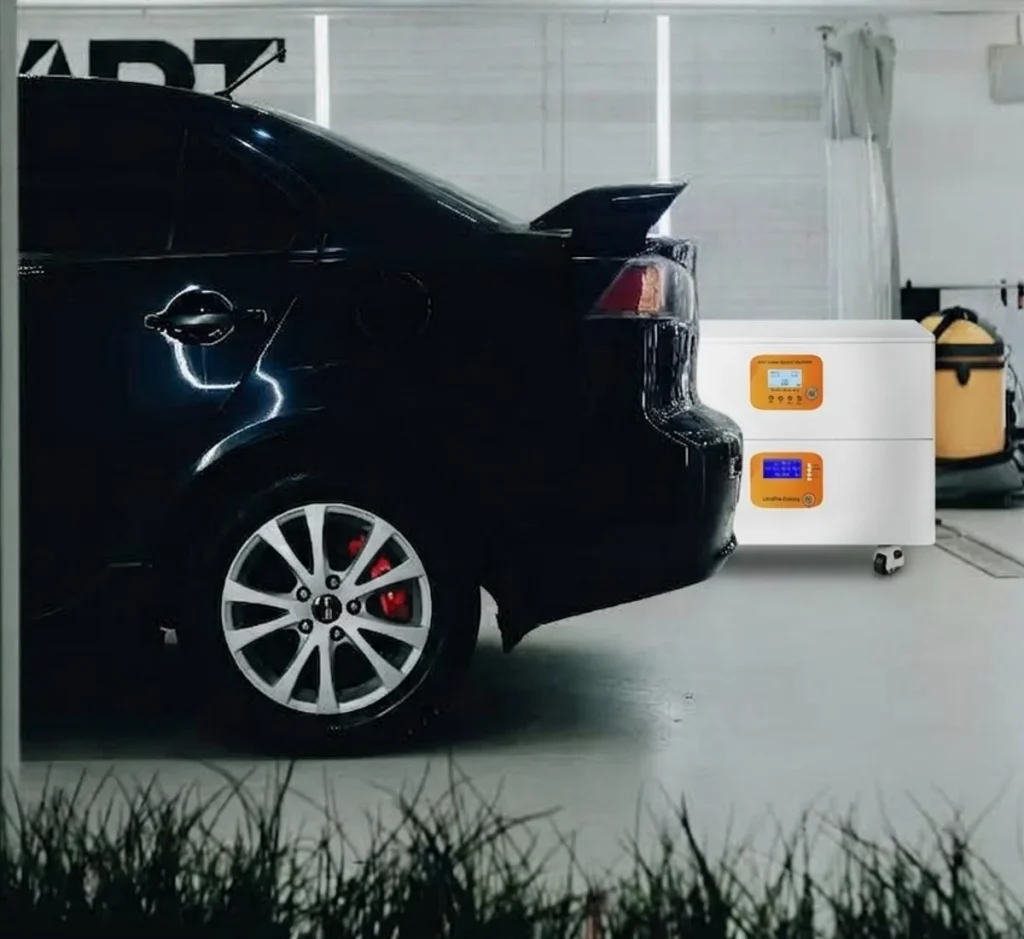
Not necessarily. It depends on what you want to use the system for.
If your main goal is to reduce your electricity bill, you don’t necessarily need a battery if you send excess electricity to the grid during the day and draw electricity from the grid at night. The grid essentially acts as your virtual battery: you send electricity to the grid during the day and draw it back at night, with the energy settled through net metering or net billing. This is the simplest and lowest-cost setup, and it is also how most grid-tied systems operate.
However, a battery may be worth considering if you fall into any of the following situations:
First, if you want to keep your refrigerator, internet, lights, or even air conditioning running during a power outage, a grid-tied system will automatically shut down when the grid goes down. Without a battery, you won’t be able to use the electricity your solar panels generate during the outage;
Second, if your local net metering policy is unfavorable and the price you receive for exporting electricity is much lower than what you pay for electricity, storing excess electricity and using it yourself at night may make more sense;
Third, if you want to increase your self-consumption rate, especially if your home has high-power loads such as EV charging, a pool, or central air conditioning, you can store excess solar energy during the day and use it at night to reduce your electricity bill further.
A 15kW system is typically paired with a battery capacity of 10kWh to 30kWh. If you only need to keep basic appliances running overnight, 10kWh may be enough; if you want to run air conditioning or need backup power for longer, 20kWh or more may be more suitable. Whether the added cost is worthwhile depends on your tolerance for power outages, local electricity rates, and whether state-level incentives are available.
What Can a 15kW Solar System Power?
What a 15kW system can power depends on two different situations. In a grid-tied system, the key question is how much of your electricity consumption the energy generated can cover. In an off-grid system or one paired with a battery, the key question is how much load the inverter can handle.
Based on the 45–70kWh of average daily energy production we discussed earlier, this amount of energy can cover scenarios such as:
- Two EVs: Each EV uses about 10kWh per day for charging, so two would use around 20kWh, or roughly one-third of the system’s daily energy production.
- Central air conditioning: Running for 8–10 hours per day in summer, it consumes approximately 15–20kWh.
- Pool pump: Running for 6–8 hours per day, it consumes approximately 8–10kWh.
- Everyday household appliances: A refrigerator, lighting, washing machine, dishwasher, TV, and computer may consume approximately 10–15kWh per day.
Together, these loads fall roughly within the daily energy production range of a 15kW system. This makes it suitable for high-energy-use households with EVs, pools, central air conditioning, larger homes, or more electrical appliances.
If the system is paired with a 15kW inverter, it can power a total load of up to 15kW at the same time. Common high-power appliances include:
| Appliance | Running Power | Can It Run? |
| Central air conditioning | 3000–5000W | Yes |
| EV charger | 7000–11000W | Yes (but it uses most of the available capacity) |
| Electric water heater | 3000–4500W | Yes |
| Electric oven | 2000–5000W | Yes |
| Induction cooktop | 1500–3000W | Yes |
| Washing machine + dryer | 3000–5000W | Yes |
How many appliances can run at the same time depends on the inverter’s power rating. A 15kW system typically uses a 10kW to 15kW inverter, so the total power of the appliances running simultaneously needs to stay within that range. A common combination might be central air conditioning (3000–5000W) + refrigerator (150W) + lighting (200W) + router (20W) + TV (150W) = approximately 3500–5500W, which is well within the capacity of a 10kW inverter. If you run an EV charger (7kW) + central air conditioning (4kW) + other basic loads at the same time, the total load may exceed 10kW. In that case, the inverter may limit the output, or you may need to stagger the loads.
In terms of annual energy production, a 15kW system can more than cover the electricity needs of an average household and can even support high-energy-use homes with EVs and pools. In terms of simultaneous loads, a 10–15kW inverter can power high-power appliances such as central air conditioning, electric water heaters, and pool pumps. However, if you run an EV charger and central air conditioning at the same time, you need to make sure the total load does not exceed the inverter’s limit. During a power outage, what the system can power depends on the battery’s output power and capacity, not the solar panels’ 15kW rating.
How to Decide If You Need a 15kW Solar System
Start by looking at your annual electricity consumption
Check your electricity bills from the past year and find your total annual electricity consumption (kWh). The average U.S. household uses about 10,500kWh of electricity per year, while a 15kW system can generate around 16,000–25,000kWh per year in most areas, far more than that. So, if your annual electricity consumption is below 10,000kWh, a 15kW system is probably oversized, and the excess electricity will either be sold to the grid at a low rate or go unused. But if your annual electricity consumption exceeds 15,000kWh, especially if you have two EVs, central air conditioning, a pool, or electric heating, a 15kW system is a reasonable configuration, while 10kW may not be enough.
Roof space
As mentioned earlier, a 15kW solar system requires approximately 80–100 square meters of roof space for the solar panels. If your roof has a good orientation and little to no shading, this area is usually sufficient. However, if your roof has limited space, multiple roof sections, or shading from trees or chimneys, you may not be able to install a full 15kW system, or you may need power optimizers to help compensate for shading losses.
Daytime vs. nighttime electricity use
If you use more electricity during the day (working from home, charging EVs during the day, or running the pool during the day), you can use more of the electricity generated by a 15kW system directly, resulting in a higher self-consumption rate and a faster payback. If you’re away from home during the day and most of your electricity use occurs at night, much of the electricity generated by the 15kW system will need to be exported to the grid, and the compensation for exported electricity is often much lower than the price you pay for electricity, reducing the economic return. In this case, storing daytime solar energy in a battery for nighttime use, or choosing a smaller system based on your actual electricity needs, such as a 10kW or 5kW system, may make more sense.
Consider whether you plan to install a battery
If you plan to add a battery, a 15kW system typically uses a battery with a capacity of 10–30kWh, which will significantly increase the overall cost. If you don’t plan to install a battery and simply want to export electricity to the grid, the economics of a 15kW system depend entirely on your local net metering policy and electricity rates. In some areas, compensation for exported electricity is already quite low, so installing an oversized system can result in a longer payback period.
Check the policies in your area
As of 2026, the federal Residential Clean Energy Credit has expired, so the previous 30% tax credit is no longer available. You can jump to this article for more details. However, some states still offer their own incentives and net metering policies. In California, under NEM 3.0, compensation for exported electricity is relatively low, making a large system less economical unless it is paired with a battery to increase self-consumption. In Texas or Florida, policies are relatively favorable, so larger systems may have shorter payback periods.
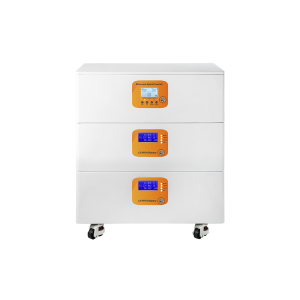
A 15kW system is suitable for households with high electricity consumption, large electrical loads, and sufficient roof space. If your electricity use is average and you don’t have an EV or central air conditioning, a 10kW or smaller system may be more cost-effective. For this system size, you can consider Piforz’s 10kW stacked energy storage series.Therefore, a 15kW solar system is not simply a larger residential system, but a system that moves into the high-energy-use residential segment. It is suitable for households using more than 40kWh of electricity per day, with EVs or central air conditioning, and sufficient roof space.