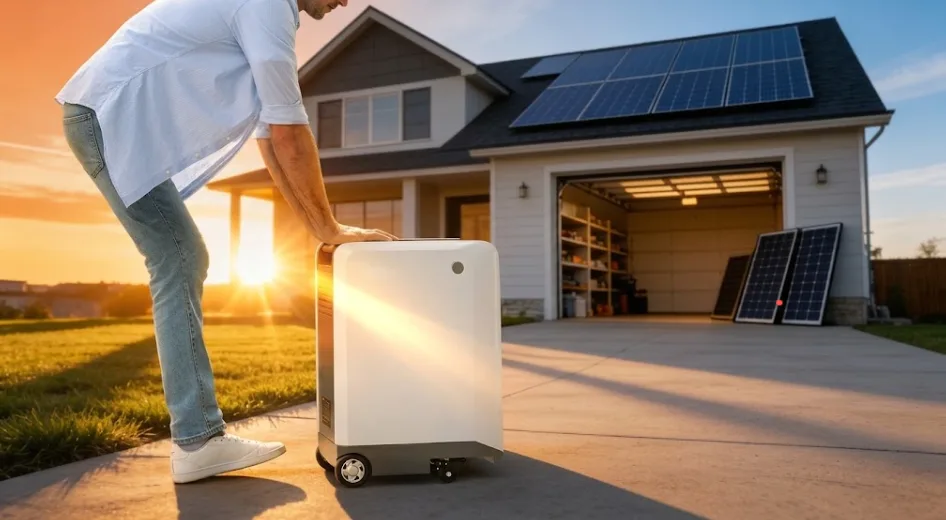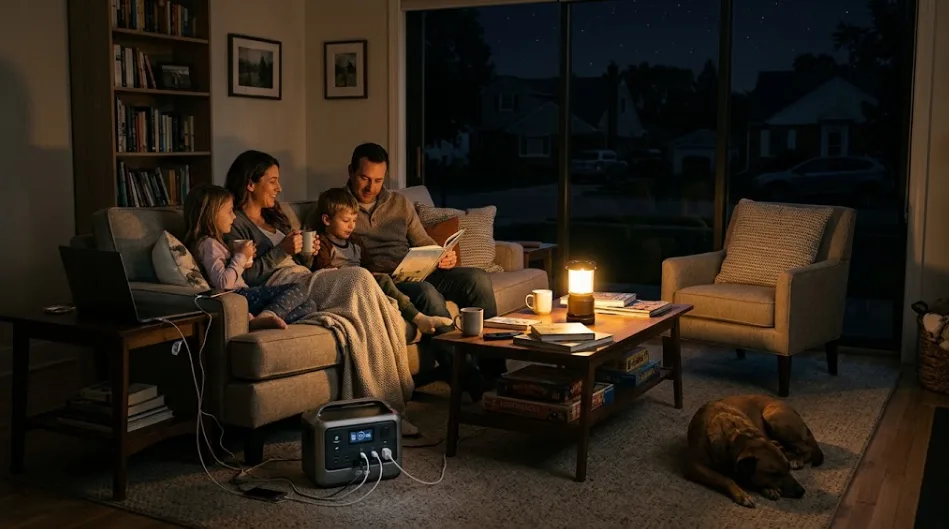

When the power suddenly goes out at home, the thing that worries people the most is usually the food inside the refrigerator. The moment the fridge stops running, a wave of anxiety starts to creep in, and you can’t help but wonder: How long can the frozen meat last before it starts to thaw? How large of a backup battery do I need to keep my refrigerator running?
Before you panic, there is one thing you should know: if you keep the refrigerator door closed, the food inside will not spoil immediately during a short-term power outage. Many people worry: If I don’t buy a backup battery, how long can my refrigerator keep food safe on its own? Will the food go bad if the power is out overnight?
Can a fridge last 8 hours without power? According to the standards from the U.S. Department of Agriculture (USDA) and the Centers for Disease Control and Prevention (CDC), when the refrigerator door remains closed, food in the fresh food compartment is generally safe for about 4 hours after the power goes out. If the freezer is fully packed and the food inside is already frozen, it can maintain a safe temperature for around 48 hours; if it is only half full, it can last about 24 hours.
In other words, for food stored in the refrigerator compartment, if the power outage lasts an entire night or longer, you will need a battery backup to keep the fridge running.
So, the questions we need to answer are: How long can a backup battery power a refrigerator? How do you calculate it? And what capacity battery should you buy?This article was written to answer all of these questions.
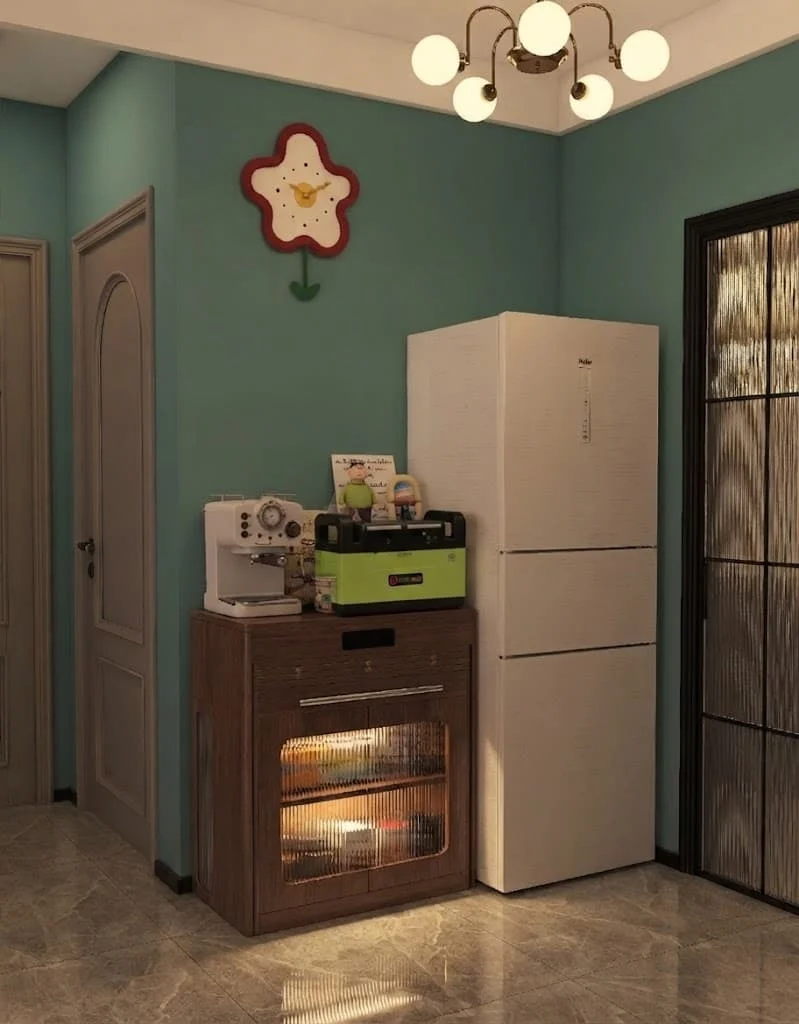
Duration of Battery Backup Power Supply for the Refrigerator
Before answering the question “How long can a backup battery power a refrigerator?”, we first need to understand several key factors: how much power the refrigerator actually consumes, how to calculate the battery capacity you need, and how long different battery capacities can keep the refrigerator running. These three factors are closely connected. Once we understand the logic behind them, we can calculate the answer based on the actual situation of our own refrigerator at home.
Let’s break them down one by one:
How Much Power Does a Refrigerator Use?
This is the most important factor. Different types and models of refrigerators can have significant differences in power consumption.
| Refrigerator Type | Running Power | Operating Voltage | Startup Surge | Average Daily Energy Consumption |
| Portable car refrigerator | 40W-60W | DC 12V/24V | 100W | About 0.4-0.5 kWh |
| Mini refrigerator | 50W-100W | AC 110V-120V | 150W-400W | About 0.5-0.6 kWh |
| Standard household refrigerator | 100W-400W | AC 110V-120V | 200W-1200W | About 1.0-1.5 kWh |
| Large double-door refrigerator | 400W-800W | AC 110V-120V | 800W-2400W | About 1.5-2.2 kWh |
Portable car refrigerators are usually compressor-based models. Their running power is typically between 40W and 60W, but they have a relatively high startup current. It is recommended to choose a power station with a rated output of at least 100W.
Mini refrigerators are commonly found in dorm rooms or offices. Their running power is usually between 50W and 100W, with daily energy consumption of around 0.5-0.6 kWh.
A standard household refrigerator refers to the common type with either a top freezer or bottom freezer design. Its startup surge is usually around 2-3 times its normal running power.
Large double-door refrigerators, such as side-by-side refrigerators or French-door models, generally have higher power consumption due to their larger capacity. Their operating current can reach 6-10A, and the startup surge can exceed 800W-2400W.
In addition, when purchasing a refrigerator, you can also check whether it has ENERGY STAR certification, which indicates higher energy efficiency. According to the “Eligibility Criteria” section of the U.S. Environmental Protection Agency (EPA)’s ENERGY STAR Version 5.1 Residential Refrigerators and Freezers Program Requirements, certified refrigerators must consume at least 10% less energy than the federal standard. In other words, an ENERGY STAR-certified refrigerator can save more electricity compared with a standard model.
Note: The data above represents estimated ranges based on various refrigerator models. Actual power consumption may vary depending on the specific brand, model, capacity, energy efficiency rating, and operating environment. For the most accurate information, always refer to the refrigerator’s nameplate label and user manual.
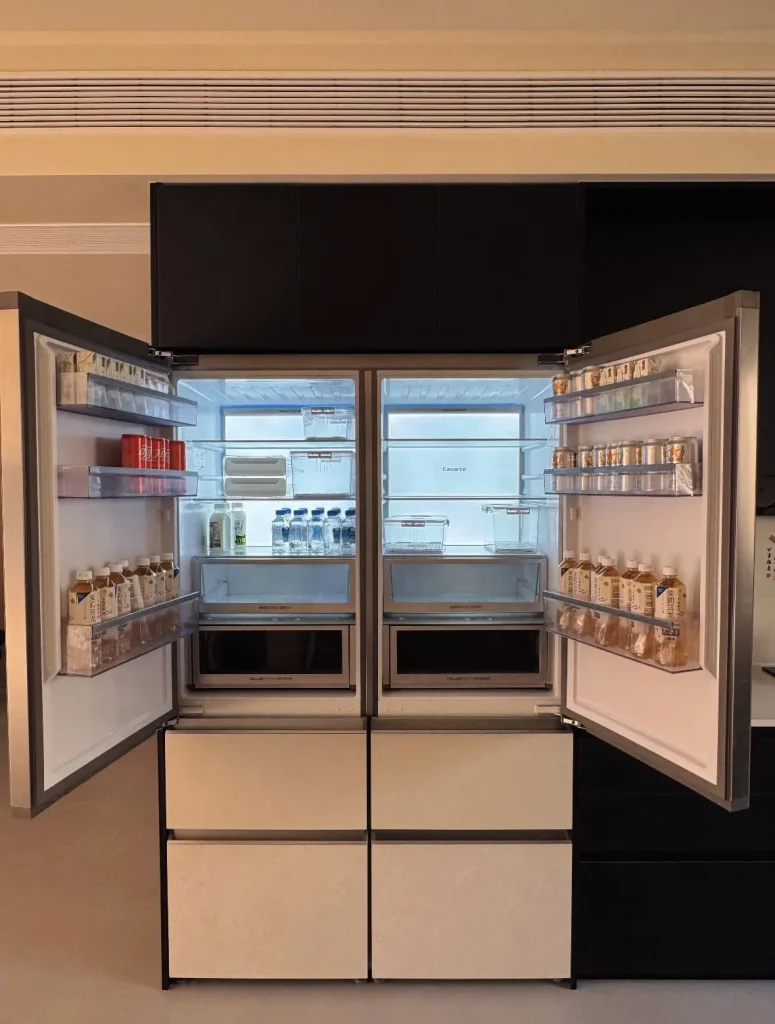
How to Calculate Battery Runtime for a Refrigerator
The complete calculation formula is as follows:
Battery Capacity (Wh) × Inverter Efficiency ÷ Actual Average Refrigerator Power Consumption (W) = Estimated Runtime (Hours)
When it comes to the inverter efficiency factor, there is one important thing to understand. A portable power station needs to convert the battery’s DC power into AC power, just like the electricity from a household wall outlet. During this conversion process, around 10%-15% of the energy is lost. Therefore, when calculating runtime, you should multiply the battery capacity by an efficiency factor of 0.85-0.9.
There are also two hidden factors that are often overlooked: the refrigerator compressor’s duty cycle and the portable power station’s own standby power consumption.
Refrigerator compressor duty cycle:
Simply put, the duty cycle refers to how often the compressor actually runs. The power rating shown on a refrigerator’s label represents the instantaneous power consumption while the compressor is running, but the compressor does not operate continuously. In most cases, it only runs for around 30%-50% of the time, while the rest of the time it remains idle to maintain the internal temperature.
For example, a 200W refrigerator powered by a 2000Wh portable power station may actually consume only around 60W-100W per hour on average, rather than the full 200W. As a result, the actual runtime could exceed 10 hours.
This means that if we calculate runtime directly based on the refrigerator’s rated power from the manual or nameplate, the result is usually a more conservative estimate. In real-world use, the actual runtime may be longer.
Portable power station standby power consumption:
This is a factor that many manufacturers rarely mention to users. When a battery backup power station is running, it also consumes some energy itself to keep components such as the inverter, display screen, and internal cooling fan operating.
According to Piforz’s internal product testing data, this self-consumption is generally around 10W. (This data is for reference only. The actual value may vary depending on different brands and models. Please refer to the specifications provided by the product manufacturer for accurate information.)
For a 1000Wh-class portable power station, if it continuously powers a refrigerator for 12 hours, the power station’s own standby consumption alone may consume around 120Wh of energy.
Therefore, when choosing a portable power station to power your refrigerator during an outage, it is recommended not to choose a capacity that is just barely enough. Selecting a slightly larger capacity model will provide a more reliable backup and leave enough energy reserve for unexpected losses.
How Long Will Different Battery Capacities Run a Fridge?
Previously, we learned about the calculation formula and the general power ranges of different refrigerators. However, it may still be difficult to visualize how long a portable power station can actually run your refrigerator at home.
To make it easier to understand, I will use four different Piforz portable power station capacities to power four common refrigerator models on the market as real-world examples. Based on the actual power consumption data publicly provided by these refrigerator brands, we can estimate how long different battery capacities can keep them running.
Runtime (hours) = [Battery Capacity (Wh) × Inverter Efficiency (0.85)] ÷ [Refrigerator Power Consumption (W) × Duty Cycle (0.5)]
Using this formula provides a runtime estimate that is closer to actual real-world performance.
The refrigerator power values used in the following calculations are based on the manufacturer’s published data, which already includes the compressor duty cycle. Therefore, there is no need to multiply by the duty cycle again in these calculations.
| Battery Capacity | Portable Car Refrigerator (BougeRV 12V Portable Fridge, average power 25W, DC direct connection with 95% efficiency) | Mini Refrigerator (Frigidaire EFR376, average power 32.5W, AC with 85% efficiency) | Standard Refrigerator (GTE18GSNRSS, average power 41W, AC with 85% efficiency) | 4-Door French Door Refrigerator (Samsung RF23M8070SG, average power 72W, AC with 85% efficiency) |
| 518Wh (PF500) | About 19.7 hours | About 13.5 hours | About 10.7 hours | May fail to start, not recommended |
| 1210Wh (PF1500) | About 46 hours | About 31.6 hours | About 25.1 hours | About 14.3 hours |
| 1536Wh (PF2000) | About 58.4 hours | About 40.2 hours | About 31.8 hours | About 18.1 hours |
| 2073Wh (PF2000 high-capacity version) | About 78.8 hours | About 54.2 hours | About 43 hours | About 24.5 hours |
It is important to note that for large refrigerators such as 4-door French door models, there is no unified standard for compressor startup surge power. Different sources report a wide range, from 600W to 2400W, and Samsung has not publicly released the specific startup surge data for this model.
Considering this uncertainty, using the PF500 (1000W peak output) to power this type of large refrigerator carries some risk. It is recommended to choose the PF1500 (2500W peak output) or higher models, which provide a much larger safety margin for handling startup surges.
Note: The runtime values in the table are estimated reference numbers only. Actual runtime depends on your specific refrigerator model, age, condition, and usage environment. It is recommended to check your refrigerator’s energy label and use the closest matching power consumption value for a more accurate estimate.
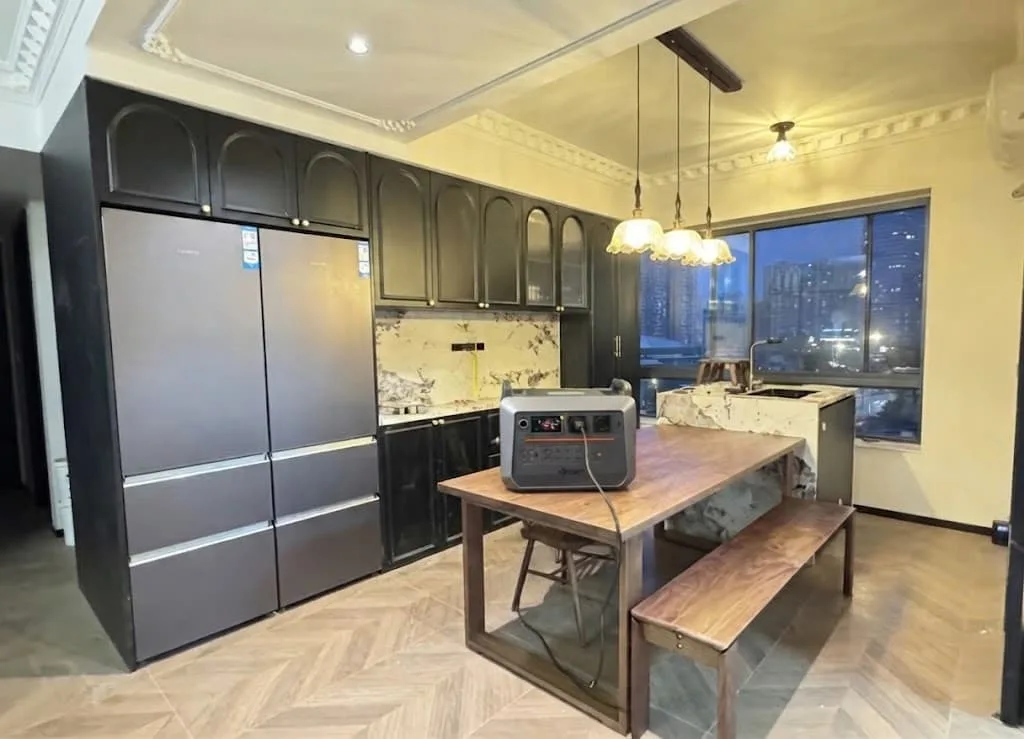
What Size Battery Backup Do You Need for a Refrigerator?
This is one of the key questions when using a portable power station during a home power outage: How large of a portable power station should you buy? How much battery capacity does your refrigerator need as backup power?
Based on the refrigerator runtime comparison table above for different battery capacities, here are my recommendations:
If you only need to handle short-term power outages lasting a few hours, such as minor circuit issues or occasional breaker trips, a portable power station with around 500Wh-1000Wh capacity is generally enough for a standard household refrigerator. This capacity range can typically keep a regular refrigerator running for about 4-8 hours. For an ENERGY STAR-certified energy-efficient refrigerator (such as the GIE18GSNRSS), a 1,000Wh power station can even provide backup power for more than 10 hours.
If you want to keep your refrigerator running through an overnight power outage, such as a regional blackout caused by a typical storm, it is recommended to consider a battery capacity in the 1000Wh-1500Wh range.
If you live in an area that frequently experiences typhoons, snowstorms, or other extreme weather events that may cause power outages lasting an entire day or even several days, choosing a portable power station with 2000Wh or more capacity will provide a safer backup solution. If your budget and conditions allow, you can also pair it with solar panels to recharge the portable power station, which can significantly extend the refrigerator’s runtime.
Important reminder:
Many people choose a portable backup power station based only on battery capacity. They assume that a larger capacity battery will automatically run longer once fully charged, so they simply buy the model with the biggest capacity.
However, capacity alone does not mean the power station can definitely run your refrigerator.
When a refrigerator starts, the compressor requires a startup surge power that can be 2-3 times higher than its normal running power. If the portable power station’s peak output power is not high enough, the refrigerator compressor may fail to start, or the power station may immediately trigger overload protection and shut down.
Therefore, when choosing a portable power station, the correct order is:
First, check whether the peak output power can handle the refrigerator’s startup surge. Then, check whether the battery capacity is sufficient for your desired runtime.
FAQ:
How Long Will a 200Ah Battery Run a 12V Refrigerator?
There is a special situation that many people ask about: “I already have a 12V 200Ah battery. How long can it power my 12V portable refrigerator?”
First, we need to calculate the battery capacity:
12V × 200Ah = 2400Wh
This means the battery has a total capacity of 2400Wh.
If your battery is a lead-acid battery, to protect the battery’s lifespan, it is generally recommended not to discharge it beyond 50%. Therefore, the actual usable energy may only be around 1200Wh.
If your battery is a LiFePO4 (lithium iron phosphate) battery, this type of battery can typically be deeply discharged to around 80%-90% of its capacity. This means the usable energy is approximately 1920Wh-2160Wh.
There is one important detail: the portable refrigerator itself is a 12V DC appliance, so this battery can power the refrigerator directly without going through an inverter. This means there is no inverter conversion loss. For a direct DC connection, we calculate using 95% efficiency.
The estimated runtime for powering a 12V portable refrigerator is therefore:
Lead-acid battery (usable capacity: 1200Wh):
1200 × 0.95 ÷ 25 ≈ 45.6 hours
LiFePO4 battery (usable capacity: 80%-90%, 1920Wh-2160Wh):
1920 × 0.95 ÷ 25 ≈ 73 hours
2160 × 0.95 ÷ 25 ≈ 82.1 hours
That means a 12V 200Ah LiFePO4 battery can run a 12V portable refrigerator for approximately 73-82.1 hours under these conditions.