In Saudi Arabia, sunshine is one resource that never seems to disappear throughout the year. Because of this, more and more households are asking a simple question: can all that abundant sunlight be turned into electricity that can actually power a home?
The best answer to that question is a solar battery.
It is not a solar panel, although many people confuse the two. Solar panels generate electricity, but the electricity they produce must either be used immediately or it is wasted. A solar battery stores electricity, keeping unused solar energy from the daytime for use at night or during power outages. The two work together to create a complete self-sufficient energy system.
I have worked in residential energy solutions for four years and helped hundreds of families calculate electricity costs and select battery systems.
While designing energy storage solutions for households across the Middle East, we noticed an interesting trend: many homes already had solar panels installed but lacked battery storage. As a result, large amounts of electricity were sent back to the grid during the day, while those same homeowners still had to purchase electricity at night.
This article starts with the basic working principles, then breaks down the advantages and disadvantages of different types of solar batteries, and finally provides a practical buying checklist. Whether your goal is backup power, lower electricity bills, or complete off-grid living, by the end you should understand which specifications matter, how much capacity you need, and whether solar panels are worth adding.
What Is a Solar Battery?
A solar battery is an energy storage device specifically designed to store electricity generated by a solar power system. It saves that electricity and makes it available when you need it later.
In everyday use, however, people usually talk about an entire solar battery system rather than a single battery. It is not just one device or component, but a complete combination of power generation and energy storage.
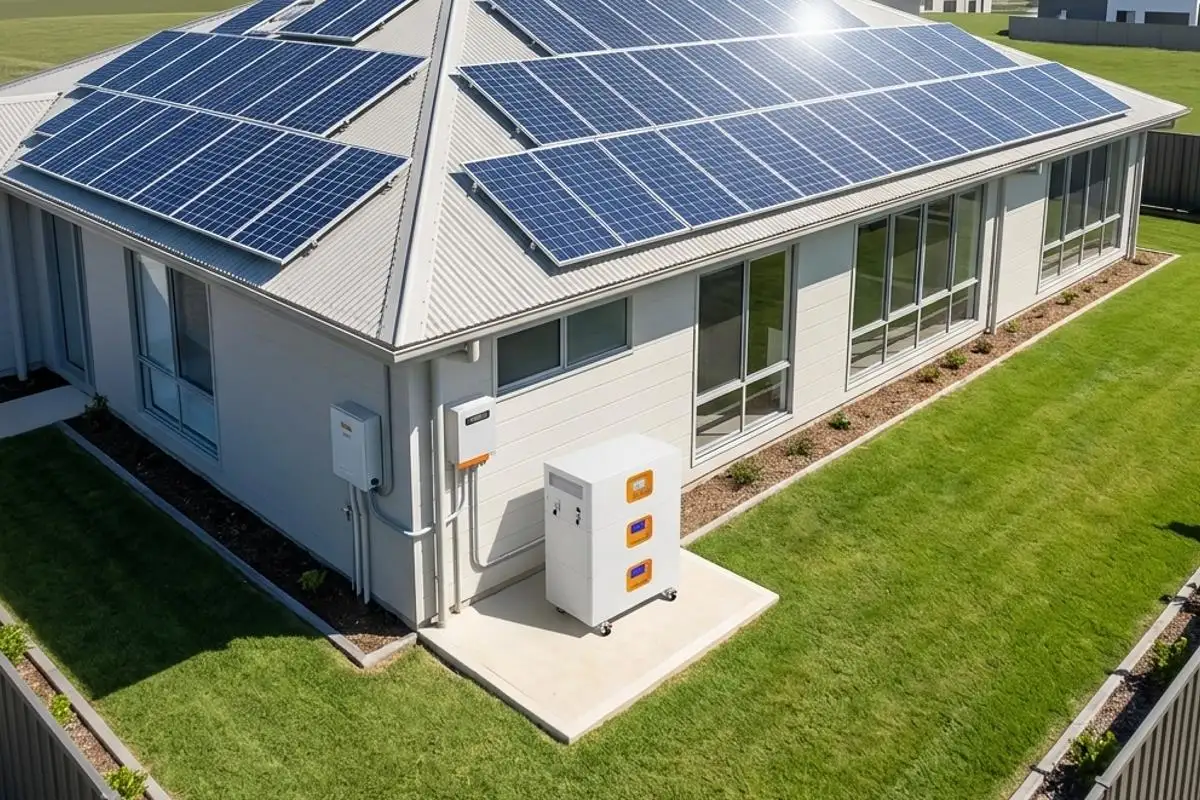
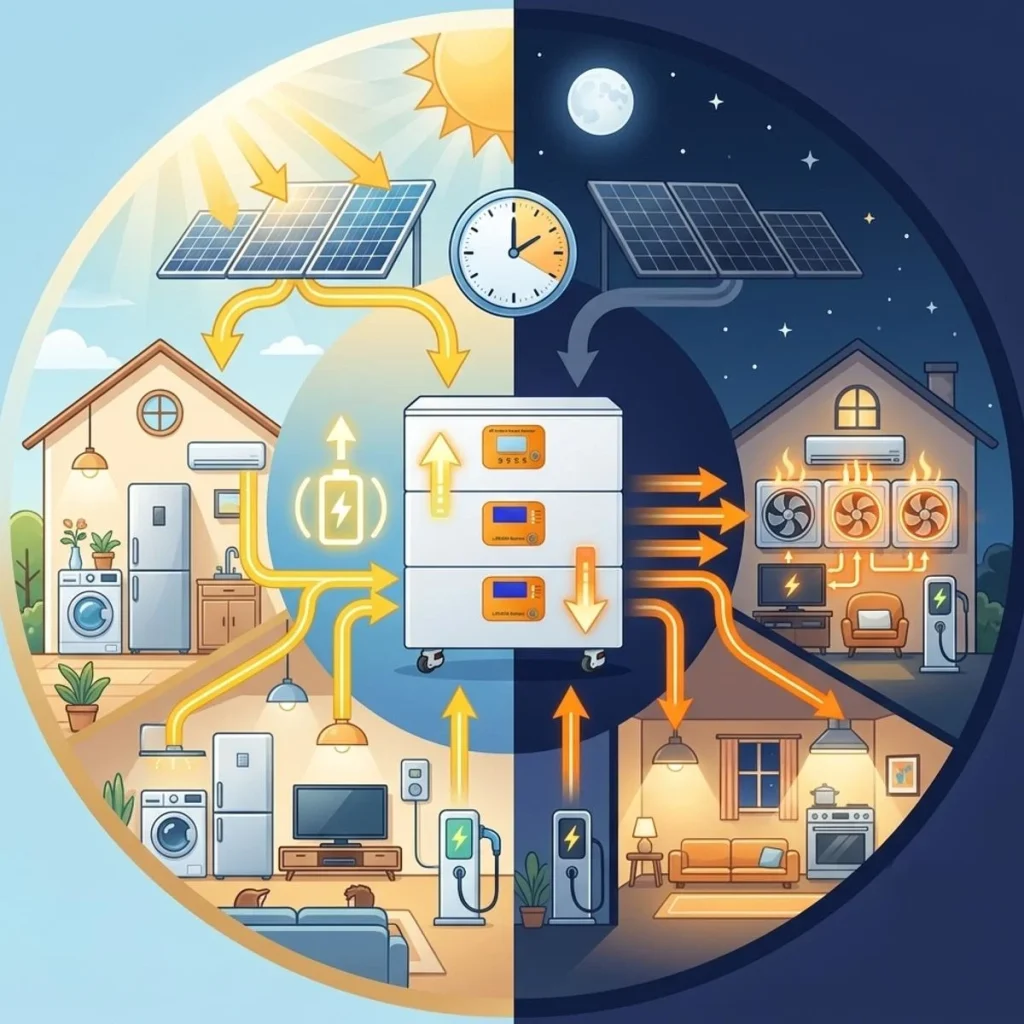
Simply put, when the sun is shining during the day, rooftop solar panels convert sunlight into DC electricity. Part of that electricity is used immediately by household appliances, while the excess is stored in the battery. At night or during a power outage, the battery releases the stored electricity.
A complete solar battery system typically includes three core components:
- Solar panels generate electricity. Installed on rooftops or in yards, they convert sunlight into DC power. The more panels you have and the stronger the sunlight, the more electricity they produce.
- The battery stores electricity. Energy collected during the day can be used at night or during outages.
- The BMS (Battery Management System) provides protection and coordination. It continuously monitors battery voltage, temperature, and current to prevent overcharging, over-discharging, and overheating. A battery pack without a BMS is not safe; the BMS acts as the system’s personal bodyguard.
In sunny regions, solar battery systems are especially practical. During the day, solar energy powers part of the home’s air conditioning load, while excess electricity is stored in the battery for nighttime use. In this setup, grid electricity becomes the backup source rather than the primary one. During an outage, the battery automatically steps in as a backup power source.
How Does a Solar Battery Work?
The operation of a solar battery system can be divided into three simple stages: generation, storage, and supply. It is easier to understand by following the path of sunlight through the system.
Power Generation
This stage is handled by the solar panels.
Sunlight hits the solar panels on the roof, and the silicon cells inside the panels convert light energy into DC electricity. There are no moving parts and no noise involved—just a physical process. The stronger the sunlight, the more electricity is produced. On cloudy days or during the evening, power generation naturally decreases.
Energy Storage
This stage is primarily handled by the battery.
Before electricity enters the battery, however, the DC power generated by the solar panels passes through an MPPT controller. The MPPT adjusts the voltage and current to match the battery’s charging requirements at that moment, allowing the battery to store energy safely and efficiently as chemical energy.
Power Supply
The electricity stored inside the battery is DC power, but household appliances such as refrigerators, air conditioners, and routers run on AC power.
This is where the inverter comes in.
The inverter converts the battery’s DC electricity into the AC electricity required by appliances in your country, supplying power to outlets and household circuits.
| Country | Standard Voltage | Frequency |
| Saudi Arabia | 230V | 60Hz |
| UAE | 230V | 50Hz |
| Kuwait | 240V | 50Hz |
| Egypt | 220V | 50Hz |
| Morocco | 220V | 50Hz |
If you choose a solar battery system with sufficient power and capacity, consider a villa in Riyadh equipped with a 12kW rooftop solar system and a 30kWh battery:
10:00 AM
Solar irradiance is increasing, and the solar array is producing approximately 8kW of power. At this time, only the refrigerator, lighting, networking equipment, and a few appliances are running, creating a household load of about 1kW.
The system first supplies the home’s electricity needs, while the remaining 7kW charges the battery.
2:00 PM
This is peak solar production time. The 12kW solar array generates around 10–11kW.
Several air conditioners are now operating, increasing household consumption to roughly 4kW.
Even with continuous AC operation, solar generation still covers all household loads while storing another 6–7kW in the battery.
9:00 PM
The sun has set, and solar production stops. Air conditioners, refrigerators, televisions, lighting, and other appliances continue running, creating an average household load of approximately 3kW.
At this point, all electricity comes from the 30kWh battery.
3:00 AM
After several hours of discharge, the battery still retains approximately 40–50% of its capacity.
The main loads are air conditioning, refrigeration, and a few standby devices, totaling roughly 1.5kW.
Because the storage capacity is large, the home can typically continue operating on battery power without switching back to the grid.
The Next Morning
When the sun rises, the solar array starts generating electricity again, powering household loads and recharging the battery, completing the daily energy cycle.
Types of Solar Batteries
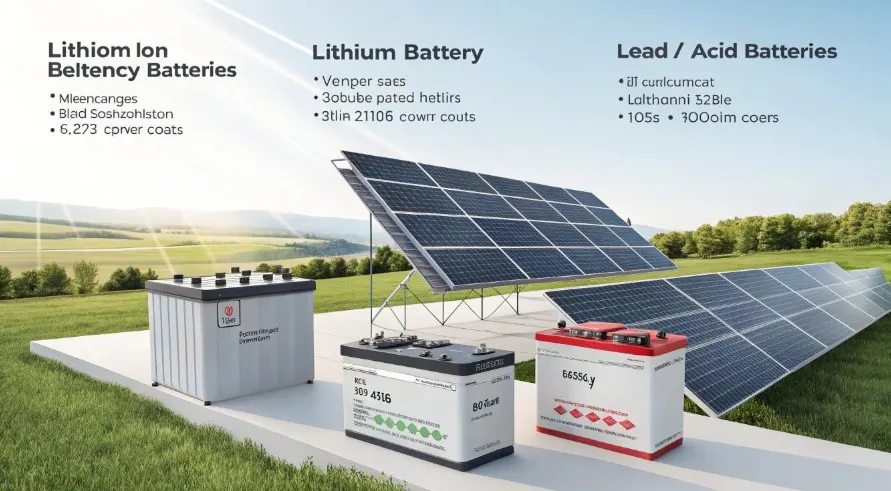
The battery is the core component that stores energy within a solar power system. Today, there are three main battery technologies on the market.
Lithium Iron Phosphate (LiFePO4)
This is currently the mainstream choice for residential solar storage.
Its biggest advantage is safety. According to public research and industry testing data, the thermal runaway trigger temperature of LiFePO4 batteries is typically above 270°C.
Cycle life is also excellent, usually reaching 3,000–6,000 charge-discharge cycles, making a service life of more than ten years realistic.
LiFePO4 batteries are relatively affordable because they do not require expensive metals such as cobalt.
Their primary weakness is reduced performance in cold climates. At -20°C, available capacity may drop to around half of the rated value.
For a hot climate like Saudi Arabia, however, this is rarely a concern and can actually be an advantage.
Ternary Lithium Batteries (NCM/NCA)
Ternary lithium batteries use nickel-cobalt-manganese or nickel-cobalt-aluminum cathode materials.
Their energy density is approximately 30–50% higher than LiFePO4, allowing them to store more energy within the same physical size.
They also perform better in cold environments and retain more capacity below freezing temperatures.
However, their main drawback is safety.
The thermal runaway initiation temperature of ternary lithium batteries is typically only 150–200°C. When punctured or severely overcharged, they are more likely to catch fire, and such fires are difficult to extinguish.
Cycle life is also shorter, generally around 2,000–3,000 cycles, roughly half that of LiFePO4.
Ternary lithium batteries are better suited for applications where size and weight are critical, such as electric vehicles. For stationary residential energy storage, the market is increasingly shifting toward the safer LiFePO4 technology.
Lead-Acid Batteries
Lead-acid batteries are the oldest rechargeable battery technology and remain extremely mature.
Their biggest advantage is cost. Initial purchase prices are often around one-third of comparable lithium battery systems.
They are also generally safe and do not present the same fire risks associated with lithium batteries.
However, their drawbacks are significant:
- Short lifespan, typically only 300–500 cycles
- Heavy weight, usually 3–5 times heavier than LiFePO4 batteries of the same capacity
- Larger physical size
- Higher maintenance requirements
- Vulnerability to sulfation if left partially discharged
| Feature | LiFePO4 | Ternary Lithium | Lead-Acid |
| Safety | High | Lower | Relatively High |
| Cycle Life | 4,000–6,000 cycles | 2,000–3,000 cycles | 300–500 cycles |
| Energy Density | Medium | High | Low |
| Size & Weight | Moderate | Small / Light | Large / Heavy |
| Initial Cost | Medium | High | Low |
| Long-Term Cost | Low | High | High |
| Home Use Recommendation | Best Choice | Not Recommended | Temporary Solution |
For households in sunny regions, LiFePO4 is generally the most practical option.
Saudi Arabia’s abundant sunshine means solar production is excellent, but the climate is also extremely hot. Batteries must operate reliably in high-temperature environments. LiFePO4’s superior thermal stability makes it a much safer choice than ternary lithium batteries for garages, utility rooms, and outdoor installations exposed to temperatures of 30–40°C or higher.
What Are Solar Batteries Used For?
Solar batteries are more than just backup power sources during outages. They act as the center of a home’s energy management system. Here are the most common real-world applications.
1. Lowering Electricity Bills
Saudi summers are long and extremely hot, and air conditioners often run all day.
For many households, electricity bills during June through September can double or even increase further.
According to data provided by Saudi energy authorities, residential electricity consumption above 6,000kWh can be billed at rates up to 0.30 SAR per kWh. Storing solar energy during the day and using it at night directly reduces those costs.
The process is simple:
Solar panels power the air conditioning system during daylight hours. Excess electricity is stored in the battery. After sunset, the battery discharges and continues powering the air conditioner.
As a result, the electricity used during evening peak periods comes from solar energy generated earlier rather than from the grid.
2. Emergency Backup Power During Outages
During a blackout, food in refrigerators can spoil, phones lose power, and homes become dark.
A solar battery system can continue supplying electricity to essential appliances.
Compared with fuel-powered generators, solar batteries are quiet, emission-free, require no fuel storage, and start automatically.
Generators can also be difficult to start and maintain in Saudi Arabia’s extreme summer heat. Solar batteries do not have this problem.
3. Independent Power for Remote Areas and Farms
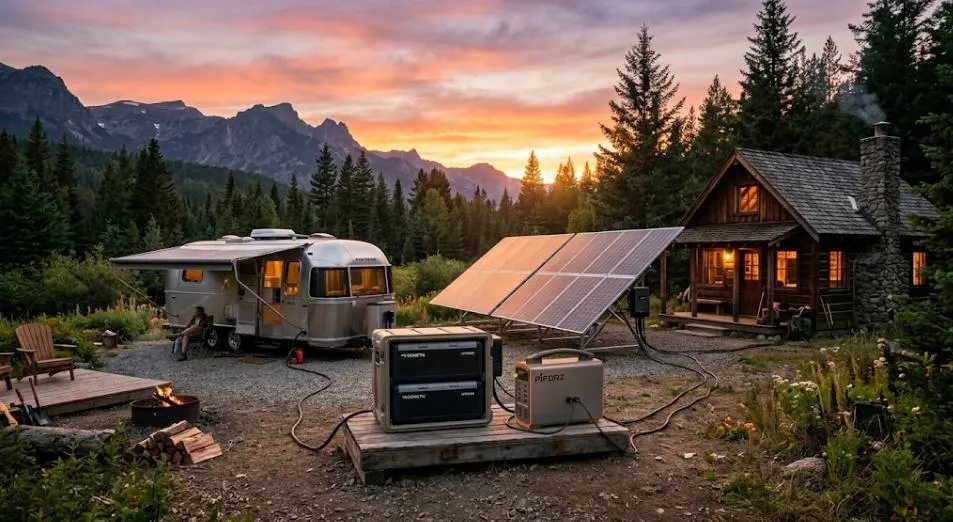
Saudi Arabia has many farms, desert camps, Red Sea vacation homes, and remote residences that are not connected to the utility grid.
Extending grid power over several kilometers can be extremely expensive and time-consuming.
In these situations, a solar battery system is not a backup source—it becomes the primary source of electricity.
A properly designed solar-plus-storage system can operate independently year-round.
Solar panels generate power during the day while simultaneously charging the battery. The battery then supplies electricity throughout the night.
With enough storage capacity, the system can continue operating through several cloudy days or dust storms. A small generator can be added as a final layer of backup protection during prolonged extreme weather.
4. Home Charging for Electric Vehicles
If your home already has a solar battery system, charging an EV becomes much cheaper.
Solar electricity generated during the day is stored in the battery and later used to charge the vehicle at night.
In effect, your vehicle is being charged with electricity that was generated for free from sunlight.
The value of solar batteries in Saudi Arabia can be summarized in three simple ideas:
Sunlight saves money.
Power outages become manageable.
Remote properties gain reliable electricity.
Whether you live in a villa in Riyadh, an apartment in Jeddah, or a farmhouse in a rural area, there is likely a solar battery solution that fits your needs. The key is selecting the right battery capacity and solar array size based on your electricity consumption, outage frequency, and budget.
How to Choose a Solar Battery
Battery Capacity
Capacity determines how much electricity the battery can store.
You will commonly encounter three units:
- Wh (Watt-hours)
- kWh (Kilowatt-hours)
- Ah (Amp-hours)
Wh and kWh represent the same concept, with:
1kWh = 1,000Wh
Amp-hours require voltage for conversion:
Capacity (Wh) = Voltage (V) × Amp-hours (Ah)
For example, a 12V 100Ah battery stores:
12V × 100Ah = 1,200Wh (1.2kWh)
The right capacity depends on how long you want backup power to last.
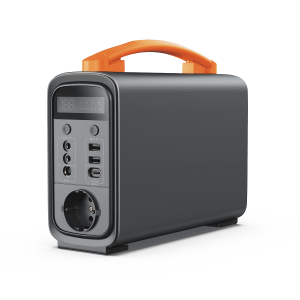
If you only need to support a refrigerator, router, lighting, and phone charging, a 2–5kWh portable power station is often sufficient.
If you want to run an air conditioner throughout the night, you may need a 10–20kWh battery storage system.
For whole-home backup, 30kWh or more is generally a safer target.
The basic rule is:
Within your budget, larger is usually better than smaller. If capacity is insufficient, you may run out of power during an outage. Extra capacity, on the other hand, can also help reduce electricity bills during normal operation.
Power Output
Power determines how many appliances can run simultaneously.
It is measured in W (watts) or kW (kilowatts) and is primarily determined by the inverter.
If your outage loads only include:
- Refrigerator (150W)
- Router (20W)
- Several LED lights (30W)
Your total load is only about 200W, meaning even a small portable power station may be sufficient.
However, if you want to operate:
- Two air conditioners (1,500W)
- A microwave (2,000W)
Your load can exceed 3,500W, requiring a battery system with at least a 4,000W inverter.
You must also account for startup surge power.
Air conditioners, refrigerators, and water pumps can require 3–5 times their normal running power during startup. If the inverter cannot handle this surge, the appliance may fail to start.
The best approach is:
- Add up your simultaneous appliance loads.
- Add a 30% safety margin.
- Verify that the inverter’s surge rating can handle compressor startup loads.
Cycle Life
Cycle life determines how long the battery will last.
One cycle represents a complete discharge and recharge.
Using 30% of the battery today and recharging it does not count as a full cycle. Only after cumulative discharge reaches 100% does it equal one complete cycle.
As discussed earlier, LiFePO4 batteries generally achieve 3,000–6,000 cycles.
At one full cycle per day, that translates to approximately 10–15 years of operation.
Even after a decade, many batteries still retain around 80% of their original capacity.
Depth of Discharge (DoD)
Depth of discharge refers to how much of the battery’s stored energy can be safely used.
Lead-acid batteries typically support only about 50% DoD. Using more than half of their capacity regularly will significantly shorten lifespan.
A 100Ah lead-acid battery therefore provides only about 50Ah of practical usable energy.
LiFePO4 batteries typically support 90–95% DoD.
A 100Ah LiFePO4 battery can safely deliver 90–95Ah without significantly affecting lifespan.
This means that for the same rated capacity, LiFePO4 batteries provide nearly twice the usable energy of lead-acid batteries.
For residential energy storage, LiFePO4’s 90–95% DoD has effectively made lead-acid technology obsolete in terms of efficiency.
Expandability
Expandability solves future growth problems.
You may only need 5kWh today for a refrigerator and lighting. A few years later, you may buy an electric vehicle or experience more frequent outages and want 15kWh or more.
Modular battery systems allow additional battery modules to be added later.
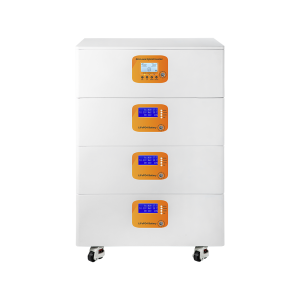
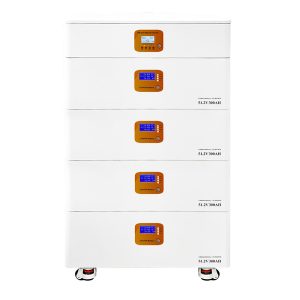
For example, Piforz’s 10kW + 15kWh system can be expanded from 15kWh to 30kWh and even 45kWh simply by adding battery modules.
The benefit is that you do not need to invest heavily upfront, and your original battery investment remains useful.
The following recommendations are provided for reference only:
| Household Type | Recommended Battery Capacity | Recommended Solar Array Size |
| Apartment / Small Home, Outage Protection | 2–6kWh | Not Required |
| Villa, Primarily for Bill Savings | 10–20kWh | 5–8kW |
| Villa + Electric Vehicle | 20–30kWh | 8–12kW |
| Off-Grid Home / Farm | 30kWh+ | 12kW+ |