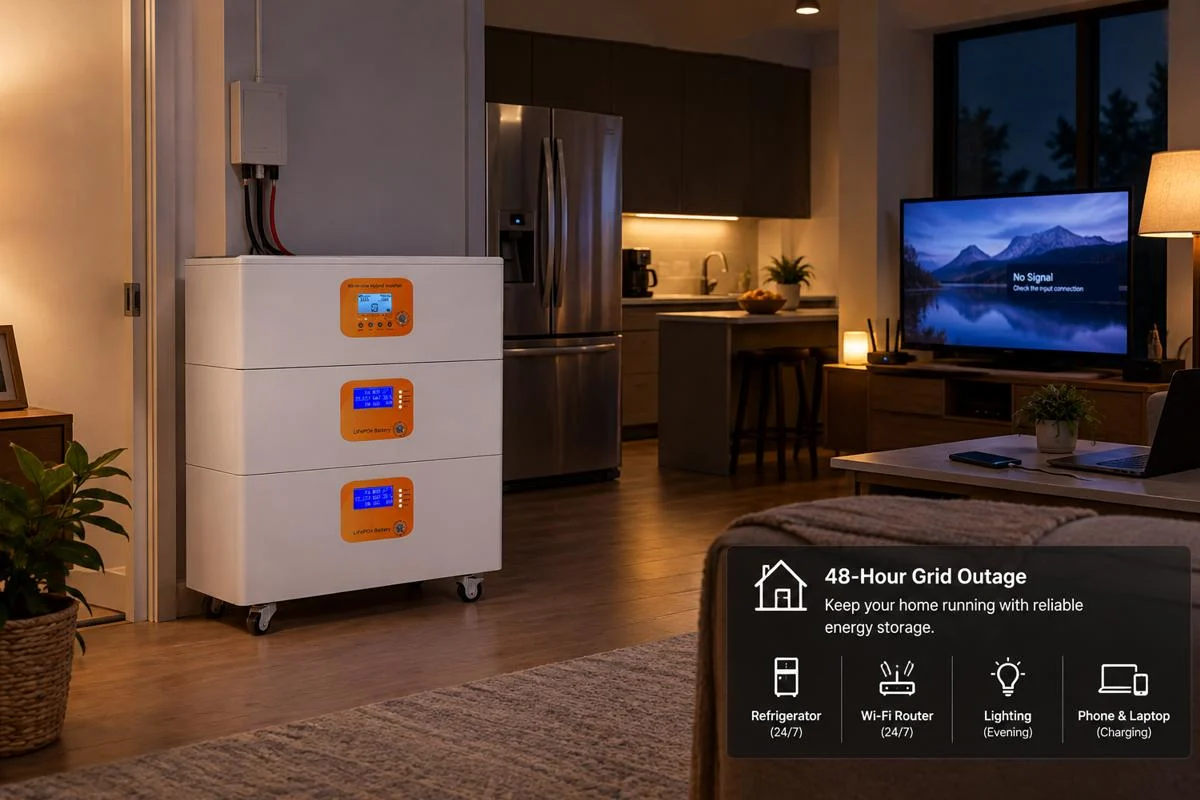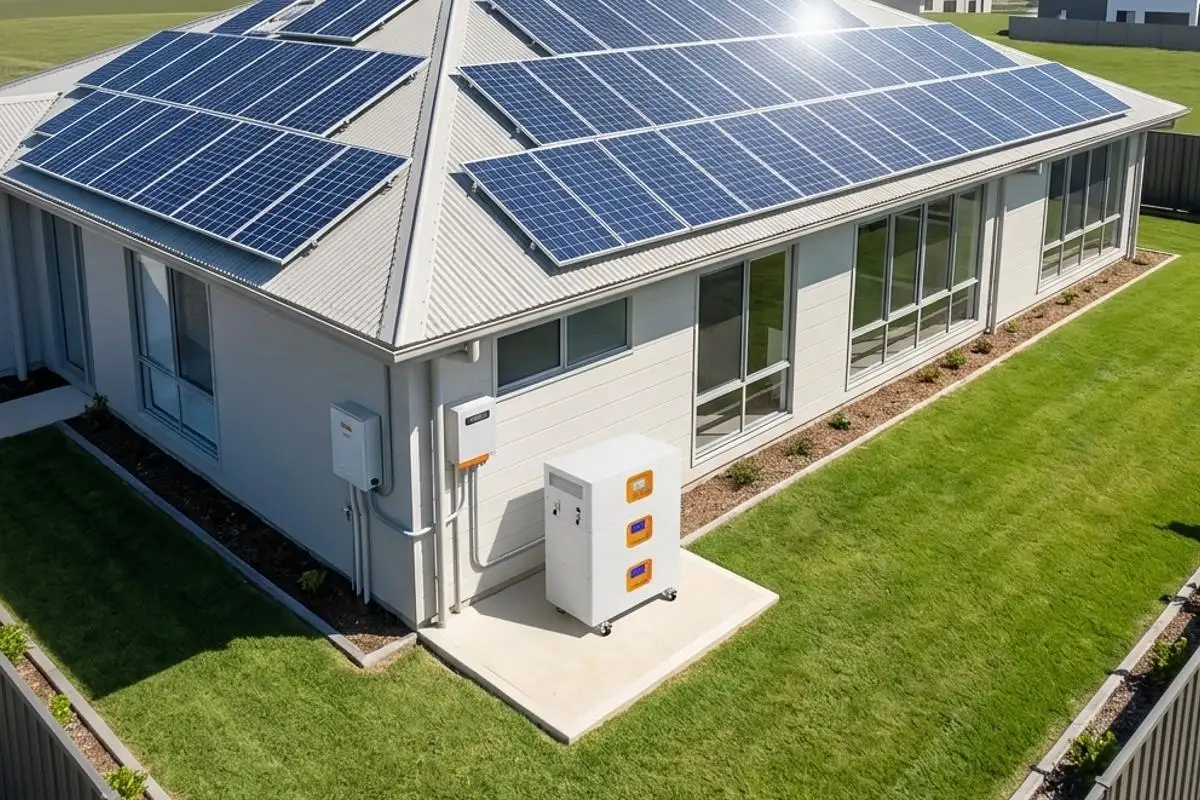

I saw a very interesting topic in a Reddit discussion forum: what would you need if you had no water, electricity, or gas for 72 hours? For the vast majority of people, unless a catastrophic event occurs, we will never encounter power or water outages lasting more than 72 hours. When people who are already accustomed to the conveniences of modern life face sudden natural disasters, can they respond calmly? Now imagine that this situation really happened. What would you need and what would you do? This is also a good mental exercise. It not only helps you prepare, but also helps you overcome procrastination.
In my view, being unable to use water or gas for 72 consecutive hours would certainly cause quite a few troubles. But the impact of a long power outage seems to go beyond just lighting and charging devices. It may also affect food preservation, access to information, heating or cooling, and even the normal operation of some water supply systems. So how exactly should we respond to and prepare for long power outages? Then keep reading.
What to Do When the Lights Go Out
When a power outage suddenly occurs, don’t panic first. You can look outside to see whether the streetlights and your neighbors’ lights are on, to determine whether it is a tripped breaker in your own home or a problem with the public power grid. If it is a tripped breaker at home, then when you go to check the circuit breaker, you must pay attention to safety. You must keep your hands dry, and strictly avoid standing barefoot on wet ground, to prevent accidents. But if it is a power grid outage, then you need to plan carefully.
Although candles are very useful during a power outage, according to data from the National Fire Protection Association, the rate of residential fire accidents caused by candle use during power outages surges. Especially when there are children or pets at home, or when strong winds cause curtains to flutter, candles are not so good at this time. Instead, there is a possibility of a secondary disaster, so for safety’s sake, it is still best to use backup batteries.
And even if the power grid suddenly comes back on, this is actually equally dangerous, because the voltage at the moment power suddenly returns is extremely unstable, and it can easily burn out household appliances. So before the power comes back, it is best to unplug appliances, leave one light on as a signal, and then after the grid restores power, wait for more than ten minutes to confirm that the voltage is completely stable and that there will be no second outage or flickering, and then plug valuable equipment such as the refrigerator and computer back into the power supply one by one.
Food and Water Safety During a Power Outage
During a power outage, darkness and other things can still be overcome. For modern society, during a long power outage, the biggest fear is the problem of food storage. Once the power goes out, refrigerator preservation enters a countdown stage. In the first 0-2 hours after the outage, the residual cold in the refrigerator is still there, there is still a large amount of cold air inside the refrigerator, and the food itself also stores cold energy. If the refrigerator door remains closed, the internal temperature usually will not rise significantly immediately. At this time, most perishable foods can still remain at a low temperature. But within 2-4 hours, the temperature will gradually rise, and by around 4 hours, this is the node for judging the safety of important food. According to common food safety guidance from the U.S. FDA and USDA, if the refrigerator door remains closed, the refrigerator can usually keep food at a safe temperature for about 4 hours. If perishable food has already risen above 4°C (40°F), then the risk needs to be judged based on the duration of the temperature exceedance. Once 4 hours have passed and the power still has not come back, the refrigerator temperature may continue to rise, and the risk of bacterial growth will also increase. Milk, meat, fish, cooked foods, and leftovers that need refrigeration especially need attention. Not only will the freshness and taste of the food decline, but more importantly, it may already be unsafe. Therefore, during a long power outage, keeping the refrigerator safe is absolutely the top priority.
During a power outage, be sure not to open the refrigerator door frequently, because every opening may accelerate the rise in internal temperature. Over time, the order in which you eat the food in the refrigerator is also important. If the power outage lasts a long time, give priority to safe perishable foods that need to be dealt with as soon as possible, and afterward rely on canned goods, nuts, energy bars, and other shelf-stable foods that do not require refrigeration.
Next, in addition to electricity, water resources are also something that cannot be ignored. Many times people think that as long as the water supply is not cut off, there is no need to store water. But in some areas, a simple power outage may affect electric pumps, private wells, or some water supply facilities. And once the water supply system becomes abnormal, it may also be accompanied by water quality safety issues, so preparing an appropriate amount of drinking water in advance is the best approach. U.S. emergency preparedness guidelines usually recommend storing at least 1 gallon (about 3.8 liters) of water per person per day for drinking, basic cooking, and limited hygiene needs. According to this standard, one person should prepare at least 3 gallons of water to meet basic needs for 72 hours.
How to Manage Power During a 3-Day Outage
Now let’s talk about the most important reserve—power resources. If a long power outage like 3 days really occurs, the home backup power supply should come into play.
Distinguishing Power and Energy
When it comes to backup power, you have probably often seen the two units W and Wh. These are actually two particularly important concepts in power supplies.
Power is usually expressed in W, reflecting how much electricity a device needs when running. For example, if a device has a rated power of 100W, it means it needs about 100W of power when running.
Energy is usually expressed in Wh or kWh, reflecting how much energy is consumed over a period of time. A 100W device running continuously for 5 hours will theoretically consume 500Wh of energy. Portable power stations commonly use W, while energy storage systems often use kWh as the unit because of their large capacity.
In addition to regular power, there is also startup surge. But many appliances, especially refrigerators and air conditioners with compressors, as well as pumps with motors, will have power surge to 2-3 times the rated power or even higher at the instant of startup. If the power supply’s startup surge is not enough, then no matter how high its power is, it cannot run large devices.
After understanding this basic information about power, you can judge exactly how much capacity of backup power you need based on what devices you must run during each power outage.
Carefully Consider the Devices That Truly Need Power
Even if you have backup power, do not “underestimate the enemy.” Do not think about running all the devices in the home. The more this kind of time, the more you need to “subtract,” so that it can last longer. It is best to prioritize the devices that need power. If there is medical equipment at home that needs power, this is absolutely top-level. Next is to ensure our food safety, and then communication and network, as well as lighting. If there is still budget, then you can live a bit more comfortably.
| Priority | Rated Power (Running) | Instant Startup Power (Surge) | Operating Mechanism and Daily Power Consumption | 72-Hour Total Power Consumption Budget | Practical Power-Saving Tips |
| Tier 1: Medical Lifeline CPAP Sleep Apnea Machine | 30W – 50W | About 50W | Runs 8 hours per night About 240Wh – 400Wh/day | About 720Wh – 1200Wh | Turn off the humidifier and heating module: directly use cold airflow, which can reduce device power consumption by more than 50%. |
| Tier 2: Food Preservation Assets Full-Size Home Refrigerator (20 cu.ft) | 120W – 200W | 800W – 1200W (Inductive Load Surge) | Compressor Duty Cycle 35% About 1.2kWh – 1.5kWh/day | About 1500Wh – 3600Wh (With pulse method, can be reduced to 1500Wh) | The inverter’s peak power must support the startup surge, otherwise it will trigger overload protection and shut down. |
| Tier 3: Emergency Communication and Information Mobile Phone (2-3 units) + Optical Modem/Router | Phone: 15W Router: 10W – 15W | — | Phone recharged daily Router turned on as needed 3-4 hours/day | About 300Wh – 450Wh | As long as the fiber optic machine room node in the community is not paralyzed, powering the optical modem and router can restore whole-home Wi-Fi. |
| Tier 4: Basic Nighttime Lighting LED Camp Lantern / Headlamp | 5W – 10W | — | Lighting 4–5 hours per night About 25Wh – 50Wh/day | About 75Wh – 150Wh | Completely eliminate open-flame candles. A 5W high-efficiency LED can illuminate the entire core living area. |
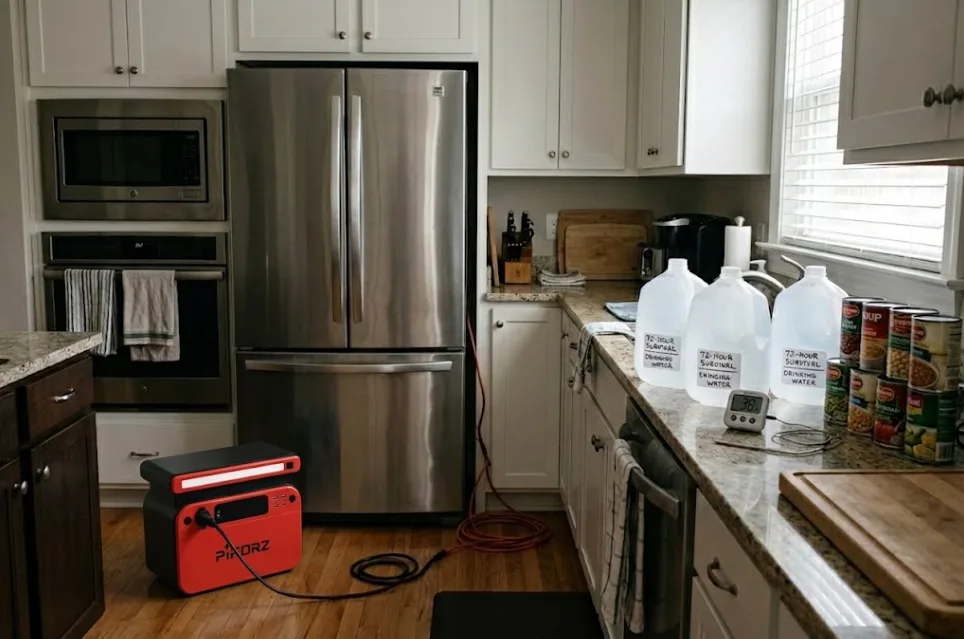
Many times people do not dare to power the refrigerator because they are afraid its consumption is too high and the backup power is not enough. But in fact, on the premise of minimizing opening and closing the door, the actual working time of a household refrigerator compressor each day is only 30%–35% of the whole day. It actually does not use as much electricity as imagined. And you do not have to power the refrigerator 24 hours a day. You can wait 4-5 hours, and when the refrigerator temperature is no longer okay, plug the refrigerator into the portable power station and run it for 30–45 minutes. This is enough for the compressor to complete a full cooling cycle and press the refrigerator compartment back below the 4°C (40°F) safety line. Then unplug it. In this way, you can easily get through 72 hours.
How to Keep Your Home Comfortable Without Electricity
And if the power outage happens during cold winter or hot summer, indoor temperature is also a big problem. Without the help of electricity, you can only think of other ways.
If it is winter, the most important thing is to ensure that indoor heat does not escape. You can reduce loss by closing off unnecessary rooms, drawing curtains, wearing more dry clothing, and using blankets or sleeping bags for warmth. You can also have the whole family gather together to reduce the collective activity space and increase heat. Of course, if your backup battery is sufficient, then do not hesitate to take out the electric blanket for warmth.
If it is summer, you can also block the heat by drawing sun-blocking curtains during the day and ventilating only when the outdoor temperature is lower. As for electric fans or air conditioning, it is naturally best if there is surplus power. If not, you can also use wet towels, cold water, ice packs, and so on for physical cooling.
Daily Life During a Power Outage
After solving the basic needs of life, what remains is psychological suffering. We have already become accustomed to a life with the internet and information. Suddenly having none of it is a bit hard to accept. So when preparing backup power, you can also include devices like the Wi-Fi router in the calculation. Also, regarding communication, even if you do not use Wi-Fi, mobile phones and other communication devices must retain sufficient power for important contact and official information. You can prepare a radio and regularly listen to local broadcasts for weather and power outage-related news, so you do not completely cut yourself off from the outside world.
Of course, you can also prepare some activities that do not require electricity in advance to help the family maintain a basically supported daily order. You can prepare paper books, playing cards, board games, puzzles, drawing supplies, or arrange simple family games. For children, you can prepare screen-free activities in advance. For the elderly, you should ensure lighting, communication, and necessary daily care needs.
The Best Backup Power Options: Building Your Off-Grid Safety Net
A lot of the content and solutions mentioned above are basically built on the premise that the household has its own backup battery. If there is no backup power source for 3 consecutive days, or if the power is insufficient, then it is indeed too hard to endure. So choosing the right backup power source is absolutely the prerequisite for everything. Without a reliable source of electricity, everything is still impossible.
Traditional Fuel Generators vs. Portable Power Stations
Apart from complete energy storage systems installed in the home, the remaining more convenient and common backup power sources are portable power stations and fuel generators. These two devices cannot be directly said to be better or worse than each other. It can only be said that each has its own advantages, depending on which aspect you value more.
In the past, many families were used to preparing a small gasoline generator. Its advantages are strong power and especially long runtime. As long as you have enough fuel, you can let it run for as long as you want, which is very suitable for long power outage scenarios like this. But in extreme weather, its disadvantages are also especially obvious. First, it must be placed outdoors, and at least 20 feet away from doors and windows, otherwise there is a risk of carbon monoxide poisoning. Second, in blizzards or heavy rain, running cords and refueling outdoors become very difficult. Also, the current it produces is unstable and cannot directly charge delicate devices such as phones and computers.
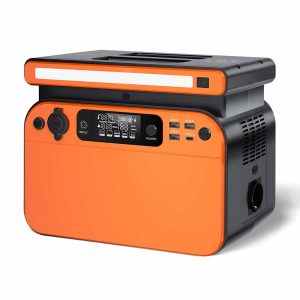
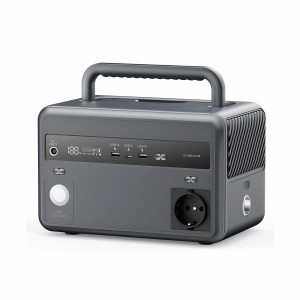
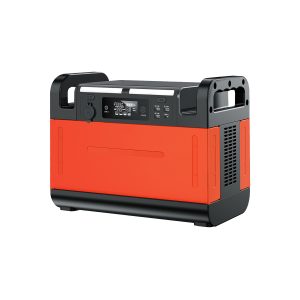
Now, compared with traditional fuel generators, portable power stations using lithium iron phosphate (LiFePO4) battery cells are becoming the mainstream choice for household emergency preparedness. Because they have zero emissions and almost no noise, you can directly place them in the bedroom to power a sleep apnea machine, or push them into the kitchen for refrigerator emergencies. They are not only highly safe, but also require almost no maintenance.
For 72-Hour Emergencies, How Much Capacity Do You Need?
There is no standard answer to this question, because every household has different devices it wants to protect. But you can calculate it yourself, and the method is very simple.
First, list the devices that must have uninterrupted power according to the household’s essential needs, then check the rated power (W) and peak power (W) on each device’s body label or manual, then add their power together, and use the formula: Device Power (W) × Daily Usage Hours (h) × 3 Days = Required Energy (Wh)
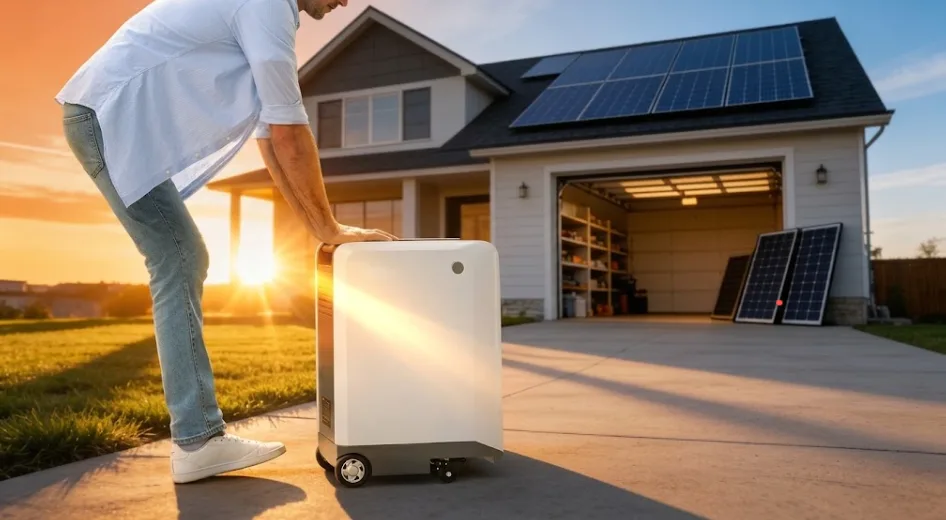
Moreover, for a 3-day outage, even a portable power station with a very large capacity may run out, and no matter how much fuel a generator has, it may also burn through it. At this time, you also need a way to remedy it—solar panels. If you have solar panels, you do not need to worry about not having enough power, because during the day, you only need to use 4–5 hours of effective sunlight, and a 200W–400W portable solar panel set can recharge the power station by 600Wh–1200Wh. This part of the electricity is just enough to support several refrigerator preservation cooling cycles throughout the day and nighttime communication, which can pull you out of a passive state and give you more peace of mind.
In a society highly dependent on modern electricity, a power outage often takes only a few seconds to completely disrupt the rhythm of our lives. But losing electricity does not mean losing order. From a few gallons of stored drinking water, the refrigerator pulse cooling technique, to a portable power station that can handle key loads, the meaning of these preparations is to preserve the most basic dignity of life and sense of security for you and your family in the sudden darkness.