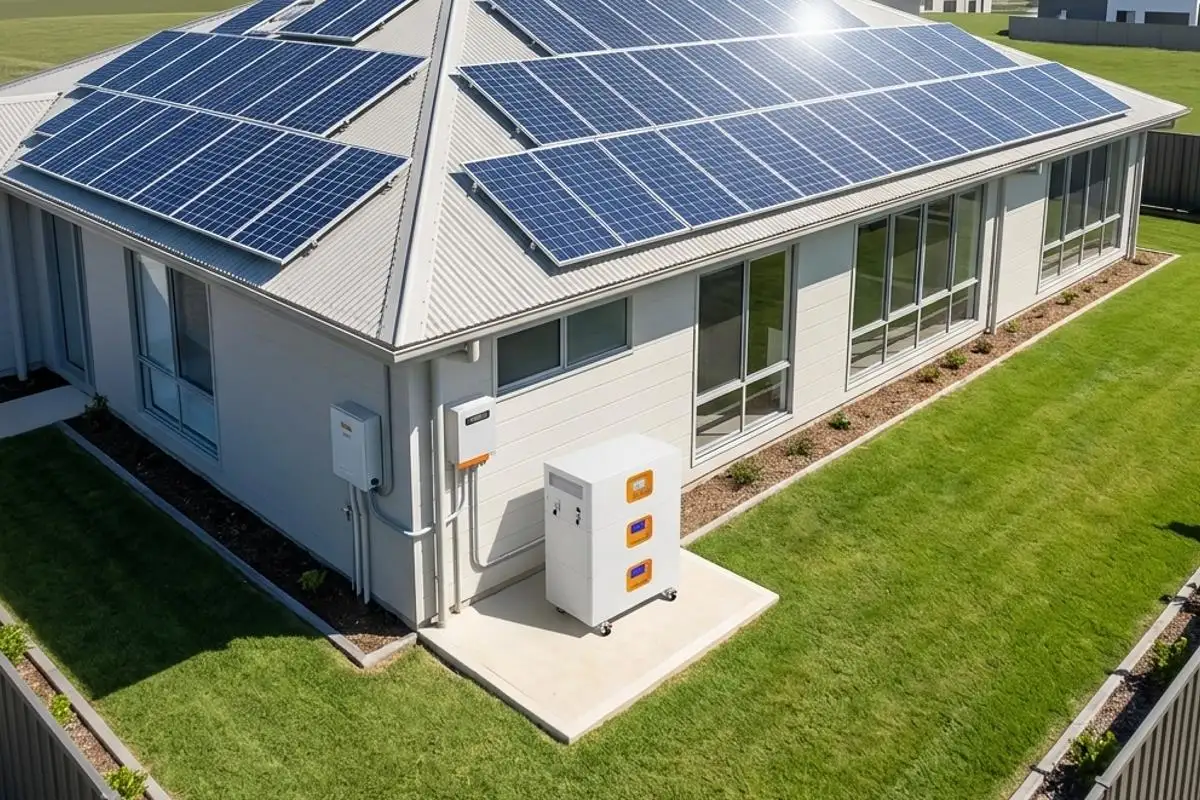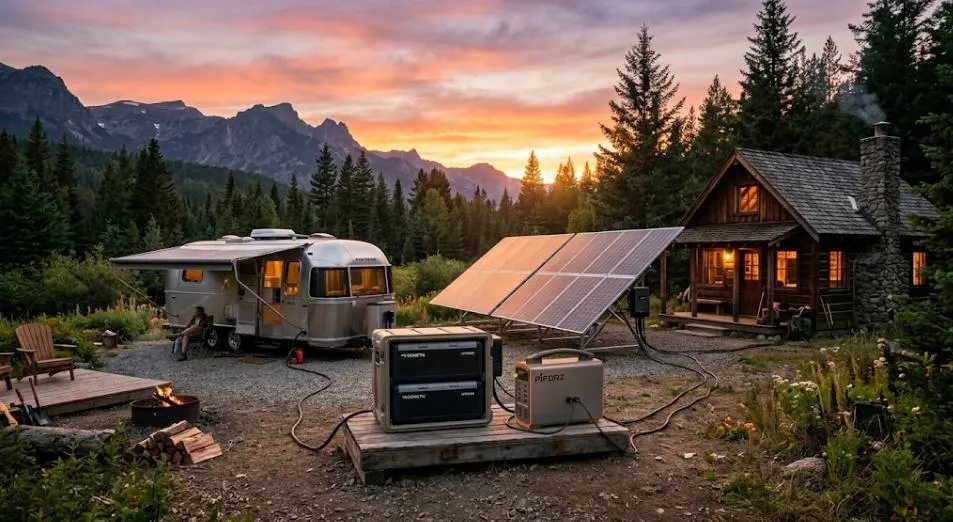

Power outages happen frequently, but can a solar system continue powering your home during an outage? Not necessarily. Having solar panels does not automatically mean you will have power during a blackout. Only a system that combines solar panels with a solar battery can continue providing power during an outage. If you have a standard grid-tied solar system without battery storage, it will not be able to power your home during an outage either.
Why is that? Keep reading, and you’ll understand why most homes with solar panels actually lose power during a blackout and how the system can continue operating when the power goes out at your home.
What Happens to Solar Panels When the Grid Goes Down?
After the power grid goes down, solar panels will still continue generating electricity as long as there is sunlight during the day. Many people ask: Why does my home still lose power during a daytime outage even though I have solar panels installed? The reason is that the electricity generated by the solar panels cannot be directly supplied to your home or sent to the grid, so your household appliances cannot use it. When a standard grid-tied solar system’s inverter detects a grid outage, it automatically shuts down, essentially cutting off the path for power output. It can neither send electricity to the grid nor supply power to your home. This is the anti-islanding protection mechanism at work.
What Is Anti-Islanding Protection?
Anti-islanding protection means that when the grid goes down, your grid-tied solar power system must shut down.
If the grid goes down and utility workers are repairing the power lines, they assume the lines are de-energized. If your solar system continues sending electricity into the lines, they could come into contact with live wires. This could directly put their lives at risk. That is why all standard grid-tied inverters must have an anti-islanding protection function: when a grid outage is detected, they must automatically disconnect their output within milliseconds.
This is why a standard grid-tied solar system usually cannot continue powering your home during a power outage. A standard grid-tied solar inverter continuously monitors the grid’s voltage, frequency, and other electrical parameters. When these parameters fall outside the permitted range, or the system detects a potential islanding condition, the protection system is triggered and the inverter stops feeding power into the grid. This ensures that when the grid fails, the solar system does not accidentally continue supplying electricity to power lines that are supposed to be de-energized.
So Under What Conditions Can You Still Have Power During an Outage?
For this to happen, your solar system needs to have a solar battery, and the inverter must also support islanding mode. Only when both conditions are met can you continue using solar power during a grid outage.
An inverter that supports islanding mode means that after the grid goes down, the inverter can automatically disconnect from the grid and independently supply power to your home.
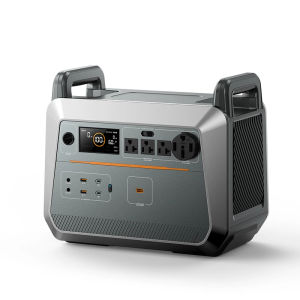
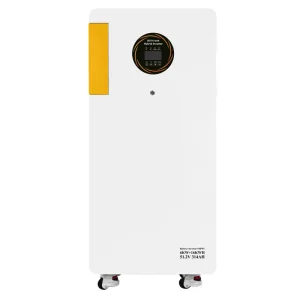
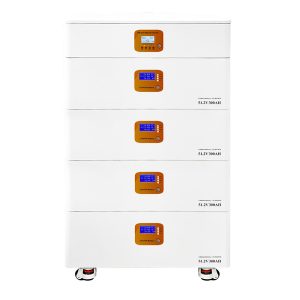
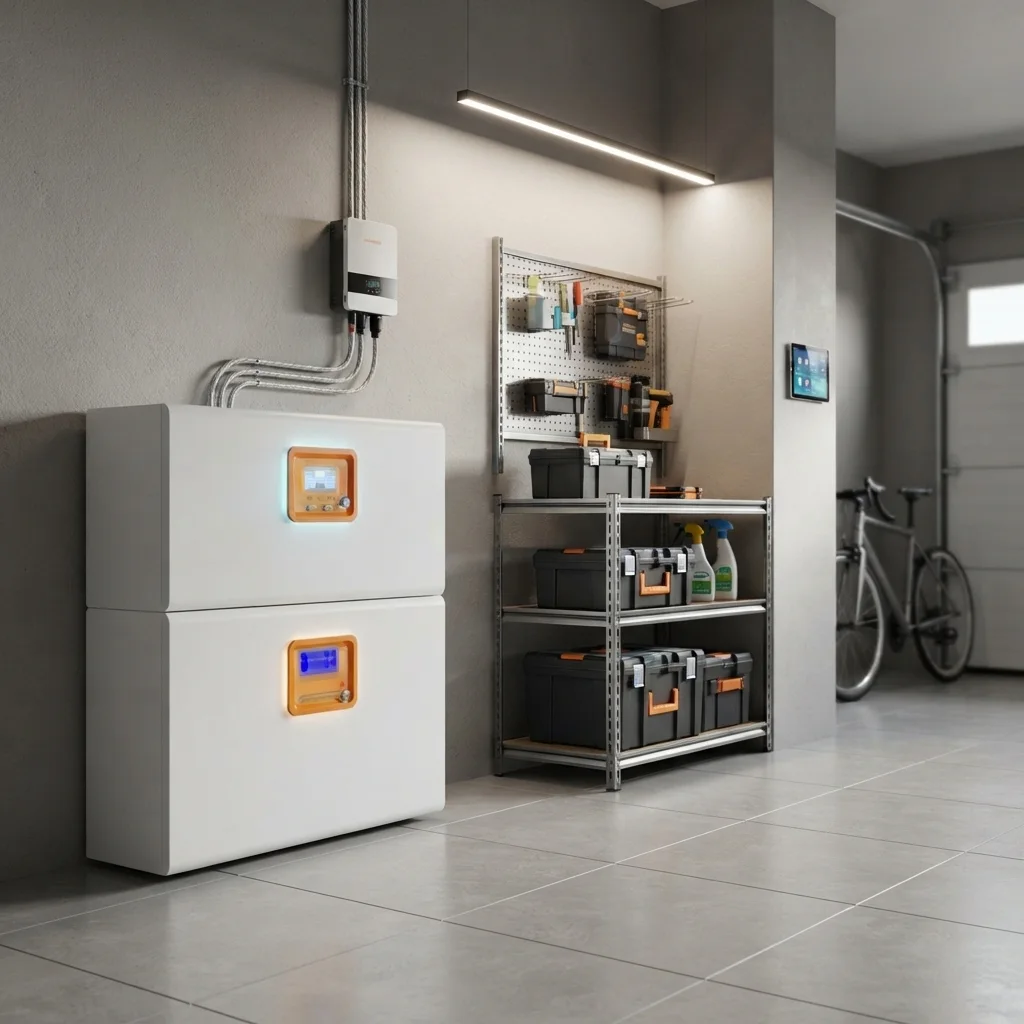
A solar battery, such as an all-in-one energy storage system with an integrated inverter, battery management system (BMS), and automatic transfer switch (ATS), is hardwired into your home’s electrical system. Under normal grid-connected conditions, the energy storage system operates alongside the grid and prioritizes storing electricity generated by the solar panels. When the grid goes down, the built-in automatic transfer switch responds quickly, automatically disconnects the home from the grid, and switches the household circuits to battery power. The battery then takes over the household loads with millisecond-level switching, allowing your appliances to continue operating.
How Does a Solar Battery Keep Your Power On When the Grid Is Down?
A standard battery without an integrated inverter, battery management system (BMS), and automatic transfer switch (ATS) cannot actively disconnect from the grid during a power outage. In other words, it cannot Keep Your Power On when the grid goes down.
However, if your solar system is paired with an all-in-one solar battery with an integrated automatic transfer switch (ATS), the solar battery system’s ATS will automatically disconnect from the grid during an outage, creating a home microgrid that operates independently of the grid and can continue supplying power to your home.
The entire process can basically be divided into the following four steps:
① Detect the Power Outage
The inverter continuously monitors the grid. Once it detects a sudden drop in voltage, abnormal frequency, or a complete loss of power, it immediately triggers islanding mode.
② Disconnect from the Grid
The system’s automatic transfer switch (ATS) immediately cuts the physical connection between your home and the external grid. This ensures that electricity generated by the solar panels cannot flow back into the grid and endanger utility workers.
③ Battery Takes Over Power Supply
Once disconnected from the grid, the solar battery system continues supplying stable power to the household circuits. The switch typically occurs within 20-100 milliseconds, while some systems are designed for even faster transfer. For example, Piforz’s all-in-one energy storage system can automatically take over household power within 10-20 milliseconds.
④ Solar Panels Continue Generating Power and Recharging the Battery
A power outage does not prevent solar panels from generating electricity. You may be wondering: Can Solar Panels Recharge the Battery During an Outage? In this home microgrid solar battery system, the answer is yes. When sunlight is available, the solar panels can continue charging the battery while simultaneously supplying power to the home. If solar generation is sufficient, the system can even charge the battery and power household loads at the same time.
What Can a Solar Battery Actually Run During a Blackout?
Typically, a 5kWh solar battery can provide backup power for about 1.5 to 3.4 days when powering only essential loads such as a refrigerator, lighting, WiFi, and phone charging. However, if you need to power high-wattage appliances such as an air conditioner, electric heater, electric oven, or washing machine, the runtime can be reduced significantly to just a few hours.
How Long Will a Solar Battery Last During a Power Outage?
During a power outage, the first thing you need to do is distinguish between the appliances that must remain running and those that can temporarily be left without power:
Essential loads: Appliances that need to remain running during an outage. For example, a refrigerator (to keep food fresh), WiFi router (to maintain internet connectivity), LED lighting (for nighttime illumination), phone chargers, and medical equipment such as CPAP machines.
Non-essential loads: Appliances that can be temporarily turned off during an outage. For example, air conditioners, electric heaters, electric ovens, and washing machines are all high-power appliances.
I’ve listed the power consumption of some common household appliances below for reference, so you can estimate how much electricity your own household loads may consume:
| Device | Running Power | Daily Usage (Reference) | Estimated Daily Energy Consumption |
| WiFi Router | 5-20W | 24 hours | About 0.1-0.5kWh |
| LED Lighting (Whole Home) | 50-100W | 4-6 hours | About 0.2-0.6kWh |
| Phone Charging | 5-20W | About 1-2 hours of charging | About 0.02-0.04kWh |
| Laptop | 50-100W | 4-8 hours | About 0.2-0.8kWh |
| Refrigerator (Energy Star Certified) | Rated power 150-400W (while the compressor is running); actual average power is about 40-80W based on the duty cycle | 24 hours | About 1.0-1.9kWh |
| TV | 80-150W | 4-6 hours | About 0.3-0.9kWh |
| Microwave / Electric Kettle | Microwave: 700-1500W; electric kettle: 1000-1500W | A few minutes per use, totaling 10-20 minutes per day | About 0.2-0.5kWh |
| Air Conditioner (Split/Window Unit) | Window unit: typically about 1200W; split central AC (10,000 BTU class): about 1500W or more | 6-10 hours | About 7.2-15kWh |
| Electric Heater | 1500-1800W | 4-8 hours (winter) | About 6-14.4kWh |
Next, let’s compare how long batteries with different capacities can typically last.
Runtime = Usable Battery Capacity ÷ Power Consumption of All Devices Running Simultaneously
Assuming the battery is only powering essential household loads (refrigerator, LED lights, WiFi, and phone charging):
| Battery Capacity | Actual Usable Capacity | Runtime (Essential Loads) |
| 5 kWh | 4.5kWh | About 1.5-3.4 days |
| 10 kWh | 9kWh | About 3-6.7 days |
| 15 kWh | 13.5kWh | About 4.5-10.1 days |
| 20 kWh | 18kWh | About 6-13.5 days |
First, decide which appliances must remain running during a power outage. Make a list, estimate their total power consumption, and then determine the appropriate battery capacity. 5kWh is suitable for basic needs, 10-15kWh is suitable for a typical household, and 20kWh or more is suitable for prolonged outages or high-power appliances.
Once you have determined the essential loads that need to remain powered, you can also use the following formula to estimate runtime:
Runtime = Usable Battery Capacity ÷ Total Load Power
By calculating how long you need the battery to provide power, you can choose a battery capacity that matches your needs.
If you’re not sure how to calculate it, you can refer to the “How to Calculate Battery Backup Runtime for Home Appliances?” section in the article: “How Long Does a Battery Backup Last When the Power Goes Out?”
Who Benefits Most From a Solar Battery During Power Outages?
Here is another practical question: Does your household really need a battery, and in what situations can a solar battery provide the most value? Not everyone who installs solar panels necessarily needs a battery. However, you should understand that a solar battery provides the most value when the grid goes down, when solar generation and household electricity consumption do not occur at the same time, or when you want greater energy independence.
If you live in an area that experiences frequent power outages, or where a single outage can last for several hours or longer, a solar battery can be very worthwhile. This is especially true if your home has appliances such as refrigerators, WiFi routers, security systems, or medical equipment that cannot remain without power for long periods. A solar battery can automatically power these devices during an outage. Compared with installing solar panels alone, a solar battery can store excess solar energy generated during the day and make it available at night or during a power outage, instead of letting that energy go to waste.
Another situation where a solar battery can be a good choice is when your household uses relatively little electricity during the day while your solar panels generate a lot of power.
For example, if you work during the day, your solar panels may generate a large amount of electricity around noon when sunlight is strongest, but your household’s electricity consumption may be very low during this period.
Without a battery, after supplying your home’s small daytime loads, much of the remaining electricity may be sold back to the grid at a low rate or simply wasted.
With a battery that has sufficient capacity, you can store this excess electricity first and use it after you return home from work in the evening. In this way, the battery is not only used as backup power during outages, but also helps you make more efficient use of your solar energy through self-consumption.
Is Solar Battery Backup Worth It in 2026?
For households with different needs, whether a Solar Battery Backup system is worth installing is not a question with one fixed answer.
If you live in an area that experiences frequent power outages, have essential devices that must remain powered, or often generate more solar energy during the day than you can use while still needing electricity at night, then installing a battery can be very worthwhile.
On the other hand, if power outages are rare in your area, you already have relatively high daytime electricity consumption, or selling excess solar power back to the grid is still financially attractive, you need to carefully consider whether the investment is worthwhile.
① The Cost of a Power Outage
The losses caused by a power outage often show up in the small details of everyday life: food spoiling in the refrigerator, the anxiety of not being able to power medical equipment, or the helplessness of trying to find a flashlight in the dark. If your home experiences multiple outages lasting several days each year, or if you rely on medical equipment, there is little need to hesitate—a battery energy storage system is an essential part of your home backup setup.
② The Value of Using Excess Solar Energy
Without a battery, any solar energy you cannot use during the day can only be sold back to the grid. However, in many areas, especially places like California where net metering policies have undergone major changes, the compensation for exported electricity has been pushed much lower than the price you pay for electricity from the grid at night. In this situation, having a battery allows you to store electricity that would otherwise be sold at a low rate and use it later when you actually need it, instead of letting someone else buy that energy from you cheaply.
③ The Difference Between Peak and Off-Peak Electricity Rates
In many areas, electricity is cheaper during the day but becomes much more expensive during the evening and nighttime peak periods. Another function of a battery is to “charge during off-peak hours and discharge during peak hours.” The larger the difference between the two rates, the faster the investment can pay for itself. In time-of-use pricing areas such as California and New York, many homeowners use energy storage batteries to reduce peak electricity consumption and shift their usage to lower-cost periods.
④ Cost
A battery is indeed not cheap. If you rarely need backup power throughout the year, have little excess solar energy to store during the day, and your electricity usage patterns do not align with peak and off-peak rates, installing a Solar Battery Backup system may provide less value than you expect. Therefore, the key question of whether to install a Solar Battery Backup is ultimately whether you actually need one.
Can a House Run on Solar Power Alone?
In theory, yes, but that is not necessarily a goal that every household needs to pursue.
First, it is important to understand that installing solar panels does not mean you will automatically have a power source around the clock. Solar power can supply your household during the day, but at night, you will either need to rely on grid electricity or use a battery.
If you install a solar battery, excess electricity generated by your solar panels during the day can be stored and used at night. This allows you to use solar energy to power your entire home throughout the day and night.
However, this actually falls into the category of an off-grid solar system. A truly off-grid home typically needs a larger solar generation system and more battery storage capacity to get through worst-case conditions such as consecutive cloudy or rainy days and insufficient sunlight during winter. In most cases, you would also need a generator as a final backup.
For most households, a more practical goal is a “solar + battery + grid” hybrid system. This approach can significantly reduce your electricity bills while still keeping essential appliances running during a power outage.
What Should You Do Before and After a Power Outage?
Before a Power Outage
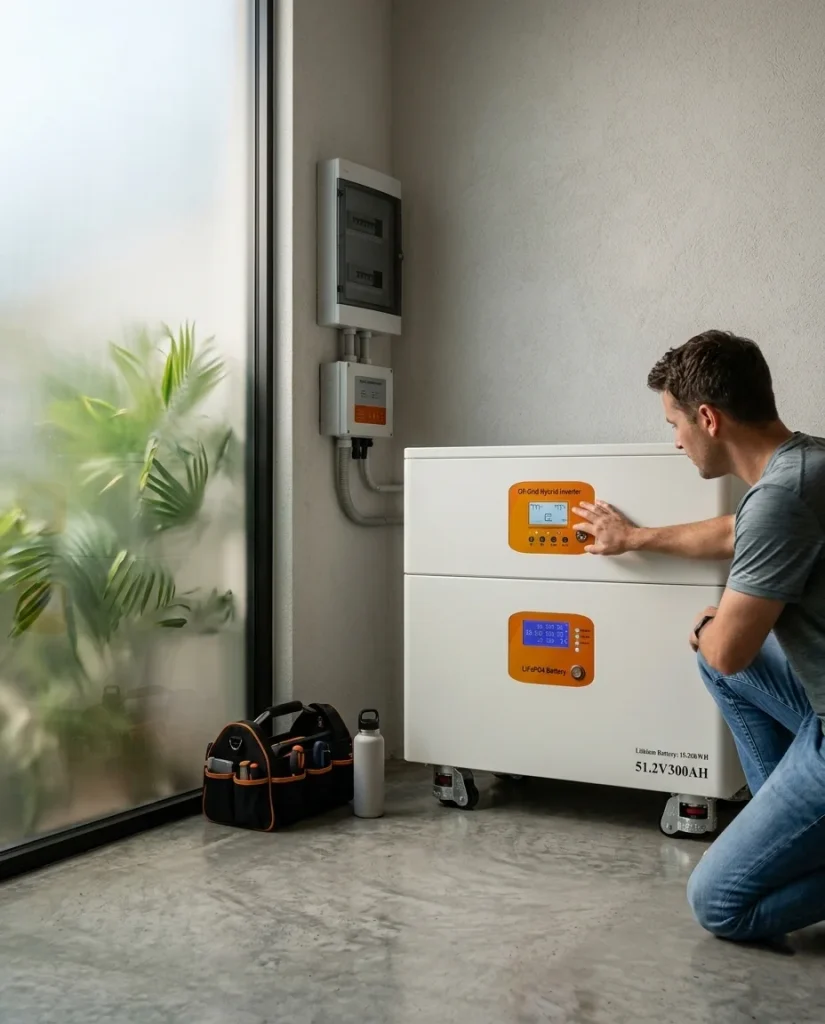
Make it a habit to keep your battery fully charged or close to full. Don’t wait until the weather forecast says a storm is coming to remember to charge it. You should also understand whether your system switches over automatically the moment the power goes out or requires manual switching, so you won’t be scrambling when an outage occurs. It’s also a good idea to familiarize yourself with the battery’s display or companion app and know where to check the remaining battery level. That’s much better than frantically searching through the manual when the power goes out.
During a Power Outage
Pay attention to how quickly your battery is being depleted rather than waiting until it is almost empty to react. Decide in advance which loads need to stay powered continuously and which ones you can cut back on. That way, when you actually need to make trade-offs, you won’t have to make those decisions on the spot. If your home has solar panels, try to limit unnecessary electricity use during the day and prioritize using the solar energy generated to recharge the battery. After all, you don’t know how long the outage will last, and that stored energy may be most important at night.
After the Power Is Restored
Remember to check whether the system has automatically switched back to normal grid-connected operation. Some systems may not switch back automatically after the grid is restored and may require you to switch modes manually. Otherwise, the system could continue running on battery power.
What Should You Look for in a Solar Battery Backup System?
1.Usable Capacity
The amount of electricity you can actually use is not necessarily the same as the capacity stated on the battery. The actual usable capacity depends on the battery’s depth of discharge (DOD). LiFePO4 batteries typically support an 80%-90% depth of discharge. For example, Piforz’s LiFePO4 energy storage battery has a rated capacity of 10kWh, but the actual usable capacity is around 8-9kWh. Lead-acid batteries, on the other hand, typically have a DOD of only around 50%, meaning a 10kWh battery would provide only about 5kWh of usable energy.
| Usable Capacity | Suitable Scenario |
| 5-10 kWh | Backup for essential loads (refrigerator, lighting, WiFi, medical equipment) |
| 10-15 kWh | Overnight backup for a typical household |
| 20 kWh or more | Whole-home backup and high-energy-use households |
2.Continuous Output Power and Peak Power
Continuous output power determines how many devices you can run at the same time. If a battery has a continuous output of only 3 kW, the total power consumption of the appliances you run simultaneously cannot exceed 3 kW. Otherwise, the system may trip.
Peak power determines whether the battery can start appliances with compressors, such as refrigerators, air conditioners, and water pumps. These appliances can draw 3 to 6 times their normal operating power when starting up. If the battery does not provide enough peak power, the compressor may not be able to start.
3.Battery Chemistry
There are two main types of batteries used in home energy storage systems: lithium iron phosphate (LFP) and lithium nickel manganese cobalt oxide (NMC). LFP is safer and has a longer lifespan (for example, Piforz’s energy storage batteries can achieve 10,000+ cycles at DOD ≥80%), but it has a slightly lower energy density. NMC has a higher energy density but a shorter cycle life (3,000–5,000 cycles).
4.Round-Trip Efficiency
Round-trip efficiency refers to how much energy you can actually use after charging the battery with 1 kWh of electricity.
During this process, energy is lost through heat generated during charging, heat generated during discharging, and inverter conversion losses. According to IRENA data, lithium-ion batteries have a round-trip efficiency of approximately 88%–98%, while current residential LFP battery systems typically operate near the upper end of this range.
5.Solar Input
If you already have solar panels or plan to install them, you need to check how much solar input power the battery system can support. This also determines how large a solar array you can install at home. If the solar input limit of the battery you purchase is too low, installing more solar panels will not help because the battery cannot accept all the additional power.
6. Expandability
A household’s energy needs can change over time. For example, this year you may only need to power your refrigerator and air conditioner, while next year you may add an EV or install a ground-source heat pump. Therefore, when adding a battery, it is better to choose a model that supports modular expansion from the start. Later, you only need to purchase additional battery modules of the same model for expansion, without removing and reinstalling the entire system.
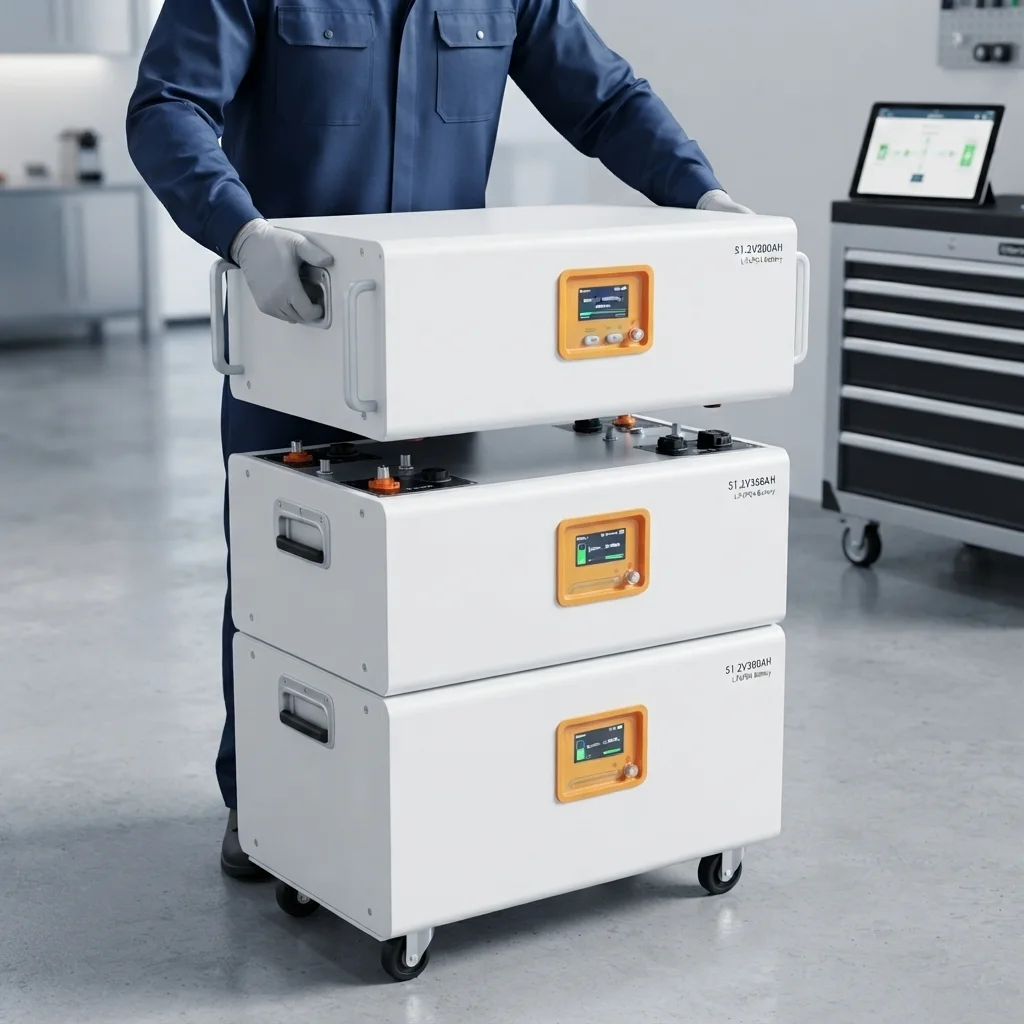
7.Transfer Time
The battery’s transfer time is also something most people care about. The faster the transfer, the less noticeable the interruption will be when the power goes out. In some cases, even the lights in your home may not flicker. For sensitive electronic equipment and medical devices, a shorter transfer time also means less risk of interruption or damage.
8. Warranty Period
The warranty period is also a very important factor when choosing an energy storage battery. A longer warranty means consumers can receive protection for a longer period in the event of performance degradation or other quality issues. At the same time, a longer warranty period can, to some extent, reflect the manufacturer’s confidence in the battery’s long-term reliability and service life.
For example, Piforz energy storage batteries come with a 5-year warranty for grid-tied and hybrid systems, and up to a 10-year warranty for off-grid systems. If you plan to use an energy storage battery as a long-term home backup power source, you should look beyond the price and compare the warranty periods and exactly what each warranty covers, such as whether it covers the product itself, capacity degradation, or cell performance, as well as whether there are warranty conditions or limitations for different use scenarios.