Of course, solar power is absolutely renewable. Its source is the nuclear fusion reactions happening inside the sun. According to scientists’ estimates, the sun still has about 5 billion years of life left, and as long as the sun exists, this energy source will be available. But keep in mind that renewable does not mean stable—solar and wind power are both “weather-dependent” energy sources, with significant intermittency and variability. So to decide whether solar power is worth using, there’s a lot more we need to understand.
Why Is Solar Power Renewable?
As we mentioned earlier, solar power comes from solar radiation, and sunlight is an energy source that is continuously available and constantly replenished. It is renewable for several key reasons:
- Sunlight is a naturally occurring energy source. The sun’s energy comes from hydrogen fusion in its core.
- Solar energy is continuously replenished by nature. Unlike fossil fuels—which are non‑renewable, formed from ancient organic remains over millions of years through complex geological processes, and consumed far faster than they can be regenerated—the sun provides energy to the Earth on a daily basis, even though its intensity may vary with weather, season, and location.
- Solar power generation does not require continuous fuel combustion. It absorbs sunlight, rather than constantly mining and burning coal, oil, or natural gas like coal‑ or gas‑fired power plants.
How Is Solar Energy Produced?
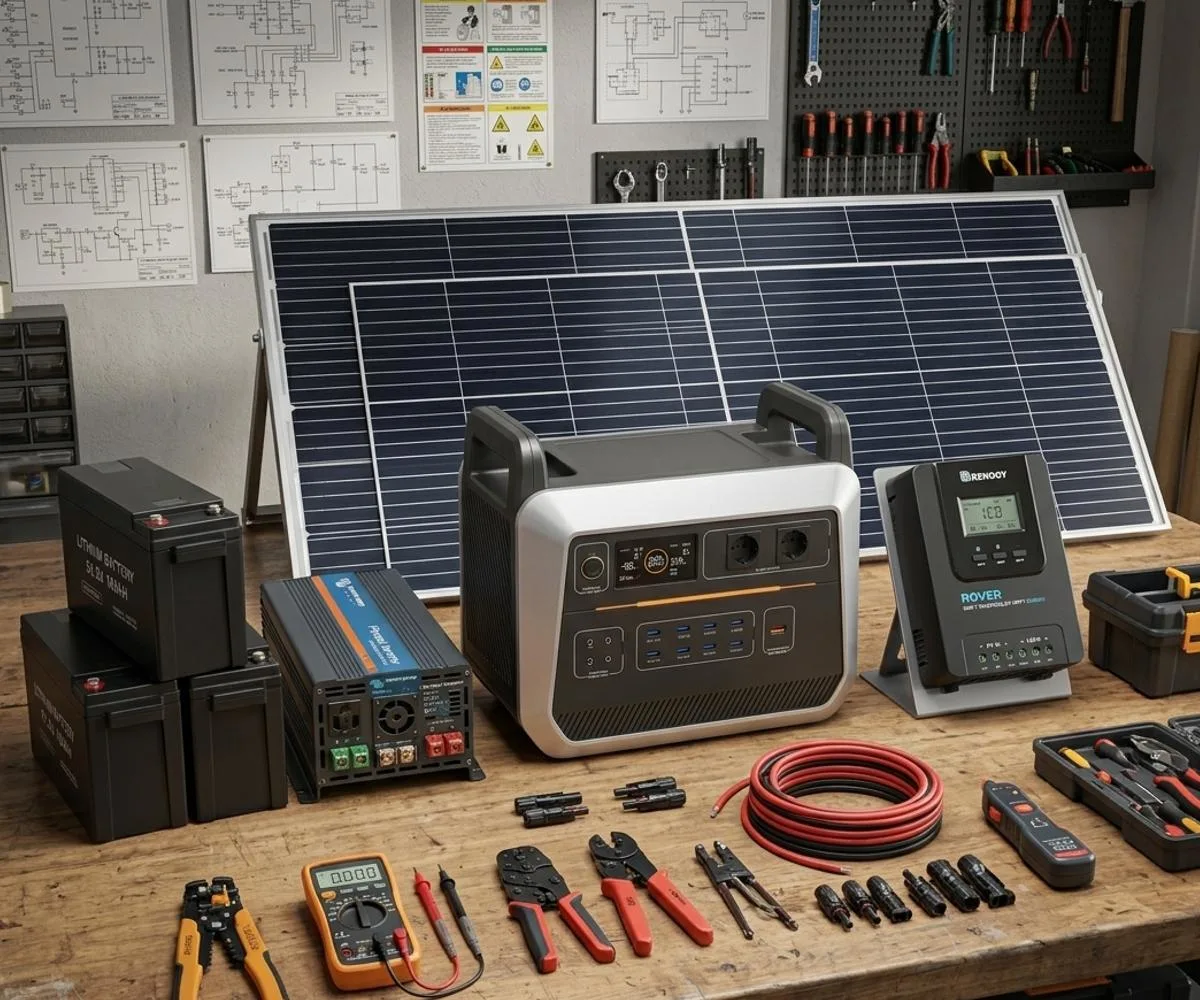
How is solar energy produced for residential use? In fact, solar power is very common in households, mainly through solar panels. When panels are placed in a suitable location and sunlight hits the photovoltaic cells, the semiconductor materials inside the cells generate an electric current. Solar panels initially produce direct current (DC), while most household appliances use alternating current (AC), so the system needs an inverter to convert the current for home use. The general process is: Sunlight hits the solar panels → DC electricity is generated → The inverter converts it to AC → Power is supplied to household appliances.
How Does Solar Compare With Other Energy Sources?
Of course, solar isn’t the only renewable energy—wind, hydropower, and some forms of biomass can also be replenished through natural processes. However, they have different requirements for geographic location, weather conditions, and equipment environments. Not to mention non‑renewable sources like coal, oil, and natural gas, which take millions of years to form and are being consumed far faster than they can be naturally replenished. For the average person, solar energy is relatively easier to access.
| Energy Source | Renewable? | How It Is Replenished | Main Limitations |
| Solar | Yes | Continuous sunlight from the sun | No generation at night; output drops on cloudy days |
| Wind | Yes | Wind generated by atmospheric motion | Power output depends on local wind speed and conditions |
| Hydropower | Usually | Relies on the natural water cycle | Requires a stable water source; may affect local ecosystems |
| Biomass | Depends on source | Plants and organic matter can regrow | Sustainability depends on feedstock source and management |
| Coal | No | Takes millions of years to form | Finite reserves; high carbon emissions when burned |
| Oil | No | Takes millions of years to form | Finite reserves; environmental impact from extraction and use |
| Natural gas | No | From finite underground deposits | Still produces greenhouse gas emissions when used |
Although wind, hydro, and others are renewable, that doesn’t mean they are suitable for every household.
For example, small wind turbines require open areas with stable wind speeds; micro‑hydro systems need a year‑round, steady water flow and sufficient head height; biomass systems require a continuous supply of wood, pellets, or other organic feedstock. Diesel, propane, or natural gas generators can provide quick backup power during outages, but they require ongoing fuel purchases and come with noise, maintenance, and emission issues.
Compared with these, solar is much more household‑friendly. In most cases, as long as you have a roof, terrace, or open space that receives sunlight, you have the opportunity to install solar panels. For average homes, what really matters isn’t just whether a source is renewable, but also whether it’s easy to install, suitable for local conditions, and able to provide reliable power when needed.
If you’d like to learn more about the practical requirements for solar, wind, micro‑hydro, fuel generators, and other options for home use, please refer to our Home Alternative Power Selection Guide.
Does Renewable Mean Clean and Sustainable?
Not necessarily. These terms are often related, but they are not interchangeable.
- Renewable: Energy that is naturally replenished on a human timescale.
- Clean: Energy that emits little or no greenhouse gases or air pollutants during generation.
- Sustainable: Energy that meets our current needs without compromising the ability of future generations to meet theirs. Solar power can indeed be used for a very long time, but it is not without costs.
It’s undeniable that solar is clean in its operation. However, the process of harnessing it involves many other factors. The manufacturing process itself has environmental impacts, so it cannot be directly equated with “clean” and “sustainable.”
1. Hidden emissions in manufacturing
The main raw material for solar panels is silicon, which requires smelting quartz sand in electric furnaces at high temperatures, along with large amounts of glass, aluminum frames, and copper wiring. The extraction and initial processing of these materials rely heavily on fossil fuels and emit significant CO₂. The production of equipment also involves energy use and pollution emissions.
2. Land use and ecological disruption
Large‑scale solar farms require leveling vast areas of land, which alters surface albedo and destroys existing vegetation and soil microbial communities. While the impact is smaller in desert areas, building on farmland or forestland can create conflicts with ecosystems.
3. End–of–life disposal
Solar panels have a design life of about 25–30 years. After that, the components contain heavy metals (e.g., lead, tin) and complex composite materials (glass + EVA encapsulant + cells). Improper recycling can cause pollution and generate electronic waste.
Solar is indeed one of the more advantageous energy sources, but it is only part of the clean energy transition—not an absolute “green” solution.
Is Solar Energy Good for the Environment?
Overall, solar energy is beneficial for the environment. The advantages of solar power are clear: it generates electricity without burning coal or natural gas, so it does not continuously emit CO₂, SO₂, NOₓ, or particulate matter like fossil-fuel power plants. Research from the U.S. Department of Energy also indicates that solar PV has significantly lower life‑cycle greenhouse gas and air pollutant emissions than fossil‑fuel generation.
Because it avoids burning these fuels, it also reduces the need for mining and transporting them—which not only cuts dependence on coal, oil, and gas but also lowers the environmental pollution associated with resource extraction and transport. Moreover, when solar and wind replace part of fossil‑fuel generation, they can bring benefits to air quality and public health. Solar isn’t zero‑pollution, but every bit of pollution saved by displacing coal power is a net gain.
For households, solar panels are usually installed on rooftops, which saves electricity bills and avoids additional land use. With a long service life—typically 20‑25 years—the cumulative savings in electricity costs and avoided pollution mean that, over its full life cycle, solar’s positive environmental contribution likely far outweighs its negative impacts from manufacturing and disposal.
What Is the Biggest Problem With Solar Power?
The biggest problem with solar power is its intermittency. It works fine during the day, but at night, or on cloudy, rainy, or snowy days, its output is very limited. For homes, the main drawback is also intermittency—it doesn’t match household peak demand. It generates a lot during the day when people use less electricity, and stops generating at night when usage rises. So even though solar is renewable, it is not a round-the-clock reliable power source.
There are generally two ways to address this:
- Stay connected to the public grid and draw power from it when solar is insufficient.
- Install a battery storage system to store unused daytime solar energy for nighttime use.
With batteries, you can store excess daytime power for evenings, cloudy days, or outages. This way, households don’t have to immediately rely on the grid after sunset and can increase their self‑consumption rate of solar power.
Why Is Energy Storage Important for Solar Power?
Why is battery storage so important for solar? Because it solves solar’s biggest weakness—intermittency. Batteries don’t make solar more renewable, nor do they increase the panels’ output, but they resolve the time mismatch.
With storage installed, households can better:
- Use surplus daytime solar power in the evening.
- Increase the self‑consumption ratio of solar energy.
- Reduce electricity purchases from the grid during high‑price periods.
- Provide backup power during outages (if the system supports it).
- Supply power for off‑grid solar systems at night and during low‑light conditions.
At the cell level, manufacturers are also exploring next-generation designs such as the Anode-Free cell. Instead of using a pre-installed anode active material, this architecture deposits lithium onto a bare current collector during charging, offering the potential to reduce cell weight and increase energy density.
However, not every solar system needs batteries. A standard grid‑tied solar system can draw from the public grid when solar is insufficient, and any excess daytime power is usually exported to the grid, so it can operate normally without batteries.
A hybrid solar system uses solar, grid, and storage together; surplus daytime power can be stored in batteries first or exported to the grid, offering more flexibility.
An off‑grid solar system is completely independent of the public grid and typically must include batteries to store daytime power for nighttime and cloudy conditions.
Grid‑tied systems can also use utility power to compensate for solar shortfalls, while off‑grid systems have no grid backup and therefore rely more heavily on storage.
What Happens After 20 Years of Solar Panels?
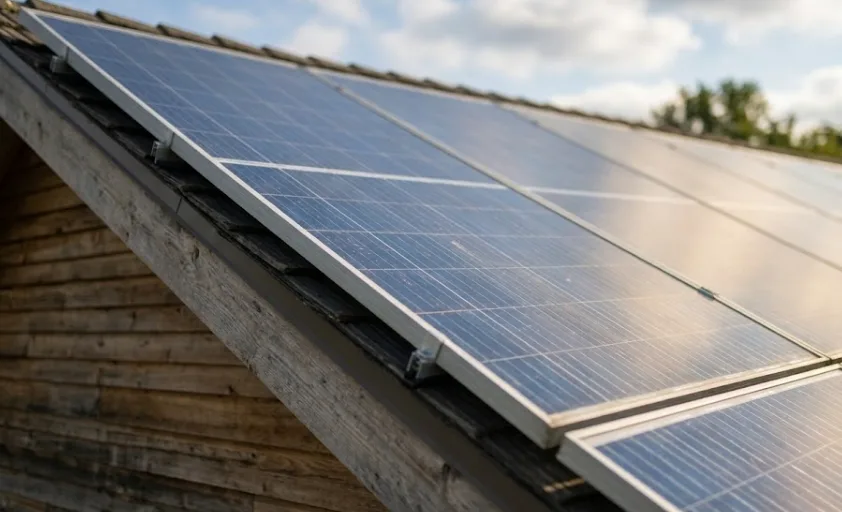
Solar panels typically don’t stop working after 20 years—they gradually age. They enter a phase of natural performance degradation but can still generate electricity.
Like all equipment, solar panels degrade over time, with their power output gradually declining. This is called degradation.
Modern solar panels lose about 0.3% to 0.8% of their generating capacity per year on average.
At an approximate degradation rate of 0.5% per year, after 20 years the panels will retain about 90% of their original capacity. They are so durable because they have no moving or wearing parts. As long as there are no major cracks, hot spots, moisture ingress, or insulation faults, they can continue generating.
After 20 years, there are generally three scenarios:
1. Continue using them :As long as there is no severe cracking, water ingress, hot spots, or insulation failures, they can keep running. Actual operational life often reaches 25‑35 years, with some systems still generating after 30+ years.
2. Replace some components:After 20 years, you may not need to replace the panels, but other equipment—like inverters, wiring, and seals—may require replacement.
3. Upgrade the entire system:Even if old panels still work, some users choose to replace them for safety or higher efficiency.
When solar panels reach the end of their useful life, they can be recycled. They are mainly composed of glass, aluminum, and small amounts of silicon and metals. Many states mandate the management and recycling of retired panels to prevent hazardous metals from leaching into landfills.
Solar isn’t perfect, but it remains one of the more convenient energy sources available to households. With proper system design based on local sunlight conditions and actual electricity needs, solar can provide cleaner, more economical power for the long term. If you’d like to learn more about solar or home energy storage, check out Home Backup Battery System: Everything You Need to Know Before You Buy.