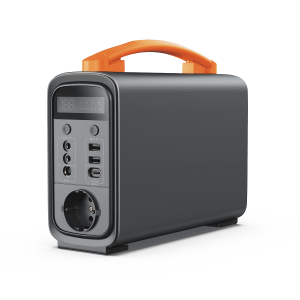

In June 2022, a 79-year-old man in Bradenton, Florida, died from smoke inhalation after a fire caused by a portable power station in his home. In addition to this fatality, the companies involved received a total of four reports of fires involving the HALO 1000 portable power station, including two reports of smoke inhalation, one of which also involved burns.
The CPSC’s recall of the HALO 1000 cited the risk that the lithium-ion battery inside the product could overheat, posing fire and burn hazards.
This incident naturally raises concerns and prompts reflection. A portable power station is, after all, not simply a power bank; it is essentially a high-capacity lithium battery system. Therefore, safety cannot rely solely on user caution but also depends on the product’s internal protection systems. So, what do portable power stations rely on to mitigate these risks? This brings us to today’s topic: the BMS in portable power stations.
What Is a BMS Battery System?
BMS stands for Battery Management System. As the name suggests, its primary role is to manage the battery. Its main tasks include monitoring battery status, ensuring safe battery usage, extending battery life, and optimizing energy output. If you think of a battery pack as a company, the BMS is the administrator responsible for safety and coordination. It doesn’t do the “physical work” directly, but it continuously checks the status of each individual cell and makes decisions to limit, cut off, or protect when voltage, current, or temperature abnormalities are detected.
People sometimes confuse the BMS with the EMS, but their core focuses are different.
| System | Primary Responsibility | What You Can Observe |
| BMS (Battery Management System) | Cell safety, voltage, current, temperature, state of charge | Stops charging when full, cuts power on overload, low-temperature protection |
| EMS (Energy Management System) | Decides when the entire storage system charges and discharges | Coordinates with solar panels, electricity pricing, and household load scheduling |
| MPPT(Solar Charge Controller) | Optimizes solar panel input to improve charging efficiency | Solar input power changes with sunlight, panel angle, clouds, and temperature |
Main BMS Functions in a Portable Power Station
Its core functions can be broken down into four areas:
1. Status Monitoring
Inside the BMS, there is a dedicated chip (the AFE) used to measure the battery’s voltage, current, and temperature. After taking these measurements, the data and information are sent to the BMS, which then calculates the State of Charge (SOC) and State of Health (SOH). The battery percentage and remaining usage time you see on the portable power station’s display are calculated by the BMS. Having this data is fundamental; it provides the basis for judgment, allowing the system to know what to do next. All subsequent protection, balancing, and thermal management depend on this data. If the data is inaccurate, everything that follows will be wrong.
SOC refers to the State of Charge – how much power is left in the battery.
SOH refers to the State of Health – the degree of aging and overall condition of the battery.
2. Safety Protection
Portable power stations might be used indoors, outdoors, with many small devices, or with high-power appliances. In short, they operate in complex and varied environments, making safety protection paramount. The BMS continuously monitors current, voltage, and temperature. If it detects an anomaly, it immediately cuts the circuit to prevent serious incidents like smoke or fire.
The BMS provides protection and supervision in the following key areas:
- Overcharge Protection: Prevents overcharging, which can lead to excessively high cell voltage, overheating, and even swelling.
- Over-discharge Protection: If the battery voltage drops too low, it can cause irreversible capacity damage. The BMS will force a shutdown before the battery is completely drained.
- Overcurrent/Short Circuit Protection: When a high-power appliance is connected or a short circuit causes a sudden current surge, the BMS instantly disconnects the output to protect the internal circuitry.
- Over-temperature/Low-temperature Protection: Lithium batteries are dangerous when too hot (e.g., exceeding 60°C) or too cold (e.g., charging below 0°C). The BMS limits charge/discharge power based on temperature or simply stops operation to protect the cells.
If data anomalies occur, the BMS intervenes based on the severity level.
Level 1: Software Current Limiting
When voltage, current, or temperature slightly exceeds the normal range but hasn’t reached a dangerous level, the BMS doesn’t cut off power; it actively reduces the power output. For example, it might lower the charging current from 10A to 5A or limit the discharge power from 1000W to 500W. Think of it like a navigation system alerting you to slow down when you’re speeding.
Level 2: Hardware Shutoff
When safety thresholds are breached – for instance, voltage reaches a critical high point or temperature enters the danger zone – the MCU (Microcontroller Unit) directly pulls down the drive signal, forcibly turning off the high-power MOSFETs on the charge/discharge circuit. This stops both charging and discharging, causing the device to shut down instantly. This is like a traffic officer pulling you over for running a red light.
MCU: The chip in the BMS responsible for logic judgment and issuing commands. It monitors battery data in real-time and, upon detecting an exceedance, orders the “immediate shutdown.”
MOSFETs:These execute the command. When turned on, current flows; when turned off, the circuit is broken. Due to their high power handling and fast switching speed, they are commonly used as the main switches in battery circuits.
Level 3: Redundant Fusing
If the previous two levels fail, an independent hardware protection chip in the circuit bypasses the MCU and directly monitors the battery voltage. In rarer, more extreme cases, the system might trigger fuse protection via this independent chip, physically severing the battery circuit. This type of protection is usually not user-resettable and might render the unit inoperable, requiring after-sales service or professional handling.
3. Balancing Control
If safety protection is the last line of defense, balancing control is the daily maintenance routine. A large-capacity portable power station consists of multiple smaller cells connected in series or parallel. Due to manufacturing variations, the performance of individual cells is never perfectly identical.
In a series-connected battery pack, the total capacity is determined by the weakest cell. Balancing aims to keep the voltage of each cell consistent. There are two main methods:
1.Passive Balancing: This method discharges cells with higher voltage through resistors, dissipating the excess energy as heat. The goal is to allow all cells to reach a full charge simultaneously at the end of the charging cycle.
2.Active Balancing: This method uses capacitors or transformers to transfer energy from cells with higher voltage to those with lower voltage. The goal here is to allow all cells to reach their cut-off voltage simultaneously at the end of the discharge cycle.
4. Thermal Management
Lithium batteries are generally sensitive to temperature, with low-temperature constraints being even more stringent than high-temperature ones.
Charging Temperature: Typically requires ≥ 0°C. Charging below this temperature can cause lithium plating, resulting in irreversible damage.
Discharging Temperature: Typically ranges from -20°C to +55°C. Outside this range, the BMS reduces power or cuts off output.
To maintain the battery, the BMS actively manages its temperature. At high temperatures, it will command fans or heat sinks to activate or actively reduce power. At low temperatures, it will first disable charging, then command heating pads or PTC (Positive Temperature Coefficient) heaters to preheat the battery. Once the temperature reaches a safe level, it resumes charging.

Why Portable Power Stations Need a BMS
I’ve covered some fairly technical points above that might be difficult for the average person to grasp. However, if I relate this to specific everyday situations, you might find yourself thinking, “Oh! So that’s the BMS at work.”
Why doesn’t it keep “force-charging” after it’s full?
Many newcomers wonder why portable power stations are so “smart” and stop charging once they’re full. When the battery level is low, it charges quickly, drawing the maximum constant current. But as the battery nears full capacity, the BMS and charging control system begin to assess whether the battery is approaching a safe full-charge range and start limiting the charging current. This is why users see the input power gradually decrease and eventually stop. For example, the BLUETTI AC200P manual states that AC wall charging and generator charging will automatically stop at 100%, which is the BMS in action.
This protection means users don’t have to monitor the charging process constantly. You can charge it overnight and not worry if you forget to unplug it until morning. However, this doesn’t mean it’s ideal to keep a portable power station plugged in at full charge for extended periods. It’s fine to leave it for a short time, but for long-term storage, it’s best to follow the manual’s recommendations for optimal charge level and recharge periodically.
Why does it automatically shut off when I plug in a high-power device?
Some users try to power appliances like electric kettles, space heaters, microwaves, air conditioners, power drills, or other power tools. These devices might start for a second, and then the power station shuts off.
When using a portable power station, you need to check the rated power, but also pay attention to the startup current of devices like refrigerators, air conditioners, motors, and drills. Some devices require significantly more power at the instant of startup than their rated running power. If this startup surge exceeds the portable power station’s rated or peak output, it can trigger overload or overcurrent protection. This is the protection system telling the user: “This device has exceeded safe limits and cannot be powered.” If it continued to try and power it, the battery, inverter, and internal wiring could overheat or become damaged, so the BMS must react.
Of course, not all power-offs are caused by the BMS; they could also be due to inverter overload, interface power limits, or excessively high device startup currents.
Why might it not turn on after being stored for a few months?
Some users encounter a situation where they’ve stored their portable power station for a few months, and when they take it out again, it won’t turn on, has no output, and the screen might not even light up.
They might think it’s broken from sitting idle, but that’s not necessarily the case. When a portable power station is unused for a long time, the battery still undergoes a slight self-discharge. If it was stored with a low charge, the voltage might drop further after several months. To prevent deep discharge, the BMS might cut the output, putting the device into a low-voltage protection or sleep state. For instance, the BLUETTI AC70P manual notes that if the SoC drops to 0, you should turn it off and charge it for at least 30 minutes before restarting. Manuals for the AC50P and AC2P have similar reminders. So, if you encounter this, don’t rush to discard it; try charging it first.
Why might charging or output be limited in high or low temperatures?
We all know portable power stations are frequently used outdoors for camping, RV trips, emergency backup, etc. They might be left in the sun, inside a car, next to a tent, or stored in a cold garage during winter – not always in comfortable conditions.
However, lithium batteries don’t handle extreme temperatures well. High temperatures accelerate aging and, in severe cases, increase safety risks. Low temperatures, especially during charging, can also affect battery life. Therefore, some portable power stations will limit charging, reduce output, or enter protection mode when the temperature is unsuitable.
The user might see “why can’t I charge it?” or “why is the output weak?” The reality is likely that the BMS is preventing the battery from operating under unfavorable temperature conditions.
What to Check in a Portable Power Station BMS
Now that you understand the BMS a bit better, you might think, “I must buy a power station with a BMS.” In reality, the vast majority of portable power stations on the market come with this system.
If you want to check whether the portable power station you’re considering has a sufficiently comprehensive system to protect its battery, you can look at the product manual or specification sheet to see if it clearly mentions the following:
| Item to Check | Why It Matters |
| Overcharge Protection | After the battery is full, does the system automatically reduce and stop charging to prevent extended overcharging? |
| Over-discharge Protection | When the charge is low, does the system automatically cut output to prevent deep discharge damage to the cells? |
| Overcurrent/Short Circuit Protection | If connected device power is too high, or abnormal current occurs, does it promptly disconnect output? |
| High/Low-Temperature Protection | In outdoor, in-car, garage, or winter low-temperature environments, does the system limit charging or output? |
| Operating & Storage Temperature Range | Can the user clearly know the suitable environments for using and storing the product? |
| Battery Type | For example, LiFePO₄ or other lithium batteries; different types have varying lifespans, safety, and performance. |
| Safety Certifications or Transport Tests | Information like UL, CE, FCC, RoHS, UN38.3 serves as a reference for product compliance and safety design. |
Of course, having certifications doesn’t mean the product is entirely risk-free, and the BMS can’t eliminate all potential hazards. However, if a portable power station clearly lists its battery type, protection features, temperature ranges, and relevant testing/certification information in its manual or spec sheet, it at least indicates that the manufacturer has provided more comprehensive documentation on safety design, allowing users to make a more informed judgment.
The Value of a BMS
The value of a BMS isn’t just about keeping the battery powered; it’s about making the battery usage more convenient, safer, and more stable.
For the average user, who isn’t going to constantly study the inner workings of the power station, it’s impossible to manually track voltage, current, and cell status at all times. This is why portable power stations need a built-in protection system.
The BMS works before the user even realizes a risk exists. It autonomously determines whether to continue charging, if output needs limiting, if it’s overloaded, if temperatures are suitable, if the battery needs to enter protection mode, and then takes appropriate action in response to these issues and dangers. This is precisely why the BMS is so crucial for portable power stations.
So, when choosing a portable power station, you shouldn’t just look at the capacity in Wh, the power in W, or the number of ports. You also need to check if it has a comprehensive battery management and protection design. For portable power stations aimed at outdoor and home backup scenarios, like those from PIFORZ, the BMS isn’t just an extra marketing point; it’s a fundamental part of the product’s safety. Its core purpose isn’t just how much energy it can store, but more importantly, whether it can consistently keep the battery operating within a safer range.
The BMS doesn’t eliminate all risks from a portable power station, but it allows the system to take preemptive measures before many potential risks become serious problems. This is a major reason why portable power stations can be used with confidence by ordinary households, campers, and in emergency backup situations.