
Based on my own experience and some data I’ve gathered, I’ll tell you whether home solar battery storage is worth it or not.
Is solar with battery storage worth it?
This question is almost on every homeowner’s mind. Let me start with a somewhat harsh truth: if you live in a state with 1:1 net metering (NEM 2.0) and a stable grid with few outages, buying a battery right now is not a smart move. However, if your state has moved to NEM 3.0 rules for net metering, or you live in storm-prone areas like Florida or Texas, then batteries are worth it. So it largely depends on where you live and the regulations of your local utility company.
NEM 2.0 vs. NEM 3.0
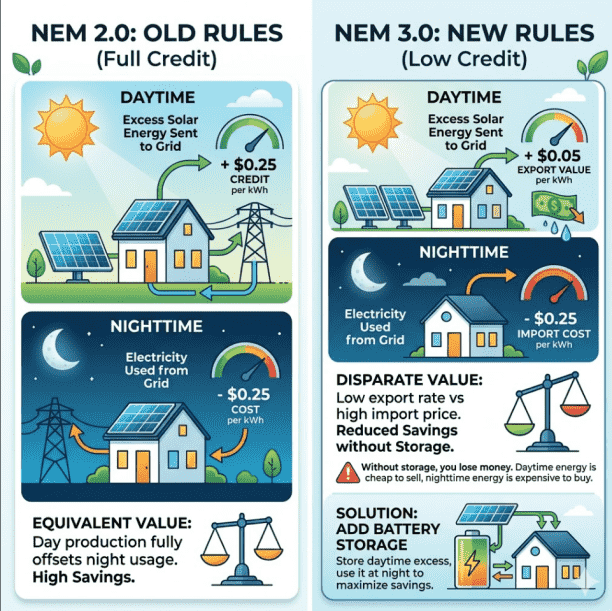
Under the old NEM 2.0 rules, if you stored 1 kWh of electricity from your solar panels in the grid during the day, it was like depositing $0.25 into your account. Then, when you used that stored 1 kWh at night when electricity is expensive, it offset $0.25 from your bill.
Under the new NEM 3.0 rules, similarly, you generate and store 1 kWh during the day, but the grid might only credit you $0.05 for that export. Yet, when you want to take out and use that 1 kWh at night, the grid charges you $0.25.
This means that without storage, your daytime exports are almost freebies, and you have to buy back expensive electricity at night.
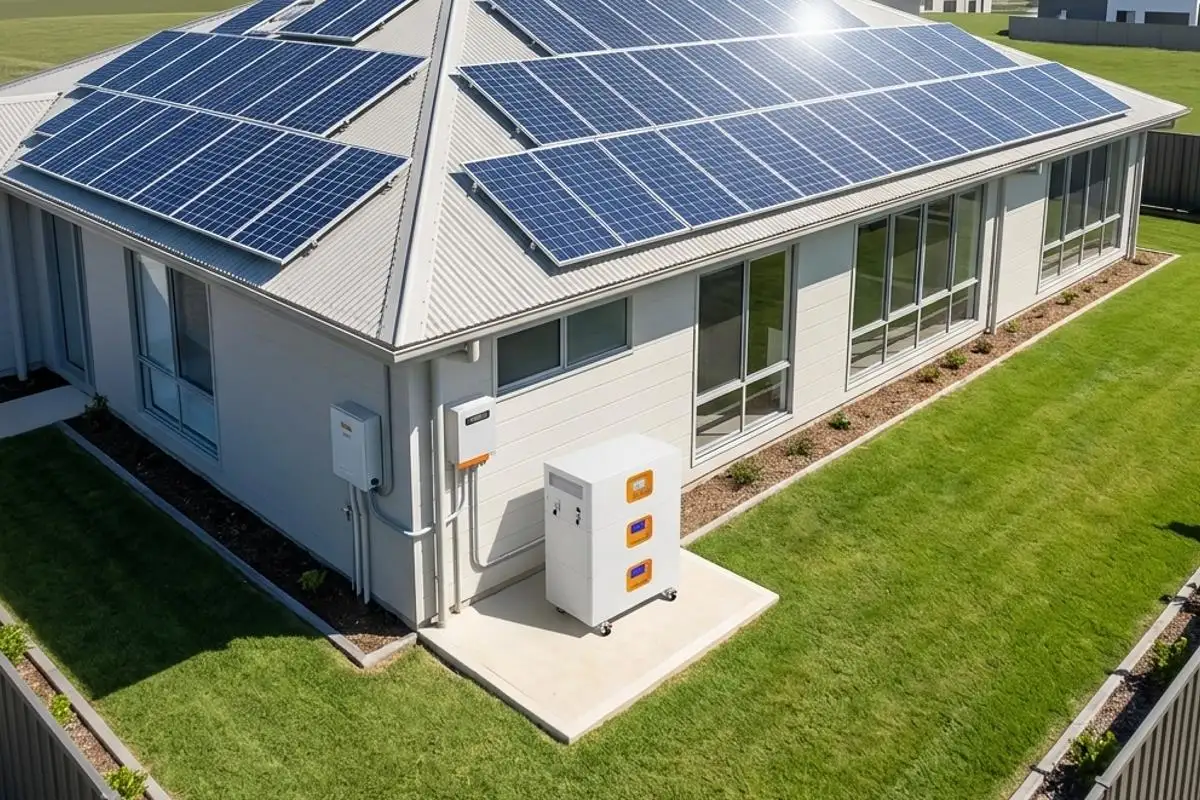
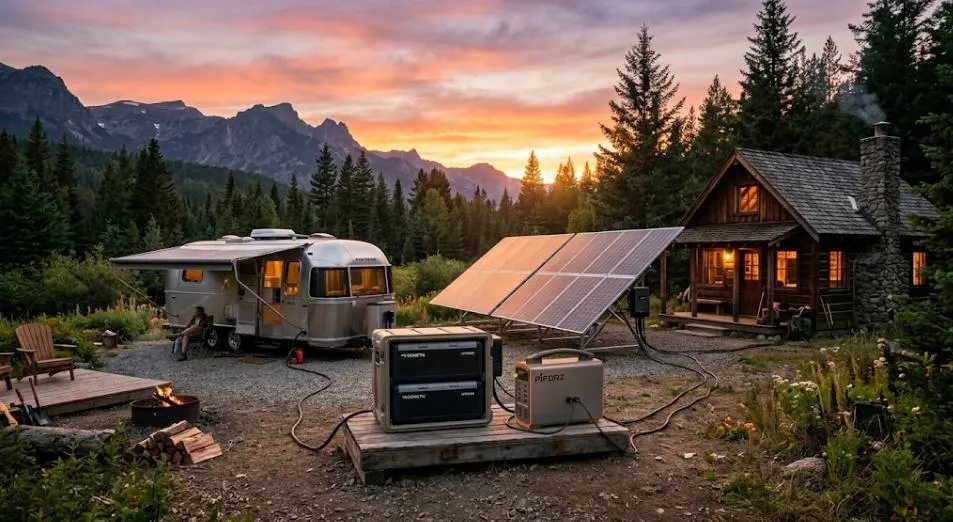
Solar battery storage system for home
I have a home solar battery storage system myself. During the day, the solar panels power my home, and any excess electricity goes directly into charging my Powerwall 3. During the night or peak electricity rate hours, the battery automatically discharges, so I basically never touch expensive grid power. When an outage occurs, it switches over in milliseconds — the steaks and other food in my fridge are completely unaffected. I pulled up my data from the last 12 months and found that I paid nearly $900 less in electricity bills than my neighbor who has solar panels but no battery storage.
That’s not even counting the federal 30% clean energy tax credit. What I want to say here is that as long as the battery is charged by solar, whether it’s a new installation or a retrofit, the battery portion can also qualify for the ITC tax credit. Of course, if you buy a home storage battery without a solar system, you might not get the solar ITC, but some regions offer incentives if it meets standalone storage tax credit conditions.
Finally, if you live in an area where policies and grid peak‑off‑peak rate differences are large, and outages are frequent, then pairing solar with battery storage is definitely worth it.
What size solar battery do you need to run a house?
Many homeowners make a mistake here: we need to first distinguish that battery capacity is measured in kWh, not kW. kW is power, which determines how many appliances it can run simultaneously. So when you see a “10 kW battery”, it should be 10 kWh.
I’ve summarized a few scenarios that work for most households.
Basic living
One refrigerator, a few LED lights, Wi‑Fi router, phone charger, ignition circuit for a gas stove. Continuous power under 500W, daily consumption 10‑12 kWh. A 10 kWh battery, used sparingly, can last a full day. This is the entry‑level home solar battery storage solution many people want.
Comfortable living
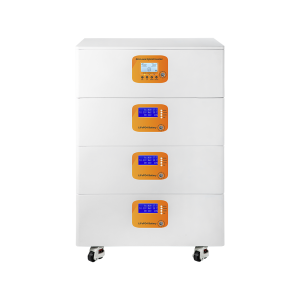
Add central air conditioning, a large screen TV, microwave, well pump, etc. Peak power might instantly hit 5‑7 kW, daily consumption 25‑35 kWh. You need at least 20 kWh of storage, and the inverter must be robust enough. Something like the Tesla Powerwall 3, with 11.5 kW continuous power and 13.5 kWh per unit, handles it comfortably, and you can add more units in parallel. Of course, there are other products besides the Tesla Powerwall 3 — you could also look at Pifotz’s stackable storage products.
Whole‑home living
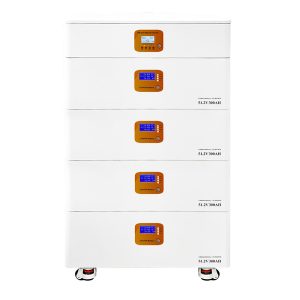
Houses over 3,800 sq ft, multiple AC units, pool pump, EV charging all need to be covered. Many homeowners need the largest home solar battery storage system for their home. You can stack multiple Powerwalls up to 54 kWh, or choose systems like FranklinWH aGate or Enphase 5P combos, easily reaching over 40 kWh. This is no longer just for backup — it’s daily energy independence.
Many homeowners ask about the price of home solar battery storage. Does more battery capacity mean higher cost? Congratulations, you’re right. But don’t just look at the battery unit price. Installing a home solar battery storage system also involves inverters, controllers, etc., which take up a part of fixed costs. So it’s recommended to get it all done in one go.
How much does a whole house solar battery cost?
Many homeowners frequently ask about the cost of a home solar battery storage system. Here I’ve gathered three mainstream products and a DIY option for comparison.
Tesla Powerwall 3
A single unit costs about $8,400, but the full installed price typically ranges from $11,000 to $15,000+. Homeowners ask why the price fluctuates — upgrading your old electrical panel, integrating smart loads, and the wiring distance in your backyard or garage all add to the cost. But the Powerwall 3’s strength is its built‑in inverter, DC‑coupled solar, high system efficiency, and it saves the cost of buying a separate inverter. It’s one of the strongest contenders for the best home solar battery storage system right now.
Enphase 5P
Enphase uses AC coupling, with 5 kWh modules — very flexible, especially suitable for existing solar systems using Enphase microinverters. Three 5Ps (15 kWh) plus the necessary gateway typically costs over $15,000 fully installed.
FranklinWH aGate
The FranklinWH aGate focuses on brute power and super compatibility. At 13.6 kWh per unit, it’s often used in the best home battery‑equipped solar panel combos, for example paired with REC or Maxeon high‑end panels. Total budget can go straight to $35,000‑$45,000 (for a complete solar + storage system).
DIY with used Nissan Leaf batteries
A popular trend among DIY enthusiasts is buying used Nissan Leaf batteries for home solar storage. Because even after the EV battery degrades enough to be unsuitable for driving, it can still hold enough capacity for stationary home storage.
In theory, used battery modules plus an off‑grid inverter can give you about 10‑12 kWh of usable capacity in a 48V system, with material costs squeezed down to $3,000‑$5,000. But this is a DIY toy: you won’t get grid‑connection permits, there’s no UL certification, no tax credits, and fire risks are yours alone. I can say responsibly that unless you live deep in the woods without any community oversight, forget it.
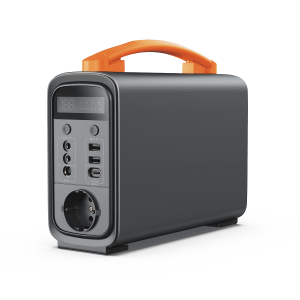
If you don’t want solar and just want to charge from the grid for backup — i.e., a home storage battery without a solar system — you can install a standalone Powerwall 3 or Enphase IQ Battery, or an all‑in‑one storage unit from a Chinese manufacturer. Relying only on grid time‑of‑use arbitrage, without solar subsidies, leads to a very long payback period (over 10 years). This is suitable for homes that can’t install solar panels.
How long will a 10 kWh battery power my house?
I recorded one power outage at our home. On that day, I disconnected from the grid and only powered the following appliances with the Powerwall 3.
| Appliance | Power | Usage time |
| Refrigerator | 200W | Continuous |
| Gas furnace blower | 600W | Continuous |
| LED lights | 40W | 3 hours |
| Router & modem | 20W | Continuous |
| Laptop | 60W | Charging |
| Coffee maker | 900W | 5 minutes |
I remember it lasted about 10 hours. If I turned off the furnace blower and used the fireplace instead, it could last 15 hours. Of course, if I wanted to run air conditioning, a 10 kWh battery would only get me a little over two hours before shutting down.
Interestingly, friends often ask me if I can install a Tesla Megapack at home. Dude, that’s for the grid and large factories — each unit is several MWh and might be bigger than our garage. So we’ll stick with home solar battery storage systems. If you want to learn more about home solar power generation, you can read the article “Home Solar Power System”.
Things to know before buying a home solar battery
1. Must have NABCEP certification — eliminate anyone without it. Batteries involve high‑voltage DC, and I’ve seen more than one homeowner get burned by an amateur installer who melted their terminals.
2. Confirm UL 9540 and UL 9540A (thermal runaway fire report). Especially if you place the battery in a garage or basement — this is a life safety measure for your family.
3. Don’t just look at the 10‑year warranty — pay close attention to “throughput”. Some brands advertise a 10‑year warranty but cap total charge/discharge at only 20 MWh. Heavy users might hit that limit in less than 5 years. The Tesla Powerwall 3 offers an unlimited‑cycle (for solar self‑consumption cycles) 10‑year warranty — that’s confidence.
4. I have to say something that might cut my own income — if your city never has blackouts, electricity is cheap and flat‑rate, and solar irradiation is poor, don’t buy a battery first. Take that money and add attic insulation or replace windows with triple glazing — you might save more on electricity. Storage is the freedom that makes a good thing even better, not a panic purchase fueled by anxiety.
Final words
What I want to say at the end is that in my eyes, a home solar battery storage system is not just a collection of cold specifications; it’s a vote by each family for energy independence. Only when you have personally experienced a whole‑neighborhood blackout while your own home remains brightly lit will you understand that this investment is not simply about “how long to pay back” — it’s a redefinition of your way of life.
I hope this article helps you figure out what size battery you need, how much to spend, and which system to choose, so you can ultimately reach your own answer: worth it, or not.