Have you ever run into this situation? When you search for a “portable solar battery,” all you see are power banks with tiny solar panels attached. Then you can’t help but wonder: Can this thing really keep you powered in the wild just by relying on the sun?
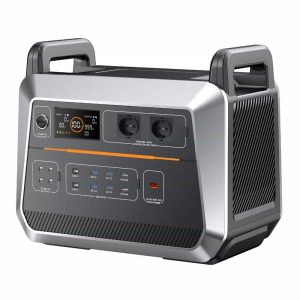
If you’ve had that question, it probably means that what you actually need isn’t one of those solar power banks, but something entirely different—the device people in the camping and RV communities are really talking about: a portable power station that supports solar charging.
Next, I’ll walk you through everything you need to know about portable solar power stations.
What Is a Real Portable Solar Battery?
The comparison below clearly shows the difference between the two products that are often confused with each other:
| Feature | Solar Power Bank | Portable Solar Power Station |
| Design | One or more small solar panels are built directly into the power bank. Compact and usually about the size of a smartphone. | Consists of a larger portable battery unit and one or more foldable solar panels connected via cables. |
| Specifications | Battery capacity is typically between 10,000mAh and 30,000mAh. The built-in solar panel output is very low, usually only 1W–5W. | Battery capacity ranges from 100Wh to over 2,000Wh. Solar panel input can be 50W, 100W, 200W, or even higher. Includes multiple output options such as USB-A, USB-C, AC outlets, and DC car ports. |
| Battery Chemistry | Lithium Polymer (Li-Po) or NCM Lithium-ion | LiFePO4 (Lithium Iron Phosphate) |
| AC Power Output | Not supported | Supported, allowing it to run household appliances |
| Primary Purpose | Provides emergency charging for phones and small devices. | Designed for off-grid power needs such as multi-day camping, RV travel, home backup power, and outdoor work. Can power laptops, cameras, drones, mini fridges, CPAP machines, and more. |
| Bottom Line | Not a practical solar charger. The tiny built-in panel charges extremely slowly and may require several days of sunlight to fully recharge the battery. It is essentially a regular power bank with a small solar trickle-charging feature. | This is the type of product that can genuinely harness solar energy. It can power multiple devices for days outdoors and even run small appliances. A portable power station paired with foldable solar panels is what most people mean when they talk about portable solar power systems. |
What Can a Portable Solar Battery Do?
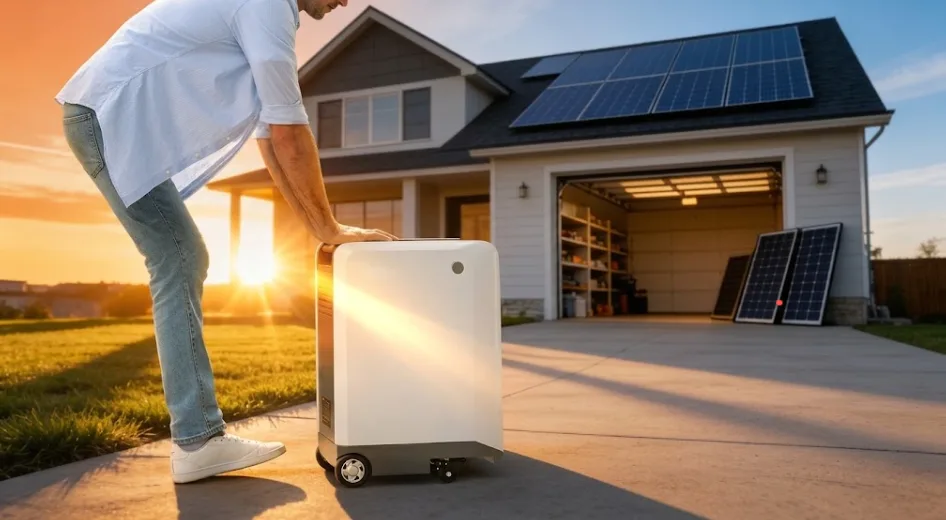
Simply put, a portable solar battery stores electricity generated from solar energy in a battery for later use. Its biggest advantage is that it allows you to power and charge electronic devices even when you’re far from the grid.
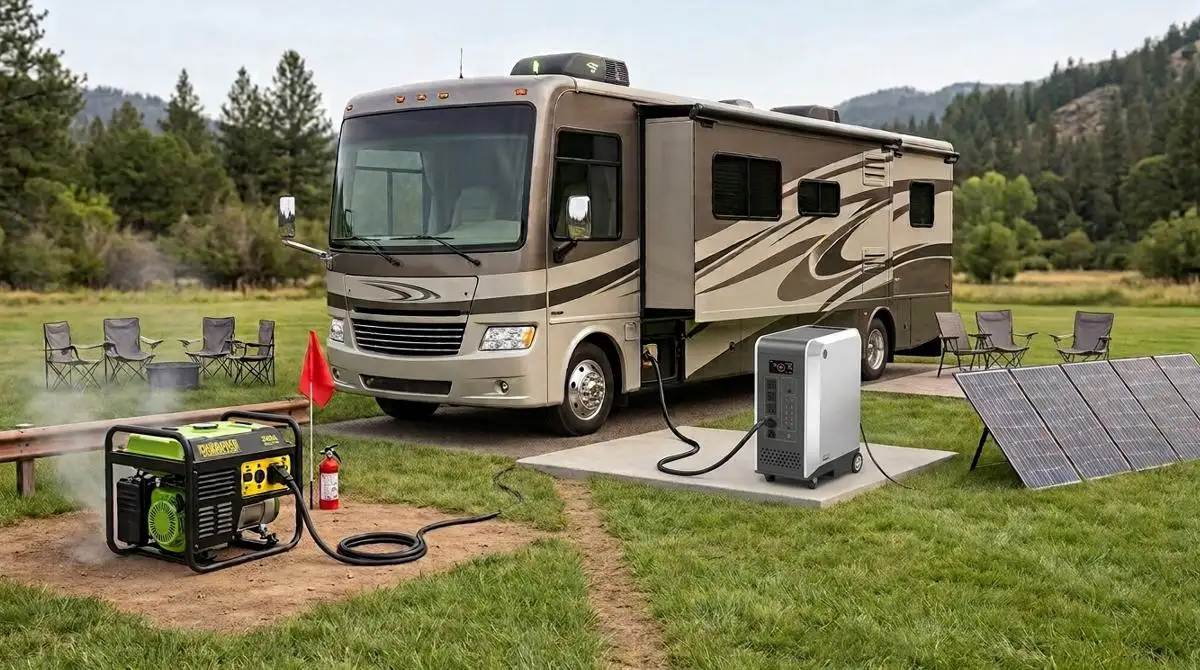
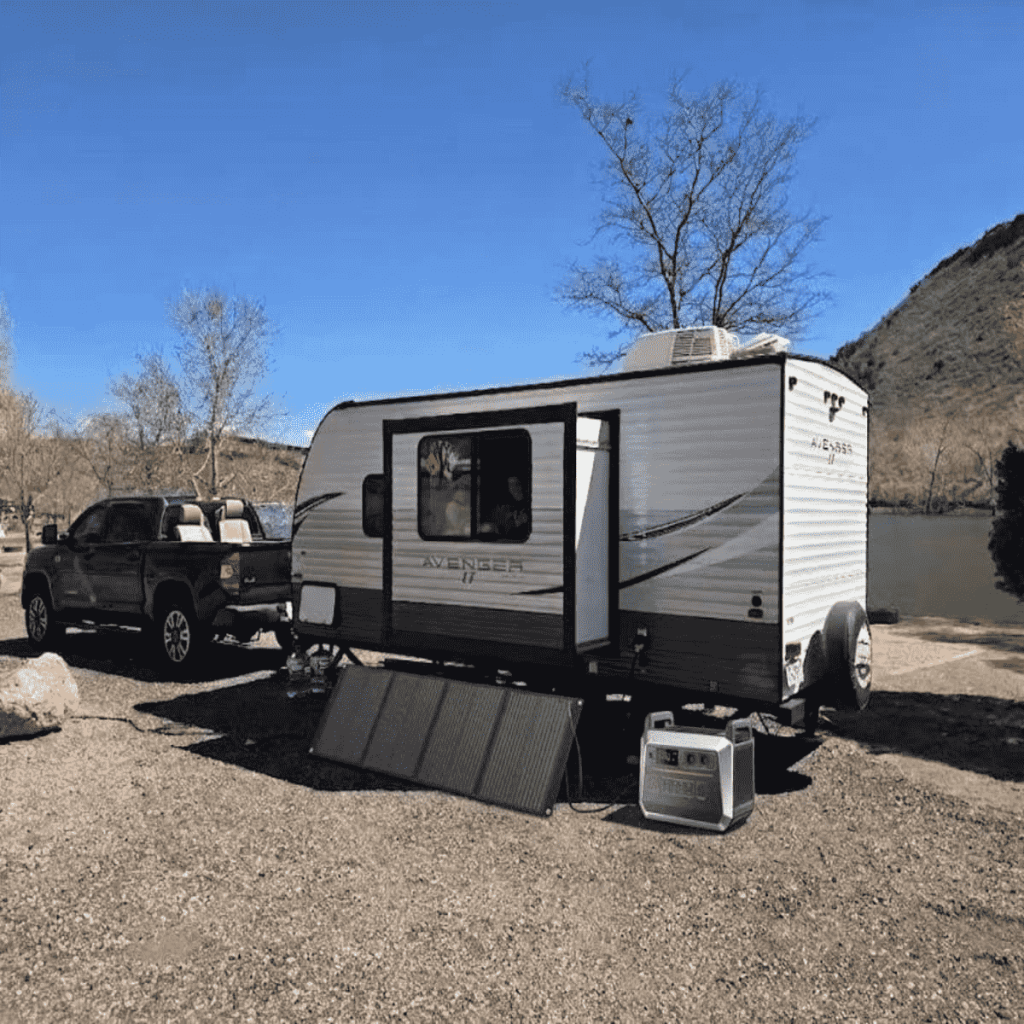
For example, during camping trips or RV travel, it can be paired with solar panels to generate electricity and power camping gear as well as appliances inside an RV. In some remote areas where severe weather can cause unexpected power outages, it can provide backup power for household appliances and essential medical equipment. Even workers operating in the field can use a portable solar power station to run surveillance equipment, water pumps, or other electrical tools needed for their work.
Portable Solar Power Station Comparison
Like many people, I initially found it difficult to choose the right portable solar battery. However, once I matched the specifications to my actual power needs and focused on a few key factors, the options became much easier to understand:
· Battery Capacity: As most people know, this indicates how much energy the battery can store.
· Rated Power Output: In general, the power consumption of your devices should not exceed the power station’s rated output.
· Battery Type: This determines the battery’s lifespan and overall safety.
· Maximum Solar Input: This indicates the maximum solar panel capacity the unit can accept.
· Number and Types of Ports: This determines how many devices can be connected and what kinds of connections are supported.
· Weight: This helps you evaluate how much effort will be required to move or carry the portable solar power station.
Based on my own experience, here is a simplified comparison of three portable power stations in the 2000Wh class. This is not a laboratory test, but rather a practical comparison from real-world use.
| Specification | Piforz PF2000 | Jackery 2000 Pro | EcoFlow DELTA 2 Max |
| Capacity | 2073Wh | 2160Wh | 2048Wh |
| Battery Type | LiFePO4 (3,500+ cycles) | NMC Lithium Battery (1,000 cycles) | LiFePO4 (3,000 cycles) |
| Output Power | 2200W rated / 4000W surge | 2200W rated / 4400W surge | 2400W rated / 4800W surge |
| UPS Switching Time | ≤10ms switching | ≥20ms switching | ≤20ms switching |
| Port Configuration | Five DC output ports (4 DC + 1 car outlet), all support regulated 12V/10A output, allowing multiple devices such as refrigerators, LED light strips, and electric blankets to run simultaneously | Only one DC output port (1 car outlet). Multiple DC devices require splitter cables or adapters | Three DC output ports (2 DC + 1 car outlet), suitable for basic power needs |
| Solar Input | 500W solar input (12–65V/20A) with a wide voltage range, compatible with most 2–3 panel portable solar setups | Up to 1200W solar input, but requires carrying multiple solar panels to take full advantage of the capacity | 1000W dual solar input supports high-power multi-panel configurations, requiring more installation space |
| Weight | 23.1 kg | 19.5 kg | 23.0 kg |
Experience and Impressions
Piforz PF2000:
Among the three models, it has the fastest UPS switching time, allowing devices such as my computer and NAS to stay powered without rebooting during an outage. It can also run multiple DC devices simultaneously. Its 12–65V/20A wide-voltage solar input design makes it compatible with 2–3 portable folding solar panels. The main drawback is its 500W solar input limit, which is the lowest among the three. For heavy off-grid use, it does not offer a significant advantage in solar recharging speed.
Jackery 2000 Pro:
This is the lightest of the three, making it the most portable option. With a maximum solar input of 1200W, it can achieve the fastest recharge times when paired with enough solar panels. However, its cycle life is relatively short, and the UPS switching time of ≥20ms means that computers may reboot during a power outage. It also has the fewest DC output ports, so running multiple DC devices at the same time often requires adapters or splitter cables.
EcoFlow DELTA 2 Max:
It offers the highest rated power and surge power among the three models. With 1000W solar input capability, it supports multiple high-power solar panels connected in parallel, making it well-suited for heavy off-grid power demands. Its downside is the UPS switching time of ≤20ms, which means sensitive electronic equipment may still experience power interruptions and restart during an outage.
Things to Consider When Choosing the Right Portable Solar Battery
Calculate the Capacity You Need
First, calculate how much electricity you actually use in a day. Don’t rely on guesswork. Instead, make a list of your devices and calculate:
Device Power × Usage Time = Energy Consumption
After adding up the energy consumption of all devices, remember to multiply the total by a 1.2–1.5 safety factor to account for inverter losses, reduced battery performance in cold weather, and temporary or unexpected power needs.
Solar Charging Considerations
First, pay attention to the solar panel materials. Whenever possible, choose panels made with monocrystalline cells and ETFE lamination. Monocrystalline panels offer higher efficiency, while ETFE coating provides excellent resistance to high temperatures and UV exposure, with a much longer lifespan than PET coatings. Also, make sure that the solar panel’s open-circuit voltage (Voc) falls within the solar input voltage range supported by the power station.
Second, MPPT is a must. Choose a portable solar power station with a built-in MPPT (Maximum Power Point Tracking) controller. MPPT continuously tracks the solar panel’s maximum power point under current sunlight and temperature conditions, matching the optimal voltage and current for charging. Compared with PWM, it can improve charging efficiency by 20%–30%.
Third, make sure the voltage and connectors are compatible. This is one of the easiest details to overlook. Check whether the solar panel’s open-circuit voltage (Voc) matches the solar input voltage range supported by the portable solar power station.
Battery Chemistry
The chemical type of the battery is the factor I care about the most. At present, the two mainstream options are lithium iron phosphate (LiFePO₄) and ternary lithium (NMC/NCA). However, I firmly prefer LiFePO₄—not out of sentiment, but based on multiple professional energy testing comparisons.
For example, research and published data from energy journals such as MDPI journals and Battery Universityconsistently support the performance differences between LiFePO₄ and ternary lithium batteries:
| Characteristic | LiFePO4 (Lithium Iron Phosphate) | NMC (Nickel Manganese Cobalt) |
| Cycle Life | Typically retains more than 80% of its original capacity after 3,000–6,000 charge-discharge cycles, which can translate to over 10 years of use. | Generally rated for 800–2,000 charge-discharge cycles before noticeable capacity degradation begins. |
| Thermal Runaway Temperature | Approximately 270°C–300°C | Approximately 150°C–210°C |
| Energy Density | Typically 130–160 Wh/kg at the cell level | Typically 150–250 Wh/kg at the cell level |
| Self-Discharge Rate | low | relatively high |
Output Ports and Power
AC output (AC sockets):
Always choose a pure sine wave inverter. This ensures stable power delivery and is safe for sensitive electronics such as laptops, routers, and medical devices.
USB-C (PD) ports:
Prefer ports that support 60W or 100W bi-directional fast charging. This allows you to charge laptops like MacBooks directly without carrying a separate power adapter, which is especially convenient for travel and outdoor use.
Car socket / DC 12V output:
Used for powering devices such as car refrigerators, air pumps, or camping lights. It is best to choose a unit with voltage regulation (stable 12V output). Without regulation, when battery levels drop, devices like portable fridges may shut off due to voltage instability.
Rated power:
This refers to the continuous stable output the power station can provide. The total power consumption of connected devices must stay below the rated output.
Surge (peak) power:
This is the maximum power the unit can handle for a short period of time, usually when devices with high startup current are turned on (such as refrigerators, pumps, or compressors).
Hard Limits and Constraints of Portable Solar Batteries
The limitations of solar panels are real—it’s not as simple as installing a panel and instantly getting full-rated output. The same 100W solar panel may produce around 85W in summ
Weather is another major factor. No matter how large a portable power station is, it will eventually run out of energy. During rainy, cloudy, or foggy days, a 200W panel may only generate around 70Wh per day on average, which
Low-temperature charging protection is also something we need to keep in mind. LiFePO₄ batteries will limit charging current below 0°C, and most power stations come with built-in BMS low-temperature protection that disables charging entirely below freezing. If you absolutely need to charge in winter, you either need to warm up the battery first or bring it indoors to a warmer place. In my own setup, I separate the panels and the main unit—the power station stays inside a sligh
Finally, one detail that many people tend to overlook is cabling and connectors. A 200W panel can carry close to 10A of current, and using a thin solar extension cable will cause noticeable voltage drop and significant power loss. Although many brands include a cable, it’s often better to choose a higher-quality one yourself for better compatibility and efficiency.