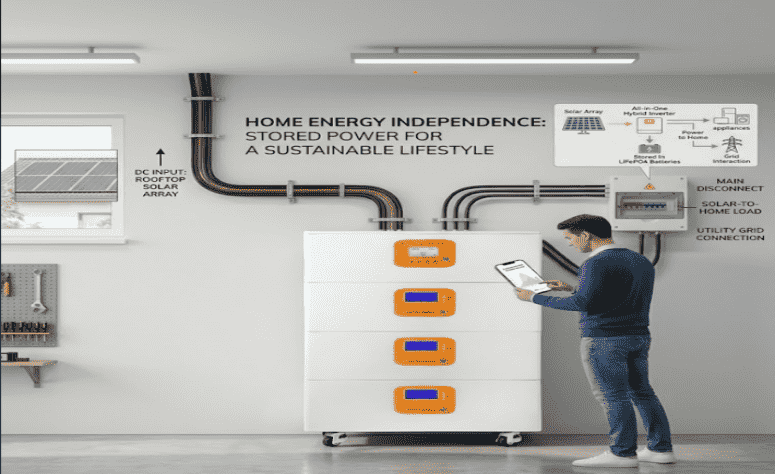

As people’s demand for electricity continues to grow, we often hear terms like batteries and portable power banks in daily life. In our everyday activities, whether powering a laptop outdoors or keeping essential appliances running during a power outage, a Portable Battery Pack with AC Outlets can deliver wall-outlet-like electricity anytime, anywhere. But how exactly do these devices store energy and convert it into stable AC output? This article will break down the basic principles and help you understand Portable Battery Packs at a fundamental level.
1. What is Portable Battery Packs
A Portable Battery Pack is a device that stores electrical energy and provides AC power for various electronic devices. It is a broad concept that includes many types of products—from small USB power banks to larger units equipped with DC, USB-C, and AC output ports.
When a battery pack includes an AC output interface, it can power devices that require wall sockets. These models are therefore usually classified as compact portable power stations, rather than just power banks.
2. How AC-Outlet Battery Packs Work
2.1 Inside the Battery: How They Store Energy
At the core of every AC-outlet battery pack is a rechargeable battery. In most modern products, lithium iron phosphate (LiFePO4) batteries are commonly used.
The battery stores energy in the form of direct current (DC). Inside the battery pack, electrical energy is stored through chemical reactions within the battery cells. During charging, DC electricity flows into the battery and is converted into chemical potential energy. During discharge, the stored chemical energy is released again as DC electricity.
In addition, the Battery Management System (BMS) built into portable battery packs with outlets ensures safe charging, temperature control, and long cycle life.
2.2 DC-to-AC Conversion: How They Deliver Wall-Style Power
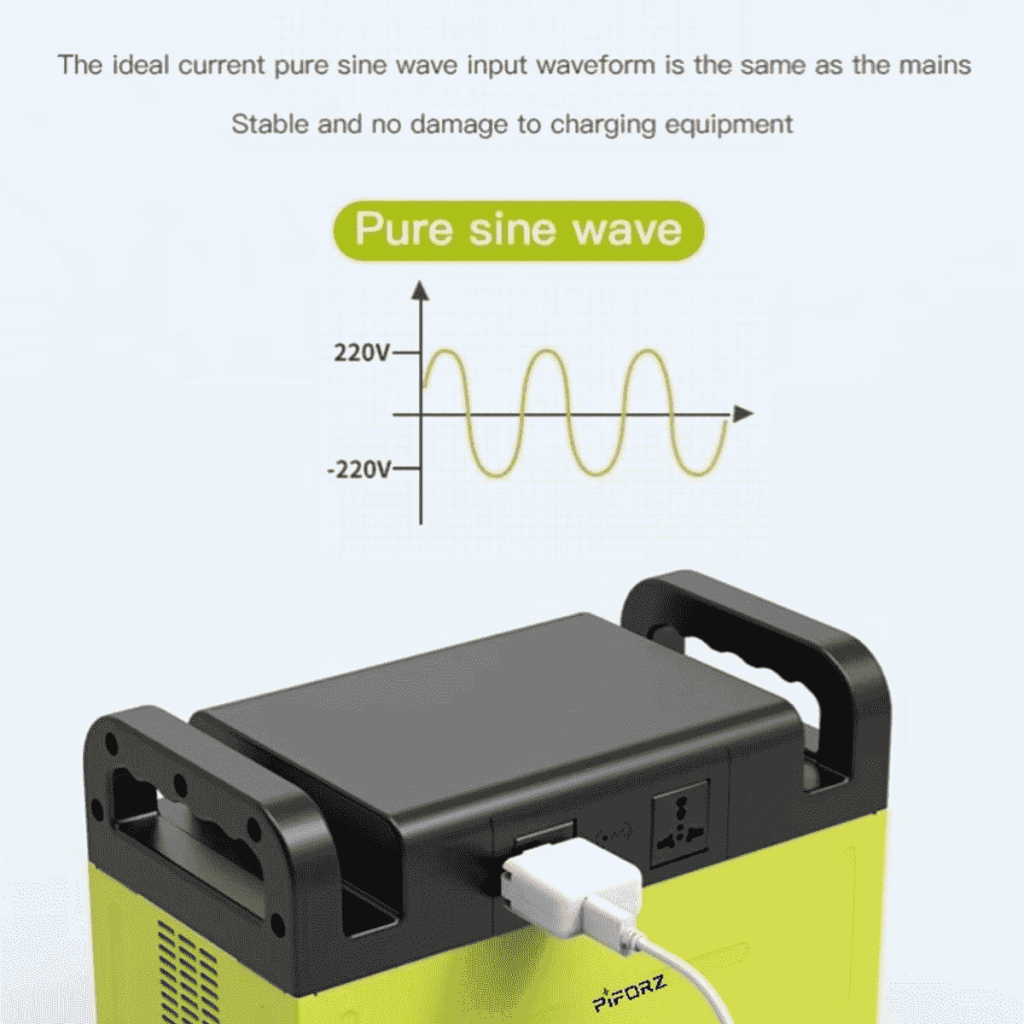
Now that we understand the battery stores DC power, how does a Portable Battery Pack with AC Outlets output AC electricity?
This conversion process is handled by an inverter, which converts DC power into a clean and stable AC waveform. High-quality portable power stations use a pure sine wave inverter, which can safely power sensitive electronics such as refrigerators, laptops, and medical devices without damage or noise. The entire PiForz portable power station lineup uses pure sine wave inverters.
2.3 Protection & Power Management
Even with AC outlets available, users may still encounter limitations. Not all appliances can be powered—why is that?
To ensure system safety, AC outlets are managed by multiple protection mechanisms, including overload protection, short-circuit protection, temperature sensors, built-in Battery Management System (BMS), and real-time power management controlled by the inverter system.
These safety layers continuously monitor electrical load and automatically adjust or shut down output when necessary. The main limitation lies in the inverter’s rated and peak power output. The restriction is not device compatibility, but whether the power demand exceeds the system’s designed capacity. Therefore, it is important to ensure connected devices remain within the rated output range of the portable power station.
3. Why Modern Portable Power Stations Are The Better AC Battery Packs
Modern portable power stations are the most advanced form of Portable Battery Packs with AC Outlets.
- Larger battery capacity, typically 200Wh and above
- Multiple output ports, including AC and DC, enabling multi-device usage
- Solar charging support, allowing continuous energy replenishment and reducing power anxiety
- High performance, with built-in BMS and efficient inverters enabling stable AC output, better load distribution, and higher conversion efficiency
Therefore, today’s portable power stations are no longer just large power banks with AC sockets. They are fully functional mobile energy systems capable of replacing traditional backup generators in many everyday scenarios.
4. Use Scenarios
A Portable Battery Pack with AC Outlets can handle situations that a Power Bank with AC Outlet simply cannot. Whether we are outdoors, setting up holiday decorations, or preparing for unexpected outages, a Portable Battery Pack with AC Outlets can deliver reliable power wherever it’s needed.
4.1. portable battery pack with ac outlet for camping
When we go camping, a Power Bank with AC Outlet can only power small devices such as phones, flashlights, laptops, and fans. It cannot run comfort-enhancing equipment like projectors or coffee makers. A Portable Battery Pack with AC Outlets, however, can give you a home-like power experience at the campsite. As long as the wattage matches, it can run an air pump, portable fridge, electric kettle, and more—making camping significantly more comfortable.
4.2 ac battery pack for christmas lights
During the holiday season, many outdoor Christmas lights don’t have USB ports or battery packs—they rely on traditional AC plugs. In this case, a Power battery with AC Outlet becomes the most convenient solution. It can provide stable all-night power for outdoor patio lights and eliminates the need for long outdoor extension cords. It keeps porch displays, yard trees, and Christmas village lighting setups safer and more reliable.
4.3 Emergency and Home Backup Situations
During power outages, a Power Bank with AC Outlet can power essential devices such as routers, lamps, CPAP machines, mini fridges, and laptops, offering stable short-term backup power for the home. This is something a standard Power Bank cannot handle, as its battery capacity and output are too low to support multiple devices at once.
5. Choosing the Right AC-Outlet Battery Pack

When choosing a Portable Battery Pack with AC Outlets, it is important to consider your actual needs.
First, consider the inverter’s power output. The combined wattage of all the devices you plan to run cannot exceed the battery system’s rated output power. Also keep in mind that some appliances have startup surge requirements that are significantly higher than their running power.
Second, consider the battery capacity. This determines how long the battery can power your devices. The formula is simple:
Battery Capacity (Wh) ÷ Device Power (W) × 0.85 (inverter efficiency) = Approximate Runtime (hours)
Another important factor is the inverter type, which determines whether your equipment operates safely and efficiently. Always choose a pure sine wave inverter. Modified sine wave inverters are cheaper, but they can cause excess heat, unusual noises, or even damage to sensitive devices such as laptops and medical equipment. Spending a little more on a pure sine wave inverter is usually worth the peace of mind.
Next is the battery chemistry. In most cases, LiFePO4 (Lithium Iron Phosphate) batteries are the preferred choice because they offer better thermal stability, longer service life, and improved safety.
Finally, consider whether the system supports solar charging. If you frequently travel, camp, or experience extended outages, being able to recharge with solar panels can be extremely convenient.
The following two scenarios can serve as useful references:
If you only need to charge devices like laptops and drones , a lightweight 200–300W unit is sufficient.
If you need it for home emergency backup, a 1500–2000W portable power station is more suitable, as most household appliances require higher rated power. In this case, a high-power portable charger with AC outlet is necessary.
Whether you need it for laptops, camping gear, or home backup power, the key is to choose the right capacity, output power, battery type, and charging method based on your real usage scenario.
6. FAQ
Q: Why is the actual usable capacity of a portable power station lower than the rated capacity?
A: The rated capacity is based on the battery’s internal voltage. After inversion and conversion losses, usable capacity is typically about 80% of the rated value, which is normal.
Q: Can a portable power station charge and discharge at the same time?
A:Most portable power stations support pass-through charging with built-in BMS control. However, long-term use of this mode may increase cycle wear, so it is recommended only when necessary.
Q: Can a portable power station run an AC?
A:Yes, a portable power station can run an air conditioner—but certain conditions must be met. The unit’s AC output must be able to handle both the air conditioner’s running wattage and its surge wattage. For best performance, it’s recommended to use a high-capacity, high-power portable power station, and consider pairing it with solar panels to extend runtime.