I’m sure many of you have come across the term “stationary energy storage system” in articles about the grid, commercial, or industrial energy storage. You might think it sounds like a big concept that has little to do with the home energy storage we use every day. Even a U.S. distributor client I’ve been working with for a while asked me, “Stationary energy storage systems—those are huge products, are you guys making those too?” I couldn’t help but laugh when I heard that. If that’s what you think, you’ve got it wrong.
Because stationary energy storage isn’t a term reserved exclusively for large power plants or industrial storage. The home battery storage we use daily is also a type of it. Batteries mounted on a garage wall or backup batteries kept in the house—these are actually the same as those grid-scale storage systems the size of shipping containers. They all fall under stationary energy storage systems. Stationary energy storage isn’t just large-scale grid storage; it also includes fixed battery backup systems designed for long-term home use. So, let’s explore home energy storage systems from the perspective of stationary energy storage.
What Is a Stationary Energy Storage System?
A stationary energy storage system is an energy storage system that captures generated electricity and then releases and uses it when needed. The only difference is that it’s stationary—installed in a fixed location and not meant to be moved around.
But in a home setting, it’s more commonly called a “Home Battery Storage System” or “Residential Energy Storage System.” Because it’s typically mounted on a wall in the house, in the garage, basement, or other fixed spots, it can also be called a stationary energy storage system.
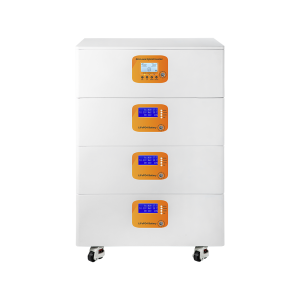
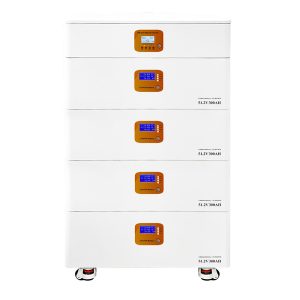
And this system isn’t just a battery by itself—it’s a complete system, usually made up of batteries, an inverter, a battery or energy protection system, and a connection to solar panels or the grid. There are all kinds of styles: wall-mounted, floor-standing, stackable, you name it.
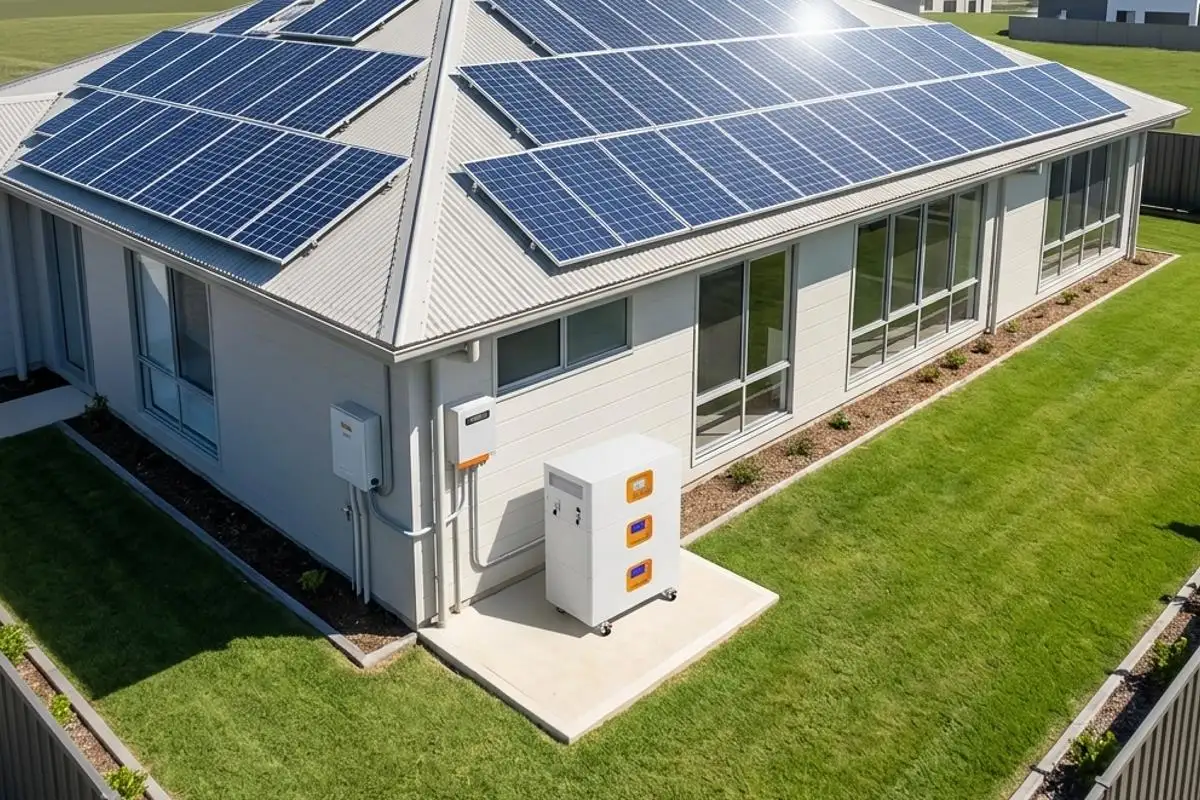
Typically, during the day, this system stores excess electricity generated by solar panels into the battery. At night or during a power outage, it releases that power to supply the home. More and more households are pairing stationary energy storage systems with rooftop solar. On one hand, it reduces reliance on the grid; on the other, it uses more eco-friendly power, which helps protect the environment.
Is a Home Battery Backup System a Stationary Energy Storage System?
Absolutely—home energy storage systems are a subset of stationary energy storage systems. The relationship between them is one of inclusion. A lot of people tend to lump home energy storage and large-scale storage together, thinking the principles are similar and it’s just a scaled-down version. But that’s not entirely accurate. If we classify stationary energy storage systems by scale, home energy storage is the category closest to everyday life.
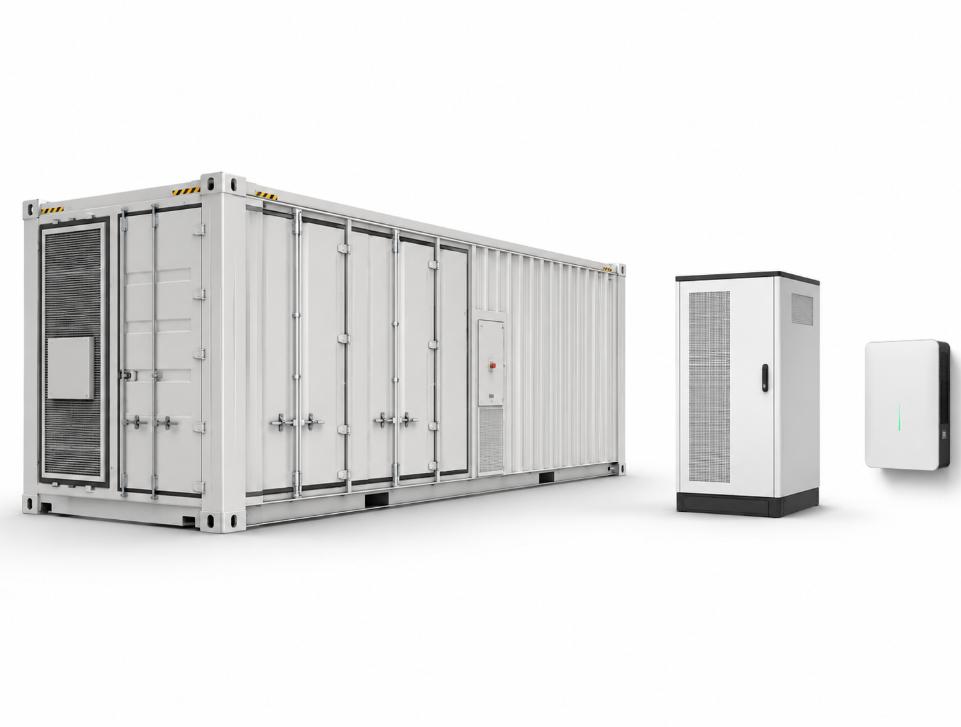
- Large-scale storage: This typically involves massive energy storage containers used in national grid stations or large wind and solar farms. Its main functions are peak shaving and valley filling (storing power at night and releasing it during peak daytime hours), frequency regulation and grid stabilization (responding in milliseconds to ensure grid stability), and supporting the integration of new energy sources (storing excess power from sunny days and using it when there’s no wind or sun). A single project can be tens or even hundreds of MWh. This doesn’t have much to do with ordinary people.
- Medium/Commercial & Industrial storage: These are energy storage cabinets more commonly used in factories, shopping malls, data centers, and similar places. Their energy capacity is generally in the tens to hundreds of kWh. They mainly help these facilities reduce electricity bills and deal with power rationing or emergencies.
- Small-scale/Home storage: Small-scale storage is what we actually use in our homes—the home stationary energy storage systems we talked about earlier. The common capacity range is usually around 5–20 kWh. You store power during the day and use it at night. During an outage, it can keep essential devices running, like refrigerators, phone chargers, routers, and other critical equipment.
Although home energy storage is much smaller in capacity and size compared to other forms, the factors it needs to address are no fewer than those for large-scale storage. Installation environment, safety standards, daily maintenance—the difficulty of doing home energy storage may not necessarily be lower than that of large-scale storage, because the biggest challenge is that it’s located very close to users. Whether it’s a garage, basement, storage room, exterior wall, or next to the home’s electrical panel, this means it’s not installed in a dedicated station like grid storage, but directly into people’s living spaces. The focus is much more on safety, quiet operation, and ease of use.
So, rather than saying home storage is a scaled-down version of large storage, it’s more accurate to say that it has different priorities compared to other scales of storage systems.
| Core Focus | Challenges | |
| Home Energy Storage | Safety, ease of use, backup power, solar compatibility, aesthetics, installation space | Users are not professionals; must be low-maintenance, low-noise, and highly safe |
| C&I Energy Storage | Peak shaving, demand charge reduction, backup power, ROI | Requires financial analysis; cycle life and EMS strategy are critical |
| Grid-Scale Energy Storage | Frequency regulation, peak shaving, new energy integration, grid stability | Complex grid-connection dispatching, large system scale, high O&M requirements |
How Stationary Energy Storage Systems Work in Homes
The core principle of a home energy storage system is to store electricity when it’s cheap or abundant and release it when needed. For the system to operate smoothly and efficiently, it relies on the coordination of several key components:
1.Battery pack: This is where the electricity is stored. These modules store electrical energy in chemical form, typically using advanced lithium-ion or lithium iron phosphate (LFP) chemistry.
2.Battery Management System (BMS): This is the brain of the battery. It monitors the voltage, current, and temperature of each cell in real time to prevent overcharging, over-discharging, or overheating, ensuring system safety.
3.Energy storage inverter: This handles the conversion of electrical energy. Solar panels generate DC power, and batteries store DC power. But home appliances and the grid use AC power. So an inverter is needed to convert bidirectionally between DC and AC. Hybrid inverters are now commonly used, as they can simultaneously manage solar, battery, and grid connections.
In traditional PV systems, the solar inverter and the storage inverter are separate and distinct. A hybrid inverter combines them into one, taking over all three ports: solar panels, storage batteries, and the utility grid/home appliances.
So how does it actually work?
1. Collecting power
It collects electricity generated by rooftop solar panels, as well as cheap power from the grid during off-peak hours. The DC power from the solar panels is stored directly into the battery via a DC controller. The cheap AC power from the grid during off-peak hours needs to pass through a rectifier to convert it to DC before it can be stored.
2. Storing power
The battery is the core. The excess solar power generated during the day that isn’t used by household appliances doesn’t go to waste—the system charges it into the battery. When electricity prices are low at night, the system actively draws power from the grid and stores it.
3. Releasing power
When the home needs power but the supply is insufficient—for example, at night when there’s no sun, during a power outage, or when grid electricity prices are high—the system automatically releases power from the battery, inverts it to the AC power that home appliances can use, and continues supplying electricity.
Stationary Energy Storage vs Portable Power Stations
When choosing a home backup battery solution, many people might think, “A battery is a battery—whether it’s an energy storage battery or a portable power station, it’s all the same.” Yes, they both store electricity and can provide power during outages or outdoor scenarios. But their purposes are different.
A stationary energy storage system is a fixed home storage system that typically works in conjunction with solar panels, inverters, and home electrical circuits. Its capacity is larger and better suited for long-term use, such as daily solar energy storage, nighttime electricity use, power outage backup, or improving home energy independence.
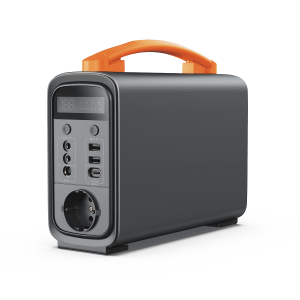
Portable power stations are better for mobile scenarios—things like camping, outdoor work, short-term emergencies, or powering phones, laptops, and small appliances. They can be moved around and carried with you, which also means their capacity is limited.
| Stationary Energy Storage System | Portable Power Station | |
| Form factor | Fixed installation | Freely portable |
| Capacity | Large, typically measured in kWh, expandable | Small, measured in Wh, not expandable |
| Use cases | Long-term home backup, solar storage | Camping, outdoor activities, short-term emergencies |
| Devices powered | Critical home loads, high-power appliances | Individual devices or a few small appliances |
| Usage cycle | Daily, long-term use | Occasional, temporary use |
Of course, if your needs are just occasional camping and charging phones and laptops, a portable power station is sufficient. But if you want your refrigerator, lights, WiFi, and some outlets to keep running during a home outage, or if you want to store excess solar power for use at night, a stationary home energy storage system is the better choice.
How Much Battery Capacity Does a Home Need?
I’ve dealt with many clients who almost always ask first, “What’s the capacity?” It’s as if bigger is always better. But choosing the right model isn’t just about capacity.
1. Capacity
Capacity is what everyone cares about and asks about, so its importance is self-evident. Capacity determines how long you can run, but bigger isn’t always better. Every household has different usage habits and backup needs. Some families just want essential devices to keep running during an outage—things like phones, lighting, and routers. Others want to run high-power appliances like air conditioners, refrigerators, and induction cooktops. So before deciding on capacity, ask yourself: “During an outage, what devices do I actually want to keep running?”
If you just need basic backup, you don’t need a very large capacity. If you want whole-home backup for an extended period, then you do need a larger battery.
2. Output power
Output power determines whether you can run a particular device. An energy storage system could have a large capacity of 20 kWh, but if the inverter’s output power isn’t high enough, it might not be able to start high-power appliances like air conditioners, induction cooktops, or water pumps. These devices need a high surge power when starting up. If the system’s peak power isn’t sufficient, it may fail to start and won’t supply power properly.
3. Battery type
A home energy storage system isn’t something you buy and use for just a few months—it’s a device that stays in your home for long-term use, so battery safety is especially critical.
The most popular and common batteries are lithium batteries, with lithium iron phosphate (LFP) being a hot favorite. Its advantage isn’t just capacity—it’s higher safety and longer cycle life, making it more suitable for long-term fixed use.
Of course, the installation environment for home energy storage is also very important. Ideal locations are typically well-ventilated, with relatively stable temperatures, away from water sources and heat sources, and easy to access for maintenance. Examples include garage side walls, equipment rooms, sheltered exterior walls, or dedicated storage installation areas. You also need to consider wall load-bearing capacity, cable routing, inverter placement, grid-tie switches, fire safety clearances, and local electrical codes when installing. After all, this is a spot you’ll be using for a long time, so the location choice shouldn’t be taken lightly.
When Is a Stationary Home Battery System Worth It?
Of course, not every household must install a stationary home battery system. It’s better suited for families with specific needs, since a whole system is a significant investment.
If you live in an area with frequent power outages that affect critical loads like refrigerators, internet, lighting, and office equipment—ultimately disrupting your daily life—then the value a home energy storage system provides is immeasurable.
Or, if you already have solar panels installed and want to store excess daytime power for use at night, a stationary battery system is also worth considering, because it allows solar generation to benefit you beyond just daylight hours.
If you want to reduce your dependence on the grid, or prefer to use stored power during peak-rate periods, a home energy storage system can also be part of your home energy management strategy.
However, if your needs are just occasional camping trips or charging phones, laptops, and cameras, then a portable power station may be more convenient and more affordable. Stationary energy storage systems are designed for long-term, stable, household-level electricity needs, not temporary power scenarios.