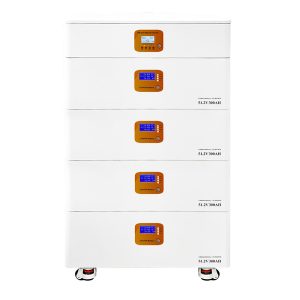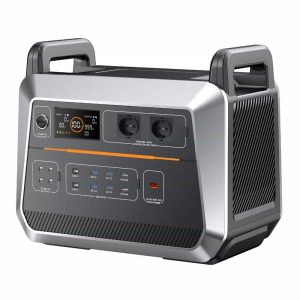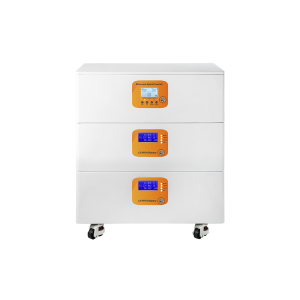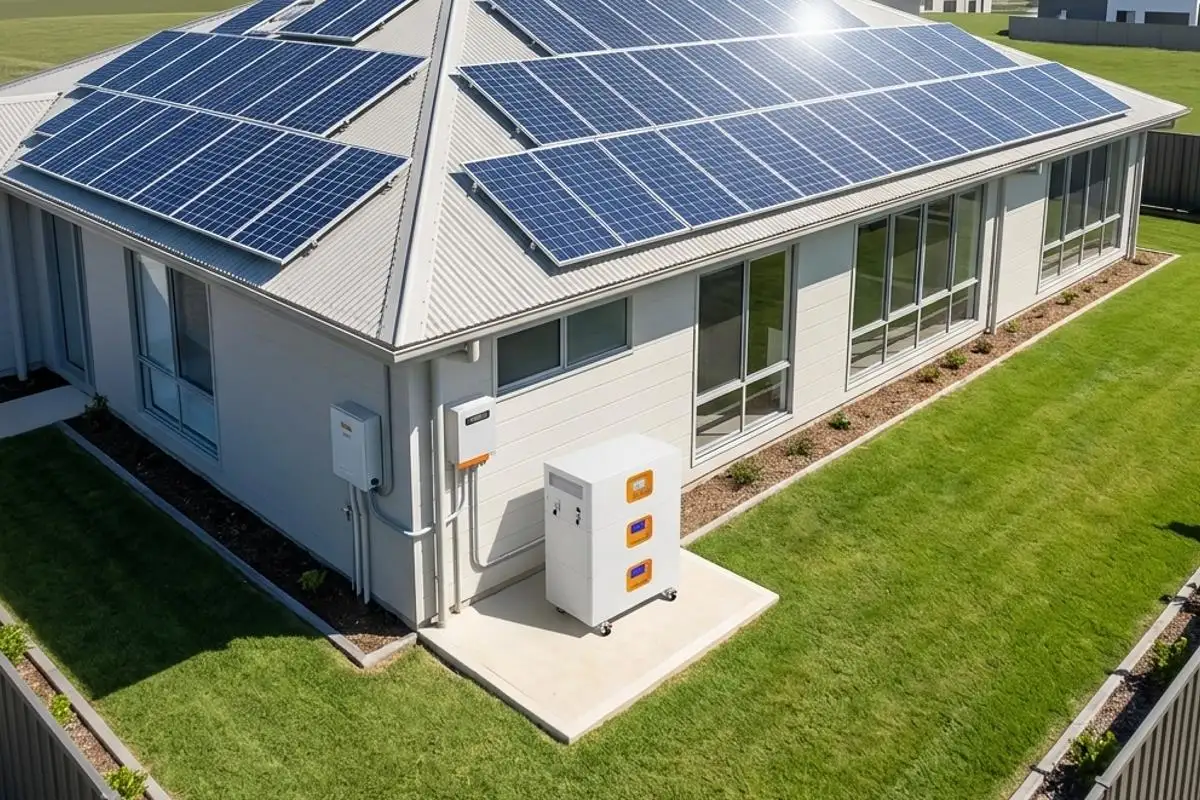
What is required for an off-grid solar system?
An off-grid solar system, also known as a stand-alone photovoltaic (PV) system, refers to a power generation and energy storage system that operates completely independently of the public utility grid. In simple terms, it means “generate your own power, store it yourself, and use it yourself.”
Off grid photovoltaic system and components and batteries and inverter not grid connected
1. Solar Panels (Photovoltaic Modules): Responsible for converting solar energy into direct current (DC) electricity.
2. Charge Controller: Responsible for regulating the direction of current flow, preventing the battery from overcharging or over-discharging, thereby protecting battery lifespan. Modern high-efficiency systems commonly utilize MPPT (Maximum Power Point Tracking) technology to maximize energy conversion rates.
3. Battery Bank: Stores electrical energy to ensure power supply even when there is no sunlight.
- Off-Grid Inverter:Converts the direct current (DC) electricity stored in the battery bank into alternating current (AC) electricity that can be used by household appliances.
What is a grid-tied solar system?
Here’s the English translation of the description for the grid-tied solar system:
Grid-Tied Solar System, also known as a Grid-Connected Photovoltaic (PV) System, is the opposite of an off-grid system. It must rely on the public utility grid to operate. It converts the direct current (DC) generated by the solar panels into alternating current (AC) and feeds it into the national power grid. In simple terms: “When sunlight is abundant, if the solar power generation exceeds the amount of electricity being used, the surplus electricity is automatically sold back to the public utility grid. When sunlight is insufficient and generation falls short of usage, electricity is automatically drawn from the public grid to meet demand.”
On-grid solar system / Components of on-grid solar system
1. Solar Panels: Convert solar energy into direct current (DC) electricity.
2. Grid-Tied Inverter: Not only converts the current, but also continuously tracks the voltage and frequency of the utility grid in real-time, ensuring that the generated power is synchronized with the grid.
- Bi-Directional Meter: Records how much electricity you have consumed from the grid and how much electricity you have exported to the grid.
What is a hybrid solar system?
Here is the English translation for the description of the hybrid solar system:
Hybrid Solar System is essentially an upgraded “two-in-one” version that combines the features of both off-grid and grid-tied solar systems. Simply put, a hybrid solar system possesses the independence of an off-grid system—allowing it to continue supplying power during a blackout—while retaining the economic benefits of a grid-tied system, such as selling excess electricity back to the grid and saving on utility bills.
Hybrid Solar Power Systems and Their Components
1. Hybrid Inverter (Bi-Directional Inverter): Simultaneously manages the power flow among three lines—the photovoltaic array, the battery bank, and the utility grid—determining when to charge, when to discharge, and when to sell power back to the grid.
2. Battery Bank: Stays fully charged on standby during normal conditions and provides seamless, uninterrupted power supply during a grid outage.
3. Solar Panels: Responsible for converting solar energy into direct current (DC) electricity.
- Bi-Directional Meter: Records how much electricity you have consumed from the grid and how much electricity you have exported to the grid.
The Differences Among Off-Grid, Grid-Tied, and Hybrid Solar Systems
Comparison Table:
| Comparison Item | Grid-Tied Solar Syste | Off-Grid Solar System | Hybrid Solar System |
| During Grid Outage | Stops working | Normal power supply | Normal power supply |
| Battery Bank | Not required | Mandatory | Mandatory |
| Selling Power Back | Yes | No | Yes |
| Primary Cost | Low | Extremely High | Relatively High |
Grid-Tied Solar System: Self-generate, self-consume, sell excess to the grid.
- During the day, PV generation supplies power for self-consumption first.
- Any unused surplus power is sold back to the grid to generate revenue.
Off-Grid Solar System: Battery backup power.
- When the grid is normal, the battery stops charging once full and remains on standby.
- The instant the grid fails, the system automatically switches to battery power. Appliances like refrigerators and computers are completely unaffected.
Hybrid Solar System: Peak shaving and valley filling.
- If your area uses Time-of-Use (TOU) pricing (expensive during the day, cheap at night), the system can be set to charge the battery using cheap off-peak grid power at night.
- During expensive peak hours in the daytime, it prioritizes using the cheap stored battery power, while also selling the PV-generated power back to the grid at the high daytime rate.
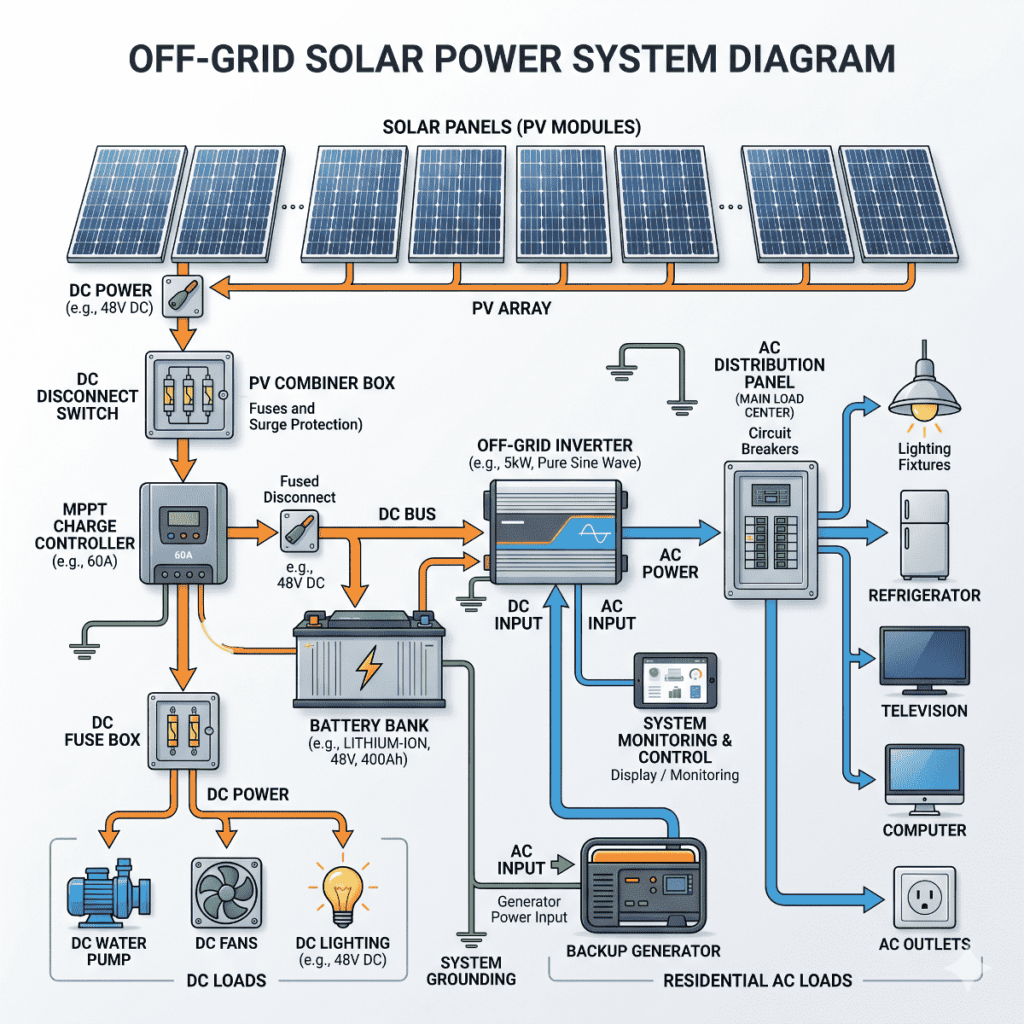
Off-grid solar system diagram
What are the requirements for setting up an off-grid solar system?
1. Solar Panels (Photovoltaic Modules): Responsible for converting solar energy into direct current (DC) electricity. The total power capacity of the solar array must be sufficiently large not only to cover daytime energy consumption but also to generate enough surplus power to fully charge the battery bank before sunset, ensuring supply for nighttime or rainy days. Currently, monocrystalline silicon modules offer the highest utilization rate and efficiency on the market.
2. Charge Controller: Responsible for regulating the direction of current flow, preventing the battery from overcharging or over-discharging, thereby protecting battery lifespan. Modern high-efficiency systems commonly utilize MPPT (Maximum Power Point Tracking)technology to maximize energy conversion rates.
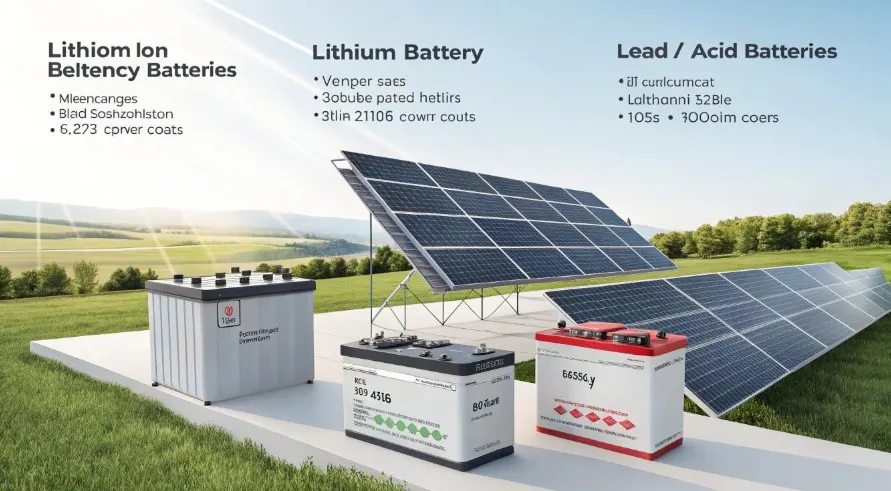
3. Battery Bank:Stores electrical energy to ensure power supply even when there is no sunlight. While traditional lead-acid batteries (AGM/Gel) have a lower initial purchase cost, modern off-grid systems and mature commercial solutions have almost entirely shifted to Lithium Iron Phosphate (LiFePO4)batteries. These batteries support an extremely deep Depth of Discharge (DoD) without damaging the cells, charge extremely quickly, offer a cycle life of several thousand cycles, and possess high thermal stability and safety.
- Off-Grid Inverter: Converts the direct current (DC) electricity stored in the battery bank into alternating current (AC) electricity that can be used by household appliances. A Pure Sine Wave Inverter is recommended because it provides higher quality power output and is gentler on electronic devices. Additionally, there is a device on the market that combines the functions of the controller and inverter into a single unit, known as an “Inverter Charger” (or All-in-One Off-Grid Inverter).
an off grid ac system needs what specific component
Core Specific Component: Inverter (or Inverter Charger)
First and foremost, the electricity generated by solar panels is Direct Current (DC), and the electricity stored in the battery bank is also Direct Current (DC) . If we do not use an inverter, we can only power DC appliances.
To run household appliances that require Alternating Current (AC) , the inverter is the only way to convert DC into 220V/110V AC power.
### Special Consideration for Inductive Loads
If you need to power inductive loads such as air conditioner compressors, water pumps, or high-power cutting machines, you must pay attention to a specific component beyond the standard inverter: Low-Frequency Pure Sine Wave Inverter.
1. Standard high-frequency inverters cannot handle compressor startup.
2. Low-frequency inverters contain a built-in toroidal transformer. This provides 3 to 5 times the rated instantaneous peak power, making it the only type capable of withstanding the massive surge current required during the first few seconds of motor startup.
AC System Standard Configuration Table
| Component Name | Specific Role in the AC System | What Happens If You Don’t Install It? |
| Pure Sine Wave Inverter | AC Waveform Generator (Mandatory) | All AC appliances become unusable; the system becomes a pile of scrap metal. |
| MPPT Solar Charge Controller | DC Management (Mandatory) | The battery bank will quickly be ruined, and solar panel efficiency will be extremely low. |
| Battery Bank | Energy Storage (Mandatory) | Power outage at night or during cloudy weather; 24/7 AC power usage is impossible. |
| Solar Panels | Power Generation (Mandatory) | No power to charge the batteries; the system will collapse within a few days. |
The Actual Power Generation Capacity of Solar Panels in Off-Grid Solar Systems
Does a 400W solar panel produce 400W?
No, it cannot. In a real-world environment, factors such as high temperatures, dust accumulation, and line losses will significantly reduce the actual output. You should expect approximately 70% to 80% of the standard rated power, which translates to roughly 280W – 320W in practical terms.
How long will a 400W solar panel take to charge a 400Ah battery?
First, let’s assume we are using a 12V Lithium Iron Phosphate (LiFePO4) battery system.
1. Calculate the total energy capacity of the battery:
12V × 400Ah = 4,800Wh
2. Calculate the actual daily power generation: (Assuming one 400W panel, 5 hours of average daily sunlight, and 75% real-world efficiency)
400W × 0.75 × 5h = 1,500Wh/day
3. Calculate the time required to fully charge:
4,800Wh / 1,500Wh/day = 3.2 Days
Conclusion:
If you want to fully charge this battery bank in a single day, you would need to configure four 400W solar panels in parallel. For an energy storage system of this capacity, it is generally recommended to install a PV array of at least 1,000W – 1,200W to ensure a full charge within one day.
How much solar do I need for 2000 kWh a month?
1. Calculate the Daily Energy Requirement:
2,000 kWh / 30 days = 67 kWh/day
2. Calculate the Required PV Power: (Assuming the location receives 4.5 hours of effective peak sunlight per day, factoring in 75% real-world efficiency)
67 kWh / (4.5h × 0.75) = 19.85 kW (approximately 20 kW)
3. System Scale Assessment:
A 20 kW system represents a very substantial rooftop photovoltaic array. If built using 400W solar panels, this would require over 50 panels in total.
Is there a 700 watt solar panel?
Yes, there are. Currently, some mainstream manufacturers have already begun mass-producing modules with power outputs exceeding 700W, primarily intended for large-scale utility power plants. However, these are not suitable for small off-grid systems. For typical residential or portable off-grid applications, 400W – 500W remains the golden balance point in terms of size, weight, and ease of handling.
What is the 33% rule / 20 rule in solar panels?
1. The 33% Rule (Oversizing Rule)
This rule is designed to allow the inverter to operate efficiently even during periods of low irradiance (cloudy or rainy weather). The design permits the total peak power of the solar array (DC) to exceed the inverter’s rated power (AC), but it is recommended that the oversizing ratio not exceed 33% (DC/AC ratio ≤ 1.33).
If the array is oversized too much, the excess energy generated during peak midday sun will be “clipped” (curtailed) by the inverter to prevent overload, resulting in wasted potential generation.
2. The 120% Rule (Often referred to simply as the “20% Rule”)
This is an extremely critical regulation found in the National Electrical Code (NEC) in the United States. It stipulates that the sum of the current ratings of the Main Breaker and the solar inverter Backfeed Breaker shall not exceed 120% of the busbar rating of the electrical panel.
For example, if your panel has a 200A busbar and a 200A Main Breaker, your PV system can only connect a maximum backfeed breaker of 40A (Calculated as: 200A × 1.2 – 200A = 40A). This is often the single largest compliance bottleneck for installing residential PV and energy storage systems in the US.
Off-Grid Solar Systems and High-Power Appliances
Can I run my AC all day with solar?
Of course, it is possible. However, if you need to run an air conditioner around the clock, your system must meet three specific conditions:
1. Inverter Power Capacity: Because an air conditioner is an inductive load, it generates a massive surge current during startup. The inverter must have sufficient peak power capacity to handle this. Therefore, selecting a Pure Sine Wave Inverter is critical, and its rated continuous power should be at least 1.5 times the rated power of the air conditioner to ensure stable startup and operation.
2. PV Array Capacity: During the daytime, the solar panels must not only provide enough power to run the air conditioner but also have additional redundant power available to charge the battery bank simultaneously.
- Energy Storage: Solar panels only generate power during the day. If you wish to enjoy air conditioning at night or during rainy/cloudy weather, you must rely on a battery bank to store the energy. The capacity of the battery bank directly determines how long the air conditioner can run independently without solar input.
How many solar panels are required to run 2 ton AC?
The continuous running power of a 2-ton air conditioner is approximately between 2,000W and 2,500W.
Assumptions:
– Using 400W solar panels.
– 4 hours of effective peak sunlight per day.
– Air conditioner runs for 8 hours per day.
Calculation:
1. Daily AC Energy Consumption:
2.5 kW × 8 h = 20 kWh/day
2. Daily Generation per Panel:
400W × 4 h × 0.75 (efficiency loss) = 1.2 kWh/day
3. Final Calculation:
20 kWh / 1.2 kWh = 16.6 panels
Conclusion:
In order to run this 2-ton air conditioner for 8 hours a day, you would need at least 17 of the 400W solar panels. If you need to run the unit for 24 hours, the required number of panels and the battery bank capacity would increase exponentially.
Can solar panels power a whole house on cloudy days?
Of course, solar panels can still generate electricity using diffuse light on cloudy days. However, under overcast conditions, the power output typically drops to only 10% to 25% of the panel’s rated capacity.
If you want to maintain whole-house power supply for 2 to 3 consecutive days of rainy or cloudy weather, you must address the following:
1. Increase Battery Bank Capacity: Based on local weather patterns, design a backup capacity sufficient to support the load for 1 to 3 days to ride through consecutive periods of low sunlight.
- Plan for Backup Power Sources: For systems requiring high reliability, consider configuring a fuel-powered generator as a backup, or, in areas with grid coverage, integrate a grid connection as a supplementary power source.
What to know before going off-grid?
Living off the grid sounds romantic and fiercely independent, but behind that dream lies a series of harsh truths that few people are willing to tell you about upfront. If you are currently considering an off-grid lifestyle, please pay close attention to the following realities.
What to Know Before Going Off-Grid
1. You must consider the power consumption and usage duration of every single appliance. On the grid, you can simultaneously run the air conditioner, refrigerator, and other high-power devices without a second thought. In an off-grid system, however, neglecting this can cause the inverter to instantly overload and trip the breaker.
2. When the power goes out in the middle of the night, it’s up to you. You will be the one grabbing a flashlight to go check the inverter or the fuse box in the dark.
3. Significant physical space is required. Whether it’s an RV setup or a rooftop installation, the system demands a substantial footprint.
The Top 10 Common Problems and Disadvantages of Off-Grid Solar Power
1. High Upfront Costs:Although solar panels are getting cheaper and cheaper, high-capacity deep-cycle battery banks (especially high-quality lithium iron phosphate, LiFePO₄) and pure sine wave inverters are very expensive.
2. Battery Lifespan and Replacement:“The battery is the most vulnerable link in the system. Even high-quality lithium batteries face capacity degradation after 10 to 15 years, requiring a significant replacement cost.”
3. Anxiety Over Weather-Dependent Charging:“During three or four consecutive overcast or rainy days, power generation can plummet to just 10% to 20%.”
4. Necessity of a Backup Generator:“To cope with extended periods of bad weather, nearly all pure off-grid systems require a fuel-powered generator as a last line of defense, which introduces noise and fuel costs.”
5. System Maintenance Requirements:“Regular cleaning of the panels is required—as dust and snow can severely impact efficiency—along with checking for loose terminal connections and monitoring the battery’s state of charge (SOC) and overall health.”
6. Inverter Capacity Limitations:“Your maximum instantaneous power draw is strictly capped by the inverter’s peak power rating. The inrush current generated when starting high-wattage appliances—such as air conditioners over two tons or water pumps—can very easily trigger the system’s protection shutdown.”
7. Wasted Energy (Curtailment):“On sunny summer days when the battery is already full, surplus solar energy cannot be sold back to the grid like in a grid-tied system; it simply goes to waste—unless you deliberately switch on ‘dump loads’ such as an electric water heater.”
8. Insurance Complications:“Many insurance companies impose stringent underwriting conditions on pure off-grid homes, and banks may likewise be reluctant to provide mortgage loans for properties that are not connected to public utilities.”
9. Necessary Lifestyle Changes:“You must turn off the lights when leaving a room, and on overcast days, you may need to avoid using the washing machine or dryer altogether.”
10. Technical Knowledge Barrier:“Understanding voltage, current, wire gauge (AWG), and breaker specifications is a basic survival skill in an off-grid setup; otherwise, you’re looking at a serious fire hazard.”
The Greatest Risks and Drawbacks of Off-Grid Solar Living
The Biggest Financial Drawback: The Lifecycle Cost of Batteries.
An off-grid system is not a “one-time investment for a lifetime of free electricity.” Every ten to fifteen years, you will face a battery replacement cost comparable to buying a car.
The Biggest Risk (Safety and Survival): Single Point of Failure.
If the main inverter board suddenly burns out, or the Battery Management System (BMS) locks up during a severe winter freeze or summer heatwave, your entire house will lose power instantly. In the face of increasingly frequent extreme weather events (such as tornadoes and powerful storms causing grid outages), an off-grid system is indeed an excellent backup power source—but only if its own equipment possesses extremely high reliability and redundant design.
Why is off-grid living illegal?
In the United States and many other countries, governments require legally habitable dwellings to obtain a Certificate of Occupancy. As a result, homes are typically mandated to have:
1. Connection to a municipal sewage system or a compliant septic system.
2. Connection to municipal water supply (or a compliant deep water well).
3. Connection to the electrical grid. Many local city and county ordinances stipulate that disconnecting from the grid renders a house “unfit for human habitation,” resulting in the property being condemned or red-tagged.
Therefore, the “illegality” often arises not because people are using solar panels, but because they have constructed buildings on unpermitted land that fail to meet modern municipal building codes and infrastructure requirements.
What happens in a storm / if lightning hits
The impact of extreme weather is a significant threat. A direct lightning strike or even an induced surge can cause severe damage to inverters, charge controllers, and other sensitive equipment.
Protection Measures:
1. Grounding System: A reliable, low-impedance grounding system must be established. All metal components (module frames, mounting racks, inverter enclosures) should be equipotentially bonded to provide a safe path for lightning current to dissipate into the earth.
2. Surge Protective Device (SPD): Appropriate SPDs must be installed on both the DC side (between the solar array and the charge controller) and the AC side (at the inverter output) to clamp transient overvoltages.
- Physical Protection: In areas with high lightning activity, consider installing a dedicated lightning rod positioned higher than the PV array. Additionally, sensor and power cables should be routed through metal conduit shielding, and long-distance exposed overhead wiring should be avoided whenever possible.
Lifespan & What happens after 25 years
After 25 years, you may find yourself with a roof or yard full of old solar panels that have degraded to roughly 80% of their original efficiency.
As for the inverter and charge controller, over that same 25-year lifecycle, you should expect to replace the inverter at least 1 to 2 times, and you will also need to replace the battery bank 1 to 2 times (depending on battery chemistry and usage).