
Some people say gas generators are reliable — they’ve been around for decades. Others say portable power stations are the future — no noise, no fumes.
You‘ve read reviews. You’re more confused than when you started.
“Generators are loud and smelly.” “Power stations run out of juice too fast.”
Who‘s right?
The answer is — both are right, but for different situations.
This article cuts the fluff. I’ll tell you directly:
·Who should get a generator vs a power station
·What you actually care about (noise, safety, cost, maintenance)·What to buy based on your real situation
Read this. You‘ll have your answer.
Quick Answer (If You’re In a Hurry)
| Your situation | Get this |
| RV / camping overnight | Power station |
| Home backup (indoor use) | Power station |
| Job site / multi-day heavy work | Gas generator |
| Off-grid / energy independence | Power station + solar panels |
| Want to cover everything | Both (hybrid setup) |
Here‘s why.
1. Noise — Will You Bother Others?
Gas generator: 60–75 dB. Like a vacuum cleaner running next to you. At a campsite, everyone hears it. Use it after 10 PM? Expect complaints.
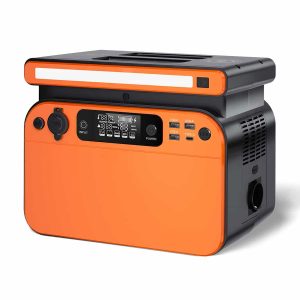
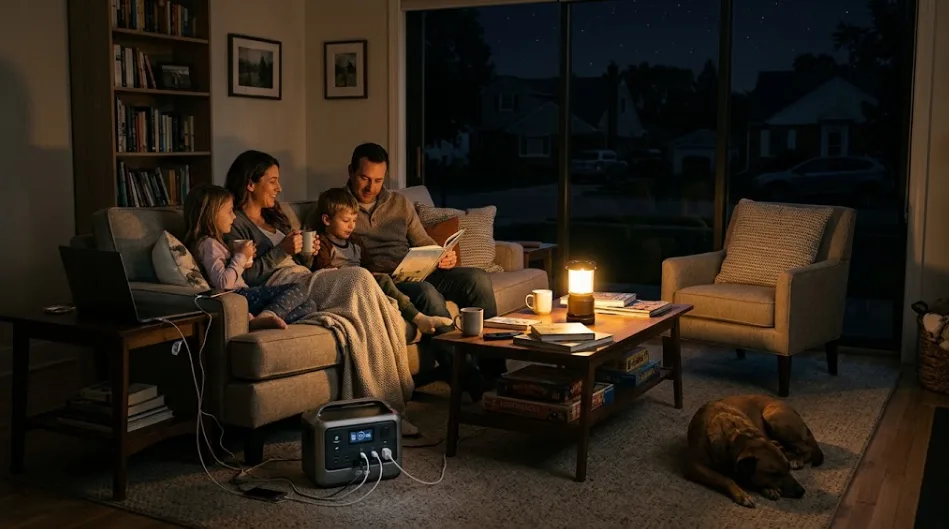
Power station: 0 dB. Completely silent. Inside an RV at night. Powering a CPAP machine. In your living room. No one is disturbed.
Verdict: If you don’t want complaints or dirty looks at the campground — get the power station.
2. Safety — Can You Use It Indoors?
Gas generator: Burns gas, emits carbon monoxide. It‘s odorless and deadly. Never use it indoors, in a garage, or inside an RV. Must be outside, ventilated.
Power station: Zero emissions. Living room, bedroom, tent, office — anywhere.
Verdict: If you’re buying for home backup — you can only choose a power station. A generator indoors is dangerous.
3. Maintenance — How Much Time Do You Want to Spend?
Gas generator:
·Oil change every 50–100 hours
·Spark plugs, carburetor cleaning
·Gas goes bad — needs stabilizer
3-year maintenance cost: $300–$800
Power station:
·Nothing
·Charge it once in a while
·3-year maintenance cost: $0
Verdict: If you don‘t want to tinker before every use — get the power station.
4. Total Cost — Which One Saves You Money?
3-year total cost comparison:
| 3-year cost | Gas Generator (2000W) | Power Station (1500W) |
| Unit purchase | $400–$800 | $250–$500 |
| Gas / electricity | $900–$1,500 | $10–$30 |
| Maintenance | $300–$800 | $0 |
| Total | $1,600–$3,100 | $260–$530 |
Verdict: A power station costs 1/6 to 1/5 of a generator. Long-term, it saves a lot.
5. Energy Independence — Can You Still Have Power When Gas Is Gone?
Gas generator: Completely dependent on gas stations. Hurricane, blizzard, flood — if stations close or fuel runs out, you have an expensive paperweight.
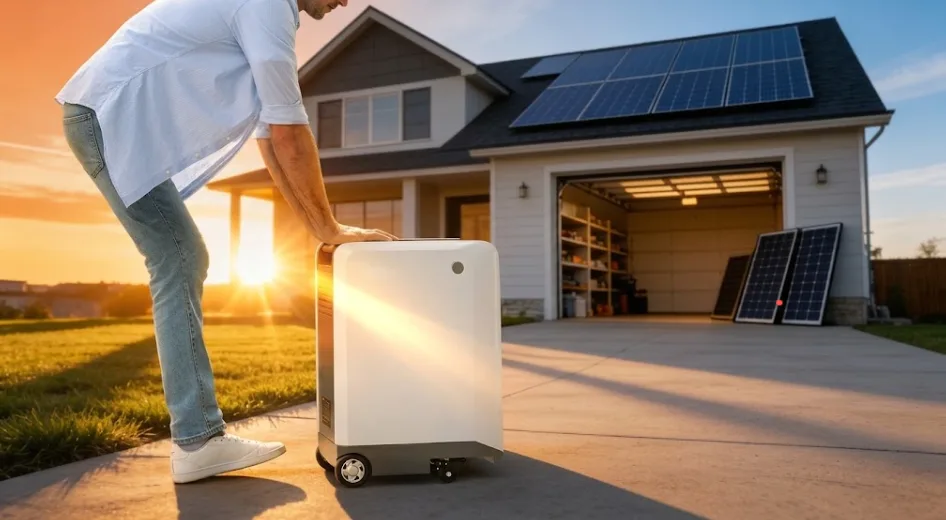
Power station: Pair it with solar panels. As long as there‘s sunlight, you have power. Off the grid. Off the fuel supply chain. True energy independence.
Verdict: If you want off-grid living, long-term emergency backup, or just don’t want to be tied to gas stations — get a power station + solar panels.
6. Use Cases — Match the Product to You
Scenario 1: RV / Camping
You need: Quiet, fume-free, doesn‘t bother others, solar-ready
Get a power station → Piforz PF series (240Wh–1210Wh)
Scenario 2: Home Backup
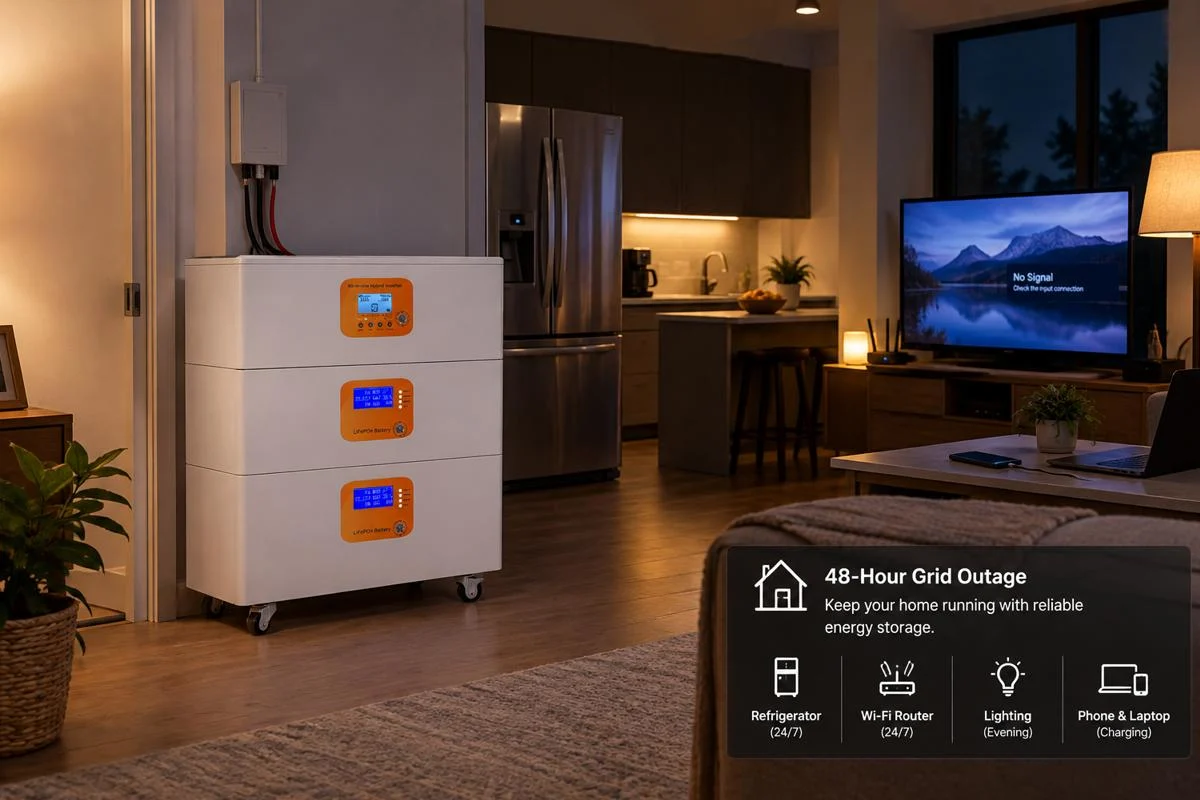
You need: Indoor safe, runs fridge + router, plug-and-play, no hassle
Get a power station → Piforz PF1500 (1210Wh, runs a fridge for 8–10 hours)
Scenario 3: Job Site / Multi-Day Heavy Work
You need: All-day power, high output, refuel and keep going
Get a gas generator (or hybrid: generator charges during the day, power station runs silently at night)
Scenario 4: Off-Grid Cabin / Energy Independence
You need: No reliance on gas stations, long-term self-sufficient, cleanGet a power station + solar panels
7. The Ultimate Setup: Hybrid Power System
You don‘t have to choose between a generator and a power station. The smartest move is to get both.
What you need:
·A small, portable gas generator (1000W–2000W)
·A large-capacity power station (like Piforz PF1500 or higher)
·Solar panels (optional — reduces fuel dependency even more)
How it works:
·Daytime: Run the generator for 1–2 hours to quickly charge the power station
·Night or quiet time: Turn off the generator. Run on the power station — zero noise, zero emissions all night
·Sunny days: Use solar panels to recharge. Don’t even start the generator.
Who is this for?
·Long-term RV travelers
·Off-grid cabin owners
·Professional photo/film crews
·Home backup users who want to cover every scenario
This is what the pros use.
8. Want Your Own Brand? Customization Comparison
| Gas Generator | Power Station | |
| Exterior customization | Hard (expensive molds) | Easy (panels, casing, logo) |
| Capacity options | Fixed (engine model) | Flexible (cell configuration) |
| Software tuning | None | Yes (charging logic, display) |
| Minimum order quantity | 500–1,000 units | 100–300 units |
Verdict: If you want your own brand, your own look — power stations have a much lower barrier.
9. About Piforz
We are not a trading company. We are the factory.
| Metric | Data |
| Factory area | 15,000 m² |
| Monthly capacity | 50,000+ units |
| Patent technologies | 120+ |
| Countries exported | 126+ |
| Cell type | A-grade LiFePO₄ |
| BMS | In-house developed, smart protection |
| Certifications | UL, CE, FCC, RoHS, UN38.3, MSDS, PSE |
Our capabilities:
Vertically integrated — from BMS software to battery pack assembly
ISO 9001 quality system — aging, temperature, drop, and vibration testing on every unit
Full OEM/ODM customization — from panel design to packaging
What this means for you:
·For brands/distributors: Lower cost, better quality control, flexible customization·For end users: Longer product life, fewer service headaches, better value
10. FAQ
Q1: How long can a power station run a refrigerator?
A: It depends on the fridge‘s power draw and the station’s capacity. A Piforz PF1500 (1210Wh) can run a home fridge (~100W) for 8–10 hours.
Q2: Is it hard to recharge a power station?
A: Not at all. Three options: wall outlet (fastest), car charger (on the road), or solar panels (cleanest, free after purchase).
Q3: Are LiFePO₄ batteries safe? Will they explode
A: Very safe. LiFePO₄ is one of the most stable lithium battery chemistries available. Combined with Piforz‘s smart BMS (protection against over-charge, over-discharge, short circuits, and high temps), there is no safety risk under normal use.
Q4: How many years will a power station last?
A: Piforz uses A-grade LiFePO₄ cells rated for 3,000+ cycles. If you use it 3 times per week, that’s nearly 20 years. The battery will likely outlast the rest of your gear.
Q5: Are you a factory or a trading company?A: We are the factory. 15,000m² facility, from BMS R&D to final assembly. That means better pricing and direct technical support for you.
11. Final Answer
| Your situation | Answer |
| Camping, RV, weekend outdoors | Power station |
| Home backup | Power station |
| Off-grid / solar living | Power station + solar panels |
| Job site, multi-day heavy work | Gas generator |
| Want to cover everything | Both (hybrid setup) |
For 80% of people — a good power station is more practical, more cost-effective, and less hassle than a cheap generator.
12. Don‘t Wait
Now you know how to choose. There‘s no absolute “better” between a generator and a power station — only what fits your life. Quiet, safe, no-hassle power that works with solar — that’s what most people actually care about. Don‘t get caught in a storm, a blackout, or off-grid without a backup plan. With a Piforz portable power station, you’ll have clean, silent, reliable power wherever you go.
sales@piforz.com – Spec sheets and quotes within 24 hours