In recent years, extreme weather events have become more frequent, leading to an increase in power outages. Most people hope to have a reliable backup power source at home. Whether we live in the suburbs, rural areas, or simply want to achieve energy independence, a house inverter with battery system has become one of the most practical home backup power solutions.
However, choosing the right system is not just about buying the most powerful inverter—you also need a basic understanding of how a house inverter with battery system works. This article provides a fundamental overview of the system, answers common questions, and offers practical buying advice.
1. What is a house inverter with battery
A house inverter with battery system is, as the name suggests, a combination of an inverter and a battery. It stores electrical energy in the battery and converts it into usable AC power through the inverter. Simply put, the battery stores the energy, and the inverter delivers it to household appliances when needed.
Together, the inverter and battery form the core of modern home backup power systems. Compared with traditional fuel generators, they provide a more stable and flexible alternative.
2. How a Home Inverter System Works
A home Inverter System converts the DC power stored in the battery into AC power, which is what most household appliances use. When grid power is available, the system can charge the battery using utility power or solar panels. During a power outage, the inverter automatically draws energy from the battery to supply the home.
In solar systems, the home inverter system becomes even more efficient. During the day, excess solar energy is stored in the battery, and the inverter supplies power whenever needed. Day or night, this seamless energy flow makes inverter systems highly reliable for both backup power and daily energy optimization.
3. Types of Home Inverters
There are three main types of home inverter systems: off-grid inverters, grid-tied inverters, and hybrid inverters.
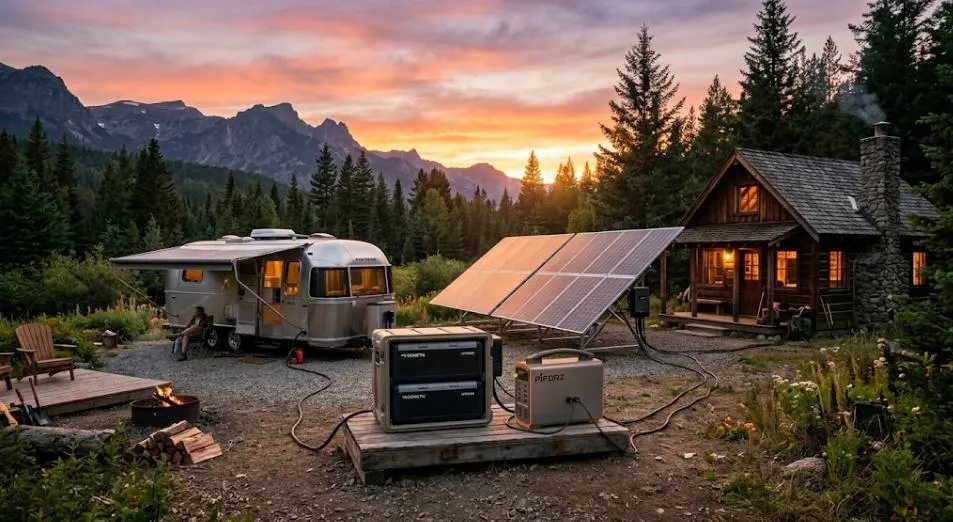
Off-grid inverters are designed for systems completely independent from the utility grid. They do not rely on grid electricity, do not participate in grid dispatch, and cannot sell excess power back to the grid. They are suitable for remote cabins, RV camping, communication towers, etc.
Grid-tied inverters rely entirely on the utility grid. If there is a power outage, they also shut down. They usually do not include batteries—solar power is either used immediately by household loads or sold entirely back to the grid.
Hybrid inverters combine grid-tie functionality with battery storage. They allow users to stay connected to the grid while also storing excess energy. A hybrid inverter prioritizes powering household loads first, stores the remaining energy in the battery, and sells the surplus to the grid for profit once the battery is full.
When choosing a solar inverter for home, compare grid-tied, hybrid and off-grid systems based on whether you need lower electricity bills, battery storage or backup power during an outage.
4. How Big of an Inverter Do You Need to Run a House?
To choose the right inverter system for your home, you must understand your total load and how long you need backup power. Typical household appliance power ratings are:
- Refrigerator: ~150–600W
- Microwave: 1000W+
- Air conditioner: 800–2000W
- Lighting & electronics: 50–300W
Because appliances also draw a peak load when starting, if you want to power all major appliances—including kitchen appliances and air conditioners—a system of 6000W or above is recommended.
However, inverter power alone is not enough. You must also consider battery capacity, which determines how long the system can sustain your loads. A properly sized system ensures stable output and adequate runtime.
5. Solar Panel With Battery Backup: Should You Add Solar?
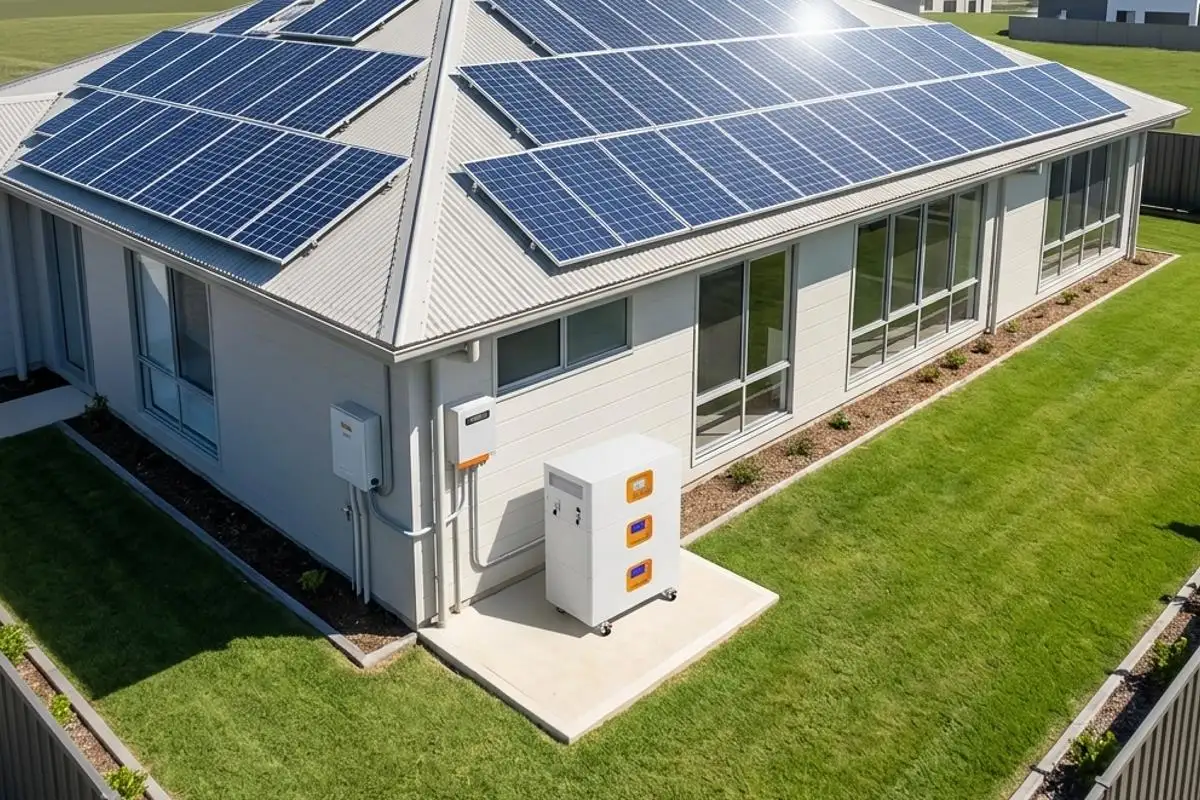
Adding solar panels to a house inverter with battery system can significantly improve energy efficiency and energy independence. Solar panels can directly power household appliances, while excess energy is stored in the battery for nighttime use.
This creates a solar power inverter for home—lowering electricity bills, improving power stability, and reducing environmental impact.
6. What You Should NOT Plug Into an Inverter
Not all appliances are suitable for inverter use, especially those with extremely high power consumption or large surge requirements. Avoid using: Large industrial equipment, High-power heating devices without load control, Air conditioners without soft-start protection, and Medical devices requiring hospital-grade stable power
If an inverter is overloaded, efficiency drops, and the system or connected appliances may be damaged. Always ensure the appliance’s power requirement is lower than the inverter’s rated output.
7. Recommended Home Backup Solutions
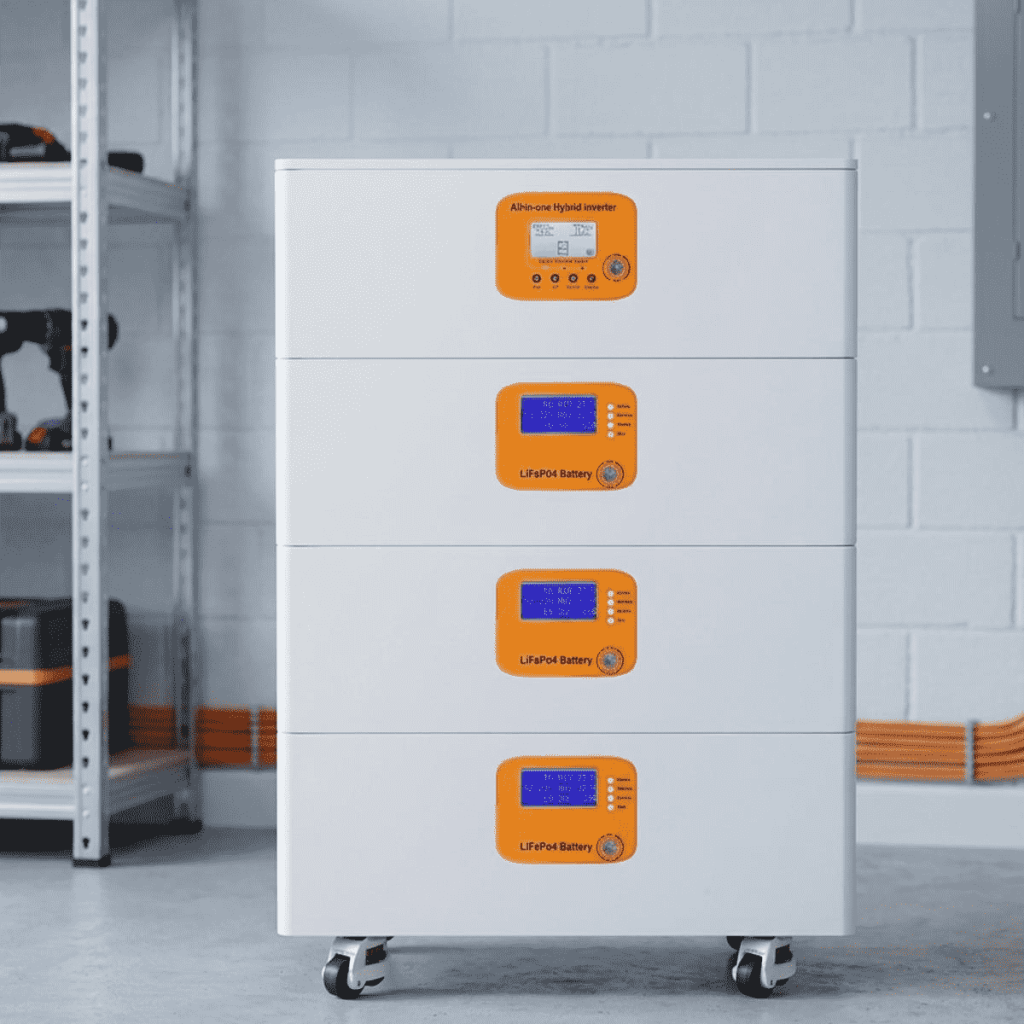
So how do we choose the right power inverter for house?
When selecting an inverter type, off-grid inverters are often a good choice for home backup systems because hybrid inverters require more complex permitting and installation. If you simply want a home backup power solution, an off-grid system is usually enough.
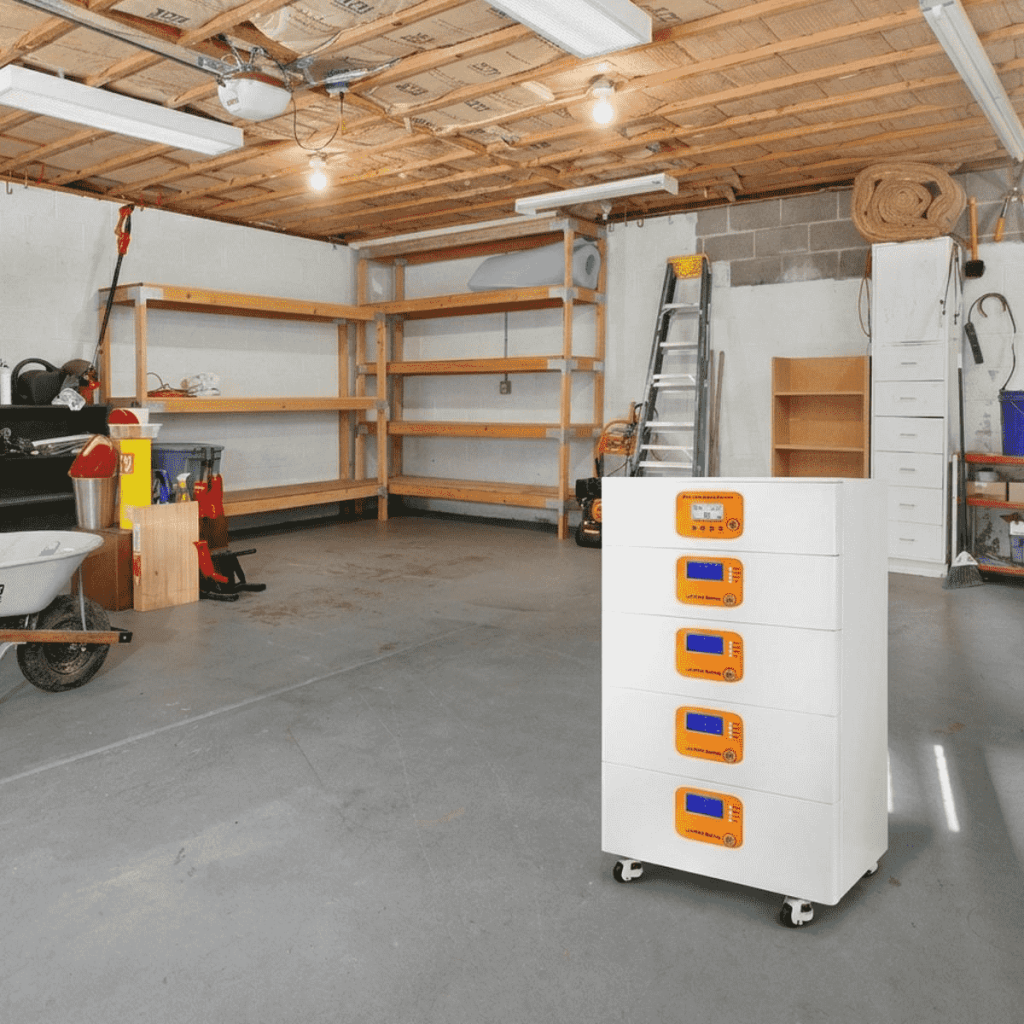
For whole-house power and all-day usage—including high-load appliances like air conditioners and water heaters—consider the Piforz Energy Storage Series stackable house inverter with battery. These systems offer 12KW rated inverter capacity, enough to power most households. You only need to select the appropriate battery capacity based on your total energy demand.
8. FAQ
Q: How long does a battery last in a home inverter system?
A: It mainly depends on battery capacity and load. In general, runtime can range from several hours to a full day for basic household loads.
Q: Can you run an inverter 24 hours a day?
A: Yes, an inverter can operate 24 hours a day. What truly matters is whether the battery capacity, load, and charging source can support continuous operation.