

After buying a portable power station, it’s natural to have questions or concerns about how it’ll hold up—especially when the weather takes a turn. In winter, you might worry about the cold draining its efficiency. In summer, the heat could leave you concerned about overheating or damage. To help you feel confident using your power station no matter the season, we’ve put together a guide on how these devices perform in cold, snowy, hot, and humid conditions. Plus, I will share some simple tips to keep you prepared and worry-free.
1. Why Does Weather Affect Portable Power Stations?
At the heart of every portable power station is its battery. High-quality brands use lithium batteries because of their stability and safety. But as we all know, batteries can be a little sensitive—they don’t love extreme cold or heat. So how exactly does weather affect performance, and can you still rely on your power station when temperatures spike or drop?
2. Cold Weather and Snow: Common Challenges for Power Stations
Cold temperatures are one of the biggest factors affecting lithium batteries—especially during winter camping, ski trips, or when you leave your power station in the car overnight.
2.1 How Low Temperatures Affect Battery Performance
In cold weather, the electrolyte inside the battery becomes more viscous, slowing down the movement of ions. This leads to reduced capacity and weaker discharge performance. In simple terms, your battery may not last as long, and devices will charge more slowly. Most batteries also activate “low-temperature protection” below 0°C to prevent long-term damage. For example, our piforz brand includes this feature to help extend the life of your device. But don’t worry—once the temperature warms up, your battery will return to normal.
2.2 Can You Leave a Portable Power Station in a Cold Car?
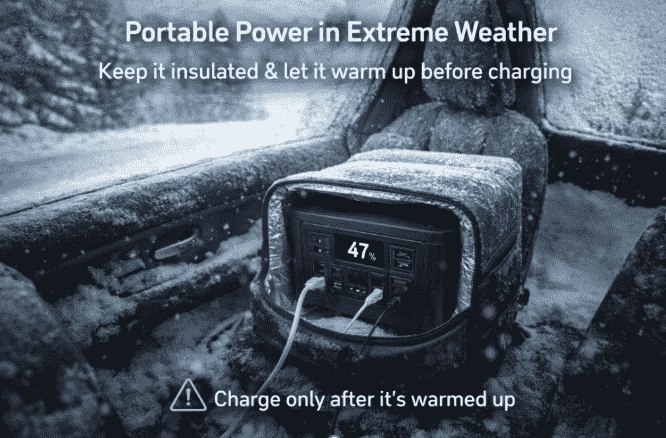
Yes, you can store it in a cold car, but you should only charge it when the temperature is at or above 0°C. Keep in mind that if it‘s sitting directly on the metal floor or chassis, it may get even colder than the air inside the car. A good tip is to wrap it in an insulating bag and let it warm up before charging.
2.3 Does snow affect solar charging for power stations?
This really depends. If heavy snow is blocking the sun, solar input will be minimal. But if it’s just a light dusting or the panels are clear, winter sun—combined with reflection off the snow—can actually give you a slight efficiency boost.
2.4 Best Practices for Using a Power Station in Winter
Now that we know how cold and snow affect performance, here’s how to use your power station wisely:
- Always warm it up before charging.
- During camping trips, try to avoid running it at over 80% load for long periods.
- If you’re using solar panels, tilt them at a steeper angle to prevent snow buildup.
3. Heat and High Temperatures: The Silent Threat
If cold weather makes batteries sluggish, heat makes them overactive—and that can cause permanent damage, not to mention safety risks.
3.1 What Happens to a Power Station in Extreme Heat?
High temperatures accelerate electrolyte breakdown, which shortens battery life. Internal heat can also trigger thermal protection, causing the unit to reduce output or shut down entirely. Over time, exposure to heat can even lead to battery swelling.
3.2 Will a power station work in 100-degree heat?
Yes, but with caution. Avoid running it at full load for long periods, and try not to power high-draw devices like coffee makers or electric kettles continuously. Also—never leave your power station inside a hot, closed car. Summer temps inside a vehicle can hit 140°F–160°F (60°C–70°C), which can seriously damage the battery.
3.3 Tips for Using a Power Station in Hot Weather
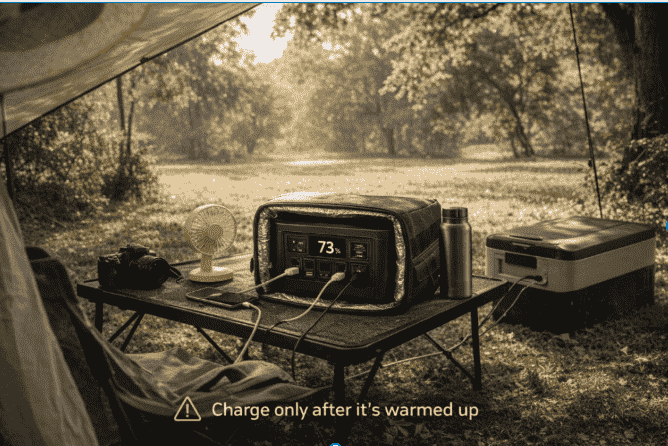
- Set it up in a shaded area like under a tarp or tree.
- Don’t leave it in a car trunk exposed to direct sunlight.
- If you need to run high-power devices, try to do it during cooler parts of the day, like early morning or late evening.
4. Rain, Humidity, and Storms: Water Resistance and Safety
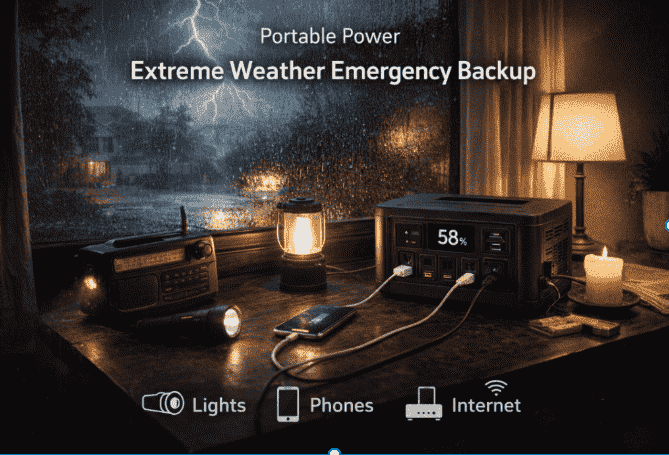
Portable power stations are not waterproof. If they get wet, especially around the ports, there’s a risk of short-circuiting. Humid conditions can also speed up corrosion on metal connectors. If you’re using your portable power station in the rain, make sure it’s under cover—like a waterproof box or umbrella—and avoid placing it directly on wet ground. When a storm is forecast, charge it up in advance and try to keep the load light during the storm. If you’re relying on it as a home backup, consider going with a larger capacity model like our PF2000.
5. Long-Term Storage and Temperature Maintenance
To extend the life of your portable power station, proper storage matters:
- Keep the charge level between 30% and 60%—this reduces internal stress and helps preserve battery health.
- Recharge it every three months to prevent the charge from dropping to 0%, which can lead to deep discharge and make the battery unusable.
- Avoid storing it in damp places or areas with major temperature swings.
- Don’t leave it in your car year-round, and keep it away from heaters or open flames.
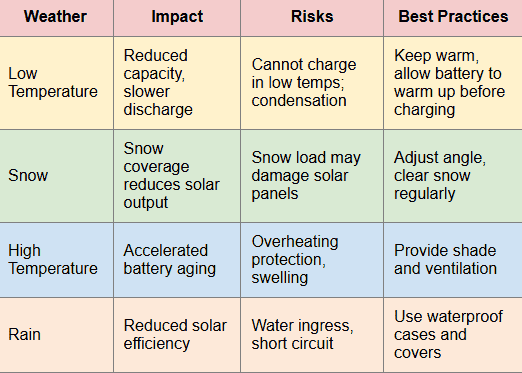
6. Performance Comparison Across Weather Conditions
7.Final Thoughts: Choose a Portable Power Station That Can Handle the Elements
If you live in an area with unpredictable weather or love spending time outdoors, choosing a power station that’s built to adapt is key. That’s why we recommend going with a model designed for real-world conditions. Our piforz lineup is engineered for environmental resilience—all models support discharge from -10°C to 40°C and charge from 0°C to 40°C. In comparison, brands like OUKITEL typically only operate between 0°C and 40°C. Take the PF1500, for example: it delivers 1500W of output power with over 1200Wh of capacity—enough to run phones, laptops, mini fridges, coffee makers, and other mid-range appliances. Whether it’s cold starts, winter use, or summer heat, it’s a solid all-around choice.
By understanding how weather affects your battery and following best practices, you can use your portable power station safely and reliably all year long.
8. FAQ
1. Can a portable power station freeze?
Yes, in extremely low temperatures—especially below -20°C to -30°C—the electrolyte can become so thick it nearly freezes, preventing normal discharge. In cold weather, store it in an insulated bag and let it warm up before charging.
2. Can I leave my portable power station plugged in all the time?
You can, but it’s not ideal. Lithium batteries don’t love being stored at full charge—it accelerates capacity loss and aging over time. Constantly trickle-charging from 99% back to 100% can also slowly wear down the battery. For best results, unplug it once fully charged if you’re not using it for a while.
3. How do you keep a battery warm in winter camping?
We can keep the battery or portable power station warm by placing it in an insulated cooler or sleeping bag. But if you’re bringing it inside from the cold, it’s best to let it sit in a slightly cooler space first, or wrap it in a dry towel before moving it to a warmer area—this helps prevent condensation from forming inside the unit.