Introduction
By 2026, the portable power market has changed a lot. Both portable power stations and power banks now come in many different models, each designed for different types of users and situations. Instead of throwing a long list of specs at you, this guide focuses on real-world needs and helps you quickly figure out which power solution actually makes sense for you.
What Is a Portable Power Station, and What Is a Power Bank?
Before choosing one, it helps to clearly understand what each product is.
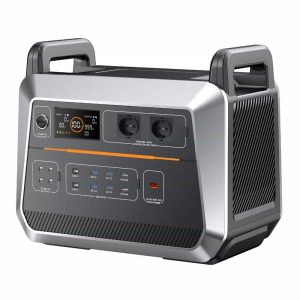
A portable power station is essentially a large-capacity battery system. What makes it different is that it includes an inverter and multiple types of output ports, allowing it to deliver stored power to several devices at the same time — including AC-powered equipment.
A power bank, by contrast, is a small, portable battery designed mainly for charging personal electronics. It usually has fewer output options and relies mostly on USB ports to power devices like phones and tablets.
In simple terms, a portable power station is a portable power system, while a power bank is more like a backup battery for your phone.
Key Differences Between Portable Power Stations and Power Banks
Different Functions
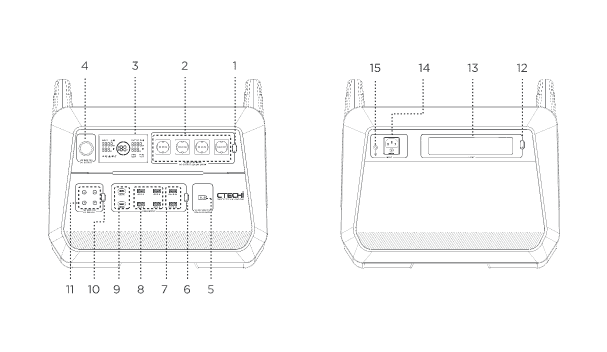
Portable power stations are built to provide stable, continuous power when there’s no reliable wall outlet available. One major advantage is the variety of ports they offer, such as AC outlets, USB ports, grounding outlets, and car sockets. Because of this, power stations can support a much wider range of devices than power banks.
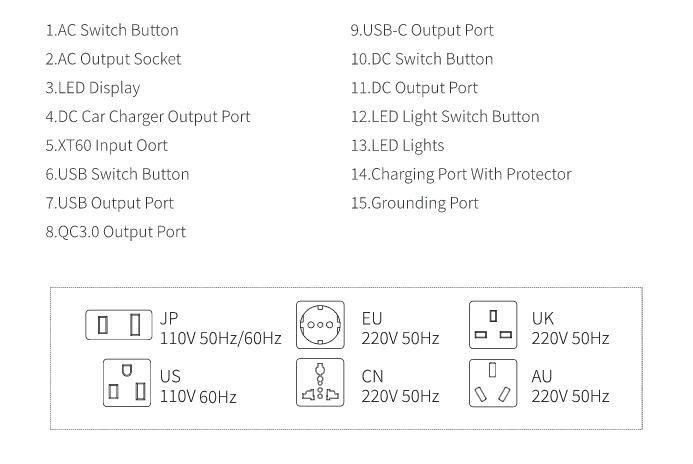
Imagine you’re camping outdoors and want to make a cup of coffee with a coffee maker. A power bank simply isn’t designed for that. It can’t supply AC power, handle high wattage, or provide the right type of outlet. This is where a portable power station really shines. It can easily and reliably power devices like coffee makers, electric kettles, and even small refrigerators at the same time.
Different Target Users
Portable power stations are best suited for people who need electricity for longer periods or during emergencies. This includes campers, RV travelers, outdoor photographers, and households preparing for power outages. These users usually have higher power demands and more devices to charge, making power stations a better fit than power banks.
Power banks, on the other hand, are better for people moving around the city for short periods. Their power needs are smaller, charging is less frequent, and portability matters more.
Different Capacities
On today’s market, portable power stations typically come in capacities like 200Wh, 300Wh, 500Wh, 1500Wh, and 2000Wh. Power banks usually range from about 10,000mAh to 30,000mAh. The difference in stored energy is significant, and it directly affects what each device can power.
Different Charging Options
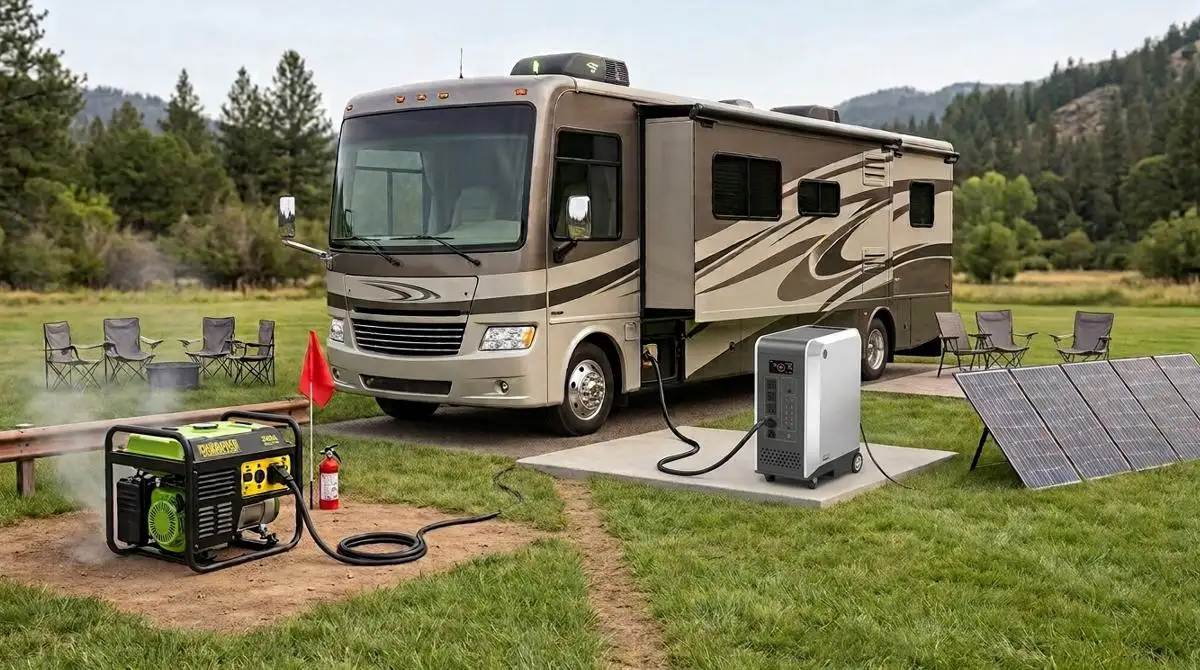
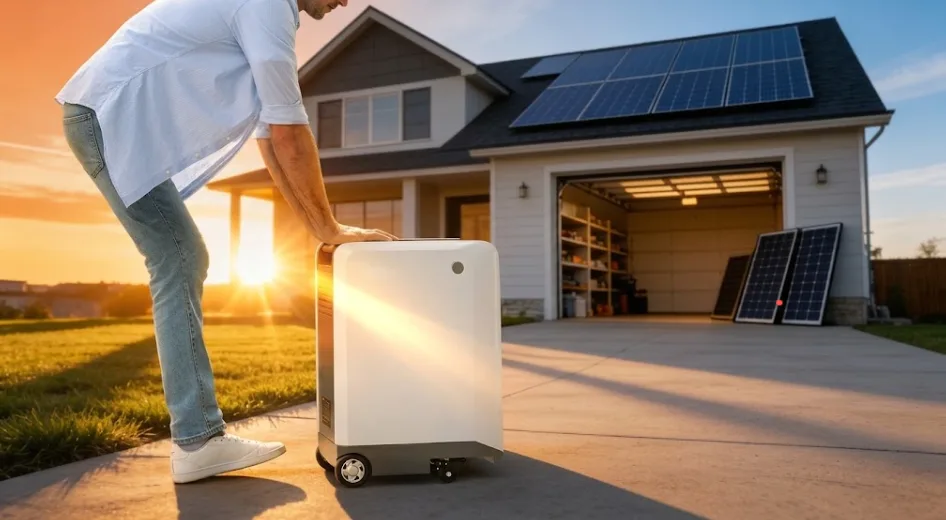
Portable power stations can be charged not only from wall outlets, but also from car chargers and solar panels. This is especially useful for camping. During the day, you can set up solar panels to recharge the power station while still using it. By nightfall, the energy collected during the day is often enough to support a comfortable outdoor experience.
Power banks rely much more heavily on wall charging, and only a small number of models support advanced fast-charging protocols.
Different Price Points
Because portable power stations use larger batteries, more complex designs, higher-quality materials, advanced power management systems, and multiple output ports, they are generally much more expensive than power banks.
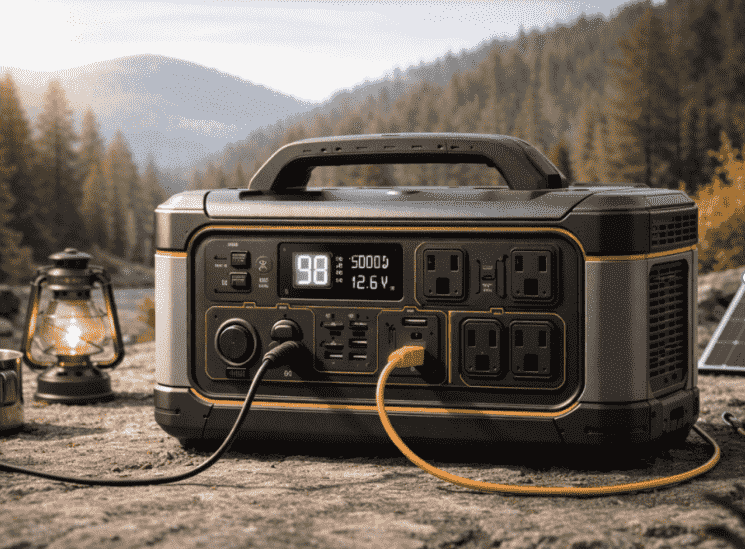
Which Portable Power Station Has the Best Performance?
The following comparison looks at several portable power stations based purely on specifications. It focuses on AC output capability, port configuration, and charging input power.
The ranking is based only on hardware performance, without considering specific use cases or user needs. The goal is to provide a clear and objective performance comparison.
| Ranking & Model | Key Technical Specifications (Objective Comparison) |
| CTECHi ST2000 | Battery capacity of approximately 2000Wh, highest AC inverter output in the lineup, advanced battery management system, widest range of output ports, and strongest AC / solar charging capability among all compared models. |
| CTECHi GT1500 | Large 1500Wh battery capacity, high-power pure sine wave inverter, significantly stronger AC output than mid-range models, and robust charging input performance with multiple output interfaces. |
| CTECHi GT500 | Mid-level capacity around 500Wh, balanced AC output power, full basic power station architecture including AC, USB, and DC outputs, representing a complete but moderate hardware configuration. |
| CTECHi GT300 | Approximately 300Wh capacity, limited AC inverter output, fewer ports and lower charging input compared to higher-tier models, positioned as an entry-level power station in terms of specifications. |
| CTECHi GT200 | Smallest battery capacity in the group, lowest AC output power, minimal port selection and basic charging capability, representing the baseline hardware configuration of the series. |
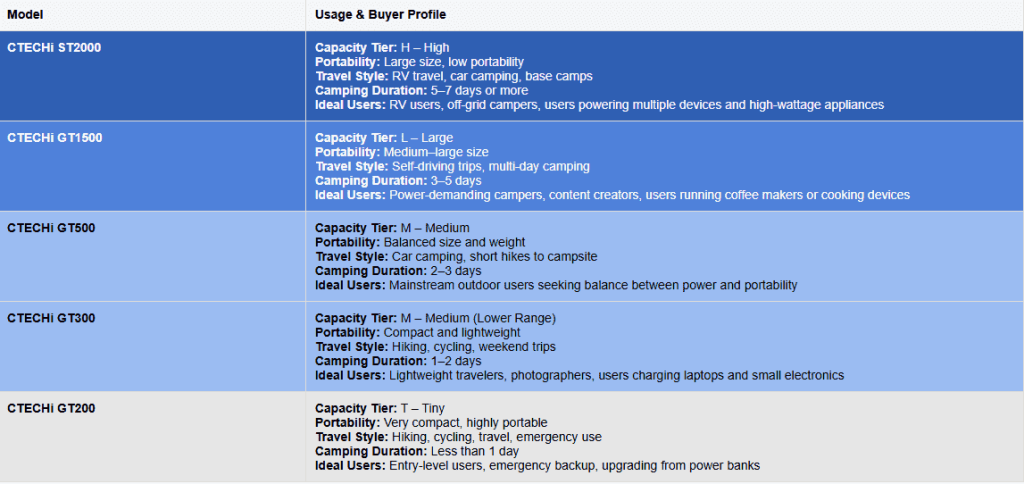
Which Portable Power Station Should You Buy?
After reviewing the ranking above, you probably already have a general idea of which model fits your needs. If you’re still unsure, the key is to look at power station size, capacity, and how you plan to travel.
If your power needs are high and you mainly travel by RV, a large-capacity power station is the best choice. If your needs are more limited, a smaller model can easily get the job done. This way, you meet your power requirements without overspending or paying for performance you don’t actually need. In the end, everything should be based on your real usage.
Which Power Bank Is the Best Choice?
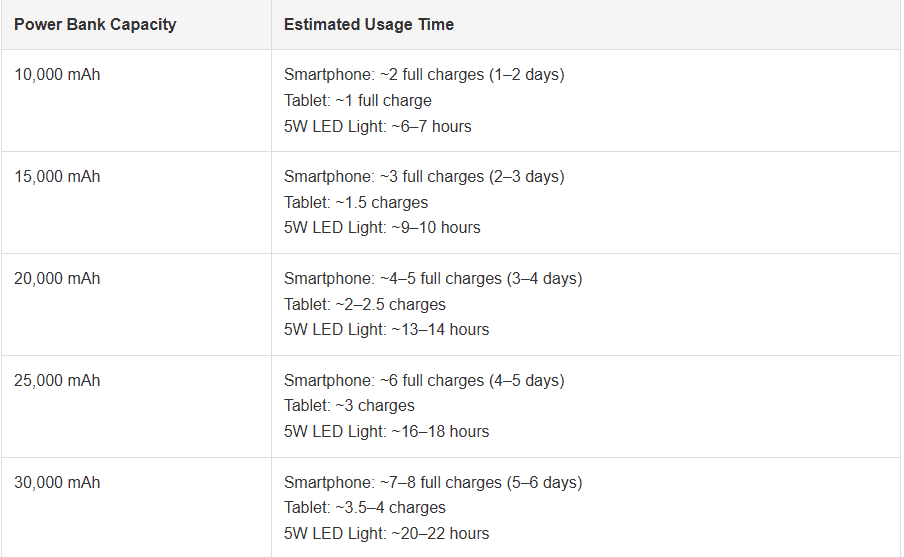
The table below compares five power banks based on how long they can power smartphones, tablets, and LED lights.
Which Power Bank Should You Buy?
Here are some recommendations based on different usage scenarios. You can narrow down your choice by matching them to your own needs.
| Light Daily Use | For everyday outings, a smaller power bank (around 10,000Wh) is a practical choice. It’s compact, easy to carry, and usually provides one to two full smartphone charges—perfect for quick top-ups when you’re running low on battery. |
| Moderate Use / Travel | A mid-range power bank (around 15,000Wh–20,000Wh) is a solid option. It offers enough capacity for several full phone charges and can also recharge a tablet a few times. This makes it well-suited for travel, long days out, or heavy phone use. |
| Heavy Use / Multiple Devices | A larger-capacity power bank (around 20,000Wh or more) is better for charging multiple devices, such as a phone and a tablet, without needing to recharge the power bank too often. It’s a good choice when access to power outlets is limited or when you need to keep several devices running. |
| Always On the Go / Multiple Full Charges | For longer trips, such as long flights or full days without access to charging, a very high-capacity power bank can be a good option. Models with fast charging and multiple ports offer more flexibility, though they tend to be heavier. In return, they can recharge your devices many times over. |
| Special Cases (e.g., laptop support) | When charging laptops or other high-wattage devices, it’s important to choose a power bank that supports high-power USB-C PD output (such as 45W–100W). Even with a large capacity, sufficient output power is necessary to ensure fast and reliable charging compatibility. |
Do Portable Power Stations Cause Battery Anxiety?
Honestly, based on real-world experience, portable power stations create much less battery anxiety than power banks.
During camping or travel, users can recharge power stations with solar panels, which greatly reduces the fear of running out of power. This is a clear advantage over power banks in outdoor settings.
That said, portable power stations aren’t unlimited energy sources. If you completely ignore power usage or fail to recharge when conditions allow, even a large-capacity power station can run out of power. No matter how big the battery is, it’s still a finite energy system.
In short, portable power stations don’t eliminate battery anxiety — they significantly reduce the chances of it happening. With a basic understanding of your power needs and smart use of solar charging, power stations tend to be more reliable than power banks and offer an experience closer to stable, everyday electricity.
Final Recommendation
In 2026, if you’re planning to buy a power solution, the best approach is to clearly understand your own needs first. That’s the key to getting the best value for your money.
As a simple rule of thumb:
If you camp often, choose a solar-compatible portable power station.
If you mainly move around the city, a power bank is the better choice.
FAQ
Q1: What factors should I consider when choosing a portable power station?
Q2: Can high-capacity power banks replace portable power stations?
Q3: Is solar charging important when choosing a portable power station in 2026?
Q4: What output ports should a modern portable power station have?
Q5: Does a larger power capacity always mean a better choice?