
As technology advances and our reliance on electricity increases, portable power stations have quickly become a must-have tool for outdoor use, emergency backup, and everyday convenience. Yet, when shopping for one, many buyers are often confused by complicated technical terms—making it difficult to know which model truly fits their needs.
If you want to clear up these questions and gain a better sense of direction before making a purchase, let’s dive into this guide together.
How to Identify Your Power Needs Before Choosing a Portable Power Station
Before choosing a portable power station, we must first clarify our purpose for purchasing it. Are we buying it to power specific devices—such as phones, tablets, cameras, and other low-power electronics—or do we need it to handle higher-power appliances like projectors, coffee makers, and mini-fridges? Secondly, we should establish a timeframe for how long we intend to use the portable power station, as its capacity is finite.So how do we interpret the power and capacity of the portable power station mentioned above?
Key Features to Look For in a Portable Power Station
Battery Capacity (Wh)
Battery capacity, measured in watt-hours (Wh), essentially tells you how much energy a power station can store—similar to how the size of a cup determines how much water it can hold. You can estimate the capacity you need with a simple formula:
Device wattage × hours of use = required Wh
For example, if you have a 60W fan and want to run it for 8 hours:
60W × 8h = 480Wh
In real-world use, it’s best to reserve an additional 20–30% capacity, because you may be powering more than one device and the battery will naturally lose some energy during conversion.
Although a higher-capacity battery will generally last longer under the same conditions, the actual runtime also depends on your device’s power draw. You can calculate it with:
Runtime = Battery Capacity (Wh) ÷ Device Power (W)
Keep in mind that device wattage determines what the power station can handle. For example, a 1500Wh portable power station with a rated output of 500W can run a 60W mini fridge overnight, but it cannot power a 1000W induction cooker because the device exceeds the station’s rated output.
Output Power (Rated & Peak Wattage)
The output power of a portable power station is typically divided into two parts: rated power and peak power.
Rated power refers to the amount of power the station can deliver continuously and safely.
Peak power (or surge power) refers to the higher burst of electricity required when certain devices first start up.
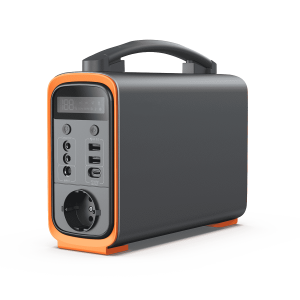
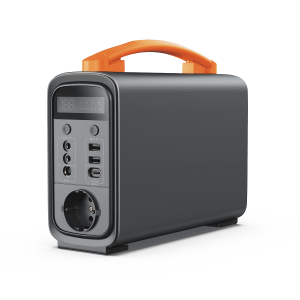
When choosing a portable power station, always make sure the device’s wattage is lower than the station’s rated power, otherwise it will not operate properly. For example, if the GT500 has a rated output of 500W, it can only power devices with a rated wattage below 500W.
Output Ports
Most portable power stations come with a variety of output ports. Common port types include USB-A port,Type-C port,Cigarette Lighter port,DC port.When choosing a power station, make sure the ports match the charging requirements of the devices you plan to power.
Charging Options
Portable power stations also offer multiple charging methods, which are usually listed in the product specifications and user manual. Common options include AC Charging,
Car Outlet Charging and Solar Panel Charging,Each charging method supports different input currents, so always refer to the user manual for exact details. In most cases, the recommended charging temperature for a portable power station is 0°C to 40°C.
Battery Type
Portable power stations typically use one of two battery types: NCM or LiFePO4.
NCM batteries (Nickel–Cobalt–Manganese) are lighter and more compact, but they offer lower safety and shorter cycle life.
In contrast, LiFePO4 batteries provide significantly higher safety, a longer lifespan (3,000+ cycles), and superior thermal and chemical stability.
Because of these advantages, more and more brands have started switching to LiFePO4 batteries for their portable power stations — including our brand, Piforz.
Buying Guide: How to Choose the Right Power Station for Your Scenario
Camping/Hiking
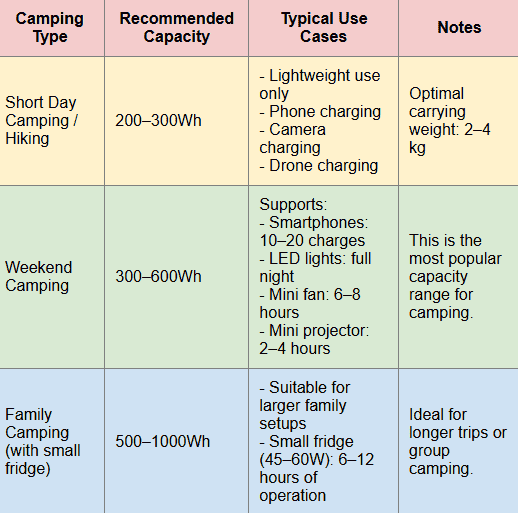
With the fast pace of modern life, many people are experiencing increasing stress. Camping and hiking have become popular ways to escape daily routines and reconnect with nature. In these scenarios, consumers often consider several factors when choosing a portable power station. I’ve summarized the key questions they usually ask, and you can refer to the chart below for guidance
RV / Van Life
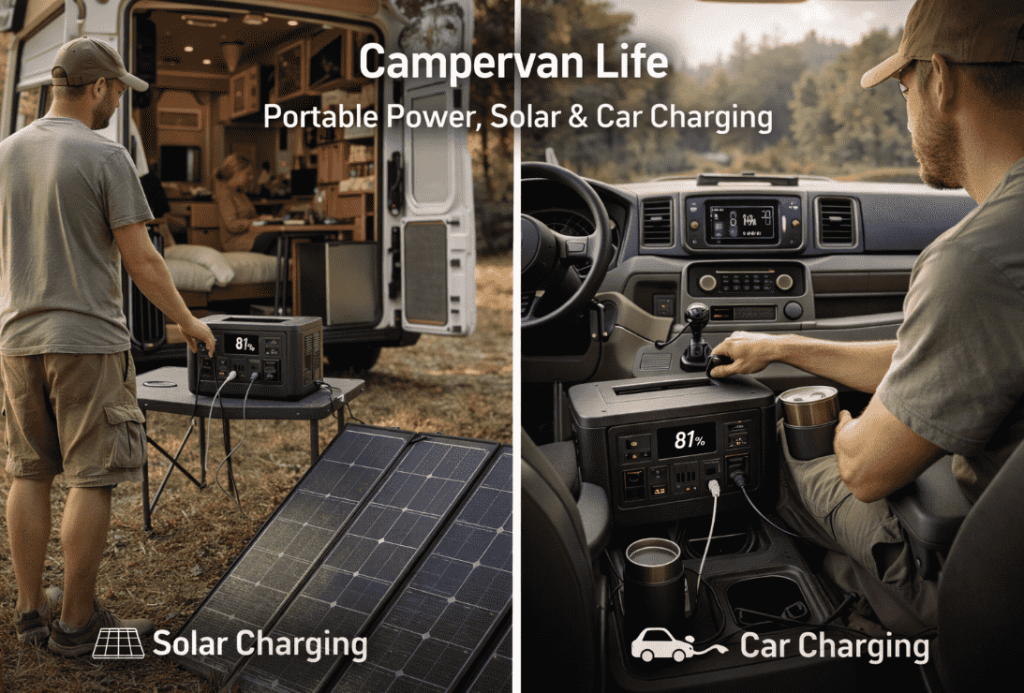
RV and van life are becoming increasingly popular ways for people to travel or even live full-time. In these situations, portable power stations must support solar charging and be compatible with car charging to meet daily power needs on the road. The ST2000 is a good example, as it meets all of these requirements and also offers a large battery capacity.
Home Backup
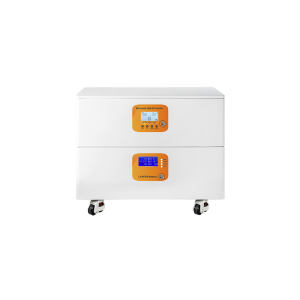
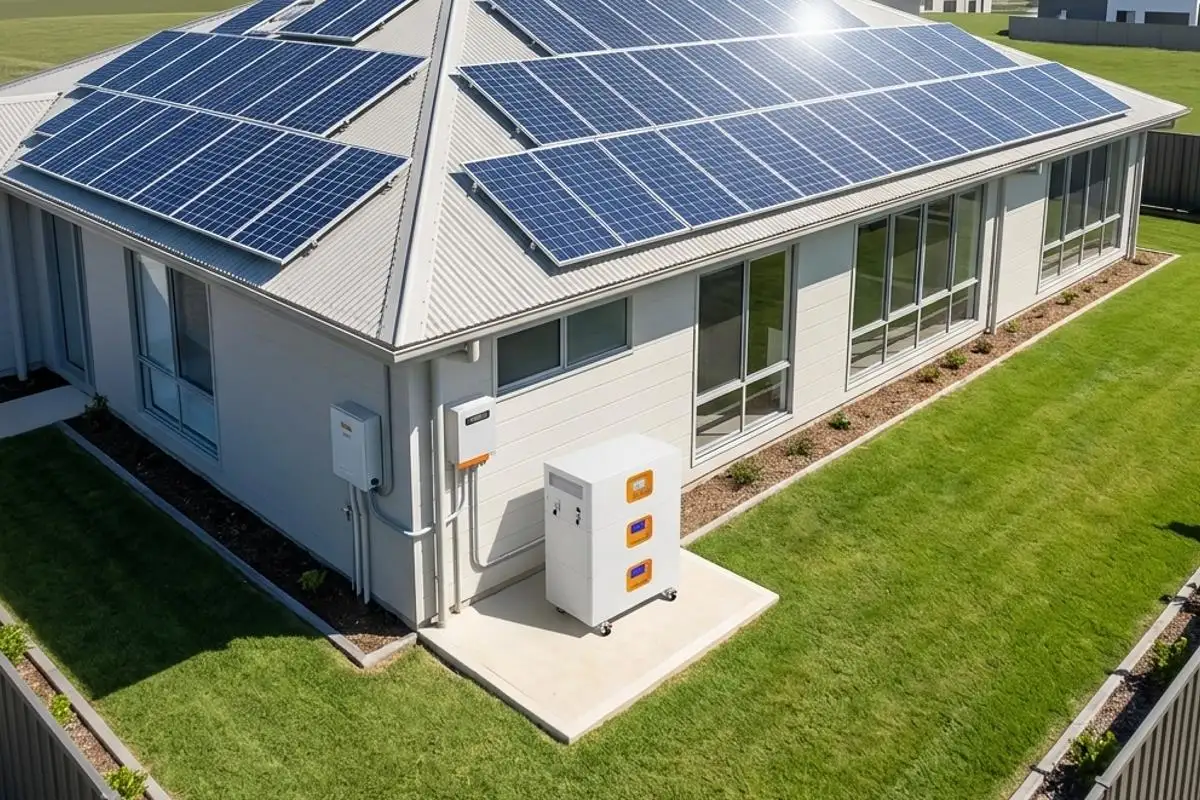
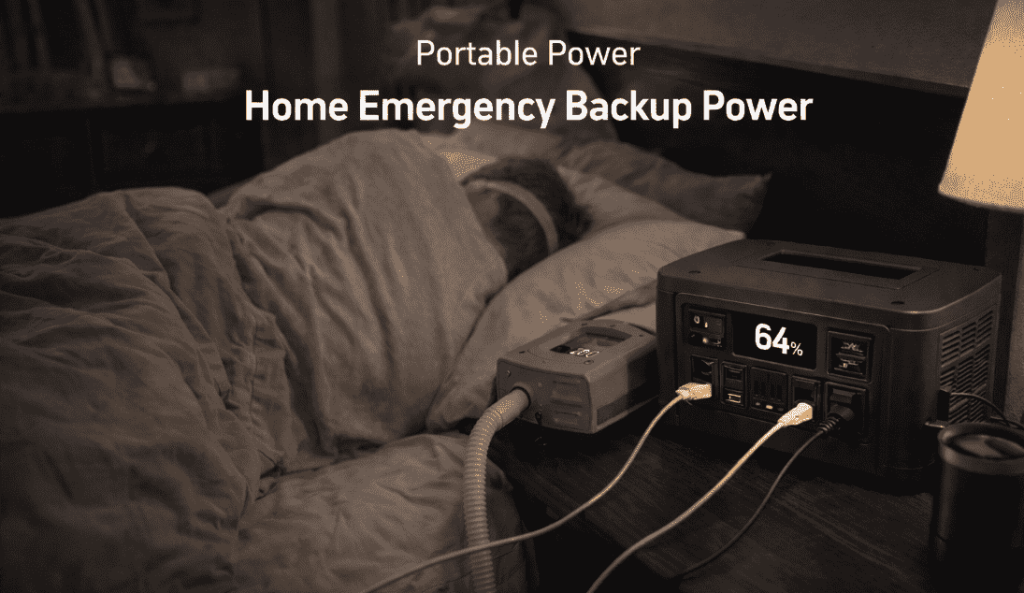
When choosing a portable power station for home backup, the most important factor is having a high rated output, so it can support essential household devices such as refrigerators, fans, and CPAP machines. A CPAP, in particular, must remain powered during outages, which means a larger battery capacity is strongly recommended.
Power stations with 1500Wh or above are generally more suitable. For example, a 40W CPAP (without a humidifier) can run on a 1500Wh portable power station for approximately:1500 × 0.85 ÷ 40 ≈ 31 hours (The 15% represents normal energy loss during conversion.)
Essential Safety Features in a Portable Power Station
BMS (Battery Management System)
The BMS (Battery Management System) plays a crucial role in a portable power station. It functions like the “brain” of the battery, protecting it whenever conditions become unsafe — such as during overcharging, over-discharging, or unfavorable temperature levels. A high-quality BMS is essential for ensuring the safety and reliability of a portable power station.
Certifications
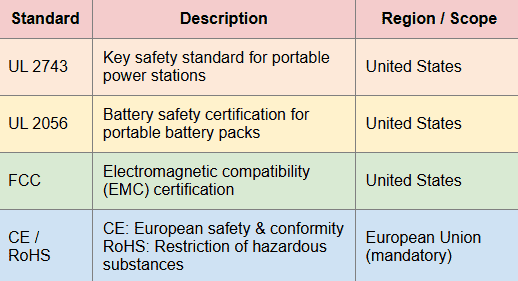
When it comes to safety, the simplest way to evaluate a portable power station is to check whether it meets recognized industry standards. Common authoritative certifications include:
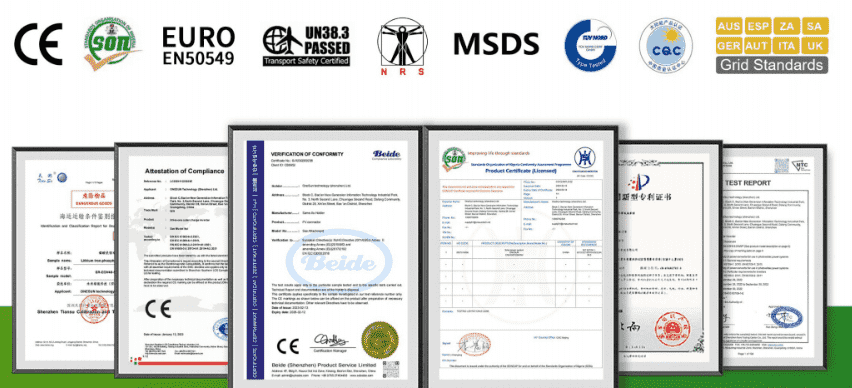
Our brand Piforz holds authoritative certifications, ensuring safety, reliability, and trustworthiness.
Conclusion
I believe that after reading this article, you now have a clearer understanding of the basic technical terms related to portable power stations and how to choose the right model for different scenarios. With this knowledge, you can confidently select a power station that fits your needs.
Thank you for reading, and I hope this guide helps you make a better decision when choosing a portable power station.
FAQ
What should I look for in a portable power station?
When purchasing a portable power station, start by identifying the devices you need to power so you can determine the required capacity. Next, check whether the available output and input ports match the types and quantities you need. Finally, make sure the power station is high-quality and comes with all the necessary safety certifications.
How to select the right size portable power station for your needs?
First, determine the rated power of the devices you plan to use. You must choose a portable power station with a rated output higher than your device’s wattage. Then, estimate how long you need to run those devices. With these two factors—power requirement and runtime—you can determine the appropriate size of portable power station for your needs.
What Determines the Battery Lifespan of a Portable Power Station?
The first factor is the battery type and its internal chemical structure. Another key factor is the depth of discharge: if you frequently drain a battery from 100% down to 0%, its lifespan will shorten significantly. Temperature also plays a major role — extreme heat or cold can negatively affect the battery’s overall longevity.