
Research, Development & Quality Assurance
From battery cells to battery packs, we define safety and performance by international standards.
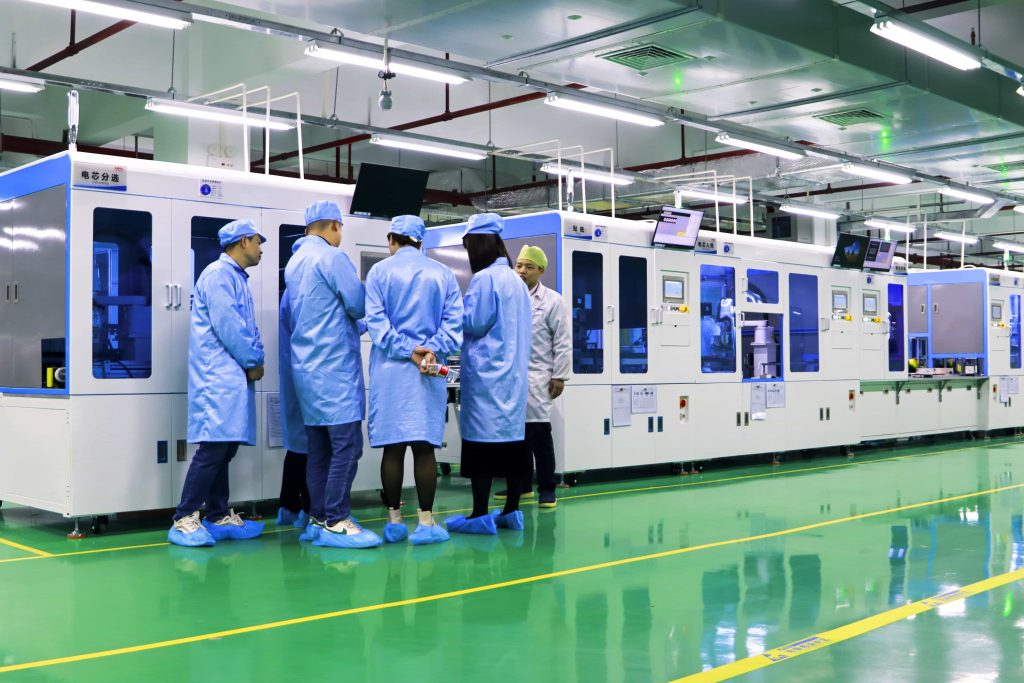
Our R&D Team
Expert Engineer
We have over 300 engineers with extensive expertise in energy storage, battery technology, and battery management systems, ensuring that we remain at the forefront of innovation.
Technology-Driven, Security-Centric
We fully recognize that the core of any energy storage system lies in its reliability and safety. Therefore, prior to leaving our facility, every product must successfully pass our proprietary “3-2-1” comprehensive testing protocol. From individual cell screening to complete battery pack integration, we simulate extreme conditions encountered in real-world scenarios to ensure that our products operate stably across diverse global climates and operating environments.
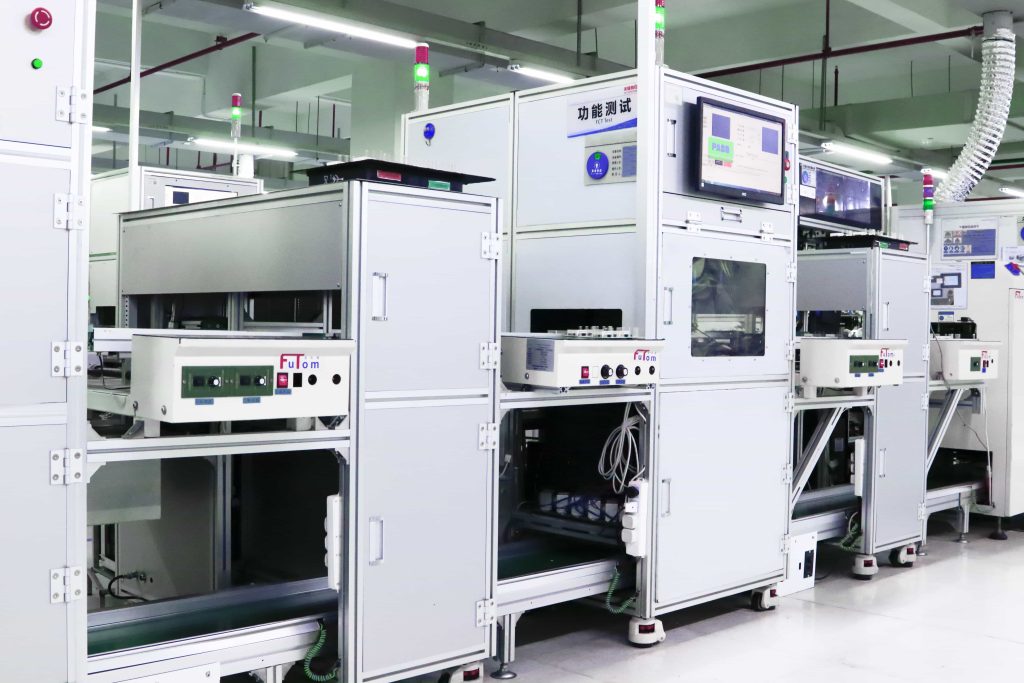
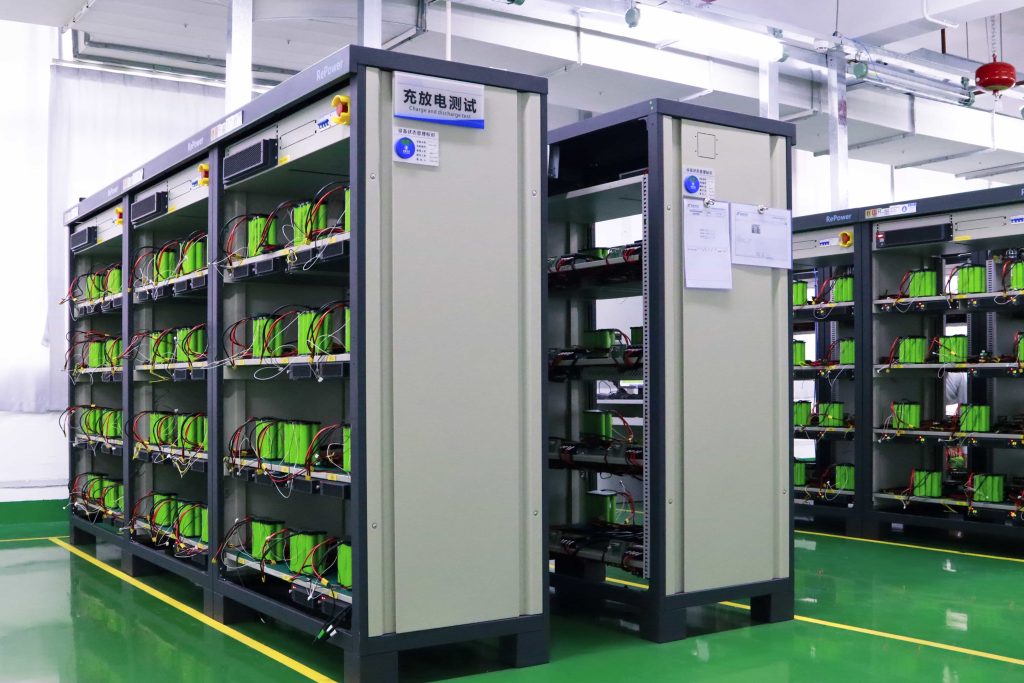
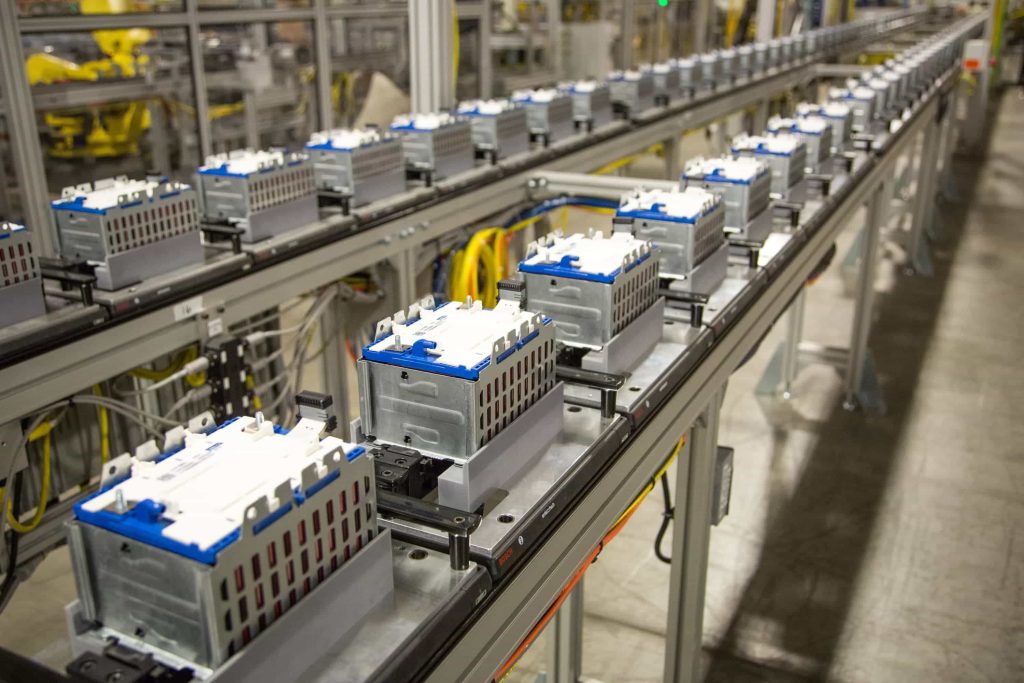
8 Critical Tests for LiFePO4 Battery Modules
From First Cycle to End of Life — Validating Safety at Every Stage
Rigorously Tested to Ensure Zero Compromise on Protection
Altitude simulation
Test cells and batteries shall be stored at a pressure of 11.6 kPa or less for at least six hours at ambient temperature
(20 ± 5 °C).
Cells and batteries meet this requirement if there is no leakage, no venting, no disassembly, no rupture and no fire
and if the open circuit voltage of each test cell or battery after testing is not less than 90 % of its voltage immediately prior
to this procedure. The requirement relating to voltage is not applicable to test cells and batteries at fully discharged
states.
Thermal test
Test cells and batteries are to be stored for at least six hours at a test temperature equal to 72 ± 2 °C, followed by
storage for at least six hours at a test temperature equal to – 40 ± 2 °C. The maximum time interval between test
temperature extremes is 30 minutes. This procedure is to be repeated until 10 total cycles are complete, after which all
test cells and batteries are to be stored for 24 hours at ambient temperature (20 ± 5 °C). For large cells and batteries the
duration of exposure to the test temperature extremes should be at least 12 hours.
Cells and batteries meet this requirement if there is no leakage, no venting, no disassembly, no rupture and no fire
and if the open circuit voltage of each test cell or battery after testing is not less than 90 % of its voltage immediately prior to this procedure. The requirement relating to voltage is not applicable to test cells and batteries at fully discharged
states.
Vibration
Cells and batteries are firmly secured to the platform of the vibration machine without distorting the cells in such a
manner as to faithfully transmit the vibration. The vibration shall be a sinusoidal waveform with a logarithmic sweep
between 7 Hz and 200 Hz and back to 7 Hz traversed in 15 minutes. This cycle shall be repeated 12 times for a total of 3
hours for each of three mutually perpendicular mounting positions of the cell. One of the directions of vibration must be
perpendicular to the terminal face.
The logarithmic frequency sweep shall differ for cells and batteries with a gross mass of not more than 12 kg (cells
and small batteries), and for batteries with a gross mass of more than 12 kg (large batteries).
For cells and small batteries: from 7 Hz a peak acceleration of 1 gn is maintained until 18 Hz is reached. The
amplitude is then maintained at 0.8 mm (1.6 mm total excursion) and the frequency increased until a peak acceleration of
8 gn occurs (approximately 50 Hz). A peak acceleration of 8 gn is then maintained until the frequency is increased to 200
Hz.
For large batteries: from 7 Hz to a peak acceleration of 1 gn is maintained until 18 Hz is reached. The amplitude is
then maintained at 0.8 mm (1.6 mm total excursion) and the frequency increased until a peak acceleration of 2 gn occurs
(approximately 25 Hz). A peak acceleration of 2 gn is then maintained until the frequency is increased to 200 Hz.
Cells and batteries meet this requirement if there is no leakage, no venting, no disassembly, no rupture and no fire
during the test and after the test and if the open circuit voltage of each test cell or battery directly after testing in its third
perpendicular mounting position is not less than 90 % of its voltage immediately prior to this procedure. The requirement
relating to voltage is not applicable to test cells and batteries at fully discharged states.
Shock
Test cells and batteries shall be secured to the testing machine by means of a rigid mount which will support all
mounting surfaces of each test battery.
Each cell shall be subjected to a half-sine shock of peak acceleration of 150 gn and pulse duration of 6 milliseconds.
Alternatively, large cells may be subjected to a half-sine shock of peak acceleration of 50 gn and pulse duration of
11 milliseconds.
Each battery shall be subjected to a half-sine shock of peak acceleration depending on the mass of the battery.
The pulse duration shall be 6 milliseconds for small batteries and 11 milliseconds for large batteries. The formulas below
are provided to calculate the appropriate minimum peak accelerations.
Each cell or battery shall be subjected to three shocks in the positive direction and to three shocks in the negative
direction in each of three mutually perpendicular mounting positions of the cell or battery for a total of 18 shocks.
Cells and batteries meet this requirement if there is no leakage, no venting, no disassembly, no rupture and no fire
during the test and after the test and if the open circuit voltage of each test cell or battery directly after testing in its third
perpendicular mounting position is not less than 90% of its voltage immediately prior to this procedure.
External short circuit
The cell or battery to be tested shall be heated for a period of time necessary to reach a homogeneous stabilized
temperature of 57 ± 4 °C, measured on the external case. This period of time depends on the size and design of the cell or
battery and should be assessed and documented. If this assessment is not feasible, the exposure time shall be at least 6
hours for small cells and small batteries, and 12 hours for large cells and large batteries. Then the cell or battery at 57 ±
4 °C shall be subjected to one short circuit condition with a total external resistance of less than 0.1 ohm.
This short circuit condition is continued for at least one hour after the cell or battery external case temperature has
returned to(57±4)°C, or in the case of the large batteries, has decreased by half of the maximum temperature increase
observed during the test and remains below that value.
The short circuit and cooling down phases shall be conducted at least at ambient temperature.
Cells and batteries meet this requirement if their external temperature does not exceed 170 °C and there is no
disassembly, no rupture and no fire during the test and within six hours after the test.
Impact / Crush
The test sample cell or component cell is to be placed on a flat smooth surface. A 15.8 mm ± 0.1 mm diameter, at least
6 cm long, or the longest dimension of the cell, whichever is greater, Type 316 stainless steel bar is to be placed across the
centre of the sample. A 9.1 kg ± 0.1kg mass is to be dropped from a height of 61 ± 2.5 cm at the intersection of the bar and
sample in a controlled manner using a near frictionless, vertical sliding track or channel with minimal drag on the falling
mass. The vertical track or channel used to guide the falling mass shall be oriented 90 degrees from the horizontal
supporting surface.
The test sample is to be impacted with its longitudinal axis parallel to the flat surface and perpendicular to the
longitudinal axis of the 15.8 mm ± 0.1 mm diameter curved surface lying across the centre of the test sample. Each sample
is to be subjected to only a single impact.
Overcharge
The charge current shall be twice the manufacturer’s recommended maximum continuous charge current. The
minimum voltage of the test shall be as follows:
(a) when the manufacturer’s recommended charge voltage is not more than 18 V, the minimum voltage of the test shall
be the lesser of two times the maximum charge voltage of the battery or 22 V.
(b) when the manufacturer’s recommended charge voltage is more than 18 V, the minimum voltage of the test shall be
1.2 times the maximum charge voltage.
Tests are to be conducted at ambient temperature. The duration of the test shall be 24 hours.
Rechargeable batteries meet this requirement if there is no disassembly and no fire during the test and within seven
days after the test.
Forced discharge
Each cell shall be forced discharged at ambient temperature by connecting it in series with a 12V D.C. power supply at
an initial current equal to the maximum discharge current specified by the manufacturer.
The specified discharge current is to be obtained by connecting a resistive load of the appropriate size and rating in
series with the test cell. Each cell shall be forced discharged for a time interval (in hours) equal to its rated capacity divided
by the initial test current (in ampere).
Primary or rechargeable cells meet this requirement if there is no disassembly and no fire during the test and within
seven days after the test.