When I first got into this industry, I only knew the English term “portable power station.” As for “generator,” I later came across “solar power generator” and initially thought it referred to a fuel generator that could be used with solar panels. It was only after reading many articles that I realized – that doesn’t seem to be what this term means.
What is a solar generator?
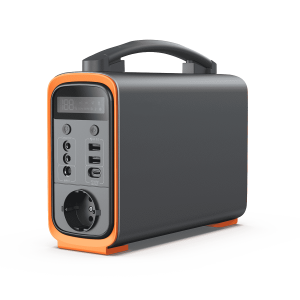
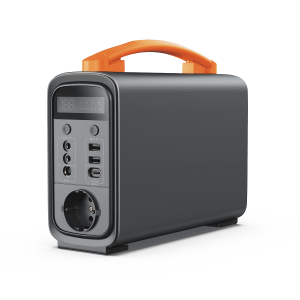
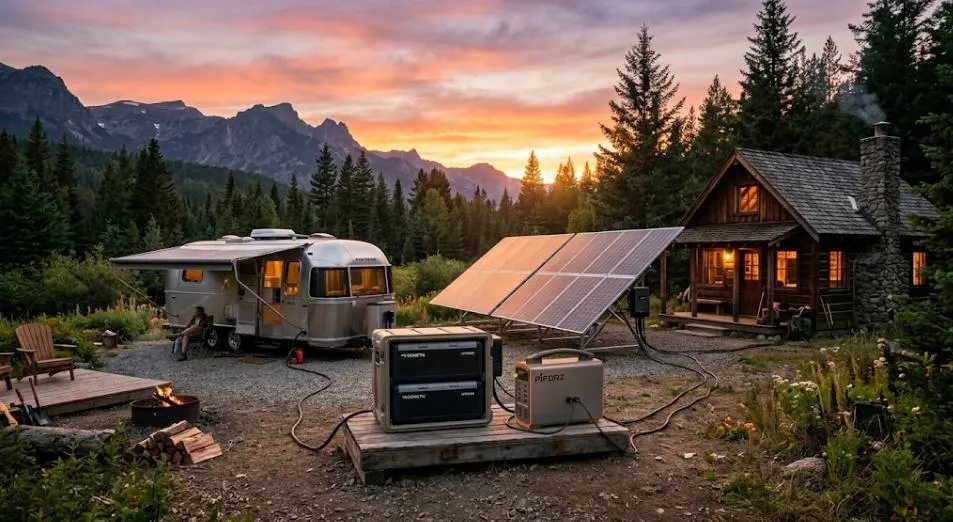
In practical terms, what we call a solar generator most of the time refers to a “portable power station + solar panels.”
Although the name includes “generator,” its essence is the transmission and storage of electricity, not the creation of electricity. For example, a fuel generator works by converting fuel into usable electrical energy through machinery – that’s creating power. A portable power station,(https://piforz.com/product-category/portable-power-station/) on the other hand, is essentially a large battery that stores power. When you add solar panels to convert energy, you have this complete solar generator setup.
Even on overseas forums, you can tell that users clearly distinguish between these two terms.
- If a user says, “I bought a generator,” their companion might ask: Isn’t it loud? Where are you going to put it?
Because fuel generators carry a risk of carbon monoxide poisoning and must be used outdoors.
- If a user says, “I bought a solar generator,” the typical response is: What’s the capacity? How many watts of solar panels did you get?
Because everyone knows this is a silent battery that can be used inside a tent or a living room.
How does a solar generator work?
The entire working process of a solar generator can be broken down into several steps:
1. Light energy conversion: Sunlight hits the solar panels, and the semiconductor material inside the panels creates the photovoltaic effect, generating direct current (DC).
2. Energy optimization: The unstable DC cannot go directly into the battery. It needs a charge controller to regulate the fluctuating current – that is, an MPPT controller. It ensures that the current is fed into the battery in a way that best matches the battery’s current state, maximizing the use of solar energy.
3. Electrical energy storage: The DC, after being regulated by the controller, enters the battery, where it is converted into chemical energy and stored. Throughout this process, the battery’s BMS (Battery Management System) monitors everything, preventing any cell from overcharging, over-discharging, overheating, or short-circuiting, ensuring the overall safety of the unit.
4. Conversion and output: At the output stage, the DC must be converted into alternating current (AC) via an inverter. That AC is what we commonly use in daily life, matching the standard household electricity.
Many people might find this daunting, thinking that so many steps must require a lot of equipment. Don’t worry. Although these steps involve multiple components, when it comes to actually buying and using, you only need two devices: solar panels and a portable power station.
You don’t need to buy these parts separately. Manufacturers have already integrated the complex internal circuitry for you at the factory. The solar panels are the device that absorbs sunlight. The portable power station is the device that highly integrates the MPPT controller, lithium battery + BMS, and inverter – all packed into one black box.
When we use it, we simply open up the solar panels and face them toward the sun, then take a dedicated cable, plug one end into the solar panels and the other into the portable power station, and then relax and do our own thing nearby.
Advantages and disadvantages of solar generators
| Advantages | Disadvantages |
| Solar power generation, clean energy, environmentally friendly | Dependent on sunlight, heavily affected by weather |
| Battery stores and delivers electricity, virtually no noise, quiet and unobtrusive | Battery capacity is limited, so its power output is also limited; may not be able to run many high-power devices |
| Safer than traditional generators; can be used indoors; low risk of explosion | High upfront cost for a solar generator; a complete system includes batteries, solar panels, and other accessories |
| Wide range of use cases: outdoor, power outages, off-grid, RVs, etc. | Solar charging is usually slower than plug-in charging, mainly due to sunlight conditions |
A solar generator is not like a fuel generator. It doesn’t have that loud roaring sound because it has no combustion, no pistons, no moving mechanical core. Even if there is any noise, it mainly comes from the cooling fan and the inverter, around 30–55 dB – about as loud as a library or a whispered conversation. This can easily be used inside a tent or bedroom.
Solar generators are heavily affected by weather. Their conversion efficiency is generally around 20–23% because solar irradiance itself is limited – the amount of energy obtainable per unit area is limited. Moreover, they are restricted by time of day and weather conditions, so they cannot generate power at any time. This means they cannot simply be “refueled and instantly back to full power” like a fuel generator; they need time.
How long do solar generators last?
A solar generator generally lasts 3–15 years, depending largely on the battery type and usage patterns.
A solar generator differs from other types of generators. Its core components are the solar panels and the battery, but it doesn’t stop there – the inverter also matters. To know how long a solar generator lasts, you can’t look at just one component in isolation.
1. Battery
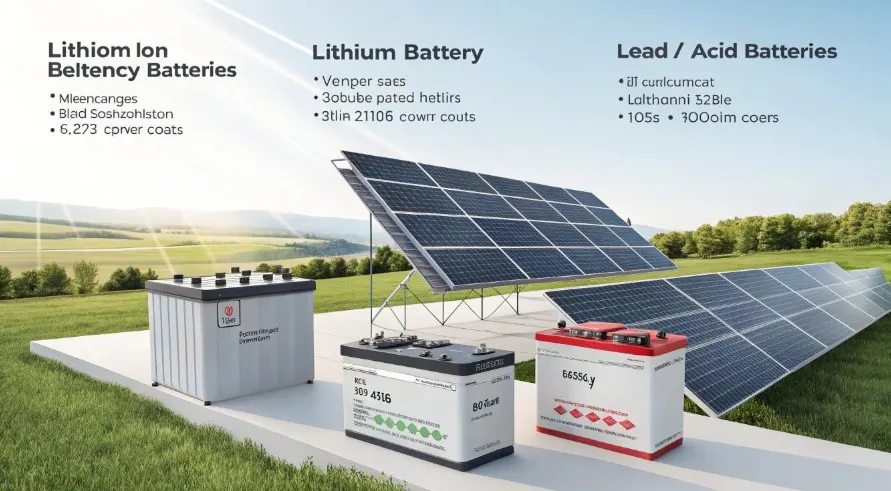
The battery is arguably the most critical. It determines how many years you can use it and how many charge/discharge cycles it can handle. Different battery types have different lifespans and performance characteristics. A good battery offers better safety, longer life, and more cycles. LiFePO4 (lithium iron phosphate) is currently the most common and user-friendly battery on the market. Other ordinary batteries naturally fall short in these aspects but come at a more affordable price. If you use your generator infrequently and don’t have high demands, a standard battery might also be worth considering. I won’t make a hard recommendation – it all depends on your needs.
| LiFePO4 | Lithium ternary (NMC) | Lead-acid | |
| Lifespan | 8–15 years | 3–8 years | 2–5 years |
| Cycle life | 2,000–5,000 | 500–1,000 | 300–500 |
| Advantages | Long life, safe, stable, high temperature resistant | Lightweight, high energy density | Cheap, mature technology |
| Disadvantages | Heavier, lower energy density | Shorter cycle life, less thermally stable | Very heavy, short life, inefficient |
2. Inverter
If the battery determines how long a solar generator lasts, the inverter determines what devices it can power. You might be wondering – as I did – since the inverter is inside the portable power station, why mention it separately? Because it’s important. We all know that the inverter converts DC from the battery into AC for household use. If the inverter’s power rating is insufficient, it won’t be able to run large appliances. Moreover, the inverter’s power rating directly determines the range of devices the generator can support. Generally speaking, a lower-power inverter can only support small devices like phones and laptops. When the inverter’s power rating increases to 1,000W or even 2,000W or more, it can then run high-power appliances such as rice cookers and hair dryers. Therefore, the inverter essentially determines what equipment the user can power, making it a key factor in evaluating a solar generator’s practicality.
Additionally, the inverter affects the stability of the power output. High-quality inverters typically provide stable pure sine wave output, resulting in more consistent voltage and better protection for electronic devices. Poor-quality inverters may produce voltage fluctuations or unstable waveforms, potentially damaging equipment over long-term use. Thus, from both user experience and safety perspectives, the inverter plays an equally important role.
3. Solar panels
Finally, consider the solar panels, because they determine how fast the generator charges. The panels don’t affect whether you can use the generator – only how long you have to wait for a charge. When choosing solar panels, the first thing to look at is their wattage. Generally, higher wattage means faster charging. For example, 100W solar panels charge relatively slowly, while 200W or higher can significantly shorten charging time. However, higher wattage is not always better; it must match the input capability of the portable power station. So when purchasing, also refer to the power station’s specifications.
Also, pay attention to whether the connectors between the solar panels and the power station are compatible, whether the voltage range matches, and what the portable power station’s maximum solar input limit is.
Suitable scenarios for a solar generator
Its range of suitable scenarios is actually quite broad – anywhere there is no electricity, where using electricity is inconvenient, or where backup power is needed.
You might wonder, while buying solar panels and a portable power station, why you still need to look at the inverter. And since the inverter is integrated into the power station and can’t be changed? As mentioned earlier, the inverter determines which appliances you can run. So when evaluating usage scenarios or making a purchase, besides focusing on battery capacity, you must also consider the actual power ratings of the devices you intend to use – only then can you ensure the generator will truly be able to power them.
| Scenario | Recommended Capacity (Wh) | Recommended Inverter Power (W) | Recommended Solar Panels | Typical Use Cases |
| Light camping | 500–1,000 Wh | 600–1,000W | 100–200W | Charging phones, drones, laptops; running small car fridges, electric blankets. |
| Long road trips | 1,000–2,000 Wh | 1,200–2,000W | 200–400W | Using electric coffee makers, rice cookers, projectors, hair dryers. |
| Home emergency | 2,000–5,000 Wh | 2,000–3,000W | 400–800W | Running full-size home refrigerators, microwaves, CPAP machines, extended lighting and communication. |
Can a solar generator work at night?
Traditional generators certainly cannot. But this is a solar generator – a combination of solar panels and a portable power station. It can work even at night or on rainy days. Because it is itself an energy storage battery. You’ve already charged the battery during sunny weather, so at night or on rainy days, it can rely on the chemical energy stored during the day to continuously power your phone, electric blanket, and other essential devices.
Can a solar generator power an entire house?
Whether a solar generator can power an entire home depends on the device’s power output, battery capacity, and how it is used.
Common portable solar generators have relatively low power output and limited energy storage, so they typically can only support basic appliances like lights, phones, computers, or a refrigerator, but would struggle to run high-power devices like air conditioners or electric water heaters simultaneously.
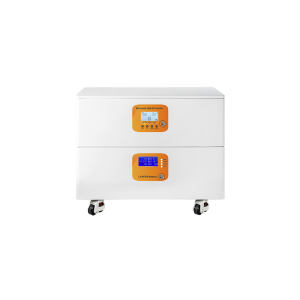
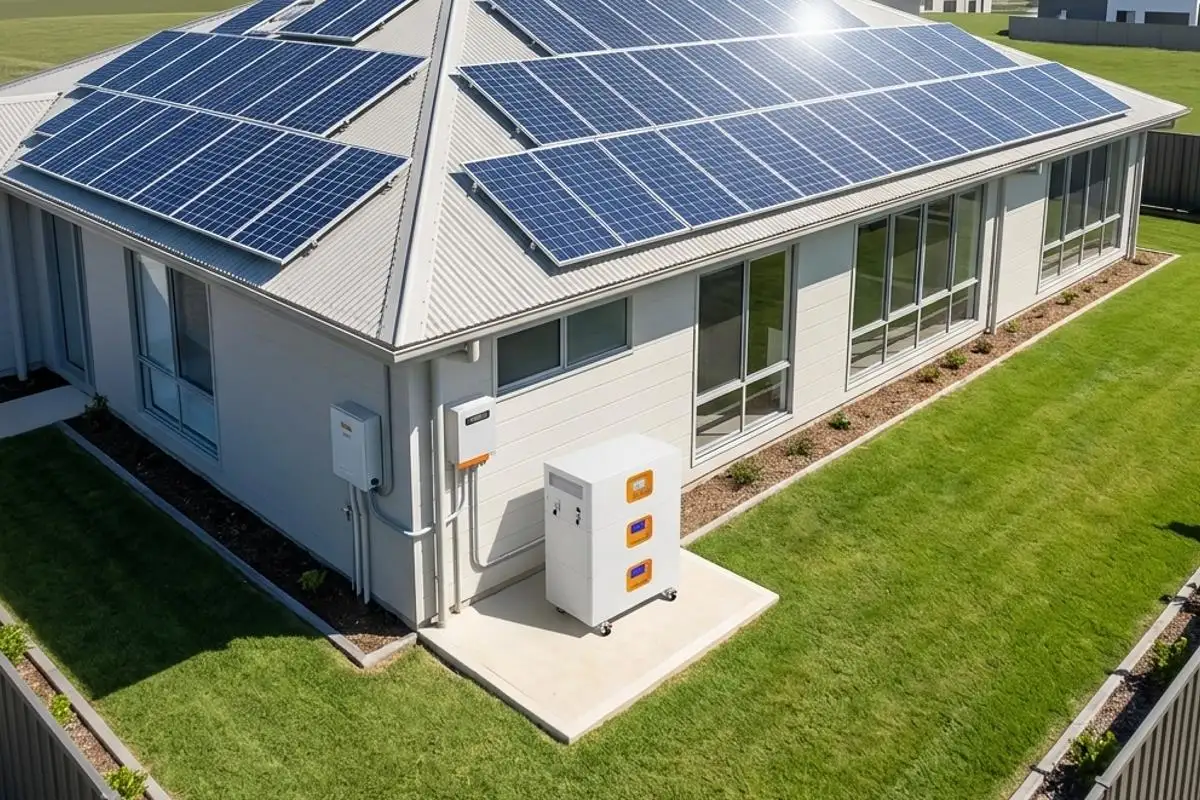
However, with a larger-scale system – for example, one that includes high-wattage solar panels, a large-capacity battery bank, and a suitably rated inverter – then it becomes possible to meet a whole house’s electricity needs. In this case, what you’re using is no longer just a single solar generator, but a complete home solar power systems.