Introduction
As extreme weather and power outages become more common, the need for reliable backup power has grown. But when deciding between a portable power station and a home generator, most of us weigh factors like tax incentives, cost, and efficiency. This article breaks down those considerations to help you make an informed choice.
What Is a Portable Power Station—And Why It Represents the Future
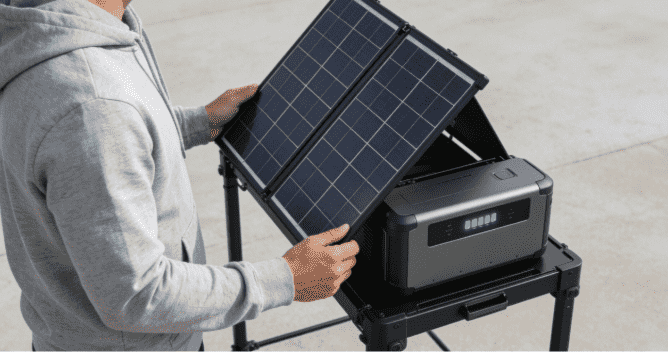
A portable power station is essentially a large, rechargeable, reusable battery—think of it as the safer, quieter, and cleaner “electric version” of a traditional generator.
It operates by storing and discharging energy, using advanced energy storage materials like LiFePO4 (lithium iron phosphate), which is more environmentally friendly and has a longer lifespan than conventional alternatives. Because it doesn’t rely on gasoline, diesel, or other non-renewable fuels, it produces zero harmful emissions and runs silently.
When paired with solar panels, a portable power station overcomes the limitation of needing the grid to recharge. This creates a “solar + storage” system that can effectively replace a home generator in most scenarios. It’s clean energy in its truest form.
Home Generators—High Power, but High Cost and High Risk
Home generators are typically powered by gasoline, diesel, natural gas, or propane. There are two common types: whole-house standby generators, which are permanently installed outside the home but come with a high price tag and limited cost efficiency; and portable gasoline generators, which offer mobility but must never be used indoors—carbon monoxide emissions can be fatal. Beyond the serious safety risks, improper installation can also complicate homeowners insurance claims.
Compared to portable power stations, home generators rely on increasingly expensive fuel and require regular maintenance, including oil changes, spark plug replacements, and air filter checks. Over the long term, their total cost of ownership far exceeds that of portable power stations.
Tax Deduction & Tax Credit—Portable Power Stations Have Clear Advantages
Portable Power Stations Qualify for Renewable Energy Incentives
The Inflation Reduction Act (IRA), passed in 2022, initially included a provision allowing a 30% tax credit on the combined purchase of portable power stations and solar panels. However, that specific funding mechanism was suspended in 2025.
The Residential Clean Energy Credit is still on the books. Under current IRS rules, this credit allows for a 30% federal tax credit on qualifying renewable energy equipment purchases and installations . Solar panels and battery storage technology are both explicitly listed as eligible technologies .
There is a catch: to claim the credit for battery storage alone, the system must have a minimum capacity of 3,000Wh (3kWh) . A 2,000Wh portable power station purchased by itself does not meet that threshold.
However, if you buy that same 2,000Wh unit together with solar panels that meet IRS requirements, the solar panels themselves still qualify for the 30% federal clean energy tax credit . This makes portable power stations not only a practical choice for home backup power, but also a qualifying investment under current federal incentive programs when paired with solar.
Home Generators Rarely Qualify
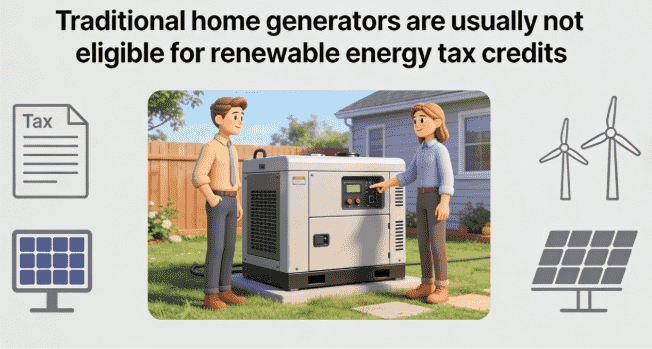
Traditional home generators generally do not qualify for federal renewable energy tax credits. However, there are limited scenarios where they may be tax-deductible—such as for qualifying medical use (requiring documented proof of need), as an expense or depreciation on a rental property, or as a capital expenditure for business use. Even in these cases, the tax benefits are far less significant than those available for portable power stations.
Operating Costs — Portable Power Stations Are Almost Free to Run
When evaluating backup power options, the upfront purchase price is only one piece of the puzzle. Ongoing operating costs are just as important—and often overlooked.
Portable Power Station Cost Advantage
Unlike home generators, which run on non-renewable fossil fuels, portable power stations draw energy from clean sources like solar. And because sunlight is essentially free, the fuel cost for a solar-charged portable power station is effectively zero.
They also don’t require the kind of expensive, ongoing maintenance that engines do—no oil changes, spark plugs, or air filters. With free solar charging and minimal upkeep, the total cost of ownership is dramatically lower. That combination of performance and low operating cost is what makes portable power stations such a strong value proposition.
Home Generator Running Costs Add Up Quickly
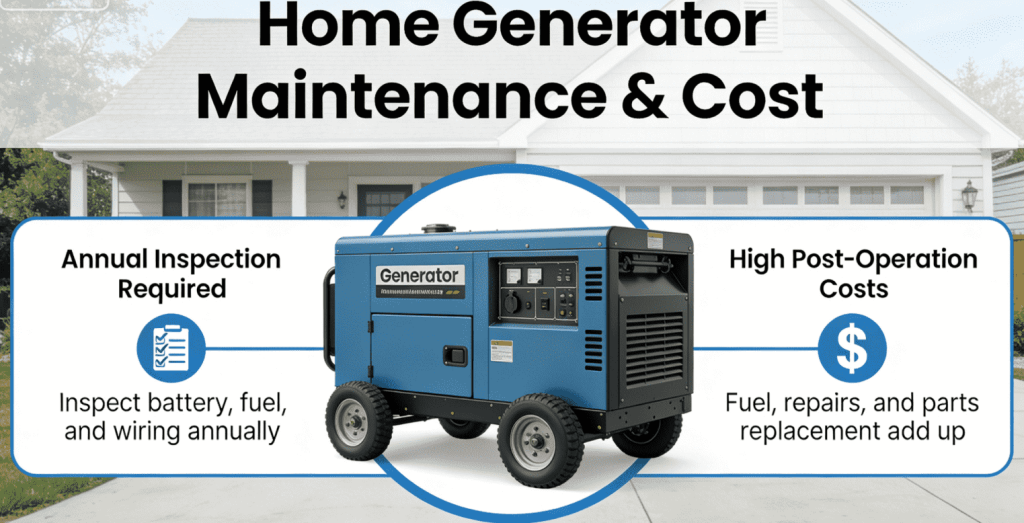
Home generators run on fuel—and the price of non-renewable fuels keeps rising. In addition, generators need annual inspections and part replacements, including air filters and spark plugs. These are ongoing, unavoidable expenses.
Beyond the financial cost, there’s also the time commitment: storing fuel, performing routine maintenance, and dealing with logistics. Portable power stations, by comparison, are virtually worry-free. The total cost of ownership for a home generator is undeniably high.
Efficiency & Environmental Impact
Portable Power Stations Offer High Efficiency
A backup power device isn’t just about capacity—energy efficiency matters. Portable power stations convert DC to AC power via inverters, which typically operate at 85–94% efficiency. They produce near-zero emissions whether charging from solar or discharging, and battery storage involves almost no thermal loss. In contrast, internal combustion engines must “burn” fuel to generate power—a fundamentally less efficient process. That makes portable power stations the clear winner in energy efficiency.
Home Generators Are Highly Inefficient
Home generators typically operate at only 18–25% efficiency. Most of the energy from the fuel is lost as heat. Internal combustion engines waste significant energy through crankshaft resistance, friction, exhaust, and cooling. What’s more, home generators often emit more pollutants than cars. They’re both less efficient and far more environmentally harmful.
Real-Life Scenarios—Why Users Prefer Portable Power Stations
Whether it’s a summer storm outage or a grid failure, when the power suddenly cuts, many people need short-term backup to run a CPAP machine, keep a router on to work from home, or maintain basic household functions. Portable power stations offer quiet, safe, and reliable power—ideal for families with children or elderly members.
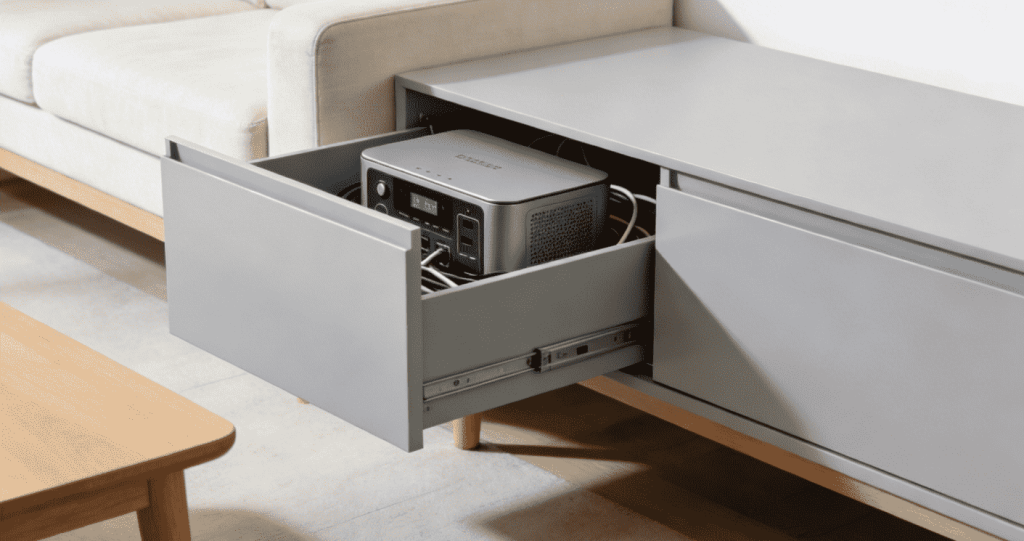
For camping or RV life, portable power stations let you enjoy electricity without the noise, fumes, or fuel hassles. For apartment dwellers, they’re compact, easy to store, and free of messy cords—making them compliant with most building codes.
When Home Generators Still Make Sense
There are situations where home generators remain the better—or only—option. For instance, if you need to power heavy-duty, whole-house appliances, or live in an area affected by prolonged winter storms or cloudy weather with little solar availability for days, a generator may be necessary. Some households also rely on high-wattage medical equipment (e.g., large ventilators) that exceeds portable power station capacity.
In these cases, a home generator is still recommended—provided it’s installed safely and according to local codes.
Conclusion
Overall, portable power stations are quieter, safer, and more environmentally friendly. They may qualify for tax credits, and their operating costs are low. Home generators, while powerful, run on non-renewable fuels, are noisier, offer no comparable tax incentives, and carry higher operating costs. Still, they remain irreplaceable in specific high-power or extended-outage scenarios.
We hope this article gives you a clearer picture of how portable power stations and home generators compare—especially on tax savings and running costs. That said, individual needs vary. Please consult a qualified professional for advice tailored to your situation.
FAQ
Is it cheaper to run a generator or use electricity?
Electricity is certainly cheaper during normal operation. But when the grid goes down and you need backup power, portable power stations are the more cost-effective option. Home generators may have lower upfront costs, but their operating expenses are significantly higher over time.
generators tax deductible?
Home generators rarely qualify for tax credits or deductions. In certain specific cases—such as hospital use as medical equipment, or strictly commercial applications—partial deductions may apply, but the benefits are limited. Consult a tax professional for details.
Does a generator reduce homeowners insurance?
Yes, permanently installed, hardwired automatic standby generators may qualify for a premium discount. Since they activate automatically during an outage even when the homeowner is away, they help prevent damage. However, you must retain proof of professional installation and compliance records and proactively notify your insurer. Consult your provider for specifics.