
In recent years, the landscape of modern healthcare has undergone profound transformations. We are witnessing a shift from a “hospital-centered” approach to one that prioritizes “home-based rehabilitation.” An increasing number of households have been transformed into miniaturized advanced care centers. Precision medical devices once exclusive to intensive care units—such as continuous positive airway pressure (CPAP) machines, high-power oxygen generators, and even home dialysis equipment—have now become standard fixtures in many households.
Home healthcare provides patients with unprecedented freedom and comfort, yet it also introduces a critical risk: absolute dependence on electricity. Today, we will delve into why traditional power grids can no longer meet the safety requirements of modern home healthcare, and how to select a truly reliable portable backup power supply for your life and health.

I.Why is the household power grid no longer “absolutely reliable”?
Many people believe that power outages are low-probability events in modern cities. However, real-world data provides a different answer. For medical equipment, even a few minutes of power interruption can lead to severe consequences. Currently, household electricity supply faces three major latent risks:
- The normalization of extreme weather: Frequent occurrences of extreme weather events such as heavy rainfall, typhoons, and blizzards have led to regional power grid outages lasting several days or even weeks, which are now commonplace news reports. In the face of natural disasters, traditional overhead transmission lines exhibit extreme vulnerability.
- Aging infrastructure and peak electricity demand: With the activation of air conditioning in summer or heating in winter, power load surges significantly. Many old residential communities, due to aging transformers, are prone to voltage instability, sudden tripping, and even localized power outages.
- Unannounced equipment failures: Emergencies such as line short circuits or cable damage during construction often leave no preparation time.
For a household refrigerator, a power outage of a few hours is merely like ice cream melting; however, for an oxygen concentrator maintaining a patient’s blood oxygen saturation, every second of power loss constitutes a countdown to life. Reliable backup power supplies are no longer exclusive toys for campers but have become indispensable safeguards for life continuation in home-based medical care.
II. Four Major Categories of Household Medical Devices Most Susceptible to Power Outages
Before purchasing a backup power supply, it is essential to first understand the power requirements of medical equipment in the home. Different devices have distinct demands for power capacity and output power:
1. Sleep apnea ventilator (CPAP/BiPAP)
Pain point: Primarily used at night, sudden power outages may cause patients to wake up due to asphyxia, severely affecting sleep quality and even posing a risk of suffocation.
Power consumption characteristics: The power output is relatively low (typically between 30W and 60W), but may surge to approximately 100W when heating pipes or humidifiers are activated. It requires prolonged battery life and an extremely quiet power supply environment.
2. Household Oxygen Concentrators
Pain point: Patients with chronic obstructive pulmonary disease (COPD) require continuous oxygen therapy, and power outages can lead to a rapid decline in blood oxygen levels.
Power consumption characteristics: Classified as a high-power consumer. A standard 5L oxygen generator operates at a working power range of 300W to 500W, with peak power potentially reaching higher levels during startup. This necessitates that the backup power supply must possess large capacity and high output power.
3. Medical refrigerated box (insulin, biologics)
Pain point: Insulin and certain expensive bio-targeted drugs are highly temperature-sensitive (typically requiring maintenance at 2°C–8°C). Once power is interrupted and temperatures rise, the drugs will rapidly lose efficacy, resulting in significant economic losses and treatment delays.
Power consumption characteristics: Small vehicle-mounted or household medical refrigerators have low power consumption (approximately 40W-80W), but require uninterrupted power supply throughout the day.
4. Rehabilitation nursing equipment (electric wheelchair, electric nursing bed, air mattress)
Pain point: Power outages may lead to loss of mobility in patients or inability to adjust the angle of nursing beds, increasing the risk of pressure ulcers.
Power consumption characteristics: Although not operating continuously, power must be available during critical moments, and instantaneous power support is required for motor startup.
III.Five critical factors must be considered when selecting power supplies for medical equipment!
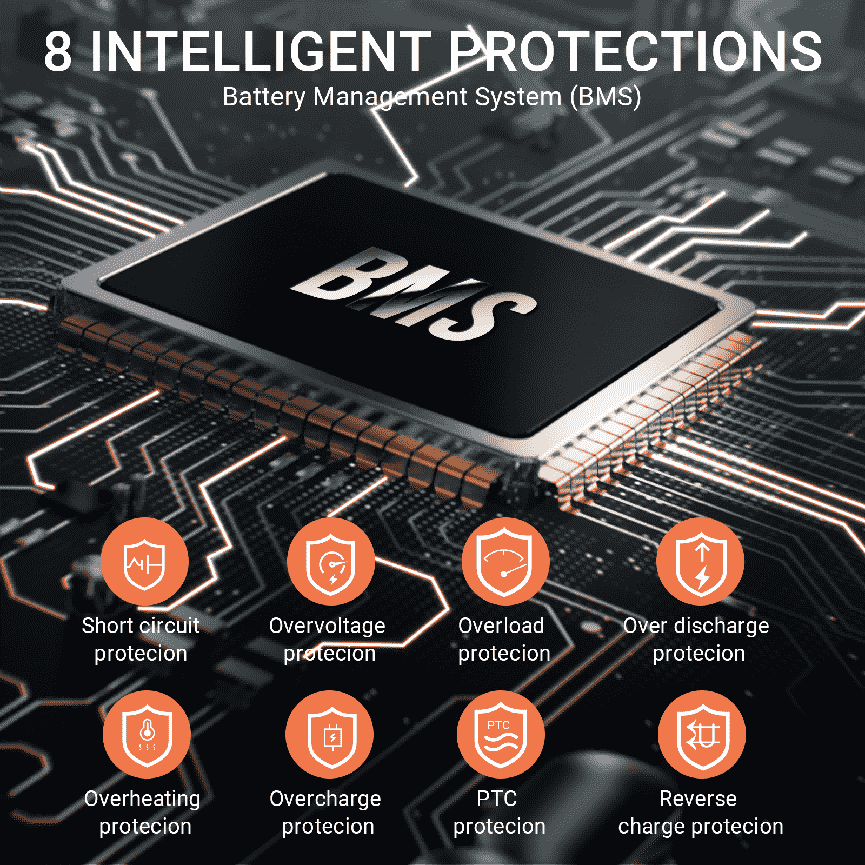
The market offers a wide variety of portable power sources (outdoor power supplies), but please note: a power source capable of charging mobile phones may not necessarily be suitable for life-saving applications. The precision and specificity of medical equipment necessitate the establishment of higher standards when selecting power supplies.
First Stage: Pure Sine Wave Output — The Bottom Line for Protecting Precision Instruments
Some inexpensive inverters on the market output “modified sine waves” or “square waves.” These current waveforms are highly irregular, which can easily cause abnormal noises, overheating, or even direct damage to the internal precision control motherboard of CPAP ventilators.
Recommendation: Always select power supplies labeled with “**Pure Sine Wave (Pure Sine Wave) output**”. These provide a smooth current identical to or even purer than household mains electricity, ensuring no damage to expensive medical equipment.
Second Level: Millisecond-level UPS (Uninterruptible Power Supply) Switching — Say goodbye to blackout panic
Imagine a scenario where a power outage occurs at midnight, requiring you to get out of bed in the dark, disconnect the ventilator’s plug, connect it to the backup battery, and then restart the device… This process is not only cumbersome but also fraught with risks. Recommendation: Select a power supply with UPS functionality. Normally, the power supply is plugged into the wall, and the ventilator is connected to the power source. In the event of a mains power failure, the power supply will automatically switch to battery power supply within 20 milliseconds (ms). This rapid response ensures that the machine remains undetected during the power interruption, allowing patients to sleep peacefully until dawn.
Third Level: Lithium Iron Phosphate (LiFePO4) Battery Cells — Extreme Safety and Longevity
Early power sources predominantly utilized ternary lithium batteries, which, despite their lightweight nature, posed higher risks of thermal runaway (easily ignitable). For medical backup power supplies intended for prolonged placement in bedrooms or even bedside areas, safety must be the paramount consideration. Recommendation: Opt for products employing lithium iron phosphate (LiFePO4) cells. This material exhibits exceptional stability, puncture resistance, and non-explosive properties, with a cycle life exceeding 3,000 cycles. Even with daily charge-discharge cycles, these batteries can remain reliably operational for nearly 10 years.
Level 4: Calculate “capacity” and “power” based on the equipment
Capacity (Wh = watt-hours): Determines the duration of operation. For example, a 1000Wh power supply driving a 50W ventilator can theoretically operate for 20 hours (1000/50).
Power (W = watts): Determines the compatible machinery. If your oxygen generator has a capacity of 400W, the rated output power of the power supply must exceed 400W (it is recommended to allow a margin by selecting products with a rated output of 600W or even 1000W to accommodate transient startup current surges).
Level 5: Silent Design and Portability
The patient requires rest. Traditional fuel-powered generators produce deafening noise and emit exhaust fumes, making them absolutely unsuitable for indoor use. Additionally, if it is necessary to move an oxygen concentrator between different rooms, the portability of the power supply (presence of handles or casters) is critical.
IV.Piforz Medical Backup Power Solution
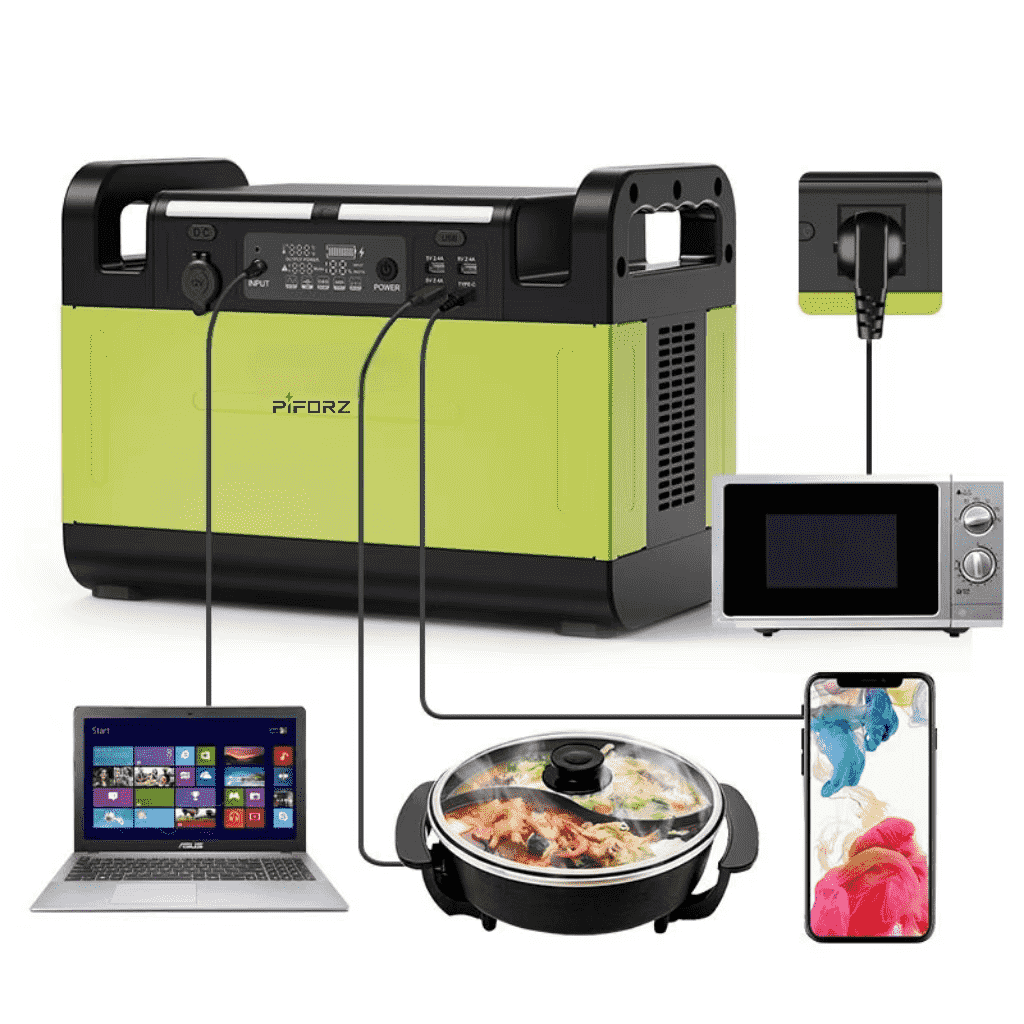
Based on profound insights into pain points in home healthcare, Piforz has launched a series of portable power stations specifically optimized for medical care scenarios, meeting diverse needs ranging from “bedside monitoring” to “whole-home backup power supply.”
Option 1: Bedside Guardian — Specifically designed for Continuous Positive Airway Pressure (CPAP) therapy
Recommended model: [e.g., Piforz 200, Piforz 200Pro]
Application scenarios: bedside table, nighttime use, short-distance travel.
Core Advantages: 1. Exceptionally compact and lightweight, weighing only [X] kg for easy one-handed handling.
2. Optimized for nighttime operation, with noise levels below [X] decibels—quiet as breathing.
3. Equipped with <20ms ultra-fast UPS functionality. Connect it in series between mains power and ventilator to achieve seamless switching during power outages, completely eliminating your fear of nighttime power failures.
4. The capacity of Wh is sufficient for mainstream CPAP machines to operate continuously for [X-X] nights (with humidification function off).
Option 2: Mobile Nursing Unit — A Perfect Combination of Oxygen Generator and Multiple Devices
Recommended model: [e.g., Piforz PF500, Piforz 1500]
Application scenarios: Power supply for movement between living room and bedroom, oxygen generator, and medical mini-fridge.
Core Advantages: 1. Rated output power of up to [X]W, effortlessly driving most 5L/10L medical oxygen concentrators on the market, with no fear of startup peak loads.
2. With a large capacity of [X]Wh, it provides approximately [X] hours of critical runtime for the oxygen generator.
3. Ergonomic Design: Recognizing the physical demands of nursing staff, we have specifically equipped the device with aviation-grade silent rollers and telescopic handles. Even power stations weighing dozens of pounds can be effortlessly moved from the patient’s bedroom to the balcony, similar to pushing a suitcase.
Option 3: Family Lifeline — Whole-House Medical-Grade Backup Power Center
Recommended model: [Piforz PF2000]
Application scenarios: Response to extreme weather conditions, prolonged power outages, and simultaneous operation of multiple heavy medical equipment.
Core advantages: 1. Modular design with capacity expandable from [X]kWh to an impressive [X]kWh range.
2. Supports seamless integration with household distribution boxes. When a blizzard cuts off the urban power grid, it can seamlessly take over the entire room’s electricity supply: ensuring uninterrupted operation of oxygen concentrators, ventilators, and monitors, while maintaining indoor lighting and temperature control.
3. Supports direct charging with high-power solar panels, ensuring uninterrupted life support even during prolonged power outages as long as sunlight is available.
V. Conclusion: Standby power supply ensures composure and reassurance
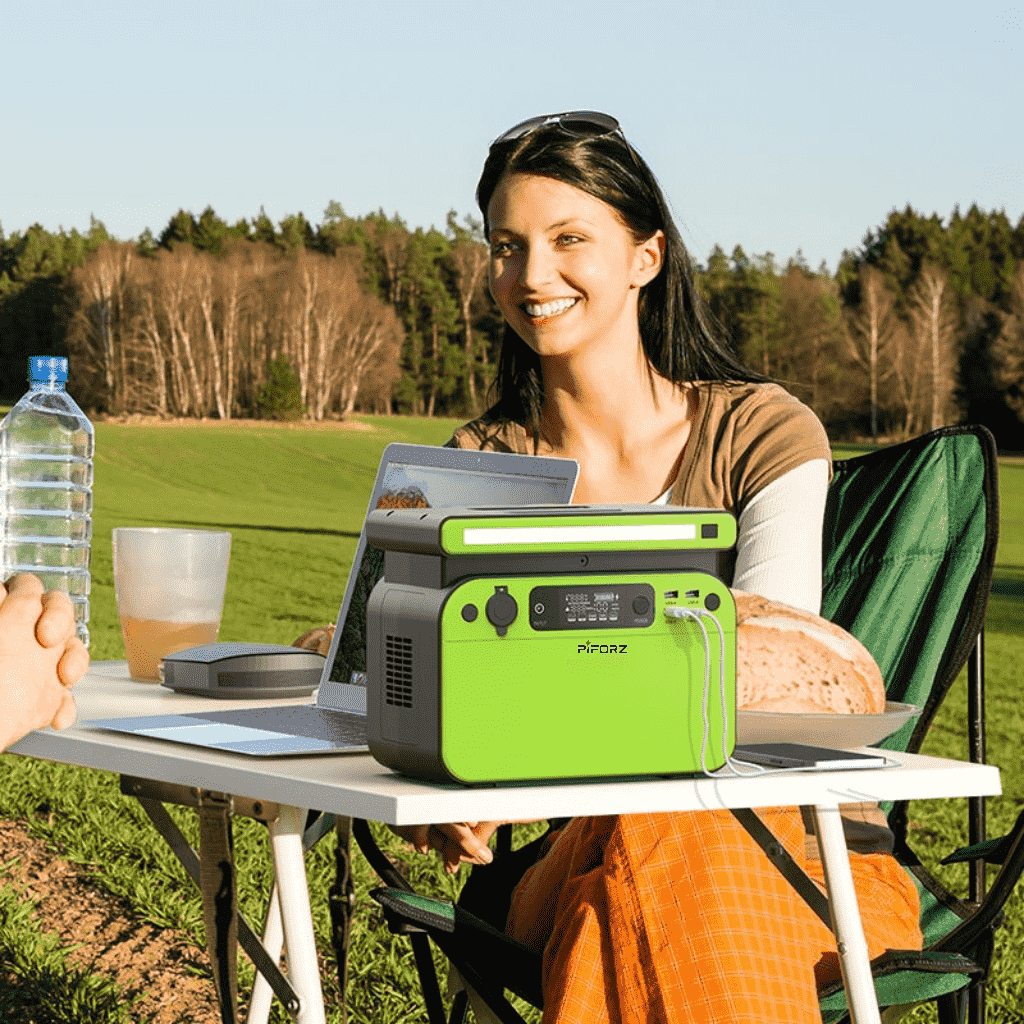
Advances in medicine have enabled us to bring precision therapies back to warm homes. However, any advanced medical equipment becomes a pile of useless plastics and metals the moment the power supply is interrupted.
Purchasing a high-quality portable power supply carries far more significance than simply acquiring a large battery. What you are purchasing includes the patient’s uninterrupted sleep throughout the night, the reassurance for family members to avoid waking up during nighttime ward rounds, and the confidence to remain composed even in extreme weather conditions such as strong winds and heavy rain.
Do not allow uncontrollable power outages to become potential hazards on your treatment journey. Welcome to visit [Your Brand Name]’s official website/mall link or contact our professional consultants. We will provide you with a free, customized home backup power solution tailored to your specific medical equipment inventory.
To protect life, we remain fully charged and ready at all times.