
You Need a Portable Power Source
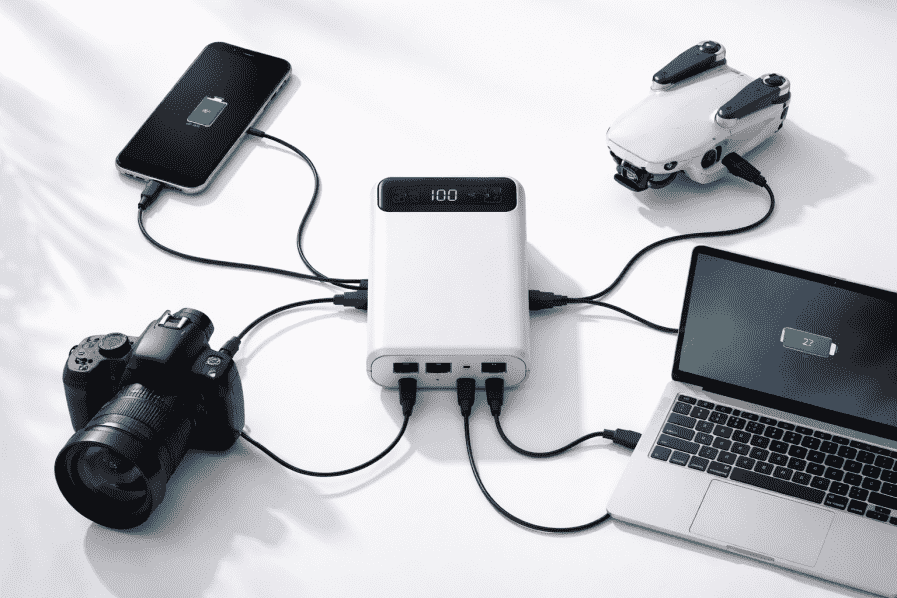
Charging cables tangled up everywhere, chargers taking up half your bag, and drone batteries needing their own separate charger – this is pretty much every tech lover’s daily struggle.
But what if I told you,all these devices could actually be powered by just one single power source?
Not one of those “just keeps your phone alive” power banks. I’m talking about a real portable power station that can handle your whole tech setup. It needs to fast-charge your phone, keep your tablet running, power up your laptop, and even bring your drone batteries back to life when you’re out in the field. Plus, it can’t weigh a ton, can’t get stopped at airport security, and can’t die halfway through charging your stuff.
This thing that seems impossible? That’s exactly what we’re talking about today –high-performance portable power banks.
Here’s the thing though. Most people only look at two things when buying one: capacity and price. Then they get it home and realize – not enough ports, wrong charging protocols, slower than molasses, or it dies right when they need it most.
Today we’re not gonna get lost in spec sheets. Let’s talk about the three things that actually matter:
Got enough ports? Do the charging protocols match your devices? And is there really a way to get both big capacity and easy portability?
Key Thing 1: Ports – From “Basic” to “Everything You Need”
Dig out an old power bank from years ago. It probably has one USB-A port, puts out 5V/1A, and charges your phone painfully slow. Now look at what you’re carrying today: Your phone’s USB-C, your earbuds might be Micro-USB , your camera needs USB-A, and your laptop needs a high-power C port or even AC power.
That’s problem number one:Ports don’t match up, so you end up carrying a bunch of cables.
Here’s what a modern portable power bank should have:
At least 2 USB-C ports: That’s where things are headed. Ideally one of them supports two-way fast charging– so it can fast-charge your devices and also fast-charge itself. No need to carry a bulky charger around.
1-2 USB-A ports: For your older stuff. Your earbuds, fitness band, some cameras, Kindle… these might not have switched to USB-C yet. Having A ports means they’re not left out.
AC outlets: If your power bank has this, congrats – it’s graduated from “phone charger” to full-on portable power station. Now you can power up laptops , drone battery chargers, small lights, or even a portable kettle.
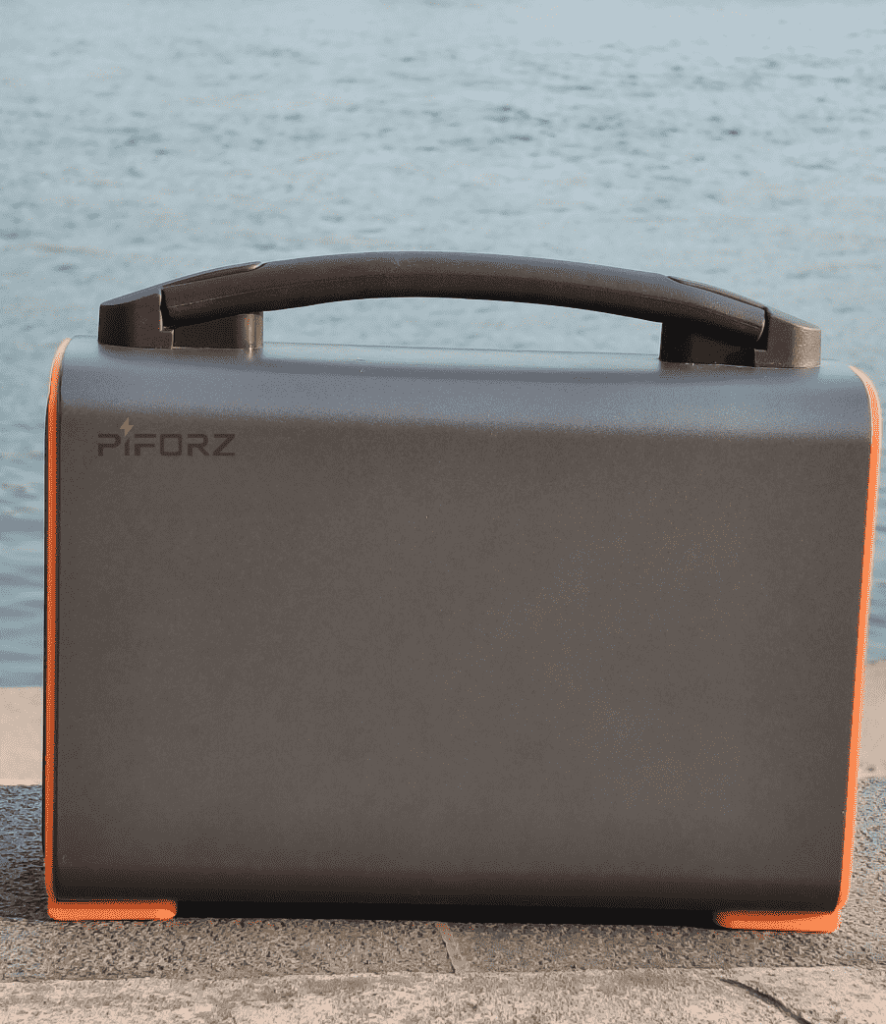
Here’s something most people don’t know:The type of AC output determines what you can plug into it.
Cheap inverters put out something called modified sine wave. Fine for a desk lamp. But when you plug in something with sensitive electronics – like a drone charger or laptop power adapter – it might not charge at all, or worse, it could fry your gear.
Pure sine wave output, on the other hand, gives you clean power that’s just like what you get from the wall socket at home. That’s what you need to safely run the fancy stuff.
Bottom line: More ports mean more useful.
Get a power bank with the right ports, and you can head out with just one USB-C to C cable and one USB-C to Lightning cable. Your bag suddenly gets way less messy. Say goodbye to carrying three cables and two chargers everywhere.
Key Thing 2: Protocols and Power – Speed Matters
Ever had this happen? You plug your phone into a power bank, it shows it’s charging, but half an hour later your battery’s only gone up 5%?
It’s not your imagination. It’s protocol mismatch.
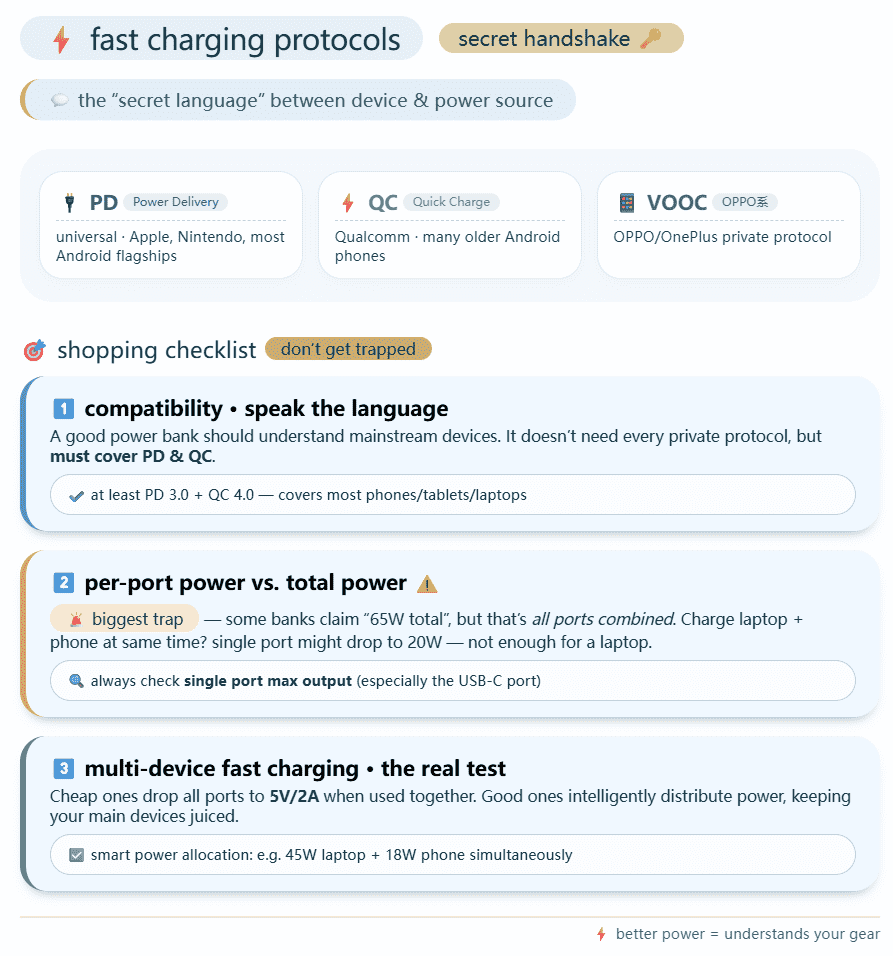
Here’s a quick breakdown: Fast charging protocols are basically secret handshakes between your device and the power source.
PD (Power Delivery) is the most universal one – Apple stuff, Nintendo Switch, most Android flagships all speak it.
QC (Quick Charge) is Qualcomm’s protocol, found in lots of older Android phones.
VOOC is what OPPO phones (and their cousins) use – it’s their own private thing.
What to look for:
- Compatibility: A good portable power bank should speak the language of most mainstream devices. It doesn’t need every single private protocol out there, but it should at least handle PD and QC.
- Single-port power vs. total power: This is where people get tricked. Some power banks claim 65W total, but that’s all ports combined. If you’re charging your phone and laptop at the same time, each port might only get 20W – not nearly enough for your laptop.You need to check the max output per port.
- Multi-port fast charging: This separates the good from the bad. Cheap ones slow everything down to basic 5V/2A when you use multiple ports. Good ones smartly split the power so your important devices keep charging fast.
Think about this common scene: You’re at a coffee shop. You plug your laptop into one C port and your phone into another. Thirty minutes later, a good power bank has your laptop from 20% to 60% and your phone topped up by half. A bad one? Both are barely creeping along.
Key Thing 3: Finding the Sweet Spot Between Capacity and Portability
Here’s the rule: Airlines say anything over 100Wh needs approval, and you can only bring two. Anything over 160Wh ? Can’t bring it on a plane at all. That’s the hard limit.
But here’s the thing: More capacity means more weight. A 50,000mAh power station can weigh over 2 pounds. Are you charging your gear or training for a hike?
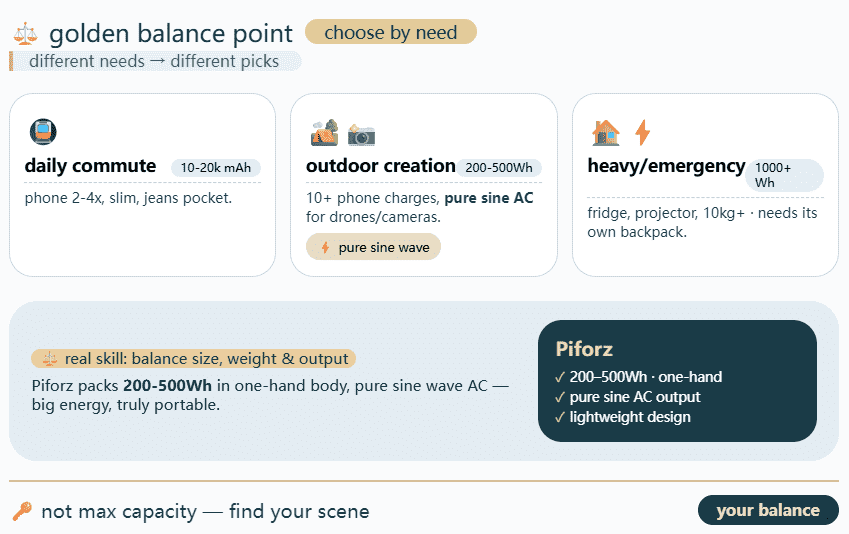
There’s a sweet spot based on what you need:
Daily commute / short trips: 10,000mAh-20,000mAh is plenty. Charges your phone 2-4 times, slim enough to fit in your jeans pocket.
Outdoor content creation / weekend trips: You’ll want something bigger. 200Wh-500Wh gives you 10+ phone charges, and more importantly, with pure sine wave AC output, you can power drone battery chargers, cameras, laptops – everything stays juiced up outdoors.
Heavy outdoor use / emergency backup: If you’re bringing drones, projectors, portable fridges, you’re looking at 1000Wh+ power stations. But fair warning – these things weigh 20+ pounds. You’ll need to decide if it’s worth its own bag.
In this middle range, how well a power bank balances size, weight, and output is where you really see good design.
Some brands have figured this out pretty well. Take Piforz for example – some of their models pack 200Wh-500Wh into a compact size you can carry with one hand. And they use pure sine wave tech to keep that AC power clean and stable. So you get decent power without needing a trolley.
The point isn’t to chase the biggest number. It’s to find what actually works for how you live.
Let Tech Work For You
Picking a portable power bank is really about choosing a freer, easier way to live with your gadgets.
It shouldn’t just be some backup battery hiding at the bottom of your bag. Think of it as the power hub for your digital life – ready when you need it, juicing up your stuff, then getting out of the way without making a fuss.
With the right power buddy by your side, you can stop stressing about battery life. Focus on your trip, your creative work, whatever matters to you. Let tech do what it’s supposed to do – quietly and reliably powering whatever you’re into.
So,what charging gear do you always bring when you head out? Ever had any awkward “my battery died” moments? Drop your stories in the comments!