
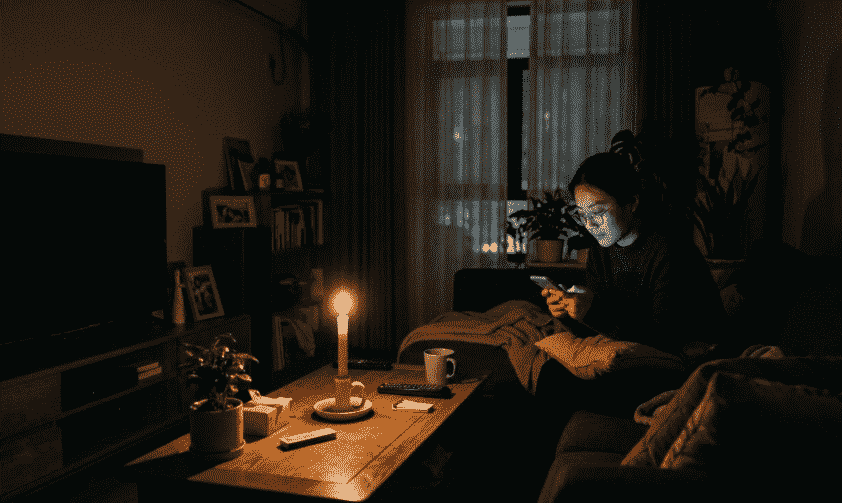
When Breathing Depends on Electricity
For people with sleep apnea, a CPAP machine isn’t just another appliance—it’s a lifeline for a good night’s sleep. Most home CPAP machines don’t have built-in batteries, so a sudden power outage can be a real problem. Over 60% of users have had their treatment interrupted by a blackout at least once.
Whether you’re planning a camping trip or just want to be ready for an emergency, Piforz portable power stations offer a professional solution. Our units use “Pure Sine Wave” technology to keep your machine’s motor safe and high-quality batteries that last for years.
Can a 300W Power Station Last All Night?
This is the most common question we get.
The Real Power Usage
Don’t be fooled by the “90W” label on your machine. That is just the maximum it can pull. In reality, if you turn off the humidifier and heated tube, a CPAP only uses about 10-15W. If you turn those features on, it jumps to about 50-65W.
Piforz PF300 Performance (299Wh):
Fan only (no humidifier): Lasts 20–29 hours (plenty for 2+ nights).
With basic humidifier: Lasts 7.5–10 hours (one full night).
Full functions on: Lasts 4.5–6 hours.
The takeaway: The PF300 is great for a night or two if you skip the humidifier. If you need more power for multiple nights, consider the PF500 or PF1500.
How long will a 1000Wh battery last for a sleep apnea machine?
When you need serious backup, look at “Watt-hours” (Wh). This tells you exactly how much energy the battery can hold. Piforz uses honest ratings so you can plan your backup time accurately.
Piforz PF1500 (1210Wh) Real-World Testing:
CPAP (Fan only): Up to 121 hours (about 5 days).
CPAP (Standard humidifier): About 24 hours.
Other Medical Gear: It’s powerful enough to run oxygen concentrators or nebulizers at the same time.
[Internal Link: Piforz PF1500 Product Page]
Is it Safe for Medical Equipment?
This is even more important than battery life.
Pure Sine Wave vs. Modified Sine Wave Wall outlets in your home provide “Pure Sine Wave” electricity—it’s smooth and steady. Cheap batteries often use “Modified Sine Wave” electricity, which is choppy and can cause CPAP motors to make strange noises, run hot, or even break over time.
Every Piforz unit (from PF300 to PF1500) provides Pure Sine Wave power. It’s just as safe and clean as the power coming out of your wall.
Triple Safety Protection:
Overload Protection: Shuts off if you try to plug in too much.
Short Circuit Protection: Stops power instantly if there’s a wiring fault.
Temperature Protection: Monitors heat in three places. If it hits 65°C, it safely shuts down until it cools off.
What Happens When the Power Goes Out?
If your CPAP is plugged directly into the wall, the motor stops the second the power fails.
The Piforz Advantage: If you keep your CPAP plugged into a Piforz unit that is plugged into the wall, there is no “switch-over” time. The battery is already providing steady power, so your machine keeps running without skipping a beat.
Which Setup is Right for You?
The Traveler (PF300 – 299Wh): Lightweight (4.3kg) and perfect for 1-2 nights of basic use.
The Frequent User (PF500 – 518Wh): Great for road trips; can handle the humidifier all night.
The Ultimate Backup (PF1500 – 1210Wh): Best for home emergencies. Can run a CPAP for over 5 days or power bigger medical machines.
Quick FAQs
Can I leave it plugged in all the time? Yes. It won’t hurt your CPAP motor and ensures you’re always ready for a blackout
How long does the battery last? We use high-grade cells that last for over 2,000 cycles. Even if you used it every day, it would last over 5 years.
Can I use it while it’s charging? Yes, you can use the DC outlets while the unit is charging.
Keep the air flowing, even when the lights go out. Medical backup isn’t just a gadget—it’s peace of mind. Piforz is here to make sure you never miss a breath.