What Is the Biggest Downside to Solar Electricity?
In recent years, the topic of new energy has gained significant and growing attention. As one of the most acclaimed renewable energy sources globally, solar power has become a cornerstone of the energy transition, thanks to its advantages of zero emissions, infinite resource availability, and low operational costs. From residential rooftop panels to large-scale centralized plants, the application of solar energy continues to expand. However, stepping outside the promotional narrative and objectively examining the downsides of solar power reveals that this seemingly ideal energy source is not absolutely reliable for power supply in all scenarios — its limitations lie precisely behind the rosy imagination of “renewable.”
Core Problems and Challenges of Solar Power
1. High Dependence on Sunlight Conditions
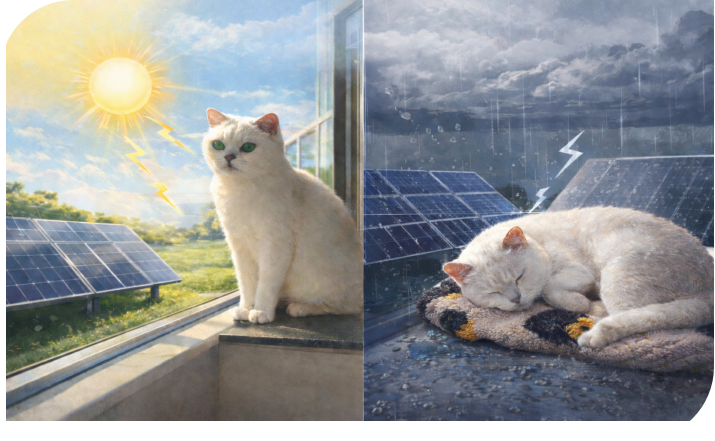
Much like a kitten loves to bask in the sun on a sunny windowsill, this preference for sunlight is exactly how solar electricity operates. Solar power is inherently an intermittent energy source; its dependence on sunlight is baked into its nature. Its power generation efficiency entirely depends on whether the sun is cooperative.
This dependency makes it subject to natural constraints: it generates power efficiently during sunny daylight hours but completely “shuts down” at night — a fundamental law that technology cannot change. Cloudy, rainy, or hazy days cause a sharp drop in output, and shorter daylight hours in winter significantly reduce generation capacity. In high-latitude regions or mountainous areas with frequent overcast weather, the effective generation hours are far fewer than in sunnier regions. While a kitten can curl up and relax on a gloomy day, solar power can only passively endure the reality of weather-dependent generation — this is its core limitation.
2. Mismatch Between Electricity Demand and Generation Time
If natural conditions are an “innate limitation,” then the misalignment between electricity demand and solar generation hours is an “acquired limitation” that directly impacts grid stability and power supply reliability.
Peak solar generation typically occurs between 10 AM and 4 PM, while peak electricity demand for most households and businesses usually happens in the morning (waking up), evening (cooking), and at night (lighting). This “generation-consumption asynchrony” significantly undermines the reliability of solar power. On summer afternoons when sunlight is strongest, household electricity demand is often low, leading to potential waste of generated power. Conversely, when demand peaks in the evening, the sun is setting, and solar generation capacity has already dropped substantially, failing to meet core electricity needs. This is one of the most prominent pain points in practical solar applications.
3. Costs Are Falling, But Physical Laws Won’t Change
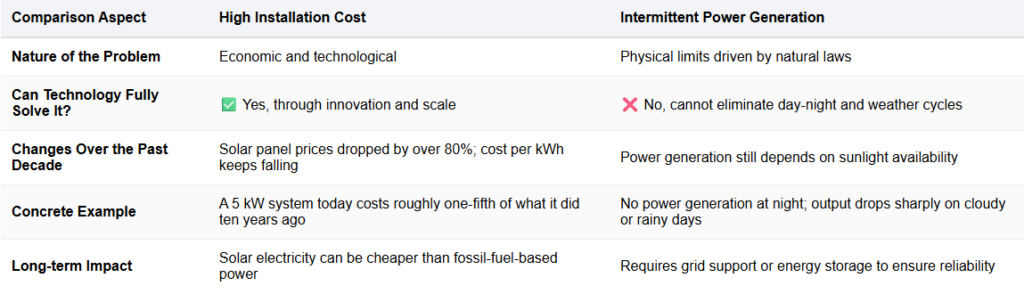
Historically, high installation costs and expensive solar panels were major barriers to widespread adoption. However, in recent years, with technological advancements and economies of scale, this issue has been significantly alleviated. Today, the cost per watt of solar panels has dropped by over 80% compared to a decade ago, making the long-term cost of electricity from solar even lower than traditional fossil fuels in many cases, highlighting its growing cost advantage.
Unlike cost issues, which can be addressed through technological breakthroughs, the physical dependency of solar on sunlight is unchangeable — the day-night cycle, seasonal shifts, and weather variations are laws of nature. Even if future panel efficiency improves dramatically, generating power at night or efficiently on cloudy/rainy days remains highly challenging. In the long run, cost is a “temporary, solvable” issue, while the instability caused by intermittency is “permanent and fundamental,” making it the more core downside of solar power.
4. Grid-Tied Environments Mask the Problem
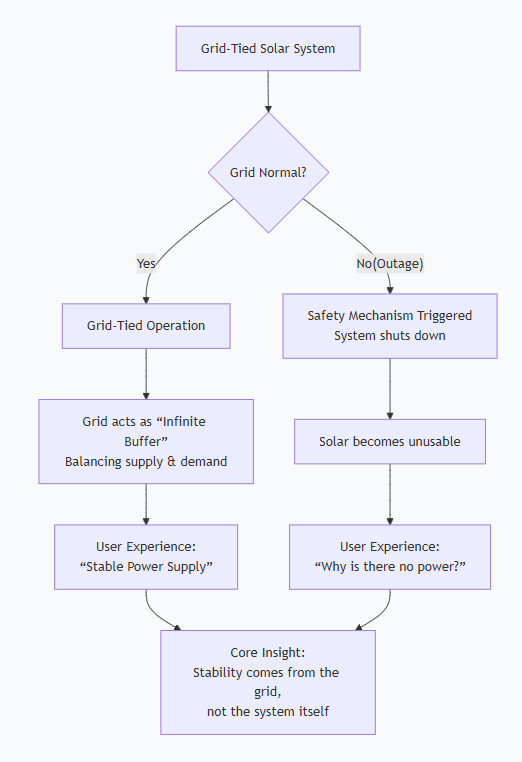
Many users with installed solar systems perceive their “power supply as stable,” but this is largely due to the “buffering effect” of grid-tied solar systems.
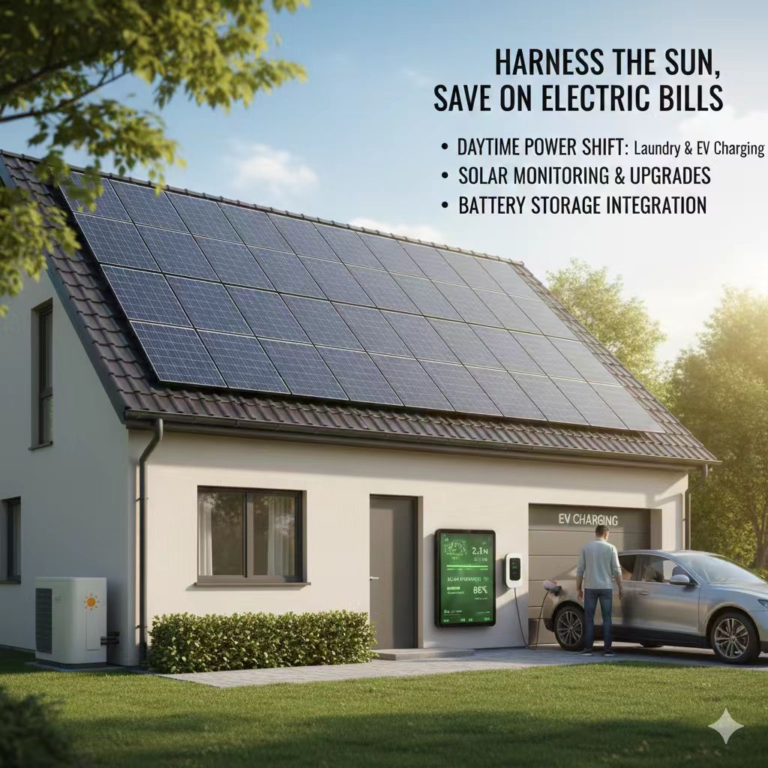
In a grid-tied setup, a home or business solar system is connected to the public electricity grid. When solar generation is insufficient, the grid automatically supplements the supply. When generation exceeds demand, the surplus can be fed back into the grid, and users can even earn credits through “net metering.” In this mode, solar’ s intermittency is masked by the grid’s robust balancing capacity, and users hardly notice any power fluctuations.
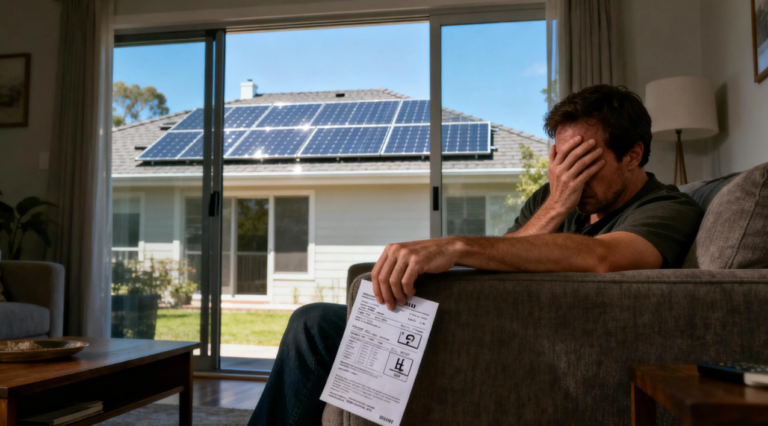
However, this doesn’t mean the problem disappears. During a power outage or grid failure, grid-tied systems automatically disconnect. At that moment, solar’ s intermittent flaw is immediately exposed: without sunlight, users lose power completely — a reality many only realize when the grid fails.
5. Solar Panels Themselves Lack Energy Storage Capability
The core function of a solar panel is “photoelectric conversion,” not “energy storage.” It only generates electricity in real-time when there is sunlight. You can only use what it generates at that moment; it cannot actively store surplus energy.
This means that without a paired energy storage system, excess electricity generated during the day is either fed into the grid or simply wasted. At night or on cloudy days, when there’s no sunlight, the panels provide no power.
For those seeking energy independence, a solar system without storage is, at best, a supplemental power source on sunny days — not a true independent power system. Achieving genuine energy independence requires pairing it with storage devices like batteries.
6. Heavy Reliance on Policy Support
The promotion and adoption of solar energy heavily depend on strong policy support. Many users choose to install solar not only for environmental reasons but also for the financial returns offered by incentives like solar subsidies, tax credits, and net metering policies. Tax credits, for instance, can significantly reduce the net installation cost.
However, policies are uncertain — subsidies may be phased out, net metering rules can change, and tax benefits might be canceled. Such policy shifts directly affect users’ return on investment expectations and can even alter installation decisions. This downside isn’t technical but profoundly impacts the pace of solar adoption and user choices in reality.
Addressing the Challenge of Intermittent Power Supply
Enhancing Storage Reliability
Many believe that “installing solar equals energy independence,” but the reality is different. True energy independence means “meeting your own electricity needs without relying on the external grid.” A simple solar system remains highly dependent on the grid. Even off-grid systems paired with storage must consider whether the battery capacity can cover all energy needs and ensure power supply during extreme weather.
Especially in emergency scenarios, if storage is insufficient or solar cannot generate, users may still face blackout risks. Real energy independence requires the coordinated use of solar, storage, and backup power sources — not reliance on solar alone.
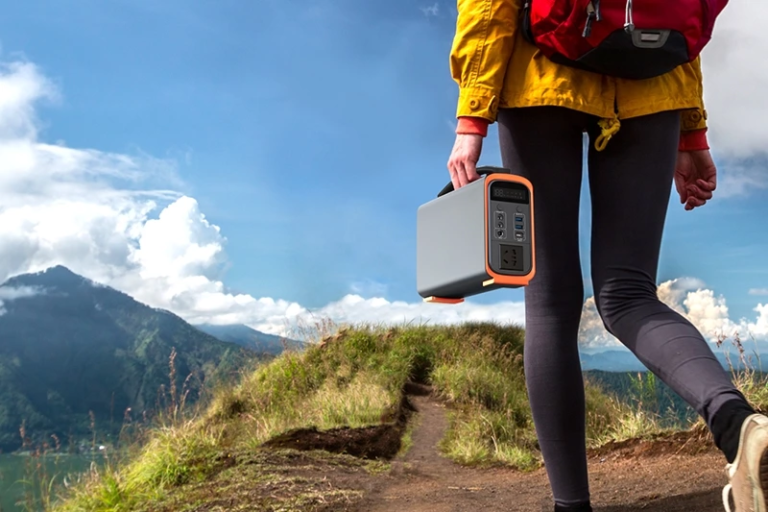
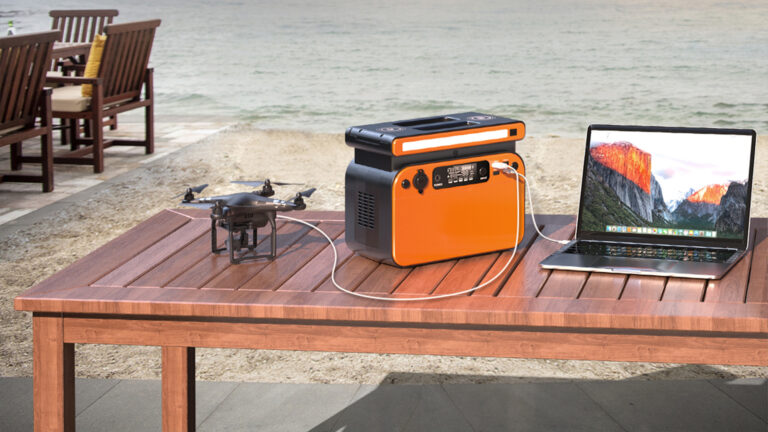
Therefore, to free solar power from its “weather-dependent” dilemma, energy storage is the only solution. This is why more and more users are turning their attention to energy storage solutions, from stationary home batteries to portable power stations, to fill the gap when solar isn’t generating.
Storage systems can store excess daytime electricity for use when needed, transforming solar from “real-time supply” to “on-demand supply,” significantly boosting power reliability.
However, adding storage also increases system complexity: factors like battery capacity matching, charge/discharge efficiency, and safety must be considered, and the initial investment rises accordingly -important considerations for users evaluating storage options. Combining backup power with solar and storage builds a more resilient power supply foundation.
In Conclusion
Back to the Core Question: What Is Solar Power’s Biggest Downside?
In summary, the biggest downside of solar electricity is not cost, but the inherent power supply instability caused by its intermittency. Solar’ s advantages — clean, low-carbon, and resource-abundant — remain compelling, and cost issues are gradually being solved through technological progress. However, its core flaw of “sunlight dependency and unstable generation” cannot be entirely eliminated by technological upgrades alone.
This conclusion echoes the points above: whether it’s the “hidden flaw” in grid-tied mode or the “necessity” of storage solutions, the essence is to address the power supply problems stemming from intermittency. The core of solar’ s main drawback consistently revolves around “stability.”
Acknowledging solar’ s shortcomings isn’t about denying its value but about finding more scientific ways to use it — solar’ s utility is maximized only through systematic integration. A complete solar power system requires paired storage solutions and backup power plans to form a full “generation-storage-supply” loop.
Homeowners can select storage batteries based on their needs, pair them with portable power stations for short outages, and connect backup generators for extreme situations. Commercial and industrial users can leverage large-scale storage to efficiently utilize solar generation and reduce grid dependence.
In the future, solar development will inevitably move towards systematic applications of “PV + Storage + Smart Management,” enabling clean energy to deeply integrate into daily life and production — under the essential premise of stable power supply.