What Size Portable Power Station Do I Need for Home Use?
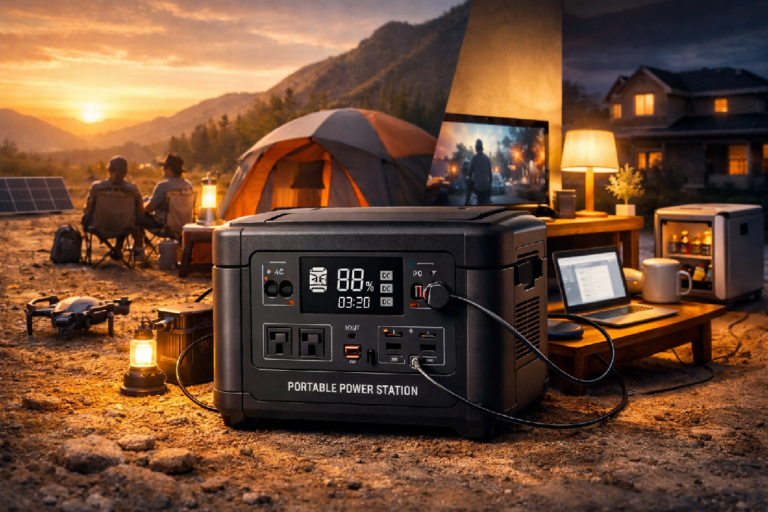
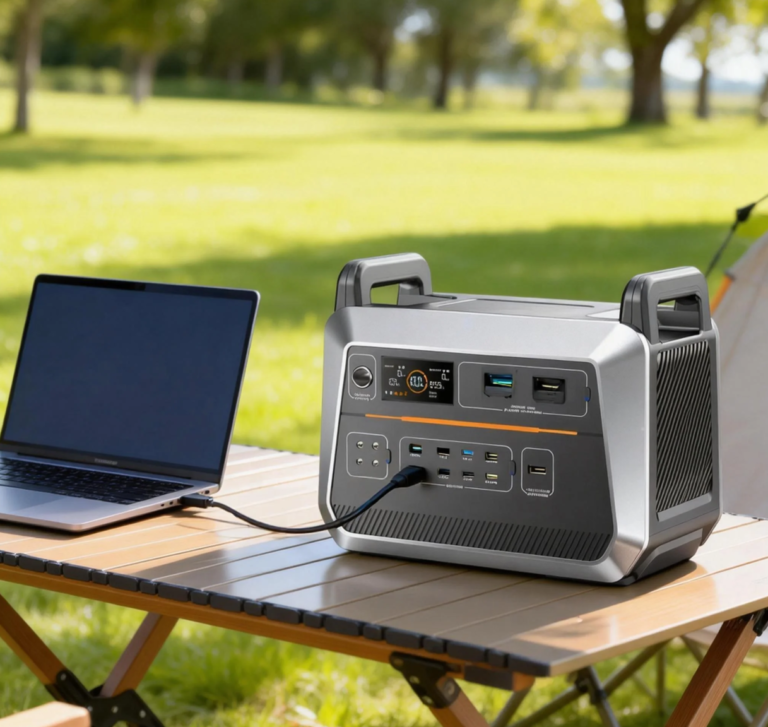
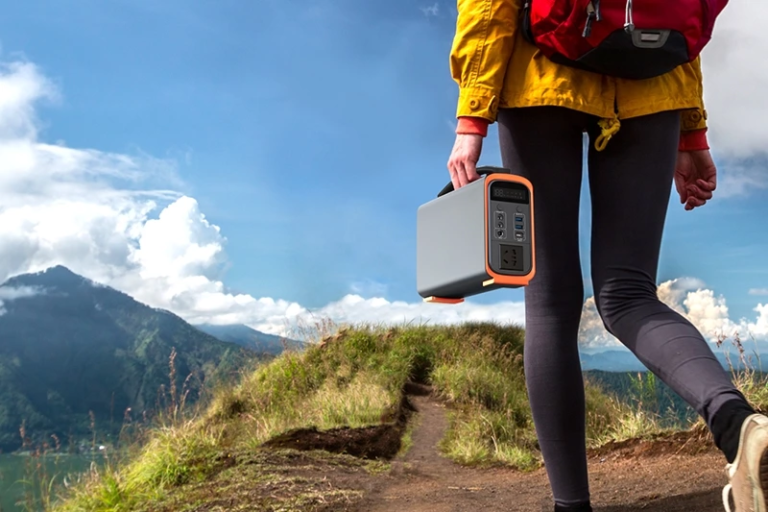
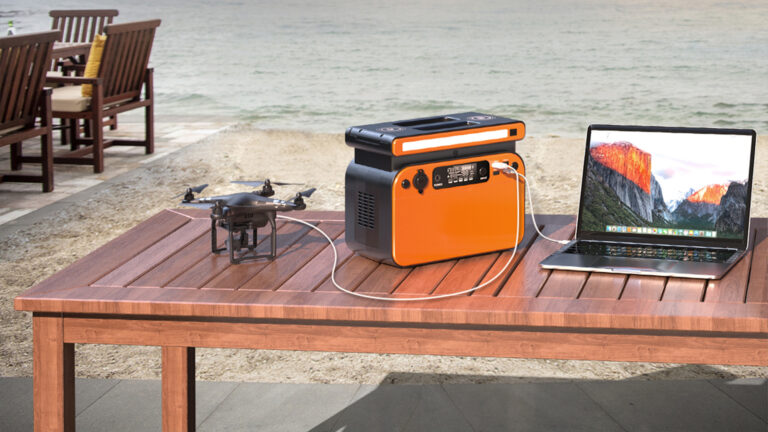
A portable power station is a compact, rechargeable battery generator designed to store electricity for mobile and backup use. It provides quiet, emission-free power and supplies energy through AC outlets, USB ports, and DC outputs—enough to run everything from smartphones to small household appliances.
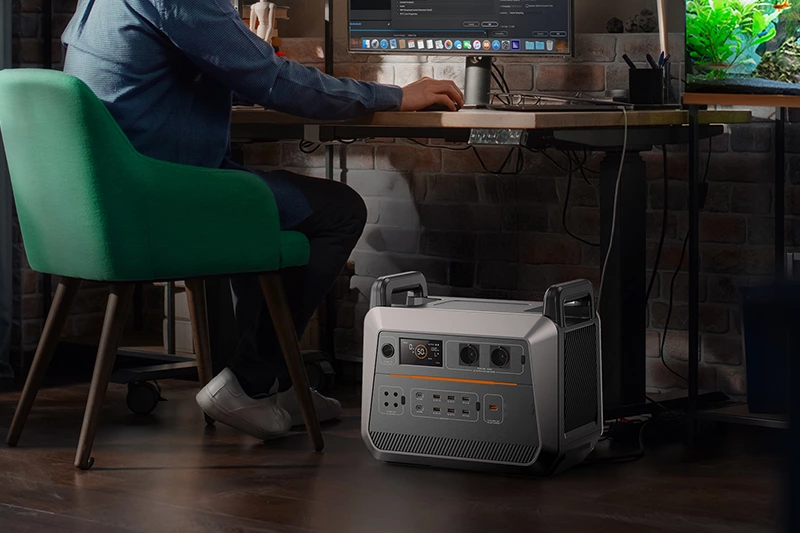
Today, many households keep a portable power station for home backup, especially to prepare for unexpected power outages. This leads to a very common question:
What size portable power station do I need for my home?
Before jumping into numbers, it’s important to clarify expectations.
When most people ask this question, they are not trying to power their entire house. In reality, the goal is much simpler and more practical: keeping the refrigerator running, maintaining Wi-Fi, having lights at night, and charging essential devices during a blackout.
Once you define that core need, choosing the right size becomes far easier and more realistic.
Key Specifications That Determine Power Station Size
To correctly size a home backup power station, you need to understand four core specifications. These are the same terms you’ll see on almost every product page, and they form the basis of all power calculations:
Power (W)
Battery capacity (Wh)
Surge power
Output waveform (pure sine wave)
1. Power (W): What Devices Can Run at the Same Time
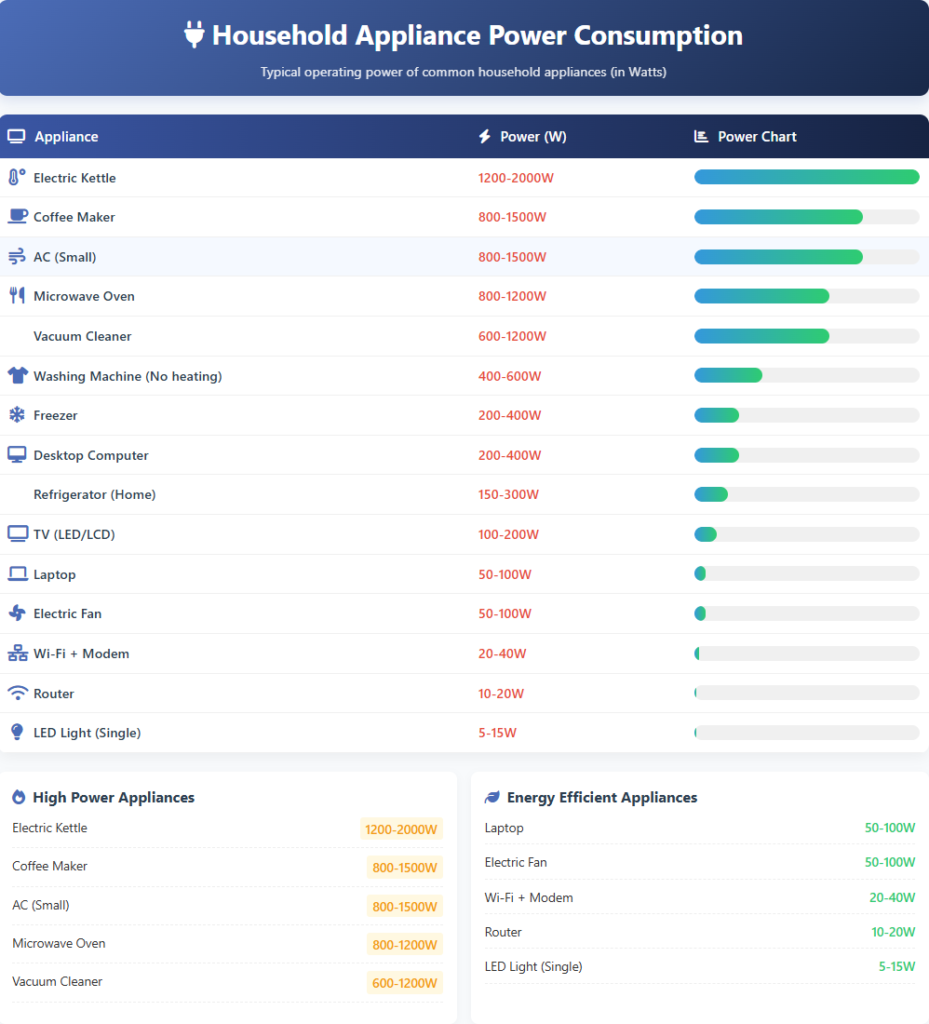
Power, measured in watts (W), describes how much electricity a device consumes at a given moment. It does not measure total energy usage—only how strong the demand is while the device is running.
For a portable power station, wattage answers one essential question:
Can it run the devices you want to use simultaneously?
A simple way to think about it:
Higher wattage means the power station can supply more electricity at once.
If a device’s required wattage exceeds the station’s output, it won’t run.
That’s why questions like:
“What size power station do I need to run a refrigerator?”
are fundamentally about output wattage, not battery capacity.
In home-use scenarios, wattage mainly determines feasibility—whether something can run at all.
2. Battery Capacity (Wh): How Long the Power Will Last
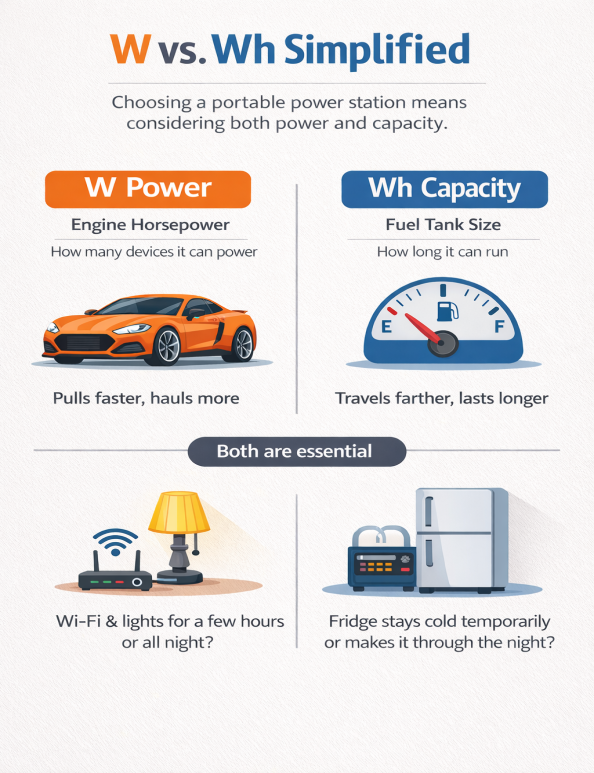
If watts (W) describe instant output, watt-hours (Wh) describe total stored energy.
In simple terms:
W (watts) decides what you can power.
Wh (watt-hours) decides how long you can power it.
An easy analogy:
Power (W) is like a car’s horsepower.
Capacity (Wh) is like the size of the fuel tank.
This is why both numbers matter:
Too little wattage → high-power appliances won’t start.
Too little capacity → devices run, but only briefly.
For home backup use, battery capacity directly determines how long you can ride out a power outage:
Will your Wi-Fi and lights last a few hours or all night?
Will your refrigerator stay cold temporarily or through the entire outage?
3. Surge Power: Handling Appliance Startup Spikes
Many household appliances draw more power when they first start.
For example, a refrigerator may:
Run steadily at around 200–300W
Spike to 600W or more when the compressor starts
This short burst is known as surge power.
If a portable power station can’t handle this surge, you may experience:
Immediate shutdown when the appliance starts
Overload protection triggering
Poor real-world performance despite “acceptable” specs
That’s why continuous wattage alone isn’t enough, especially for refrigerators, microwaves, pumps, or power tools.
Quick summary:
W → determines what can run
Wh → determines how long it runs
Surge power → determines whether devices start smoothly
4. Pure Sine Wave Output: Power Quality Matters at Home
Another important factor when choosing a portable power station for home use is AC output quality.
There are two main types:
Pure sine wave: Smooth, stable power identical to household grid electricity
Modified sine wave: A rough approximation found in cheaper models
Most household appliances—especially those with motors or sensitive electronics—are designed for pure sine wave power.
Using modified sine wave output can cause:
Increased noise
Higher heat
Reduced efficiency
Potential long-term damage
For phones or simple lighting, this may not matter.
For refrigerators, laptops, medical devices, or kitchen appliances, pure sine wave output is strongly recommended.
How to Calculate the Right Size Portable Power Station for Your Home
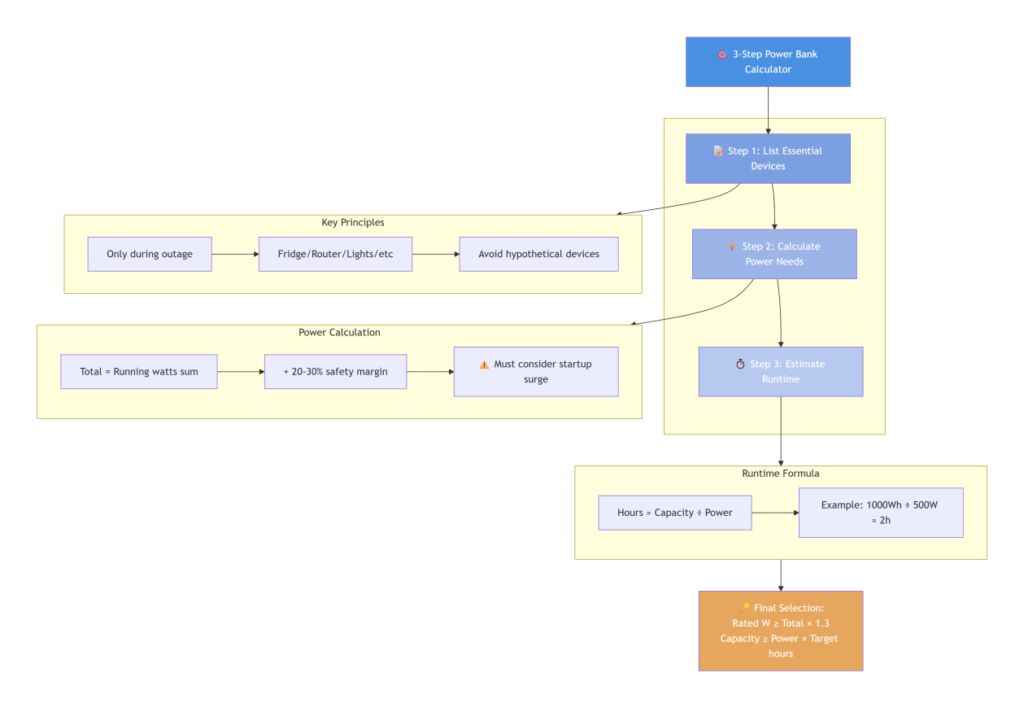
Instead of guessing, you can follow a simple three-step approach.
Step 1: List Only Essential Devices
You are not powering the whole house—only what truly matters during an outage.
A typical list includes:
Refrigerator
Wi-Fi router
A few lights
TV or laptop
This keeps your power station size realistic and avoids unnecessary cost.
Step 1: List Only Essential Devices
You are not powering the whole house—only what truly matters during an outage.
A typical list includes:
Refrigerator
Wi-Fi router
A few lights
TV or laptop
This keeps your power station size realistic and avoids unnecessary cost.
Step 3: Estimate Runtime Based on Capacity (Wh)
Use this simple formula:
Runtime (hours) ≈ battery capacity (Wh) ÷ total load (W)
Example:
Battery capacity: 1000Wh
Load: 500W
1000Wh ÷ 500W ≈ 2 hours
If your goal is 4 hours, you’ll need roughly 2000Wh.
This explains why how long can a portable power station run a refrigerator never has a single universal answer—it depends on both load and capacity.
Common Portable Power Station Sizes for Home Backup
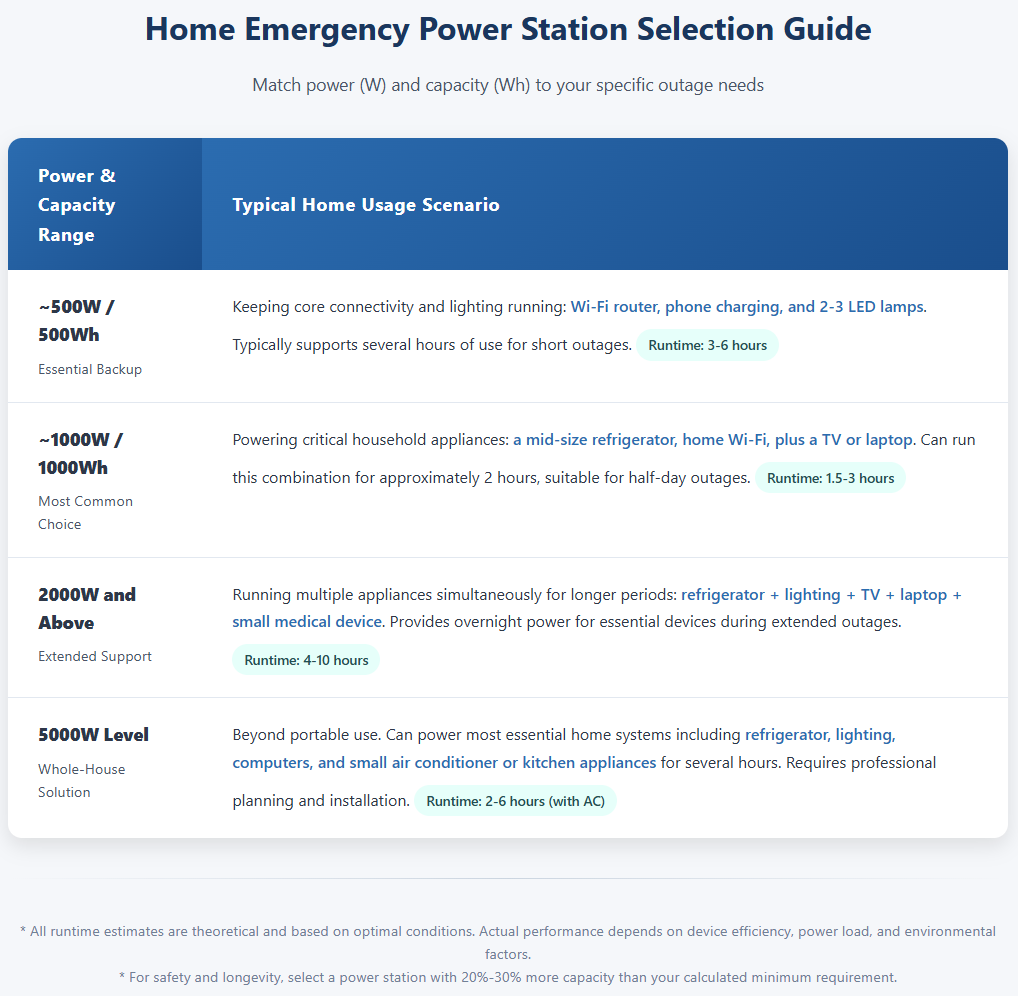
In practice, it’s best not to size a power station exactly at your calculated minimum.
Power draw fluctuates, and conversion efficiency is never 100%. Leaving a 20–30% buffer leads to a much better experience.
Also worth noting:
Bigger is not always better.
For many households, a mid-sized power station is more practical, easier to use, and far more cost-effective than an oversized unit designed for extreme scenarios.
Can a Portable Power Station Power an Entire Home?
Technically, yes—but with compromises.
Large, high-capacity units can support multiple appliances for several hours, but this usually means:
Significantly higher cost
More complex setup
Moving beyond the original emergency-backup purpose
For most homes, a portable power station works best as short-term backup power, not a full replacement for grid electricity.
Final Thoughts
Instead of asking:
“Can this power my entire house?”
A more useful question is:
What can I absolutely not afford to lose during a power outage?
Once that list is clear, the required wattage and battery capacity become obvious. This need-driven approach is usually more practical, more economical, and far more likely to help you choose the right portable power station for home use.