
Many owners who buy a 50-amp RV are left with one big question right after taking delivery: with a rig this big, what size generator am I going to need? Then they go online, do a quick search, and find that everyone on the forums is asking the exact same thing.
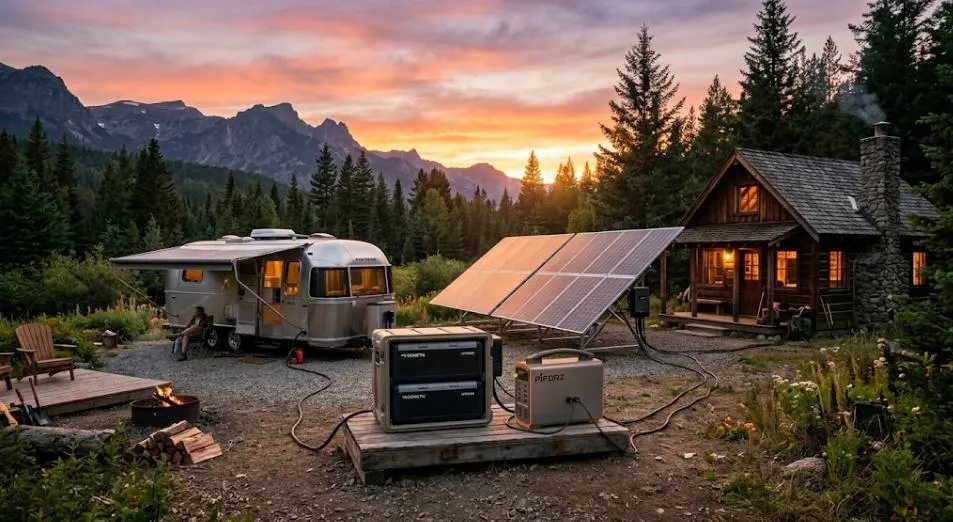
But here’s something you might not have stopped to consider: what your electrical system can handle and what you actually need to run are two completely different matters. 50 amps is simply the maximum capacity the circuit can handle—not how much you actually need, and not even how much you’re realistically going to use. We run into this all the time in the battery business too. Customers come in asking if we carry a generator for a 50-amp RV, and at first our salespeople were just as confused. It wasn’t until they dug into it that they figured out what was really going on. And according to actual usage feedback from PIFORZ users, most RV owners simply don’t draw that much power day-to-day—it’s way below 12,000 watts. If you’re even a little mindful about managing your usage, a portable power station might actually be enough.
What Does 50 Amp Mean on an RV?
On an RV, 50 amps refers to the high-capacity electrical system that can deliver up to 12,000 watts of power at maximum—in other words, the upper limit of current that the circuit can safely handle.
What do we mean by “what the circuit can handle”? More precisely, it’s the circuit’s ampacity—the maximum amount of current or wattage that the wiring, outlets, plugs, breakers, and distribution system can safely pass through.
What’s that for? It’s mainly used to determine how many appliances you can run simultaneously in the RV and to prevent overheating, tripped breakers, or even fires. It also dictates what size generator you’ll need if you’re planning to power the rig.
30 Amp vs 50 Amp
Now some people ask: does a higher amp rating mean a higher maximum current capacity? Yes, it does—the higher the amp number, the more it can handle. Currently, 30-amp and 50-amp are the two most common and widely used power standards in the RV world, and they’re actually quite different from each other.
Different plug designs:Just by looking at them, you can see clear visual differences. A 30-amp plug has three prongs and is round (TT-30 standard), while a 50-amp plug has four prongs and is square (NEMA 14-50 standard).
Different capacities: It’s not just the numbers that differ—the total wattage they can handle is a 3.3x difference. A 30-amp system can handle a maximum of 3,600 watts total, while a 50-amp system can handle 12,000 watts. Also, a 30-amp system has only one hot wire at 120V, while a 50-amp system has two hot wires, each also at 120V. Even though the 50-amp system’s total capacity is much higher, each individual hot wire is still limited to 50 amps of current.
Do You Really Need a 12,000 Watt Generator for a 50 Amp RV?
As we mentioned earlier, 50 amps represents the maximum current the system can handle—but that doesn’t mean we’re ever actually going to use that much.
Also, “powering” an RV and “charging” an RV are two completely different things:
- Powering the RV from a power station: This means a portable power station or wall outlet outputs AC power directly to the RV through its external shore power connection. In this process, electricity flows through the RV rather than charging its batteries—these are two separate systems. It’s just like plugging a TV into a wall outlet at home; the current just passes through the RV to power the devices inside. And without an external power source, most 120V AC appliances in the RV—like the roof air conditioner, microwave, regular outlets, water heater, etc.—generally can’t run directly.
- Charging the RV’s house battery: The RV comes with its own battery bank (12V or 48V) that powers low-voltage DC devices like lights, exhaust fans, refrigerator control boards, and so on. If we’re talking about “charging the RV,” we mean charging this battery—as long as the battery has juice, these devices will work.
| 12V DC System | 120V AC System | |
| What it runs | Lights, water pump, exhaust fans, fridge control board, cigarette lighter, USB charging ports | Air conditioner, microwave, induction cooktop, water heater, regular outlets (hair dryer, rice cooker) |
| Where power comes from | RV’s built-in 12V house battery | External source: shore power, generator, portable power station |
| Without external power | Works normally, running off battery | None of it works, unless you fire up a fuel generator or use a portable power station |
| What if battery dies | Alternator charges while driving / solar panels / portable station via DC port | Only option is to plug into external power—no other way |
A lot of people hear “12,000 watts” and immediately think they need to haul around a massive generator to power the whole rig. But seriously, ask yourself: do you really use that much electricity?
Power usage in an RV is no different—12,000 watts is the *maximum* it can handle, not what you need to run every single time. And when you’re living in your RV, do you turn on every device at once, or only what you need at the moment?
Obviously, you turn on what you need.
If you want to cook, you fire up the induction cooktop or microwave—not the air conditioner, water heater, TV, and hair dryer all at the same time just to keep you company.
When you’re sleeping, maybe you’re just running the AC, a night light, and letting the fridge do its thing. You’re not going to have the microwave and induction cooktop going while you’re asleep, right?
And during the day, when you’re sitting outside or walking around the campground, you might only need the fridge to keep running while everything else stays off.
So here’s the real takeaway: what determines the size of generator you need isn’t the label on your RV—it’s what you plan to run simultaneously.
If you want to run two air conditioners at the same time, heat up food in the microwave, boil water for a shower, keep the fridge running, charge your phone, and also blow-dry your hair—then yeah, we have to admit that’s going to require shore power or a 10,000–12,000W fuel generator to handle it.
But if you’re living simply—just turning on a light at night, charging your phone and laptop, running the fridge, connecting to WiFi, using a CPAP machine, or occasionally brewing a cup of coffee with a coffee maker—then you absolutely don’t need a 10,000-watt setup. A few thousand watts from a small generator or even a portable power station will do just fine.
| Scenario | Appliances Running Simultaneously | Estimated Running Wattage |
| Cooking during the day | Induction cooktop + fridge + lights | ~1,800–2,600W |
| Afternoon nap in summer | One AC unit + fridge + phone/laptop charging | ~800–1,800W (lower for small AC, over 2,000W for high-power units) |
| Sleeping at night | One AC unit + fridge + small night light | ~700–1,800W |
| Heating in winter | Space heater + fridge + lights | ~1,600–2,300W |
Based on our after-sales service communications and the load lists provided by users themselves, we’ve found that most 50A RV users don’t come anywhere near the 12,000W full load for extended periods. In actual off-grid use, typical loads are usually one AC unit, a fridge, lighting, WiFi, phone and laptop charging, and occasional kitchen appliance use. Aside from concentrated cooking periods or peak AC draw times, sustained power consumption rarely exceeds 3,000W.
So it really comes down to what equipment you want to run.
For example, if you’ve got a 15,000 BTU roof air conditioner in your RV, it draws about 1,500–1,800W while running. Add a refrigerator at roughly 150–300W, lighting under 100W, and WiFi plus phone/laptop chargers under 100W—your actual continuous power draw is probably around 2,000–2,500W. That number is still a long way from the 50A RV system’s theoretical 12,000W ceiling, so there’s really nothing to worry about.
But here’s one thing to keep in mind: air conditioners have startup surge power. For example, a roof AC that runs at 1,500W can spike to 3,000W or even higher the instant the compressor kicks in. So when you’re choosing a generator or portable power station, you can’t just look at the battery capacity in Wh—you also need to check its continuous AC output, peak output, port types, charging speed, and whether it’s actually suited for RV use.
What Size Generator for a 50 Amp RV with 2 AC Units?
Now someone might ask: what if I want a more comfortable lifestyle and I want to install two AC units in my RV, while still using other appliances too? If shore power is available, the RV’s electrical system can handle all of that without issue. But if there’s no shore power to plug into, how big of a generator would you need just running off that?
In my view, this is really two questions. One: is there a generator that can handle two AC units starting up at the same time? Two: can the battery or fuel tank sustain running such high-power equipment for any length of time? Because let’s be honest—in the vast majority of cases, you’re rarely going to actually need both ACs running simultaneously. And most RVs already come with a dash air conditioner that runs while driving. If you add a second one, it’s usually either an RV-specific DC inverter air conditioner or a retrofitted household inverter AC. But the power sources for these two types are quite different—one runs off the engine alternator while driving, the other relies on shore power, battery, or generator while parked.
If both of your ACs are traditional RV rooftop AC units, each drawing about 1,500W during normal operation, running both simultaneously would be roughly 3,000W. Add in basic loads like the fridge, lights, WiFi, TV, battery charger, etc., and you’re probably looking at 4,000W–6,000W of actual running power. Then factor in the startup surge, and a 6,500W–9,000W generator would be the sweet spot. If you also want to run high-power appliances like a microwave, electric water heater, or hair dryer at the same time, then you’ll be looking at the 9,000W–12,000W range.
But if one of them is a 12V/24V DC parking air conditioner, the situation changes. This type of AC is better suited for resting while parked, cooling a small space, or providing supplemental cooling—it’s not really designed to be the main AC for a large 50-amp RV. Its power draw is lower, but that also means less strain on the generator or battery system.
| Two-AC Configuration | Power Demand | Better Power Solution |
| Two traditional RV rooftop AC units | Very high | 6,500W–9,000W generator minimum; 9,000W–12,000W for more comfort |
| One traditional RV rooftop AC + one 12V/24V DC parking AC | Moderately high | Medium-sized generator, large portable power station, or RV battery system all up for discussion |
| One dash AC + one parking DC AC | Depends on use case | Engine while driving; battery or external power while parked |
| Two low-voltage DC parking ACs | Relatively lower | Better suited for direct battery supply, portable power station, or solar charging system |
In our interactions with customers, we’ve noticed that people tend to focus only on capacity and rarely pay attention to startup surge. A lot of RV owners also just look at rated wattage when choosing a generator, only to have both ACs trip the breaker the moment they start up at the same time.
Air conditioners are power-hungry devices. When looking at their rated power, you also need to pay close attention to the startup surge. An AC that runs at 1,500W can spike to 3,000W or more at startup. When two of them start up simultaneously, that surge is even greater. If the generator doesn’t have enough headroom, it’ll trip the breaker or trigger overload protection right away.
People with experience might ask: does a Soft Start help? Yes—installing one can reduce the startup surge quite a bit, allowing a smaller generator to handle it. But it only solves the startup problem; how long you can run still comes down to capacity.
50 Amp Inverter Generator vs Fuel Generator vs Solar Generator
If you’re looking for additional power to run a 50-amp RV, the first step is to understand what power sources are available. Then you need to evaluate which scenarios or equipment you need to power, and finally choose the right solution based on your overall needs.
For RV users, there are three common power options: traditional fuel generators, inverter generators, and solar generators. All of them can provide electricity to an RV, but they’re suited for different problems.
- Traditional fuel generators: Their biggest advantage is raw power and continuous runtime. If you need to run two RV AC units, an electric water heater, microwave, hair dryer, rice cooker, and other high-wattage appliances for extended periods, a fuel generator can handle it all with capacity to spare—it’s extremely capable. But the downsides are obvious: loud noise, exhaust fumes (which we all know about), and the biggest one—many campgrounds restrict their use at night.
- Inverter generators: These are probably the better choice for RVs among fuel-powered options. They’re quieter than traditional generators, and their output power is cleaner and more stable, which is friendlier to sensitive electronics in the RV like TVs, laptops, chargers, and control boards. However, they’re still fuel-burning devices, so the drawbacks are largely the same—noise, maintenance, and exhaust. If you’re looking for a quieter generator or one with a dedicated 50-amp outlet, this is your best bet.
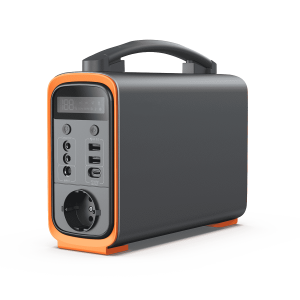
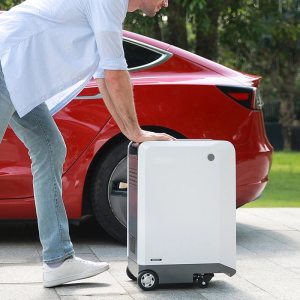
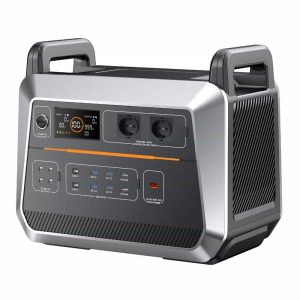
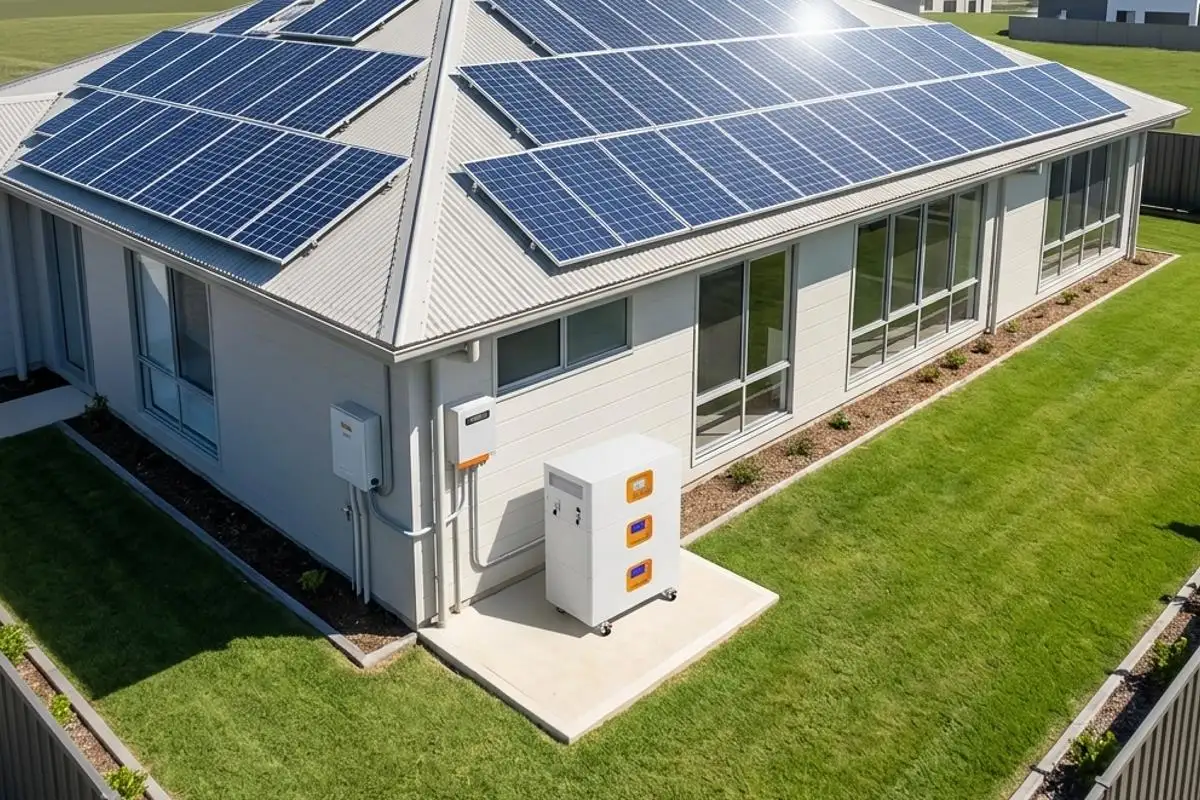
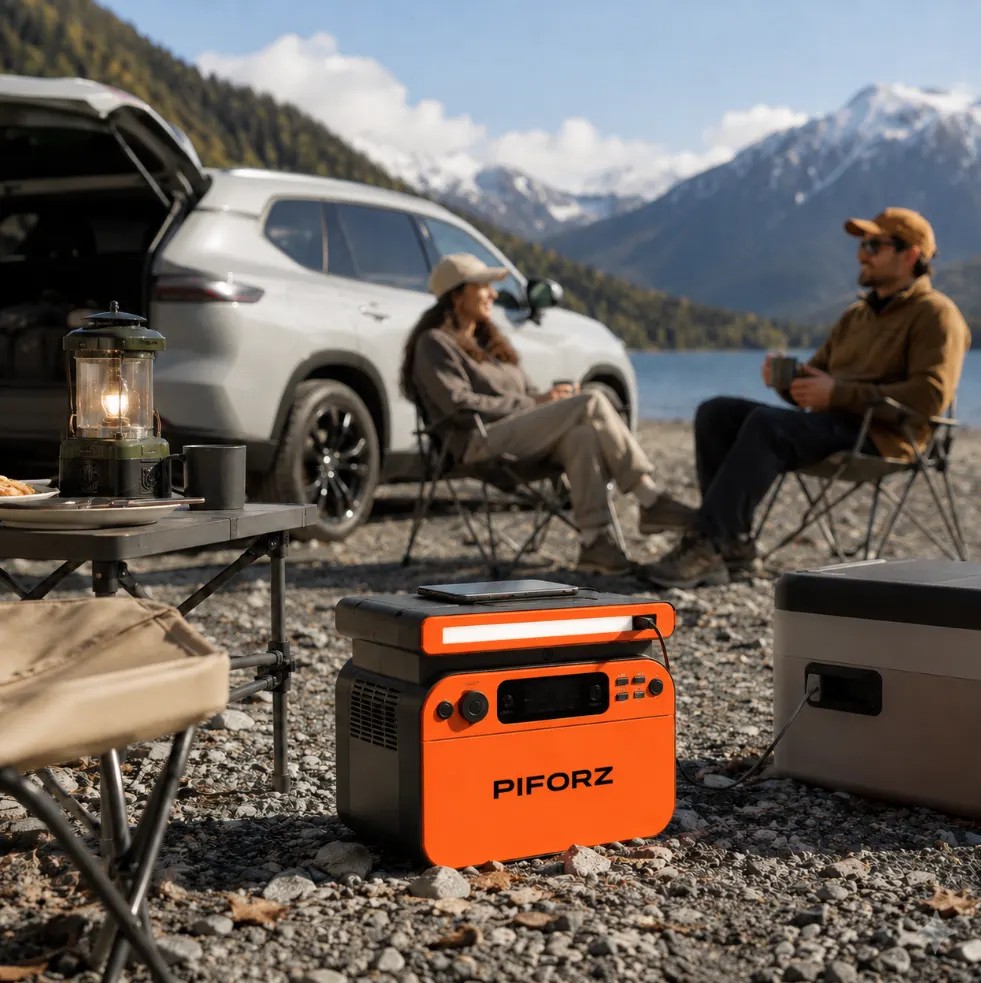
- Solar generators: This means a combination of solar panels and a portable power station. Compared to the other two options, the advantages are clear—clean solar energy and silent battery power, with zero exhaust or noise issues. The output options are also diverse. If you want quiet power at night, a portable power station is your best companion. Of course, the downside is that a standard-capacity power station might feel a bit limiting for an RV user—you’d need to step up to a larger capacity. And when choosing one, you also need to pay attention to startup surge to make sure it can handle those big appliances.
| Power Source | Better Suited For | Main Limitations |
| Traditional fuel generator | Two AC units, microwave, water heater, extended high loads | Noise, fuel consumption, exhaust, maintenance |
| Inverter generator | Two AC units, microwave, water heater, extended high loads | Higher cost, but still requires fuel |
| Solar generator (portable station + panels) | Quiet nighttime use, fridge backup, CPAP, phones/laptops, WiFi, lights, short-duration kitchen appliances | Not suitable for prolonged heavy loads from two large AC units |
Choose by Load, Not Just by the 50 Amp Label
Stop focusing on the 50-amp label—what you need to look at is what you personally want to run. What size generator for a 50-amp RV? There’s no one-size-fits-all answer—it entirely depends on how you plan to use it.
So, will a 7,500W generator work? It can absolutely handle many 50-amp RV’s daily loads, and it might even be able to run two AC units with some effort. But the catch is you’ll have to be mindful about what you’re using—don’t run high-power appliances simultaneously, stagger the AC startups, and it’s best to install Soft Starts on the ACs. It’s workable, not carefree.
Whether you’re looking at Honda, Harbor Freight, a quiet 50-amp inverter generator, or a portable power station—don’t just see the 50-amp label and assume it fits. That 12,000W ceiling on a 50-amp RV is the maximum your RV’s electrical system can handle, not a number you need to hit on every camping trip.
So if you want to choose the right setup, don’t buy the biggest or the most expensive—buy what’s just enough for the way you actually live.