What is a Solar Emergency Generator?
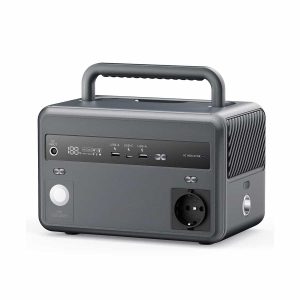
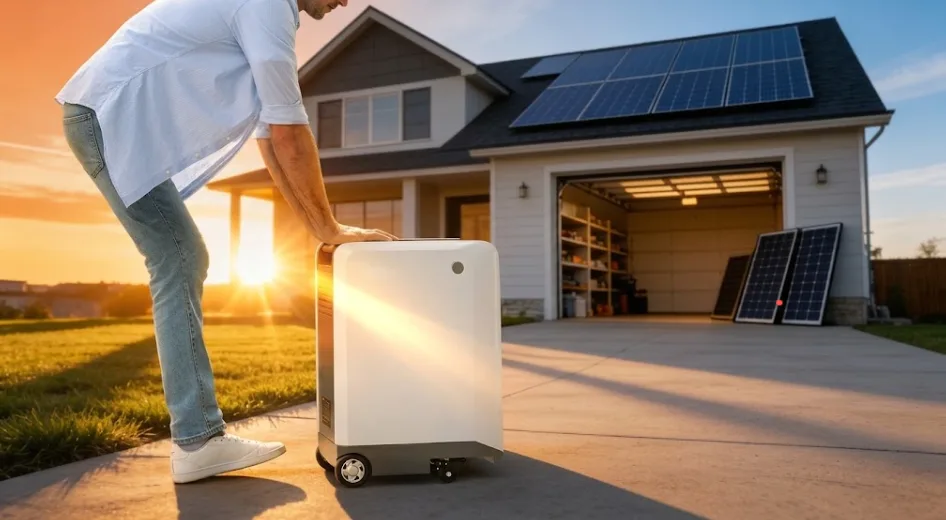
A solar emergency generator, also known as a portable power station or solar generator, is a device that uses solar panels to convert sunlight into electrical energy, stores it in a built-in battery, and can provide power support for your household devices at any time.
Four Key Components of a Solar Emergency Generator
A solar emergency generator consists of four core components:
(1) Solar Panels: Convert sunlight into direct current (DC). Monocrystalline silicon panels are more efficient in low-light conditions.
(2) Storage Battery: Lithium iron phosphate batteries are now the mainstream choice, with a lifespan of up to 3,500–6,000 cycles, higher safety, and support for deep discharge.
(3) Charge Controller: Prevents overcharging and over-discharging of the battery. MPPT controllers can improve power generation efficiency by 10%–30%.
(4) Inverter: Converts the battery’s DC power into alternating current (AC) for your household appliances.
Working Principle of a Solar Emergency Generator
(1) Power Generation Phase: During sufficient sunlight, the solar panels generate DC power, which is stored in the battery via the controller.
(2) Energy Storage Phase: The controller monitors the charge level in real-time and automatically stops charging once the battery is full.
(3) Power Supply Phase: When you need electricity or when the system detects a power outage, the inverter converts the battery’s DC power into AC power for household appliances, available through USB ports or household outlets.
Core Differences Between Solar Emergency Generators and Traditional Fuel Generators
| Comparison Item | Solar Emergency Generator | Traditional Fuel Generator |
| Energy Dependency | Requires only sunlight, no fuel resupply | Requires continuous supply of gasoline/diesel |
| Environmental Impact | Zero emissions, no noise, suitable for indoor use | Emits exhaust fumes, noisy (>70 dB) |
| Response Speed | Automatic switch after outage, no startup needed | Manual startup required, with delay |
| Applicable Scenarios | Enclosed spaces, medical environments, home emergencies | Only outdoors or well-ventilated areas |
| Long-term Cost | High initial cost, very low operation and maintenance costs | Ongoing fuel and maintenance costs |
Types and Application Scenarios of Solar Emergency Generators
Solar emergency generators can be classified from different perspectives.
Classification by Battery Cell Type:
(1) Lithium Iron Phosphate Generator: Advantages include long lifespan—over 3,000–3,500 cycles, usable for more than 10 years—and high safety, with a high thermal runaway temperature and low fire risk. All Piforz portable power stations use lithium iron phosphate batteries. Disadvantages include lower energy density, making them heavier and larger than ternary lithium batteries at the same capacity.
(2) Ternary Lithium Generator: Advantages include high energy density and light weight—lighter than lithium iron phosphate at the same capacity. Disadvantages include lower cycle life and lower thermal stability.
Classification by Capacity:
(1) Portable (Small) Solar Emergency Generators: Typically range from 200Wh to 700Wh, suitable for charging small devices such as phones, laptops, computers, and cameras.
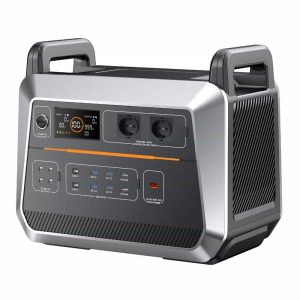
(2) Medium/Large Capacity Solar Emergency Generators: Typically range from 1000Wh to 3000Wh, often used as backup power for short-term household outages, powering appliances like microwaves, CPAP machines, and refrigerators.
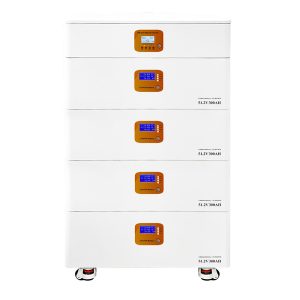
(3) Heavy-Duty/Large Solar Emergency Generators: Typically range from 3600Wh to over 10kWh, and can be extended indefinitely with expansion batteries. Suitable for sudden long-term outages or extended power cuts caused by extreme weather.
Classification by Inverter Output Waveform:
(1) Pure Sine Wave Inverter Type: Output waveform matches grid power, can drive precision equipment such as medical instruments, suitable for voltage-sensitive appliances.
(2) Modified Sine Wave Inverter Type: Output waveform is stepped, lower cost, but higher harmonics, not friendly to sensitive electronics (may cause overheating). Suitable for resistive loads like lights and electric heaters.
Application Scenarios for Solar Emergency Generators
With technological advancement and development, renewable energy is increasingly entering our homes and becoming closely related to our daily lives. Common application scenarios include:
Home Emergency Backup Scenarios
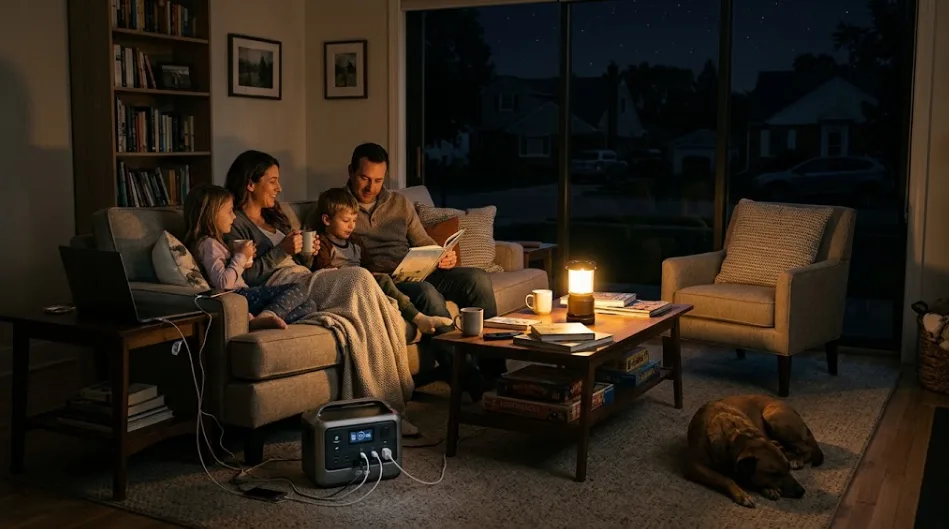
(1) Short-term Power Outages: Can support basic daily needs for many residents, such as refrigerators, medical devices, and lighting.
(2) Whole-House Power Supply: Can seamlessly take over power supply for all household appliances, ensuring no change in daily living standards.
Outdoor Travel or Off-Grid Living
(1) Camping Life: If you are enjoying a refined camping experience with your family, a portable solar emergency generator can provide continuous power for your projector, small electric pot, and other devices, allowing you to enjoy your camping life without worrying about power issues.
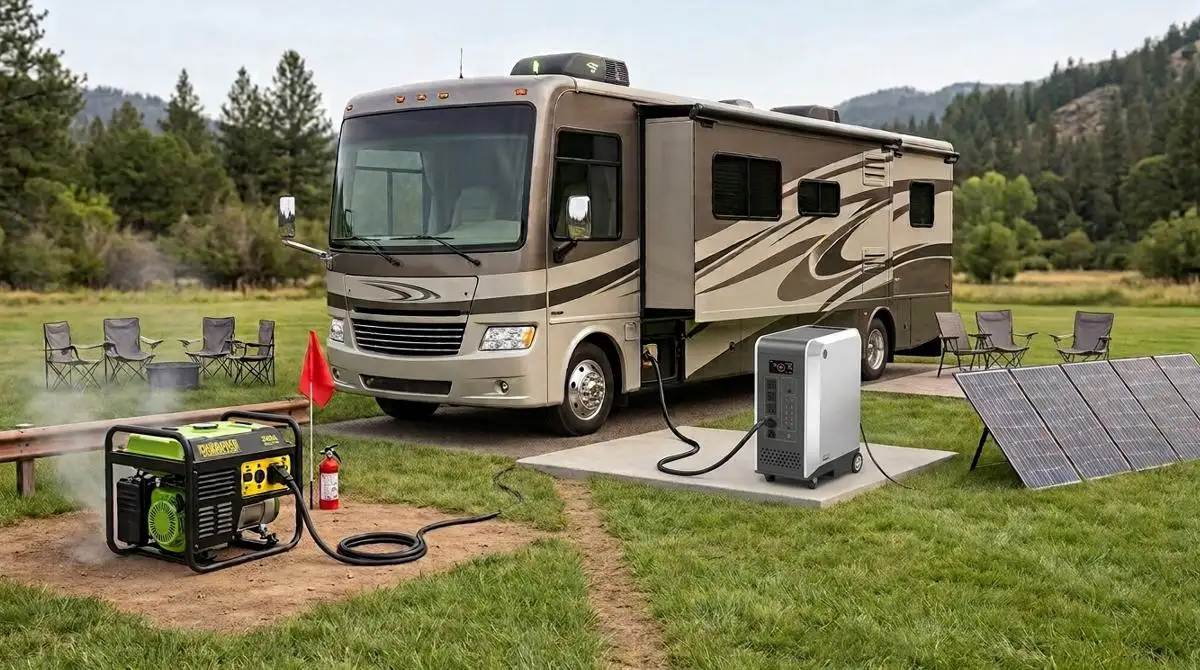
(2) RV Travel: If you want to take an RV trip with your family during your vacation, a portable solar emergency generator can serve as your backup battery, providing electricity for your lighting, water pump, refrigerator, and other equipment. Moreover, you can install solar panels on the roof of your RV, so you can charge it simply by parking in a sunny spot.
(3) Outdoor Work: If you are a field photographer or a geological surveyor, a portable solar emergency generator can also charge your laptop, measuring instruments, cameras, and other equipment.
Disaster Emergency Scenarios
(1) Disaster Emergency Power Supply: During natural disasters such as typhoons, earthquakes, or floods that cause grid outages, a portable solar emergency generator can provide timely power for communication devices and lighting.
(2) Emergency Communication Support: Can power temporary communication base stations, satellite phones, drones, and other equipment in disaster areas.
Remote Areas Without Grid Coverage
(1) Remote Villages and Pastoral Areas: If you live in an area without grid coverage, a solar emergency generator can provide daily electricity at a lower construction cost than traditional power grids.
(2) Field Monitoring or Research: Automatic weather stations, islands, hydrological monitoring equipment, etc.
I believe you now have a certain understanding of solar emergency generators. Many people ask, “How do I choose the right solar generator?”
Which Solar Generator Should I Choose?
Regarding the choice of a solar generator, I believe many of you have done research on various websites and forums, but many still aren’t sure exactly what they need. Let me help you understand.
Solar Generator for Apartment Use
Some people ask, “I live in an apartment, what kind of solar generator should I choose?” First, we need to understand the challenges of an apartment: limited space, meaning you cannot store fuel outdoors, and sensitivity to noise. Imagine using a fuel generator or a very noisy generator in an apartment—the pungent smell alone would be unbearable, and your neighbors might call the police because you’re disturbing their precious rest.
So you should choose a compact, super quiet, zero-emission generator that can operate safely indoors and be easily moved around your room.
Compact models like the PiForz PF500 (518Wh) and PiForz PF200 Pro (320Wh) offer a perfect balance between portability and emergency power. They are completely silent, use lithium iron phosphate batteries for safety and long life, and can be charged via wall outlet or small folding solar panels.
Solar Generator for Camping
Personally, I love camping, but I don’t like carrying heavy or bulky items. For camping, weight and size are the primary considerations. You need enough power to charge devices, run a portable refrigerator, or power a CPAP machine all night—without exhausting yourself.
Also, consider whether the device has enough ports for your various devices.
Models like the PiForz PF300 (300Wh, with folding solar panel) and PF500 (518Wh) are designed for outdoor adventures—lightweight, durable, and capable of solar charging while you hike, fish, or rest. For RVs and extended off-grid camping, the Jackery Explorer 2000 Plus and PiForz PF2000 (2073Wh) provide enough power for several days.
Solar Generator for Home Backup
Regarding home use, I really don’t want to say too much because every household’s needs are different. Some may need to power many appliances, while others only need a few.
If you need a home backup solar generator, first clarify your needs: which appliances must keep running during an outage? Grab your notebook and walk around your home, noting their power ratings. Also, determine how long you need them to run during an outage.
Common appliances that need to run:
| Core Household Appliance | Running Power (W) | Startup Power (W) | Estimated 24-hour Consumption (Wh) |
| Full-size Home Refrigerator | 100–200W | 800–1200W | 1200–1600Wh |
| Wireless Router & Modem | 15–30W | 15W | 400–700Wh |
| Medical Device (e.g., CPAP) | 40–80W | 100W | 400–600Wh |
| Phone/Computer Charging (4 people) | 150W | 150W | 500Wh |
| LED Emergency Lighting (4 lights) | 40W | 40W | 200W (based on 5 hours) |
| Microwave / Induction Cooktop | 1000–1500W | 1500W | 300–500Wh (based on 20 minutes) |
Also note: Choose pure sine wave. Reason: Modified sine wave can damage sensitive modern appliances. Refrigerators, microwaves, CPAP machines, and boiler controllers all require pure sine wave current to operate safely and without noise. UPS/EPS automatic switching is necessary. Reason: When the grid suddenly fails, the generator can take over power within 10–20 milliseconds, ensuring that routers, NAS servers, refrigerators, or medical devices don’t restart or get damaged.
Frequently Asked Questions
Can a Solar Generator Survive an Electromagnetic Pulse?
For those preparing for worst-case scenarios, EMP protection is a serious concern. An electromagnetic pulse (EMP)—whether from a high-altitude nuclear explosion or a severe solar coronal mass ejection—can induce massive voltage surges in electronic circuits, potentially destroying unprotected equipment instantly.
Not necessarily, unless specific precautions are taken. Consumer solar generators are typically not EMP-hardened. Any device containing microchips, inverters, and charge controllers is vulnerable. Long solar panel cables may also act like antennas, channeling damaging energy into the device during an EMP event.
However, mitigation is possible. The most effective method is to store your portable power station inside a Faraday cage—a sealed metal container that blocks electromagnetic fields. Some preppers also make Faraday bags for their folding solar panels. If you disconnect a PiForz portable station from its panels and store it in a metal container, its chances of surviving an EMP increase significantly.
What Can a 3000-Watt Solar Generator Power?
| Device Category | Device Name | Typical Running Power (W) | Usage Advice & Considerations |
| Kitchen Appliances | Microwave | 1000 | High power but short usage time; avoid running simultaneously with other high-power devices. |
| Electric Kettle | 1200 | Same as above; high power while boiling. | |
| Coffee Maker | 800–1000 | Standard kitchen appliance; safe to use. | |
| Rice Cooker/Oven | 1200 | Can be used simultaneously with low-power devices like lighting. | |
| Induction Cooktop | 1800–2200 (common) | High-power device; monitor total load to avoid overload. | |
| Blender/Juicer | 300–500 | Low power; can be used with other devices. | |
| Large White Goods | Refrigerator/Freezer | 100–800 | Pay attention to startup power (3–7 times running power). Generator must handle this peak. |
| Washing Machine | 300–800 | Power increases significantly when heating water; be mindful. | |
| Air Conditioner (window/small 1.5 hp) | 900–1500 | High-power device. Key is whether generator’s peak power can handle startup current. | |
| Electric Dryer | 3000 | Extremely high power; nearly monopolizes generator capacity; other devices should be paused. | |
| Entertainment & Office | LCD TV | 45–150 | Very low power; can be shared freely. |
| Laptop | 50–100 | Minimal power consumption. | |
| Desktop Computer (with monitor) | 300–500 | Power varies by configuration; gaming PCs consume more. | |
| Phone/Tablet Charging | 6–8W | Negligible power consumption. | |
| Lighting & Other | LED Light (equiv. 60W) | 13 | Extremely energy-efficient; ideal for prolonged emergency lighting. |
| Energy-Saving Bulb (11W) | 11 | Low power; multiple can be used simultaneously. | |
| Electric Fan | 40–120 | Low power; economical choice for emergency cooling in summer. | |
| Hair Dryer | 1500 | High power but very short usage time; avoid other high-power devices simultaneously. | |
| Power Tools | Drill/Angle Grinder | 500–1500 (common) | Standard tools; power usually within generator capacity. |
| Chainsaw/Cutter | 1500–2200 (common) | High-power tools with high startup current; ensure sufficient peak power margin. |
Can I Buy a Solar Generator Recommended by Consumer Reports?
Yes, you can, but ultimately, you should order based on your actual needs.