In energy forums and technology-focused Reddit communities, people often ask:
“If my roof isn’t suitable for solar panels, or I’m not ready to invest in a solar system yet, can I still benefit from a home battery backup?”
Many people assume that a home battery backup only makes sense when paired with solar panels. In reality, that’s no longer the case. Today, an increasing number of households are installing home backup power systems, portable power stations, or whole-home battery storage systems even without any solar panels.
As an energy storage manufacturer, we’ve conducted an in-depth analysis of the best home battery backup without solar, covering their practical applications, comparing different installation options, and examining perspectives from online communities and social media. Our goal is to help you identify the most cost-effective solution for your needs.
What Is a Home Backup Battery Used For?
1. Time-of-Use Electricity Cost Savings
According to the latest data from the U.S. Energy Information Administration (EIA), residential electricity prices have risen significantly. Utility companies such as PG&E often charge between $0.30 and over $0.50 per kWh during peak hours.
By charging a home backup battery during off-peak nighttime hours — when electricity is cheaper and grid supply is abundant — and discharging it during expensive afternoon peak periods, homeowners can actively reduce their dependence on high utility rates.
2. Emergency Backup During Power Outages
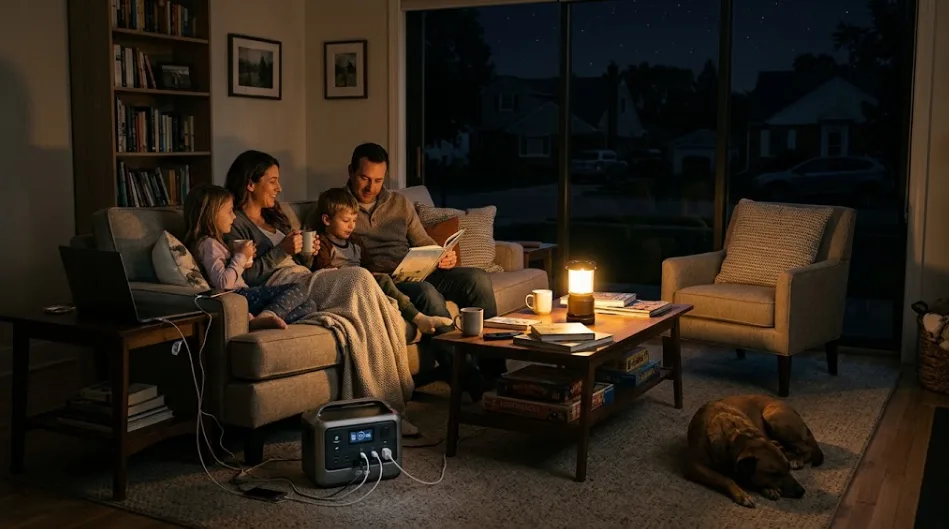
When the grid goes down, the battery system automatically takes over, keeping essential devices such as lights, refrigerators, routers, and security systems running without interruption.
This helps prevent food spoilage, work disruptions, and safety risks. It is especially important for households that rely on medical equipment such as CPAP machines or oxygen concentrators.
3. Preventing Overload and Breaker Trips
When multiple high-power appliances — such as air conditioners, ovens, and electric water heaters — run simultaneously, the battery can provide supplemental power support and help prevent overloads that exceed the capacity of the household electrical panel or utility connection.
For older homes or properties with limited electrical capacity, this can reduce the need for expensive electrical upgrades while still allowing safe use of high-power appliances.
4. Future Solar Expansion Compatibility
Even without solar panels today, many battery systems already support future solar charging integration.
This means homeowners can install a battery first and add solar panels later as their needs or budget change — without redesigning or replacing the entire energy system.
Can You Buy a Home Battery Without Solar Panels?
Absolutely. An energy storage battery can operate independently and charge directly from the utility grid — essentially functioning like a giant smart power bank for your home.
However, there are several important things to consider before installation:
1. Battery Safety Comes First
Safety should always be the top priority when choosing a home backup battery system.
Battery chemistry, BMS (Battery Management System) quality, thermal protection, and certification standards all directly affect long-term reliability and fire safety. For residential energy storage, industrial-grade LiFePO4 (LFP) batteries are generally considered one of the safest options available today.
2.Choose the Right Battery Size and Capacity
The battery’s capacity and output power should match your household’s actual energy needs.
A small apartment may only need backup power for lighting, internet, and a refrigerator, while a larger home may require enough capacity to support HVAC systems, kitchen appliances, or even whole-home backup during outages.
3. Proper Installation Location Matters
The battery should be installed in a dry, cool, and well-ventilated location with sufficient clearance and installation space.
According to the strict standards outlined in the National Electrical Code (NFPA 70) and NFPA 855 Energy Storage System Safety Standard, large residential energy storage systems should never be installed inside living spaces or bedrooms.
True industrial-grade LiFePO4 battery systems typically use rugged IP65-rated enclosures designed for safe deployment in garages, basements, utility rooms, or other dedicated equipment areas.
4. Future Expandability
Before purchasing, it is important to consider whether the system supports parallel expansion and future upgrades.
A scalable system allows homeowners to add more battery capacity, integrate solar panels later, or expand into whole-home backup without replacing the original equipment.
Choose the Best Home Battery Backup Without Solar Based on Your Needs
During a typical household power outage, the devices most families need to keep running are usually:
| Device | Power Range | Key Focus / Usage Tip |
|---|---|---|
| Refrigerator | 100–300W | Prevent food spoilage |
| Wi-Fi / Router | 10–30W | Maintain network communication |
| Phone / Computer | 20–100W | Work and staying connected |
| Lighting Fixtures | 5–20W | Basic essential illumination |
| Electric Fan | 30–80W | Basic summer comfort |
| CPAP Machine | 30–60W | Essential medical necessity |
| Television | 80–150W | Basic entertainment |
| Microwave | 800–1500W | Short-term high power use |
| Coffee Maker / Kettle | 1000–2000W | High-power instantaneous devices |
However, the backup power needs vary significantly from household to household:
1. Short-term outage households
If you want to meet the above device power requirements, the backup power system you need should have an output power of 1000–2000W and a battery capacity of 1000–3000Wh. This is currently the most mainstream range for home backup power systems. It can run refrigerators and kitchen appliances, while also being suitable for camping and outdoor use.
2. Light outage backup households
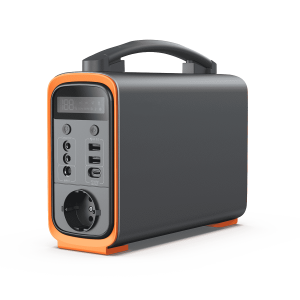
For urban apartments with only occasional power outages, basic backup is usually sufficient to keep essential devices running (phones, lighting, small fans, laptops). In this case, a small portable power station is enough, with a recommended output of 300–600W and a battery capacity of 300–1000Wh.
3. Long-term outage / extreme weather households
For prolonged outages or extreme weather conditions where you need to sustain refrigerators, communication, and medical devices for multiple days, and without solar support, achieving seamless whole-home switching requires an electrician to install a manual or automatic transfer switch or a critical load panel in the breaker box. A higher-capacity, stackable energy storage system is recommended, with an output of 2000–5000W and a battery capacity of 5000Wh+.
Note: One common mistake is that many people buy the wrong system because they focus only on high power ratings but ignore capacity. They assume a high-wattage unit can run appliances like an air conditioner, only to find that it runs for just 40 minutes before the battery dies. Therefore, the key is not to “buy the biggest,” but to ensure sufficient runtime, proper coverage of essential devices, and safe, stable long-term operation.
How do media and communities see this?
In our testing lab, as well as in discussions with many North American Reddit users, we found that more than 40% of users who purchased stackable battery systems did not actually install solar panels in the first year. Their primary motivation was the economic benefit of charging during off-peak electricity hours.
We also identified another noteworthy issue: this year, due to the cancellation of federal tax incentives, installation companies have significantly increased labor costs—typically $150 to $250 per hour—in order to maintain profit margins. If users purchase traditional non-modular battery systems, any time they want to expand storage capacity, they must pay electrician fees again for rewiring and system adjustments.
This is exactly where modular, stackable architecture (such as the Piforz energy storage series) represents a paradigm shift: you only need to hire an electrician once to install a standard manual or automatic transfer switch (or a critical load panel) next to the main breaker box. When you want to upgrade from 5kWh to 15kWh, there is no need to call an electrician again or reapply for municipal permits. You simply purchase another battery module and stack it onto the main unit like building blocks. A fast-lock, blind-mate connector automatically handles the high-voltage connections.
Reviewers who test systems under best-practice home backup wiring standards highly value this modular design, as it helps protect consumers from continuously rising electrical labor costs.
A Comparison of the Best Home Battery Backup Options Without Solar Panels
| Comparison Dimension | Wall-Mounted All-in-One (e.g., Tesla Powerwall 3) | Stacked Modular ESS (e.g., Piforz ESS Series) |
|---|---|---|
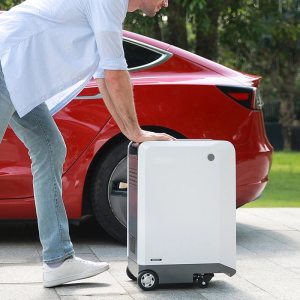
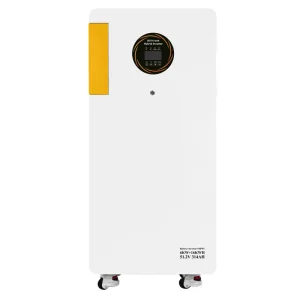
| Product Form | Fixed wall-mount, heavily integrated. Large volume, single-unit battery wall (13.5 kWh/unit). | Vertical ground-stacked, modular breakdown (e.g., 10 kW inverter + 5 kWh battery modules). |
| Basic Parameters | 13.5 kWh capacity / 11.5 kW continuous power output. NMC or LFP (PW3 starts utilizing LFP). | Adjustable capacity (15 kWh – 60 kWh), output power generally 6 kW – 10 kW (LFP – Lithium Iron Phosphate). |
| Initial Installation Barrier | Must be installed by a Tesla-certified installer. Requires extensive electrical panel modification, grid-connection permits from the city, and a longer construction period. | Base plate connects to a Transfer Switch or smart panel. A regular licensed electrician can complete the setup in 1–2 hours. |
| Initial Upfront Cost | Hardware is approx. $9,000. Including pure energy storage (No Solar) retrofitting costs, the final total out-of-pocket cost is typically $13,000 – $16,000+. | Saves on complex grid-connection approvals and expensive custom labor fees. Hardware plus basic installation keeps the initial overall investment highly controllable. |
| Convenience of Future Expansion | Every addition requires repeating the process: booking a certified electrician + rerouting cables + paying thousands of dollars in labor costs again. | Homeowners can purchase battery modules online and simply stack them on top like LEGO bricks (plug-and-play blind mating) to complete the upgrade. |
| Asset Mobility | Fixed asset. Virtually impossible to dismantle and take with you when moving, usually left behind for the next owner as property appreciation. | Mobile asset. When moving, power down and disassemble into separate modules, then load straight onto a truck. Ideal for renters or those planning to move. |
Objective Pros and Cons Analysis:
1. Tesla Powerwall 3 (Wall-Mounted Benchmark)
Advantages:
Tesla’s software ecosystem is widely considered best-in-class. It can automatically integrate weather forecasts and pre-charge from the grid before severe weather events, maximizing resilience even without solar panels. Its grid gateway enables extremely fast transfer switching, ensuring near-seamless backup power during outages—lights typically do not flicker, and household appliances continue running uninterrupted.
Disadvantages:
As a pure energy storage solution, its cost-effectiveness is relatively poor. The real value only becomes competitive when paired with a full solar installation that qualifies for incentives. In a grid-charging-only scenario, installation can require significant modifications to the existing electrical panel, leading to high labor and equipment costs.
In addition, due to its all-in-one integrated design, if a critical internal component fails during an outage, the entire system may become inoperable until serviced by authorized technicians.
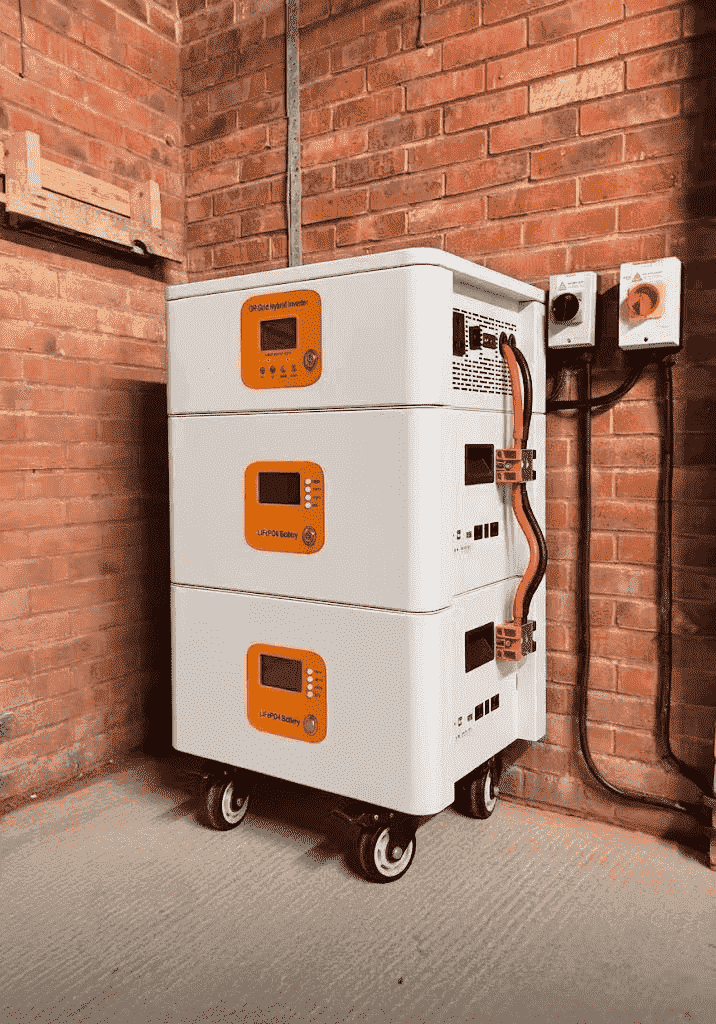
2.Modular Stackable System (Piforz Series)
Advantages:
Flexible expansion: Users can start with a small base unit to handle outages, and later expand capacity by simply adding additional battery modules—similar to stacking building blocks. This avoids any future rewiring or electrician costs.
Fast and simple installation: The vertical stackable design does not require wall-mounted heavy drilling or structural modifications in garages or utility rooms. It also avoids complex external high-voltage DC wiring, making the system safer and space-efficient.
High redundancy and fault tolerance: Each battery module has its own independent control and protection system. If one module fails, it is automatically isolated while the remaining modules continue supplying power. The faulty unit can be removed and sent back for repair without shutting down the entire system.
Disadvantages:
Brand recognition and ecosystem maturity are not as strong as Tesla’s. In some highly strict communities or HOA-regulated areas, additional effort may be required to ensure compliance with local installation and equipment approval standards.
Recommendation:
If the priority is long-term home ownership, a high budget, no concern about installation complexity, and a high likelihood of integrating large-scale solar roofing in the future, a wall-mounted system like Powerwall can be a reasonable choice.
However, if the goal is maximum cost efficiency, starting with a smaller investment in a “core system + base capacity,” and then scaling freely over time without labor costs—while also maintaining portability for future relocation—the modular stackable storage approach offers a more flexible and economically adaptive solution.