Differences in Power Needs: Overlanding vs. Traditional Camping
A lot of people think a power station is a power station—if it charges your phone at a local park, it’ll work for a week in the desert, right? Not exactly. Traditional camping is a hobby; overlanding is an expedition.
While a weekend camper only needs to power some string lights and a smartphone, an overlander’s needs are much more demanding. When you’re hitting washboard roads, climbing high altitudes, or crossing sand dunes, “affordable and pretty” doesn’t cut it. You need a unit that’s shock-resistant, temperature-tolerant, and capable of providing the stable, expandable power required for true self-reliance.
Survival Assurance
In an overlanding environment, a power station isn’t just a luxury for comfort; it is your ultimate backup and insurance policy.
Navigation and Communication Are Non-Negotiable
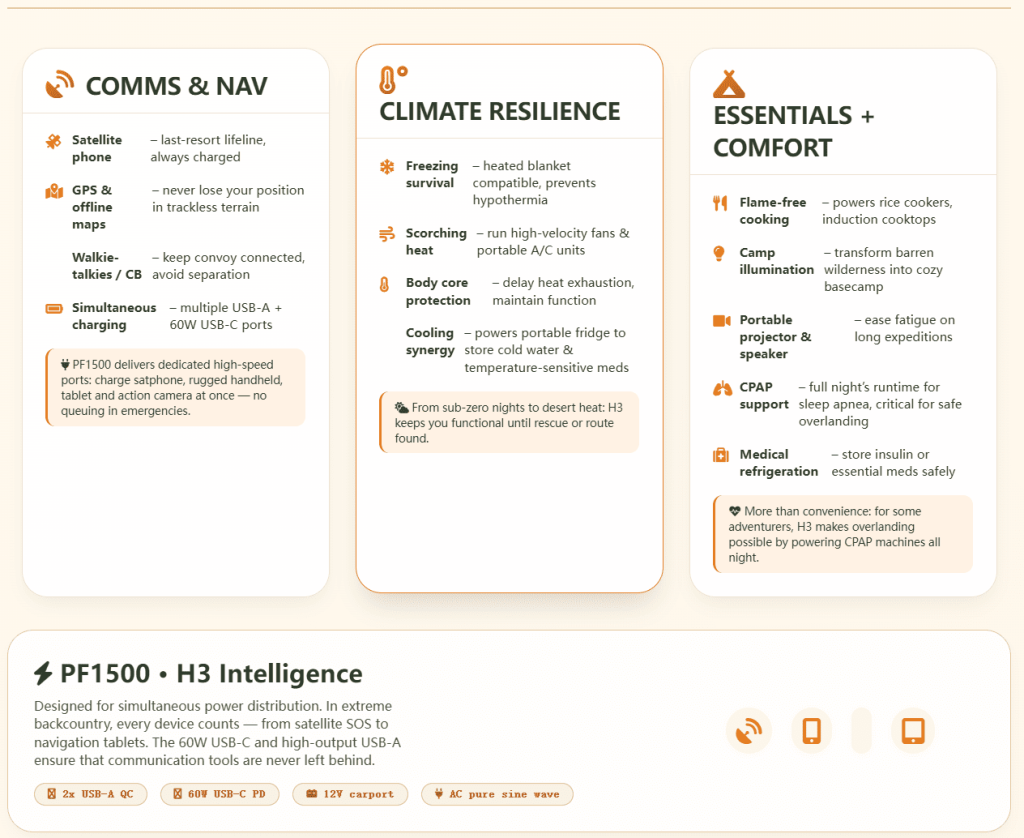
Overlanding takes you deep into the “no-signal” zones. If your rig breaks down or you lose the trail, your tech is the only thing standing between you and a very dangerous situation. Without a reliable charge, these tools are just expensive paperweights:
Satellite Phones: Your final “SOS” option for rescue.
GPS & Offline Maps: Essential for finding your way back to civilization.
Two-Way Radios: The glue that keeps a convoy together.
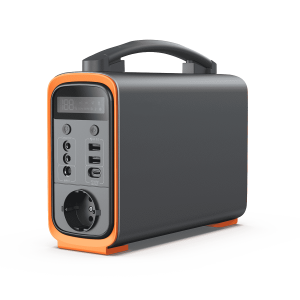
The Piforz PF1500 features multiple USB-A ports and a 60W Type-C port, so you can juice up your sat-phone, smartphone, and comms all at once. No more taking turns to stay safe.
H3: Conquering Extreme Weather Conditions
Wild weather is part of the adventure, but it can turn south fast. A solid power station helps you manage your core body temperature until help arrives or the storm passes:
In the Cold: Run electric blankets to ward off hypothermia when the mercury drops.
In the Heat: Power high-efficiency fans or even a portable AC and fridge to prevent heat exhaustion.
H3: Essential Appliances: The Best Portable Power Station for Home Backup Capabilities
A high-end power station is the heart of a “home-away-from-home” setup. It enables flame-free cooking via induction stoves or rice cookers and keeps your fridge running so your food stays fresh and your drinks stay ice-cold.
Beyond the basics, it powers the gear that makes the trail fun—like Bluetooth speakers or a projector for a movie under the stars. Most importantly, for overlanders with sleep apnea, it’s a total game-changer, powering a CPAP machine through the night for a safe, restful sleep.
H2: Built for the Long Haul: Safety and Stability
The constant jolts, vibrations, and extreme temperature swings of the trail are the ultimate test for any battery.
H3: The Necessity of LiFePO4
We use LiFePO4 (Lithium Iron Phosphate) because it’s the safest chemistry on the market. Its “thermal runaway” threshold is a massive 500°C (932°F), compared to just 200°C for standard NCM batteries. This means even in a sweltering vehicle or a collision, the fire risk is incredibly low. Plus, it lasts longer; the PF1500 retains over 80% capacity even after 3,500+ cycles.
H3: Trail-Proof Construction
Cheap units fall apart on washboard roads. While the batteries themselves are tough, the danger lies in vibrations loosening internal wires or causing short circuits. Our units are built with internal independent frames, cushioned cells, and reinforced connection points designed specifically to survive the jolts of the trail.
H3: Intelligent BMS (Battery Management System)
Every Piforz unit includes an industrial-grade Battery Management System (BMS). It acts like a digital bodyguard, monitoring voltage and temperature in real-time. If it detects a surge or a short, it cuts the power in milliseconds. You don’t need to be an electrical engineer—the BMS handles the thinking for you.
H2: Smart Packing: Every Inch Counts
Space is the most valuable currency in an overlanding rig. Your trunk is already fighting for room between spare tires, recovery boards, and camping gear. A great power station shouldn’t just be “small”—it should be rectangular and stackable. Our designs are built to slide into tight gaps, sit flush against your seats, and stay secure with a single tie-down strap.
H2: Battery Life and Standby Performance
A weekend camping trip is one thing, but overlanding often lasts for weeks. This leads to “range anxiety,” making it crucial to understand how long your power lasts and if it loses charge while idle.
Usage Time: This is determined by capacity.
(Estimated hours ≈ Capacity ÷ Device Watts × 0.8)
Self-Discharge: If left unused for a long period, you might notice a slight drop in charge—this is a normal “self-discharge” phenomenon.
Lead-acid batteries: Lose ~5-10% per month.
Standard Lithium-ion: Lose ~3-5% per month.
High-quality LiFePO4: Stays within a 2-3% loss, proving once again why it is the gold standard for overlanders.
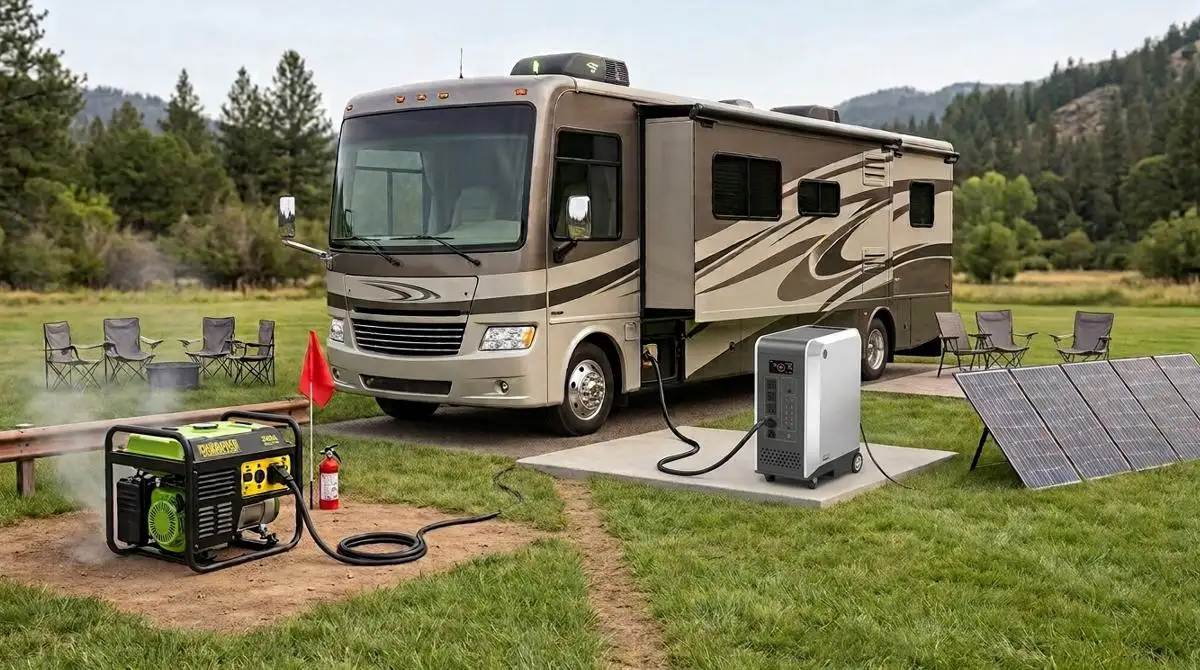
If you still face range anxiety, an overland solar setup is your best bet. Carrying a foldable solar panel allows you to top off the battery during sunny days, acting as your ultimate “hole card” for staying off-grid two days longer.
H2: Don’t Gamble on Your Gear
When you’re miles from the nearest paved road, reliability is everything. You need a partner that can handle the heat, the dust, and the bumps. If you’re looking for a power station that’s as tough as your rig, Piforz is ready for the journey.