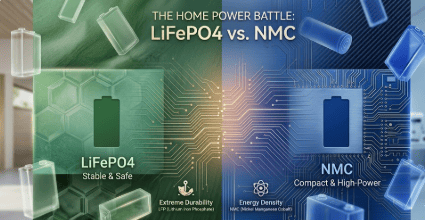
When discussing portable power and home energy storage, battery capacity is an unavoidable hurdle. However, choosing a battery is more than just a simple preference; it is a core decision that must be made at the very beginning. The battery is the heart of the device, determining its safety, lifespan, weight, and whether you feel confident using it in specific environments.
Understanding the Difference: LFP vs. NMC Lithium Batteries
To make an informed choice, one must understand the fundamental differences between the two primary lithium-ion technologies.
LiFePO4 (LFP) Battery Characteristics
LFP batteries use Lithium Iron Phosphate as the cathode material. Because the chemical structure is highly stable, the thermal runaway temperature is typically above 500°C, making it one of the safest lithium battery categories.
Superior Safety: The stable chemical structure resists high temperatures. Even in the event of an internal short circuit or overcharging, it is unlikely to catch fire.
Longer Cycle Life: LFP cells typically reach 3,000 to 6,000 cycles before hitting 80% capacity, making them ideal for daily solar charging and discharging.
High-Temperature Stability: Performance degradation is slower in hot environments.
Common Applications: Best for residential energy storage and commercial transport (buses/trucks) where safety and longevity are prioritized over weight.
Ternary Lithium (NMC/NCA) Battery Characteristics
NMC batteries utilize Nickel, Manganese, and Cobalt (or Aluminum). These are defined by high performance in compact forms.
High Energy Density: They can store more power in a smaller, lighter package.
Excellent Low-Temperature Performance: NMC batteries function well in sub-zero temperatures with minimal capacity loss.
Strong Power Output: Capable of high-rate discharge to meet the instantaneous demands of high-power appliances.
Common Applications: Ideal for Electric Vehicles (EVs) and drones where lightweight design and cold-weather reliability are critical.
In-Depth Comparison: LFP vs. NMC Battery Technology
To choose the right solar battery backup for your home, a detailed side-by-side comparison across multiple dimensions is essential:
| Aspect | LFP (LiFePO₄) | NMC (Ternary) | Home Impact / Note |
|---|---|---|---|
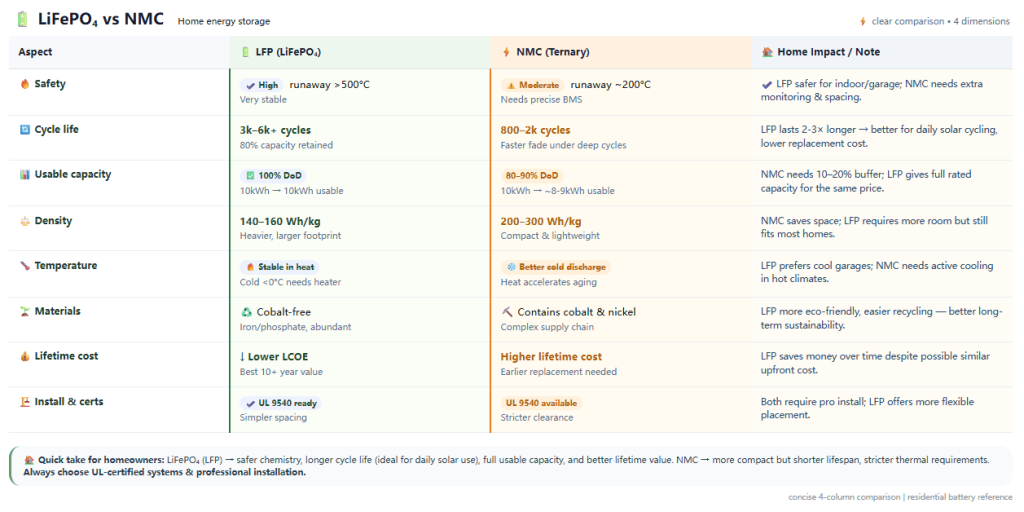
| Safety | HighThermal runaway >500°CVery stable | ModerateThermal runaway ~200°CNeeds precise BMS | LFP is safer for indoor/garage use; NMC requires extra monitoring and spacing |
| Cycle life | 3k–6k+ cycles80% capacity retained | 800–2k cyclesFaster capacity degradation under deep cycles | LFP lasts 2–3× longer, making it better for daily solar cycling with lower replacement costs |
| Usable capacity | 100% DoD10kWh → 10kWh usable | 80–90% DoD10kWh → ~8–9kWh usable | NMC requires a 10–20% capacity buffer; LFP provides more usable capacity at the same rated size |
| Energy density | 140–160 Wh/kgHeavier, larger footprint | 200–300 Wh/kgCompact and lightweight | NMC saves space; LFP requires more room but still fits most home applications |
| Temperature performance | Stable in heatCold below 0°C requires heating | Better cold discharge performanceHeat accelerates aging | LFP is better suited for cool garages; NMC may require active cooling in hot climates |
| Materials | Cobalt-freeIron phosphate materials, abundant supply | Contains cobalt and nickelMore complex supply chain | LFP is more environmentally friendly and easier to recycle for long-term sustainability |
| Lifetime cost | Lower LCOEBest 10+ year value | Higher lifetime costEarlier replacement needed | LFP usually provides better long-term value despite similar upfront costs |
| Installation & certifications | UL 9540 readySimpler spacing requirements | UL 9540 availableStricter clearance requirements | Both require professional installation; LFP allows more flexible placement |
| Category | Recommendation |
|---|---|
| Home energy storage | LiFePO₄ (LFP) is usually the better choice due to higher safety, longer cycle life, full usable capacity, and lower lifetime cost. |
| Space-limited applications | NMC offers higher energy density and a smaller footprint but has a shorter lifespan and stricter thermal requirements. |
| Certification | Always choose UL-certified systems and professional installation. |
LFP vs. NMC Comparison for Home Solar Battery Backup
For most home energy storage systems, LiFePO₄ (LFP) is usually the better choice because of its safety, longer lifespan, and lower lifetime cost. NMC batteries are mainly preferred when space and weight are the top priorities.
Why Choose LFP for Home Battery Backup?
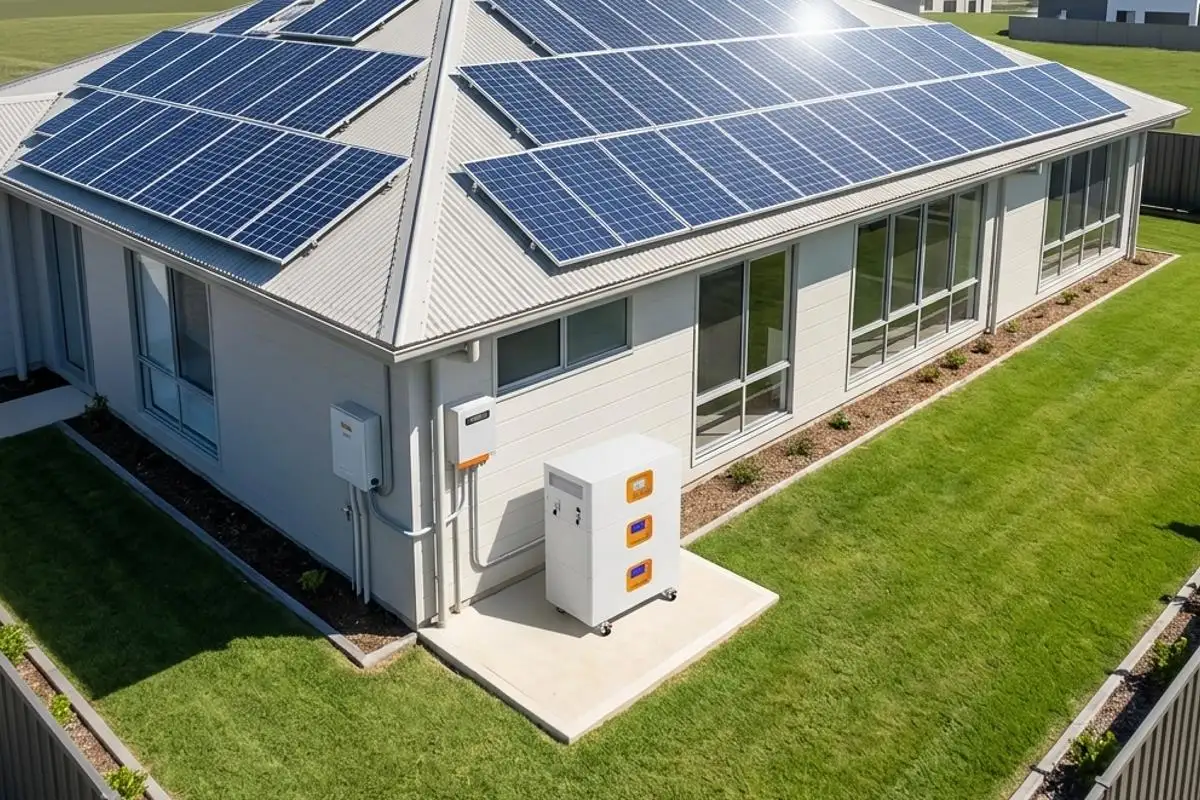
Fixed Installations: Since home battery systems are stationary, the extra weight and size of LFP are negligible.
Longevity and ROI: Home systems require a lifespan of 10+ years to be cost-effective; LFP’ s high cycle count fits this perfectly.
Safety First: For homes with children, the elderly, or critical medical equipment (like ventilators or oxygen concentrators), LFP offers peace of mind.
Summary: Unless you require extreme portability or live in an Arctic climate, LFP is the standard recommendation.
When to Consider NMC Batteries?
Space Constraints: If you live in a small apartment with a very restricted installation footprint.
Extreme Cold: In climates where temperatures drop below -20°C, LFP capacity may drop to 50%, while NMC can maintain over 70%.
Short-term Needs: If you only need a backup solution for 2–3 years (e.g., before moving) and don’t require a 10-year lifespan.
If you have decided that LFP (Lithium Iron Phosphate) is the superior choice for your household after this in-depth comparison, you should explore Piforz.
Critical System Considerations: Safety Standards and Compatibility
Beyond the battery cells, you must evaluate the entire Energy Storage System (ESS)
UL 9540 Certification and Safety
Buying a battery isn’t just about the chemistry; it’s about compliance.
UL 9540: The safety standard for the entire energy storage system.
UL 9540A: A specific test for thermal runaway fire propagation. It determines how heat spreads and the required safety spacing between units.
Inverter Compatibility
The residential storage industry has largely standardized around LFP battery communication protocols. Most mainstream hybrid inverters are designed to work seamlessly with LFP systems. In contrast, NMC systems often use fragmented, proprietary protocols, making it difficult to match batteries with different inverter brands.
Installation Environment
LFP Placement: Stable and non-toxic; can be installed indoors (garages, utility rooms) without special ventilation. It is “cold-sensitive” and may require a heater if temperatures drop below 0°C.
NMC Placement: Due to higher fire risks during thermal runaway, it is best kept in outdoor equipment rooms or away from living areas. It handles cold well but is sensitive to heat, requiring active cooling.
Taking everything into account, LFP batteries are the definitive choice for home energy storage. For residential users, safety, lifespan, and cost-effectiveness are the top priorities.
While NMC batteries offer advantages in energy density and low-temperature performance, these benefits provide limited value in a typical home battery backup scenario
FAQ
Q: Which is safer, LFP or NMC?
LFP is inherently safer due to its high thermal stability (500°C+ runaway threshold). NMC relies more heavily on a precise Battery Management System (BMS) to ensure safety.
Q: What is the “80-20 Rule”?
To prolong NMC battery life, it is recommended to keep the discharge depth within 80% (leaving 20% charge). LFP batteries do not have this restriction and can be used to 100% Depth of Discharge (DoD).
Q: Do LFP batteries work in the winter?
They can be used, but charging LFP below 0°C can cause permanent damage. Units in cold climates should have a self-heating function.
Q: Is UL 9540 certification necessary?
Yes. It is a vital safety benchmark and is often required for legal, code-compliant installation in many regions.
Q: Will my solar inverter work with LFP batteries?
Most modern hybrid or storage-ready inverters support LFP. Check your manual for specific LFP settings. If you have an older grid-tie inverter, you may need an AC-coupled inverter to add battery storage.